
A musty smell usually means mold spores, mildew, or excess humidity are circulating through the air your family breathes. The right air purifier pulls those particles and odors out, which is why I focused this list on units with true HEPA filtration (meaning a filter that captures 99.97% of particles down to 0.3 microns) paired with activated carbon (a porous material that traps odor molecules and gases). Each pick below handles a different room size and budget, so you can match the unit to your damp basement, stuffy bedroom, or open-plan living area.
The Choices Worth Comparing
Clarifion Air Ionizers for Home (6 Pack)

DREO Air Purifier for Home (DR-HAP009)
ECOSELF HAP602 Large Room Air Purifier
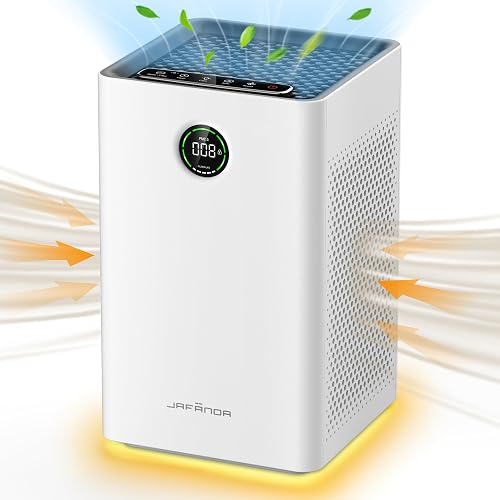
Jafanda HEPA Air Purifier with Carbon Filters
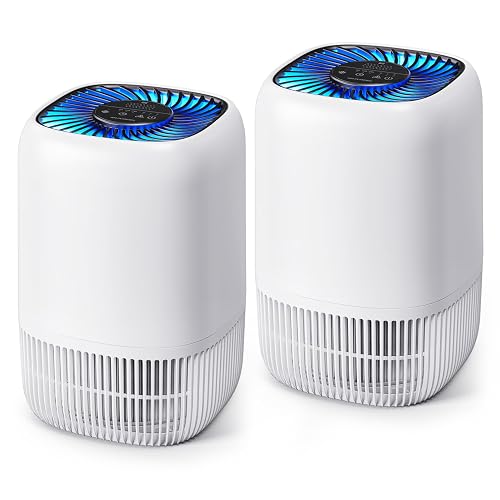
VOOPNU 2-Pack Desktop Air Purifier (DH-JH12)
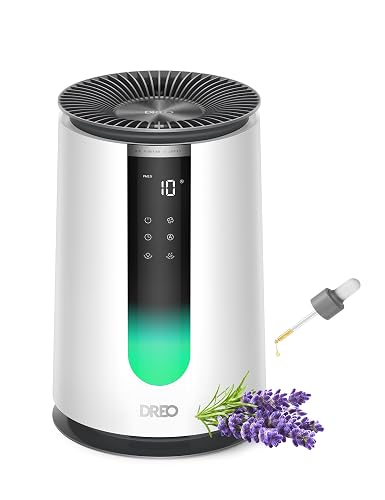
DREO Air Purifier for Home (DR-HAP008)
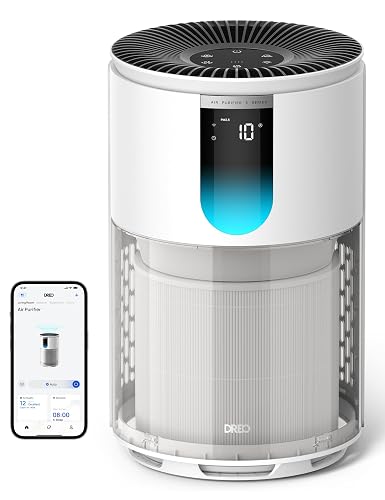
DREO Smart Air Purifier (DR-HAP009S)
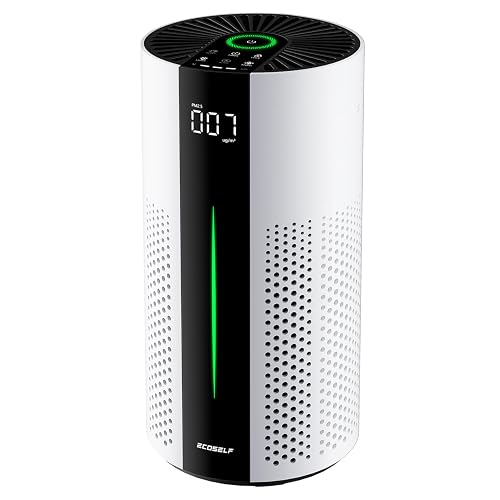
ECOSELF Air Purifier for Home (1800 ft²)
A Closer Look At Each Pick
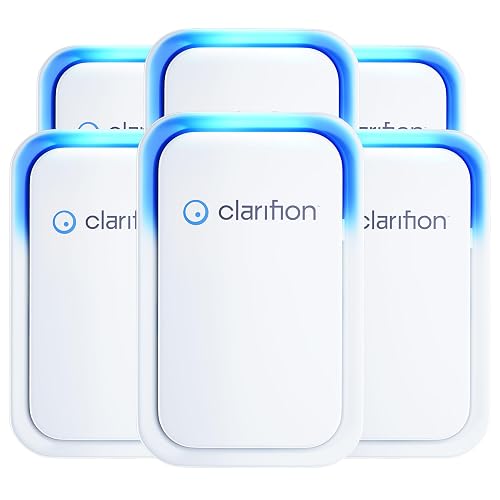
Clarifion takes a different approach from the rest of this list. Instead of pulling air through a HEPA filter, these compact ionizers release negatively charged particles that bind to airborne irritants, which then settle on nearby surfaces. You just plug one into any wall outlet, no hoses or moving parts to worry about.
The six-pack format means you can spread one in every room where musty air lingers, from a windowless bathroom to a guest bedroom that closes up most of the year. It runs silent and never asks for a replacement filter, which most owners will appreciate. Just know that ion technology does not capture gases the way carbon does, so heavy mildew odors may persist.
Useful Highlights
- Filterless operation removes ongoing filter costs and disposal
- Six units let you cover a whole apartment on a single purchase
- Silent, fanless design disappears in bedrooms and studies
- Plugs directly into an outlet, no shelf or floor space required
- Portable, so you can move one to whichever room smells worst that day
Worth Noting
- Ionizers produce ozone in trace amounts, which may bother sensitive users
- Without a carbon layer, strong mold odor molecules pass through unchanged
- Particles cling to walls and fabrics, so weekly dusting becomes more important
Specs at a glance
Best Suited To
Renters and apartment dwellers who want set-and-forget units in several rooms without buying a stack of replacement filters.
Look Elsewhere When
You need real carbon odor control, in which case the Jafanda HEPA Air Purifier with Carbon Filters is a stronger match for stubborn musty smells.
The DREO DR-HAP009 is the kind of room-sized workhorse most people picture when they think of an air purifier. It carries a CADR rating (Clean Air Delivery Rate, a measure of how quickly the purifier filters smoke, dust, and pollen) of 158 CFM, which means it cycles the air in a 245-square-foot bedroom about five times per hour. For a damp basement office or a living room that traps cooking steam, that kind of throughput is what actually moves the needle.
A built-in PM2.5 sensor (a laser-based reader that detects fine particles smaller than 2.5 microns) drives the auto mode, so the fan ramps up the moment humidity and particles climb. The display also doubles as a useful nightlight, dimming enough for most bedrooms. Compared to the Clarifion set above, this is a real filter-and-fan machine, so it tackles both particles and the gasses behind musty odor.
Well-Handled Touches
- PM2.5 readout turns vague mustiness into a number you can watch drop
- Turbo mode scrubs the room after a storm leak or paint project
- Four speeds give you quiet overnight and powerful daytime cleaning
Trade Offs
- Filter replacements add a small annual cost, worth budgeting for
- Turbo mode is loud enough to interrupt a conversation, so it suits quick bursts more than constant use
Right Fit For
Anyone with a 200-to-500-square-foot room who wants a single unit that handles both particles and odor-causing gasses.
Skip It When
You are working with a smaller bedroom under 200 square feet, where the DREO DR-HAP008 is the calmer, quieter fit.
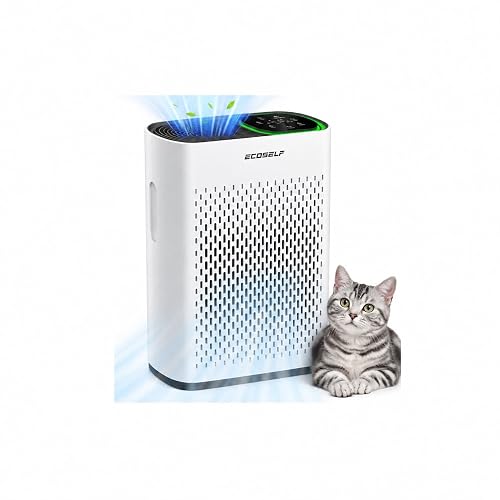
Where most air purifiers on this list top out around 1,000 square feet, the ECOSELF HAP602 claims a 2,400-square-foot cleaning pass in half an hour. That ceiling makes it a smart pick for finished basements where humidity lingers and air circulation is poor. The 360-degree intake pulls musty air from every direction, so placement in the center of the room works well.
You also get a touch-controlled PM2.5 display that flips through green, blue, yellow, and red zones, which is oddly satisfying when the reading settles into the green band. In auto mode, the fan responds to the sensor, so the unit quiets down once the air clears. Owners commonly mention that the sleep mode is genuinely quiet, around 20 decibels.
Everyday Perks
- Large touch display shows air quality at a glance from across the room
- Ultra-quiet sleep mode at around 20 decibels suits light sleepers
- Three-stage HEPA filtration (a pre-filter for large debris, a true HEPA layer for fine particles, and a carbon layer for odors) tackles particles and smells together
- Auto mode adjusts fan speed without any button-pressing on your part
- 360-degree intake means you can park it in the middle of the room, not against a wall
Small Caveats
- The unit is large, so plan floor space before it arrives
- HEPA and carbon filters need regular replacement to keep performance steady
Feature Snapshot
Made For
Homeowners fighting basement dampness or anyone with a 500-plus-square-foot living space that stays closed up most of the day.
Consider Something Else When
Your space is small and you want a desktop-friendly unit, in which case the VOOPNU 2-Pack Desktop Air Purifier (DH-JH12) is a more sensible size.
Musty rooms usually need more than particle filtration. They need carbon, which is why the Jafanda stands out: it pairs a true HEPA layer with a generous 300-gram activated carbon pre-filter. Activated carbon is a heat-treated charcoal that traps volatile organic compounds (VOCs, the gas-phase molecules that produce musty and mildew smells) through adsorption, which is the process of gas molecules sticking to the carbon surface.
It covers up to 1,090 square feet at one air change per hour, which makes it a real contender for a smoky living room or a house with multiple pets. PM2.5 is tracked through a small nightlight display, so you can glance at the unit before bed. The nightlight is soft enough to leave on without lighting up the room.
Why It Works Well
- 300-gram carbon layer pulls in odor gasses that HEPA alone misses
- Coverage up to 1,090 square feet handles large, open living spaces
- Nightlight display doubles as a subtle bedroom accent
Honest Caveats
- Carbon filters need replacing more often than HEPA, so factor that into ownership costs
- At full speed, the fan noise is noticeable in smaller rooms
Key Product Details
Who It Suits Best
Pet owners, smokers, and anyone dealing with persistent mildew in an open-plan home where HEPA alone is not cutting it.
Reach For A Different Pick When
You want smart-home connectivity, which the DREO Smart Air Purifier (DR-HAP009S) handles with Wi-Fi and voice controls instead.
For dorm rooms, small bedrooms, and home offices, a tower-sized purifier is overkill. The VOOPNU DH-JH12 measures about 6.7 inches wide and 9.8 inches tall, so it tucks onto a desk or nightstand without taking over. The pack of two lets you run one in a bedroom and one in a connected office for full coverage.
It includes a fragrance sponge, which is a small foam pad where you can add a few drops of essential oil for a mild scent boost, and a nightlight function. At around 22 decibels, it sits below normal bedroom noise. The catch is coverage: the unit is best in rooms under about 200 square feet, so a finished basement would be too much for it.
Where It Helps
- Compact frame fits on desks, nightstands, and shared shelving
- Two-pack pricing makes multi-room coverage affordable
- Fragrance sponge lets you add scent without buying a separate diffuser
- Nightlight feature is dim enough for a side table
- 22-decibel operation sits below typical bedroom noise
Less Ideal Details
- Coverage tops out well below larger units, so it cannot handle a basement
- Fragrance sponge needs occasional cleaning to stay fresh
Perfect Match For
Students and remote workers who want a quiet, compact unit for a personal space under 200 square feet.
A Better Fit Elsewhere
Anyone with a 400-plus-square-foot living room should look at the ECOSELF Air Purifier for Home (1800 ft²), which trades portability for real coverage.
The DREO DR-HAP008 is the smaller sibling of the DR-HAP009 above, and it leans into bedroom-friendly design. With a CADR of 115 CFM, it cycles air in a 178-square-foot room at about five changes per hour, which is plenty for a master bedroom. The PM2.5 display keeps you informed without the brightness of a TV standby light.
What separates it from the larger DREO is a built-in scent diffuser pad. You can add a few drops of essential oil to introduce a soft background fragrance while the HEPA layer works through particles. It is one of the more thoughtful small-room designs in this category, though you may find the turbo mode loud enough to wake light sleepers.
Where It Delivers
- Scent diffuser pad adds subtle aromatherapy during operation
- Compact body fits on dressers and nightstands
- Auto mode handles day-to-day swings without manual adjustment
Some Limits To Know
- Coverage drops off sharply past 200 square feet, so living rooms are out of reach
- Filter life depends on usage, and HEPA replacements are an annual cost to plan for
Who Should Grab It
Anyone with a small-to-medium bedroom who wants a quiet purifier with a built-in scent option for nighttime.
Swap It Out When
You need larger coverage and like the DREO ecosystem, in which case the DREO DR-HAP009 covers a much wider footprint.
The DR-HAP009S takes everything that works in the standard DREO and adds the connectivity most smart homes expect. The same 158 CFM CADR rating applies, so the cleaning performance mirrors the DR-HAP009, but Wi-Fi and voice control let you adjust fan speed or check air quality from your phone. For a humid basement that you want to monitor remotely, that kind of access is genuinely useful.
Setup is straightforward through the companion app, and schedules let you boost the fan before a work-from-home morning. The auto mode still uses the PM2.5 sensor to react in real time, so the smart features build on a strong base rather than replacing it. You may find the smart features overkill in a small apartment, but for a connected whole-home setup, they earn their place.
The Helpful Details
- Wi-Fi and voice integration fit households already running smart speakers and routines
- PM2.5 monitoring remains visible on the unit even when you use the app
- Schedules let the unit ramp up before you walk into a stuffy room
Possible Compromises
- Smart features add cost over the non-smart DR-HAP009, with no gain in cleaning power
- Wi-Fi setup can stall on older routers, depending on your network
Quick Facts
Whose Shelf It Belongs On
Smart-home enthusiasts who want air quality data on their phone and prefer voice commands over walking to the unit.
Where A Sibling Pick Shines
You do not need app control and want the same cleaning power for less, in which case the DREO DR-HAP009 is the more wallet-friendly route.
The final ECOSELF on this list targets a specific problem: large, open floor plans where a single small unit just cannot keep up. With coverage up to 1,800 square feet, it suits ranch homes, lofts, and open living areas where humidity and cooking smells drift from one zone to the next. The 360-degree intake design pulls air in from all sides, so corner placement is not required.
Auto mode reads the PM2.5 sensor and adjusts the fan on the fly, so you do not have to babysit it. Compared to the HAP602 above, this is a more budget-focused option, with slightly less heavy-duty build but a similar approach to coverage. For a first-time shopper who wants one unit for a wide space, the value case is strong.
Benefits That Matter
- 1,800-square-foot coverage handles ranch homes and lofts
- 360-degree intake means flexible placement in any open room
- Auto mode reacts to air quality shifts without manual input
Points To Note
- Replacement filters are an ongoing cost, worth factoring before you buy
- Larger footprint means it wants a corner or open wall, not a crowded shelf
Built With In Mind
Homeowners with open floor plans who want a single unit to cover most of the main level without buying multiple purifiers.
Not Your Match When
Your home is apartment-sized and you would rather have two smaller units in different rooms, where the VOOPNU 2-Pack Desktop Air Purifier (DH-JH12) is a more flexible setup.
What to Look For In an Air Purifier for Musty Rooms
True HEPA, Not “HEPA-Type”
The single most important feature is a true HEPA filter, which captures 99.97% of particles at 0.3 microns. That is the size range where mold spores and dust mite debris sit. “HEPA-type” or “HEPA-style” labels are softer, and they usually mean a less efficient filter. For a musty room, true HEPA is worth insisting on.
Carbon for the Smell, Not Just the Particles
HEPA alone handles particles, but musty odor comes from volatile gasses, the volatile organic compounds (VOCs) released by mold and mildew. Activated carbon is the layer that actually neutralizes those smells. If your problem is purely visual dust, carbon matters less. If your problem is that damp, basement smell, carbon is essential.
Match Coverage to Your Room
Manufacturers list two coverage numbers, and the trick is reading them carefully. The bigger number is the room size at one air change per hour (ACH), which is a slow refresh. The smaller number is the room size at four to five ACH, which is what most people need to feel a real difference. If your room sits at the upper end of the listed coverage, expect the unit to work hard, and consider sizing up.
Noise, Filters, and Smart Features
Sleep mode and decibel ratings matter more than people expect. Anything under 25 decibels is genuinely bedroom-friendly. Also budget for replacement filters. HEPA filters usually last 6 to 12 months, and carbon filters wear out faster in heavy-use rooms. Smart features, like Wi-Fi and voice control, are convenient but do not improve cleaning, so treat them as a luxury, not a necessity.
Key Considerations Across These Picks
Where Shoppers Go Wrong
A common slip is buying on coverage alone. A purifier rated for 1,200 square feet will still struggle in a 1,200-square-foot open room, because the rating assumes one air change per hour. For musty smells, you usually want four to five changes per hour, which means treating the rating as a generous upper bound. Another mistake is ignoring filter replacement cost. A cheaper unit can cost more over two years if its filters are pricey or short-lived.
Where The Extra Money Goes
Higher-tier models in this category tend to add three things: a larger carbon filter for stronger odor control, a more accurate PM2.5 sensor for true auto mode, and a quieter motor for bedroom use. If your problem is a small bedroom with mild humidity, a basic HEPA unit is enough. If you are dealing with a basement that genuinely smells, the upgrade to a heavier carbon layer and a stronger sensor pays off quickly.
Frequently Asked Questions
How long does it take an air purifier to remove a musty smell?
Most purifiers make a noticeable dent in a musty smell within 24 to 48 hours of continuous use in a closed room. Severe mildew embedded in carpet or drywall may need weeks of running alongside deeper cleaning.
Can one air purifier handle a whole floor of a house?
It depends on the open floor plan. A 1,800-square-foot unit can cover one large open area, but it cannot clean behind closed doors. Bedrooms with the door shut usually need their own purifier for real results.
Do I need a carbon filter for musty smells?
Yes, in most cases. Mold and mildew release odor-causing gasses, and HEPA alone does not trap them. Activated carbon is the layer that addresses the smell side of the problem.
How often do I need to replace the filters?
HEPA filters typically last 6 to 12 months with regular use. Activated carbon filters wear out faster, often every 3 to 6 months, especially in smoky or pet-heavy homes. Check the indicator on your unit when available.
Is an air ionizer enough to remove musty odor?
Ionizers help with airborne particles but do not capture odor gasses. For musty smells, a true HEPA purifier with an activated carbon layer is the more reliable tool.
Final Verdict
A musty room is fixable, and the right air purifier speeds it up dramatically. For a small bedroom, the DREO DR-HAP008 or the VOOPNU 2-Pack keeps things quiet and simple. For a basement or open living area, the ECOSELF HAP602 or the Jafanda with its heavier carbon layer handles both particles and odor gasses. Match the unit to your room, budget for replacement filters, and run it consistently. A damp, closed-up space does not stay that way for long once the air starts moving.