
A good bedroom air purifier is less about specs and more about how it behaves at 2 a.m. when you’re trying to sleep. You want a unit that scrubs pet dander, pollen, and lingering odors without sounding like a desk fan on high. The picks below balance coverage area, noise floor, filter type, and the kind of features (auto mode, PM2.5 sensing, sleep scheduling) that actually matter in a bedroom.
A quick note on what “HEPA” means here, since it shows up everywhere: a true HEPA filter is a mechanical filter rated to capture at least 99.97% of particles down to 0.3 microns. That includes most pollen, dust mite debris, and pet dander. Anything finer (some smoke particles, certain viruses) is also trapped because of how the fibers are layered. Carbon filters layer on top to handle odors and gases. Together, they form the core of nearly every serious bedroom unit.
This list runs the gamut from full-room HEPA workhorses to tiny plug-in ionizers for tight spaces and travel. Each one earns its slot for a specific reason.
A Side-By-Side Look
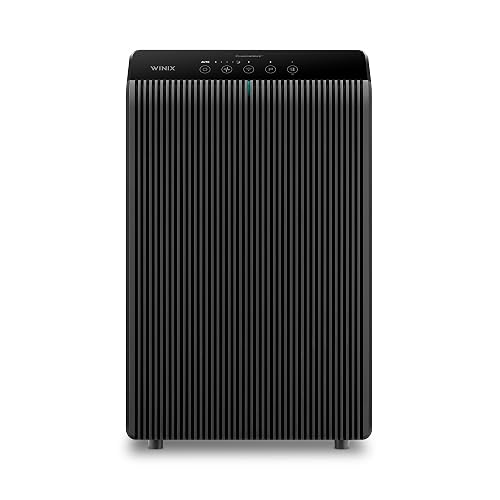
WINIX 5510 Air Purifier with App Support

WINIX 5520 Air Purifier with Air Quality Monitor
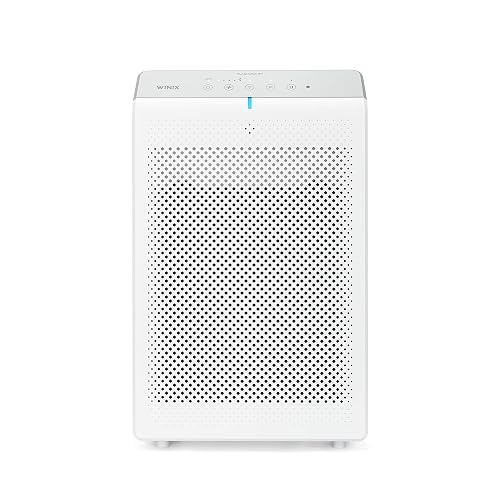
WINIX 5530 Air Purifier with App Control

DREO Air Purifier DR-HAP009 (539)
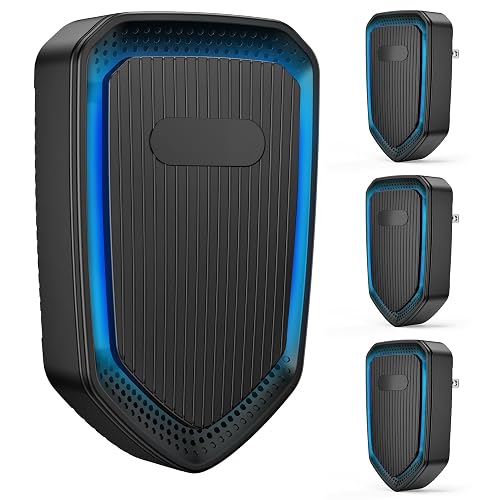
Plug In Negative Ion Air Purifier
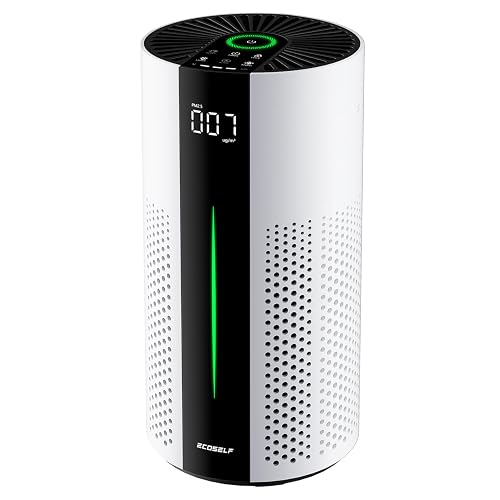
ECOSELF Air Purifier for Large Rooms
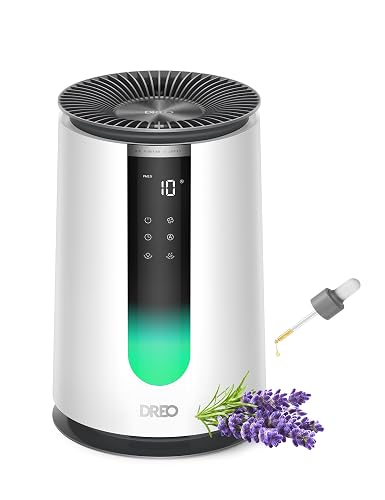
DREO Air Purifier DR-HAP008 (338)
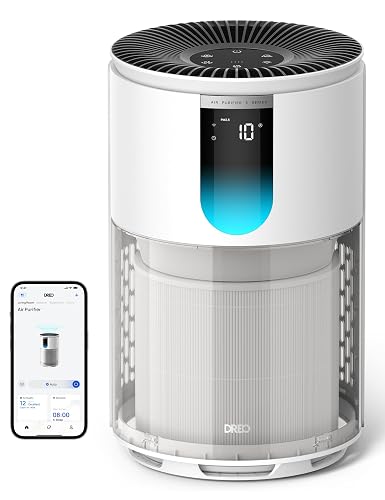
DREO Smart Air Purifier DR-HAP009S (539S)
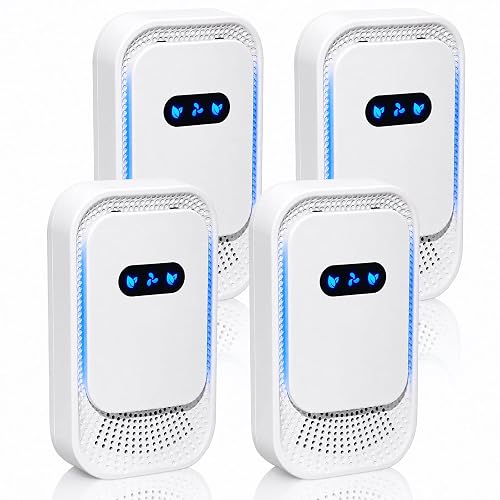
Air Ionizers 4 Pack, Negative Ion
More On The Choices That Made The List
Bedrooms that double as home offices or sit inside open layouts need a unit with serious reach, and the WINIX 5510 brings that without much fuss. The 1881 sq ft one-hour rating means a standard master bedroom clears out in well under an hour on high, and on its lowest speed it fades into background noise, which is what most people actually care about at night.
Compared to the WINIX 5520 reviewed next, this model leans on the app for control rather than a built-in air quality display. You may find the app a nicer fit if your phone is already your remote for everything, or you may miss the glanceable readout depending on how you like to check in on air quality.
What Earns Its Place
- True HEPA media paired with a high-deodorization carbon stage, covering both fine particles and odors common in bedrooms (pets, cooking, smoke drift)
- Auto mode adjusts fan output to current air quality, so the unit quiets itself once the room is clean
- App support lets you schedule, monitor filter life, and tweak speeds from bed without getting up
- Large-room coverage means one unit handles most bedrooms without needing a second box
Things To Consider
- Like most full-size HEPA units, the carbon filter is a recurring cost that owners commonly replace roughly every 12 months
- The tower footprint is taller than compact alternatives, so placement in tight corners can be a minor hassle
Feature Snapshot
Best Suited To
Smart-home households who want phone-based control and have a large master bedroom to cover.
Where Another Pick Suits Better
Choose the DREO DR-HAP008 (338) if your bedroom is under 200 sq ft and you care more about compact size and a built-in scent pad than app control.
The WINIX 5520 keeps the same large-room HEPA core as the 5510, but trades app control for a built-in air quality indicator on the unit itself. That matters more than it sounds in a bedroom: you can glance across the room and tell whether the air is fine or whether you need to bump the fan, no phone unlock required.
Auto mode does the heavy lifting, ramping up when smoke or pollen spikes and settling back down once readings normalize. For allergy-prone sleepers who like tangible feedback, this is the easier of the two Winix options to live with day to day.
What It Does Well
- Onboard air quality readout provides instant visual feedback without an app
- True HEPA plus a dedicated odor-focused carbon stage tackles particles and smells in tandem
- Auto mode reacts to real-time air quality, so the unit only ramps up when needed
- Coverage near 1,882 sq ft in an hour suits oversized bedrooms and small apartments alike
Honest Caveats
- Lacks the smartphone control that the 5510 and 5530 offer, which may be a dealbreaker for app-first households
- Filter replacements are a long-term cost worth budgeting for, with the carbon layer typically swapped annually
Made For
Large master bedrooms where you want a glanceable air quality indicator instead of pulling out a phone every time.
Look Elsewhere When
Step up to the WINIX 5530 if you want the latest-generation Winix features with full app control layered on.
The 5530 is the newest branch of the Winix large-room family, and it’s aimed squarely at people who want both an in-room display and full app control. Where the 5520 reads out air quality on the unit only, the 5530 pushes the same data to your phone, so you can monitor and tweak from the kitchen or office.
Underneath, the HEPA-and-carbon setup mirrors the rest of the line, so the air-cleaning itself is consistent across the trio. The premium here is in the control surface, not the filtration, which is worth keeping in mind if you don’t actually use apps much.
Positive Takeaways
- Combines a physical unit display with full app control, so neither experience feels sacrificed
- True HEPA plus high-deodorization carbon targets both fine particles and odor-causing gases
- Auto mode responds to live readings, reducing fan noise once air is clean
- Large-room coverage keeps a typical bedroom in the safe zone quickly
- App-based filter tracking helps you stay ahead of replacements
Points To Note
- You’ll pay a premium for the dual control scheme over the app-only 5510
- As with other full-size units, finding an outlet within cord reach and a clear airflow path around the tower takes some placement thought
Right Fit For
Tech-forward households who want the most modern Winix control experience in a large bedroom.
Skip It When
Pick the WINIX 5520 instead if app control feels like overkill and you’d rather save on the sticker for the same core filtration.
DREO built the DR-HAP009 around the way bedrooms actually work: lights off, white noise low, and the purifier running for eight to ten hours straight. The dedicated HEPA sleep mode drops fan speed and dims indicators, so the unit doesn’t pull focus from the room. A PM2.5 monitor (a sensor that measures fine particulate matter 2.5 microns and smaller) sits under the hood, so auto mode reacts when something actually changes.
Versus the larger Winix models above, this DREO targets a more typical bedroom footprint at up to 1,176 sq ft, which covers most master suites comfortably. It also runs a four-speed setup with a turbo mode for when pollen or smoke spikes.
A Favorable Mix
- HEPA sleep mode drops fan output and dims lights for true nighttime use
- PM2.5 auto sensing keeps the unit reactive without manual adjustments
- Four speeds plus turbo give you a wide operating range, from whisper to clearing
- Coverage up to 1,176 sq ft handles most bedroom sizes
Trade Offs
- Without Wi-Fi, you don’t get the remote control the DREO 539S adds, which may matter for some smart-home setups
- Owners commonly find that replacement filter pricing sits in the mid-range, worth budgeting for annually
Quick Facts
Who It Suits Best
Light sleepers with large bedrooms who want a sleep-specific mode and solid auto reaction without going into smart-home territory.
Swap It Out When
Go with the DREO Smart Air Purifier DR-HAP009S (539S) if you want Wi-Fi and voice control layered on this same footprint.
This little plug-in ionizer does something the full-size HEPA towers on this list don’t: it takes up zero floor space. You press it into a wall outlet, and it immediately starts releasing negative ions, charged particles that attach to airborne contaminants and help them settle out of the breathing zone. It’s the kind of unit you forget is even there, which is exactly the appeal.
It’s also a different category than the DREO and Winix options above. An ionizer doesn’t pull air through a filter, so it won’t trap particles the way HEPA does. It works as a quiet supplement in a small bedroom, dorm, or guest room rather than a primary whole-room solution.
The Value In It
- Direct outlet plug-in means no cords, no shelf space, and no setup
- Very low noise output suits sleep use and quiet offices
- Lightweight and portable, so you can move it between rooms or pack it for travel
- Tackles everyday odors from pets, cooking, and stale air at a low cost
Small Caveats
- Coverage is limited to the immediate area around the outlet, so it won’t clean a full bedroom like a HEPA tower
- Ion-based cleaning differs from mechanical HEPA, so expectations should match the technology
- Owners occasionally mention keeping the surrounding outlet area free of dust buildup for best results
Whose Shelf It Belongs On
Anyone with a small bedroom, dorm, or travel setup who wants a no-fuss supplement to their main air routine.
Another Choice May Suit
Choose the ECOSELF Air Purifier for Large Rooms if you want true HEPA-grade filtration in a still-affordable full-size footprint.
The ECOSELF brings a different airflow design to the large-bedroom category: a 360° intake that pulls air in from every direction instead of a single-sided grille. In practice, that means placement is less of a worry, and you don’t have to angle the unit toward the bed or the door to get full benefit.
It’s also a more approachable option than the Winix line if you want HEPA-grade filtration without paying for app ecosystems. The trade-off is a smaller feature set, so power users will want to look elsewhere, but most bedroom use cases land well within its comfort zone.
Standout Benefits
- 360° intake design cleans the room without strict placement rules
- HEPA filtration handles fine particles common in bedrooms
- Up to 1,800 sq ft coverage suits open-plan bedrooms and small apartments
- Generally a friendlier price point than the largest Winix models
- Auto mode reacts to changing conditions without manual input
Areas To Watch
- Fewer smart features than the Winix 5510/5530 or the DREO 539S, so no app or voice control
- Filter replacement cost and frequency will depend on usage, so budget accordingly
Feature Card
Perfect Match For
Open-plan bedrooms and small apartments where flexible placement matters more than smart features.
Reach For A Different Pick When
Pick the WINIX 5530 if you want full app control and a more established large-room feature set.
The DREO 338 is the smaller sibling of the 539 above, and it shows in the design. Where the 539 targets large rooms at up to 1,176 sq ft, this unit focuses on cozier bedrooms where footprint and aesthetics matter more than raw coverage.
It carries the same sleep mode and PM2.5 auto behavior as its bigger brother, plus a built-in scent pad slot. That last detail makes it stand out: if you like a faint lavender or eucalyptus note while you sleep, this is one of the few HEPA purifiers in the list that accommodates it directly.
Real Benefits
- Compact form fits nightstands, dressers, and tight bedroom corners
- HEPA sleep mode keeps operation quiet and lights low overnight
- PM2.5 auto mode responds to changing air conditions
- Built-in scent pad slot allows a gentle aroma layer without a separate diffuser
- AHAM-verified performance adds a layer of independent validation
Practical Considerations
- Smaller coverage area means it’s best matched to typical bedrooms rather than oversized master suites
- Scent pad refills are an additional ongoing cost to factor in
At A Glance
Who Should Grab It
Bedroom-focused sleepers in standard-size rooms who want a dedicated sleep experience and a touch of optional aromatherapy.
Not Your Match When
Choose the DREO DR-HAP009 (539) if your bedroom is large or open-plan and you need broader coverage with the same sleep features.
The 539S is the connected version of the 539 reviewed earlier, and the difference is the control layer. Wi-Fi, voice integration, and app-based scheduling layer on top of the same HEPA core, PM2.5 sensing, and sleep mode that already work well in a bedroom.
For households that already run schedules and routines through their phone or smart speaker, this is the more natural fit. The honest trade-off is that you may find the app features more useful in a living area where you actually interact with the unit, while the bedroom mostly benefits from scheduled quiet hours.
Why It Works Well
- Wi-Fi and voice control integrate with existing smart-home routines
- HEPA sleep mode keeps nights quiet with dimmed indicators
- PM2.5 auto mode reacts to air quality in real time
- Up to 1,176 sq ft coverage handles typical large bedrooms
- App-based scheduling helps you align purification with sleep, work, and away hours
Where It Is Less Suited
- Voice and app features add cost that may be hard to justify if you only use the unit in a single bedroom
- Like other full-size HEPA units, recurring filter replacements are part of long-term ownership
Built With In Mind
Connected smart-bedroom households who want scheduling, voice control, and app-based monitoring on a serious HEPA platform.
Where A Sibling Pick Shines
Go with the DREO DR-HAP008 (338) for a smaller, simpler, scent-pad-equipped bedroom unit without the smart-home layer.
The Ceoeyelin 4-pack flips the usual bedroom-purifier formula. Instead of one big HEPA tower for the bedroom, you get four small ionizers you can spread across the bedroom, living room, kitchen, and home office. For pet households and busy families, that spread matters: odors and particles aren’t only in the bedroom, so treating only one room leaves a gap.
Like the single plug-in ionizer earlier on the list, these work through negative ion emission rather than mechanical HEPA filtration. They’re a low-cost, low-noise supplement, not a replacement for a true HEPA unit in your main bedroom.
What Works In Its Favor
- Four units in one box let you cover multiple rooms without buying four separate purifiers
- Plug-in form factor means no floor or shelf space is used
- Low noise output suits bedrooms, nurseries, and quiet offices
- Useful for pet households where odor and dander drift between rooms
- Travel-friendly design works in hotels, dorms, and short-term rentals
Some Limits To Know
- Ion-based cleaning is not equivalent to HEPA mechanical filtration, so expectations should match the tech
- Owners commonly report that coverage is most noticeable close to the outlet rather than across a large room
Technical Sheet
The Right Fit
Multi-room households and pet owners who want light, distributed air freshening across several spaces without buying multiple HEPA towers.
A Better Fit Elsewhere
Choose the ECOSELF Air Purifier for Large Rooms if you want true HEPA-grade filtration focused on one main bedroom.
What Matters Most In A Bedroom Air Purifier
Coverage is the first filter, and the easiest one to get wrong. AHAM-verified ratings (an industry-standard test that measures how fast a purifier delivers clean air) tell you how quickly a unit cleans a given square footage. For most bedrooms, a unit rated for somewhere between 200 and 500 sq ft is plenty; for a master suite or open layout, you want headroom so the purifier isn’t running on high all night. Both the Winix and the larger DREO options sit well above that, which is why they handle oversized rooms without strain.
Filtration type shapes what you’re actually removing. True HEPA media catches fine particles: pollen, dust, pet dander, much of smoke. A carbon layer adds odor handling, which matters in bedrooms with pets, nearby cooking, or older buildings. Skip units that describe themselves as “HEPA-type” without the true HEPA rating, since that language has no standardized meaning.
Noise and sleep behavior separate bedroom-appropriate units from generic living-room ones. Look for a sleep or night mode that drops fan speed and dims indicator lights. Auto mode backed by a PM2.5 sensor is a real quality-of-life feature, because the unit only ramps up when something changes, instead of running flat-out and pulling focus from sleep.
Practical concerns: filter replacement cost and availability, the unit’s physical footprint, and whether you need smart-home control. Recurring filter expense is the cost most people underestimate, so factor it in before falling for a low sticker. Smart features are nice, but only if you actually want to schedule the unit from your phone.
Key Considerations Across These Picks
Where Shoppers Go Wrong
The most common slip-up is matching coverage rating to room size without considering ceiling height and door position. AHAM ratings assume standard eight-foot ceilings and a closed room. Open doorways, vaulted ceilings, or adjoining hallways all stretch the effective space, so a unit that “covers” 200 sq ft may feel underpowered in a connected layout.
Another mistake is buying on CADR numbers alone. CADR (Clean Air Delivery Rate) measures how fast a purifier delivers particle-free air for specific pollutants, and it’s useful, but it doesn’t tell you about noise at that speed, filter life, or how the unit behaves overnight. A high CADR paired with a loud fan isn’t a bedroom unit, no matter what the spec sheet says.
When Paying More Pays Off
Higher-tier models in this category earn their cost in three places: better sensors, smarter auto mode, and quieter sleep behavior. The Winix 5530 and DREO 539S both add app and scheduling, but the deeper value is that the auto mode actually responds to real air changes, so the unit quiets down when the room is clean and ramps up when something happens. Cheaper units with weaker sensors tend to run at one speed all night, which is exactly the behavior that disrupts sleep.
Premium picks also tend to have longer-lasting filters and clearer replacement indicators, which reduces the “I forgot to change it” problem. For allergy-prone sleepers, that reliability is often worth more than raw CADR.
Frequently Asked Questions
How often do HEPA filters need to be replaced? Most bedroom units run on a 6 to 12 month replacement cycle depending on usage and air quality. Pet households and homes near wildfire-prone areas typically replace more often.
Are air purifiers loud enough to disrupt sleep? Modern bedroom units drop to roughly 20 to 30 decibels on sleep mode, which is quieter than a soft whisper. Always check the lowest fan speed rating, not just the maximum.
Do ionizers work as well as HEPA purifiers? They work differently. Ionizers help particles settle out of the air but don’t trap them in a filter the way HEPA does. For allergy and asthma concerns, true HEPA is the more effective choice.
Can one air purifier cover a whole apartment? Sometimes, but only if the apartment is open-concept with high ceilings factored in. Most bedroom-focused units are sized for a single room, so multi-room coverage usually means either a larger unit or multiple smaller ones.
Where should I place a bedroom air purifier? Aim for a spot with good airflow, away from walls and curtains, ideally a few feet from the bed. Corner placement restricts intake and reduces effectiveness.
Bottom Line
The right pick depends on your room size, your tolerance for app control, and whether you want HEPA-grade filtration or a quieter ionizer supplement. For most bedrooms, a dedicated HEPA unit with a real sleep mode, like the DREO 539 or the WINIX 5520, will do more than enough. Match the unit to the room, change the filter on schedule, and let auto mode do the rest.