
Crawlspace moisture is the kind of problem you don’t see until the wood starts to darken or the air upstairs turns sticky. A dedicated crawlspace unit pulls humidity down before mold spores, musty odors, and floorboard cupping take hold. These picks cover the realistic range: light residential use, mid-size damp basements, and seriously wet commercial-grade jobs. Each one is sized to a specific scenario so you spend on capacity you actually need, not overkill you won’t use.
The Lineup, Simplified
PLUSCENT 1,500 Sq. Ft 21 Pint Dehumidifier
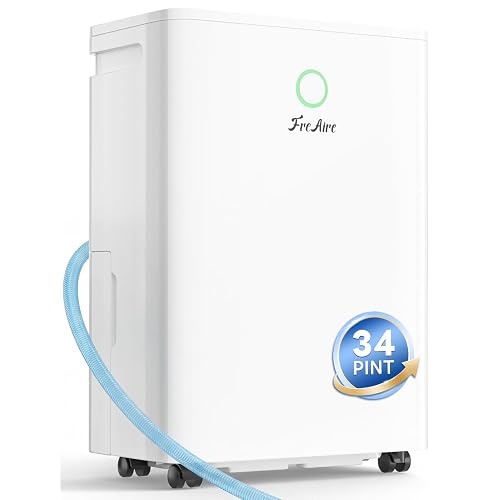
FreAire 34 Pint Dehumidifier with Drain Hose
ALORAIR Smart Wi-Fi 120 Pints Crawlspace Dehumidifier
ALORAIR 70 Pints Crawlspace Dehumidifier, Sentinel HS35
ALORAIR 120 Pints Crawlspace Dehumidifier, Sentinel HD55S Gold
ALORAIR 120 Pints Crawlspace Dehumidifier, Sentinel HD55S
ALORAIR 145 Pints Crawlspace Dehumidifier with Pump, Galaxy 60P
More Details On Our Top Picks
The PLUSCENT 21-pint unit sits in a comfortable middle ground for homeowners who want a simple plug-in solution rather than a permanent install. Rated for spaces up to 1,500 square feet, it pulls moisture at a rate that handles a typical damp basement, a humid bedroom, or a small enclosed area. The 160W compressor is modest on power draw, so running it 24/7 through a wet season won’t show up harshly on the utility bill.
Unlike the heavier ALORAIR units reviewed below, this one ships with a drain hose ready to go, so you can set up continuous draining without buying accessories. For a true crawlspace install with standing moisture and tight clearances, the next few picks make more sense, but for a finished basement or a converted room, this is an approachable starting point.
A Few Strong Suits
- 1,500-square-foot coverage suits most home basement and bedroom scenarios
- 21-pint daily removal rate handles moderate humidity without running constantly
- 160W power draw keeps energy costs reasonable for continuous operation
- Included drain hose supports set-and-forget continuous draining
Points To Keep In Mind
- Light-duty residential build, not engineered for harsh crawlspace dust and debris
- Plastic housing may scuff during transport and tight installs
Who Will Love This
First-time dehumidifier owners managing a single damp room or finished basement up to 1,500 square feet.
Skip It When
Tough crawlspace conditions call for the ALORAIR Sentinel HS35, which is built for the harsher environment.
The FreAire 34-pint model steps up daily moisture extraction to 12 liters per day under standard conditions, which makes a real difference in larger damp basements where the PLUSCENT 21-pint unit would run flat-out without catching up. Coverage stretches to 2,500 square feet, so you get headroom for open floor plans, finished basements, or a multi-room retrofit.
The 6.56-foot drain hose is long enough to reach a floor drain or utility sink in most basement layouts, removing the need to manually empty a tank. The compressor-based system pulls humidity down faster than smaller residential units, though it also generates more heat and noise as a side effect. In most finished living spaces, the extra output is worth the trade.
What Stands Out
- 34-pint daily removal tackles persistent dampness that overwhelms smaller units
- 2,500-square-foot rating covers large basements and open layouts
- 6.56-foot drain hose reaches most basement floor drains without extensions
- Faster pull-down time gets damp rooms dry in a day rather than a week
Worth Noting
- Larger footprint than compact residential picks, plan for placement space
- Compressor noise is noticeable in quiet finished living areas
Best Suited To
Homeowners with large basements or wide open-plan spaces who need faster moisture pull-down.
Consider Something Else When
Crawlspace installs demand the ALORAIR Smart Wi-Fi 120 Pints model, which is purpose-built for the harsher underfloor environment.
The ALORAIR Smart Wi-Fi 120 Pints model is the first entry in this list that is genuinely engineered for crawlspace work, with a 120-pint-per-day extraction ceiling under saturated conditions. The Wi-Fi-enabled control panel is the headline feature: a paired app lets you check live humidity, tweak the target level, and confirm the unit is still running without crawling under the house with a flashlight.
For homeowners who manage a vacation property, a second residence, or simply don’t enjoy squeezing into a dirt-floored crawlspace, the remote monitoring pays for itself in peace of mind. The compressor pulls significantly more moisture than the FreAire above, which is necessary in a sealed, low-airflow environment where humidity can climb fast after a rain event. Expect louder operation and higher energy draw than residential picks.
Notable Gains
- 120-pint saturated extraction handles serious moisture loads in sealed crawlspaces
- App-based remote monitoring removes the need for physical underfloor checks
- Engineered specifically for crawlspace airflow and humidity patterns
- Real-time humidity tracking helps spot drainage problems early
Honest Caveats
- Compressor noise is louder than compact residential models
- Higher energy draw reflects the larger extraction capacity
- Wi-Fi setup requires a reachable signal at the install location
Feature Snapshot
The Right Fit
Connected homeowners with second properties, rental units, or anyone who values remote monitoring over manual checks.
Swap It Out When
The ALORAIR Galaxy 60P makes more sense if your install location lacks a reliable Wi-Fi signal, since it adds a built-in pump instead.
The Sentinel HS35 is the smallest of the ALORAIR crawlspace line, and that compactness is its main selling point. It removes 35 pints per day under standard AHAM conditions (a widely used industry test for dehumidifier output) and up to 70 pints at saturation, with 115 CFM airflow rated for spaces up to 1,000 square feet. The smaller body fits into tight joist bays and short vertical clearances where the larger HD55S would barely squeeze through the access hatch.
For moderately damp crawlspaces that don’t see standing water, the HS35 hits a useful middle ground between overpowered commercial units and undersized residential dehumidifiers. Owners commonly report that the compact form simplifies the install considerably, since the unit can be carried by one person and positioned without disassembling ductwork or framing.
Notable Upsides
- Compact body fits through standard crawlspace access hatches
- 35-pint AHAM-rated output suits moderately damp conditions
- 115 CFM airflow circulates effectively in 1,000-square-foot spaces
- One-person carry and install reduces setup effort
Trade Offs
- Lower output than 120-pint models in heavy-saturation scenarios
- Plastic housing may require more careful handling than metal-cased units
Quick Facts
Built With In Mind
Homeowners with mid-size crawlspaces and tight access hatches who want a capable but manageable install.
Another Choice May Suit
The ALORAIR Sentinel HD55S handles larger or wetter spaces, where the HS35’s lower output may fall behind demand.
The Sentinel HD55S Gold is the rugged sibling of the standard HD55S reviewed below, and the metal outer casing is the most obvious upgrade. In a crawlspace where dust, accidental contact, and seasonal humidity swings punish plastic housings over time, that metal shell earns its keep. The 120-pint saturated capacity and 55-pint AHAM rating (a standardized moisture-removal measurement) cover spaces up to 1,300 square feet, matching the standard model on raw output.
The Gold designation also signals cETL certification, a safety certification from a recognized electrical testing lab, which matters if your local code requires listed equipment for enclosed or commercial installs. Compared to the smart Wi-Fi unit above, this one trades remote monitoring for a tougher physical package, which is the right call for hard-to-reach installs where you won’t be visiting often.
A Strong Showing
- Metal outer casing withstands rough crawlspace conditions
- 120-pint saturated output handles high-moisture environments
- cETL listed for code-sensitive and commercial installations
- 1,300-square-foot coverage suits large crawlspaces and basements
Things To Weigh
- Heavier than plastic-housed models, plan for two-person install
- No Wi-Fi connectivity for remote monitoring
Feature Rundown
Right Fit For
Installers and homeowners with large or commercial crawlspaces who prioritize physical durability over smart features.
Look Elsewhere When
The ALORAIR Smart Wi-Fi 120 Pints model is the better call if remote monitoring matters more than a metal housing.
The standard Sentinel HD55S is the long-running baseline of the ALORAIR crawlspace line, and that history is part of its appeal. It pulls 55 pints per day under AHAM conditions and up to 120 pints at saturation, with coverage rated at 1,300 square feet. The metal housing and Energy Star rating make it a sensible workhorse for both residential and light commercial installs.
Compared to the HS35 above, this unit handles significantly more moisture, which makes it the better fit for properties with persistent high humidity or post-storm saturation. Compared to the Gold version reviewed just above, it skips the cETL listing, so commercial code-sensitive installs should look at the Gold. For most homeowners, the standard HD55S is the more practical buy.
What It Does Well
- 55-pint AHAM rating provides consistent everyday moisture removal
- Energy Star certified for efficient continuous operation
- 1,300-square-foot coverage suits most large residential crawlspaces
- Established model with a long track record in the category
A Few Limitations
- Not cETL listed, so check local codes for commercial installs
- No built-in pump, drainage setup requires gravity-fed routing
Made For
Homeowners with large crawlspaces who want a proven daily performer without paying for commercial certifications.
Reach For A Different Pick When
Installs without floor drainage benefit from the ALORAIR Galaxy 60P, which includes a built-in condensate pump.
The Galaxy 60P is the top-capacity option in this list, rated at 145 pints per day at saturation with coverage up to 1,800 square feet. The defining feature is the built-in condensate pump, which lets you route water vertically or over horizontal distances to a drain, sink, or exterior discharge point. For crawlspaces that lack a floor drain, this removes the most common install headache.
Compared to the HD55S just above, the Galaxy adds about 25 pints of saturated capacity plus the pump, at the cost of a larger body and higher energy use. The compact commercial design still fits through standard crawlspace hatches, though you may need to plan a clear path before delivery. For wet crawlspaces, basements with sump pits, or storage areas with persistent moisture, this is the most hands-off install in the lineup.
The Helpful Details
- 145-pint saturated output handles the wettest residential and light commercial jobs
- Built-in condensate pump eliminates the need for gravity drainage
- 1,800-square-foot coverage suits large or open crawlspace layouts
- Compact commercial-grade design fits standard access hatches
Potential Drawbacks
- Larger body requires more clearance space for placement
- Higher energy draw than smaller units in continuous operation
Feature Overview
Whose Shelf It Belongs On
Property owners dealing with very wet crawlspaces or installs where gravity drainage isn’t an option.
Not Your Match When
Moderate-dampness residential crawlspaces are well-served by the smaller ALORAIR Sentinel HS35, which costs less to run.
What to Match Your Crawlspace Against
Sizing The Unit To The Space
Crawlspace dehumidifiers are rated by pints of water removed per day, and the right number depends on three things: square footage, how sealed the space is, and how wet it actually gets. A 1,000-square-foot sealed crawlspace with mild seasonal dampness handles fine with a 35 to 55-pint AHAM-rated unit. Anything with standing water, post-storm saturation, or chronic readings above 70 percent relative humidity needs 70 pints or more at saturation. Oversizing isn’t wasteful if the unit has a humidistat, a built-in sensor that cycles the compressor only when humidity rises above your target, since it just runs less often.
Drainage And Pump Options
Continuous draining beats emptying tanks every few days, but the install location dictates the method. Gravity drainage works when you can route a hose downhill to a floor drain, sump pump, or exterior discharge. Crawlspaces without that slope benefit from a built-in condensate pump, which pushes water vertically or over distance to a drain line. The Galaxy 60P in this lineup is the only unit with a factory-installed pump, and that single feature can decide whether the install is a Saturday project or a plumbing headache.
Build Quality And Environment
Crawlspaces are unforgiving: low ceilings, dust, occasional contact with stored items, and humidity swings that punish cheap materials. Metal-cased units like the Sentinel HD55S Gold hold up noticeably better than plastic shells in this environment. The cETL certification on the Gold matters if your local code requires listed equipment for enclosed or commercial spaces. For one-time or seasonal use, build quality matters less. For a permanent install you don’t want to revisit, it’s worth the upgrade.
Smart Features And Monitoring
Wi-Fi connectivity adds genuine value when the crawlspace is hard to access, far from living areas, or on a property you don’t visit often. The app-based monitoring on the ALORAIR Smart Wi-Fi model lets you confirm humidity, runtime, and fault codes from your phone. In a primary residence with an easy access hatch, the same data is available by walking over and reading the panel. Match the feature to how often you’ll actually check the unit.
Key Considerations Across These Picks
Mistakes Worth Dodging
The most common error is buying a residential unit for a true crawlspace install. Plastic housings and consumer-grade filters weren’t designed for dust, debris, and continuous low-temperature operation, and they tend to fail early. The other frequent miss is underestimating drainage: people assume gravity draining will work, then discover the access hatch is uphill from every drain in the house. Confirm the drainage path before ordering, and consider a pump-equipped model if gravity isn’t reliable.
Where The Extra Money Goes
The jump from a $200 residential unit to a $700+ commercial crawlspace model buys three things: higher daily extraction in saturated conditions, a metal housing that survives the environment, and certifications that satisfy code inspectors. For a sealed, never-wet crawlspace with mild humidity, a mid-range pick handles the job. For a chronically wet underfloor space, a sump pit installation, or a property you manage remotely, the upgrade pays back in fewer service calls and longer service life.
Frequently Asked Questions
How many pints per day do I need for my crawlspace?
For a typical 1,000 to 1,300-square-foot sealed crawlspace with moderate humidity, a 35 to 55-pint AHAM-rated unit is a sensible starting point. Crawlspaces with standing water, post-storm saturation, or chronic readings above 70 percent relative humidity need 70 pints or higher at saturation to keep up.
Do crawlspace dehumidifiers need a drain?
Continuous draining is strongly recommended since daily extraction can exceed several gallons in a wet crawlspace. Gravity drainage works when a floor drain or downhill route is available, while a built-in condensate pump handles installs where gravity isn’t reliable.
Can I use a regular home dehumidifier in a crawlspace?
A residential dehumidifier can work for short-term or seasonal use, but it isn’t built for the dust, low clearances, and continuous low-temperature operation of a permanent crawlspace install. Commercial-rated units with metal housings and higher saturated output last longer in that environment.
What is AHAM versus saturated pint rating?
AHAM is a standardized test (80°F, 60 percent relative humidity) that gives a realistic everyday extraction number, while the saturated rating measures output at 95°F and 90 percent relative humidity. The AHAM number is the better guide for typical operating conditions.
How often does the filter need cleaning?
Most crawlspace dehumidifier filters need a quick rinse or vacuum every one to three months, depending on dust levels. A clogged filter reduces output and forces the compressor to work harder, so a quick monthly check during the first year sets a realistic maintenance rhythm.
Wrap Up
The right crawlspace dehumidifier comes down to matching capacity and drainage to the actual conditions under your home. A small sealed space with mild humidity needs a different tool than a wet underfloor area with no floor drain, and the picks above cover both ends of that range. Start with the conditions you can measure, then choose the unit that meets them without overbuying on capacity you won’t use.