
Litter box odor is one of those household problems that hides in plain sight until you walk into the room and notice it. Anyone sharing a home with a cat, especially in a smaller space, knows the smell can drift into hallways, bedrooms, and living areas faster than litter deodorizers alone can keep up with. A dedicated air purifier placed near the litter area pulls ammonia and fine dust out of the air before it spreads, which makes a real difference in daily comfort. This roundup covers eight options built for that exact job, from compact ionizers to large-room HEPA units with serious carbon filtration.
The Leading Options At A Glance
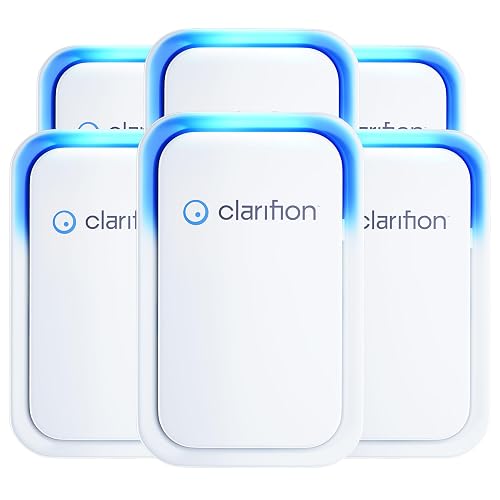
Clarifion Air Ionizers for Home (6 Pack)
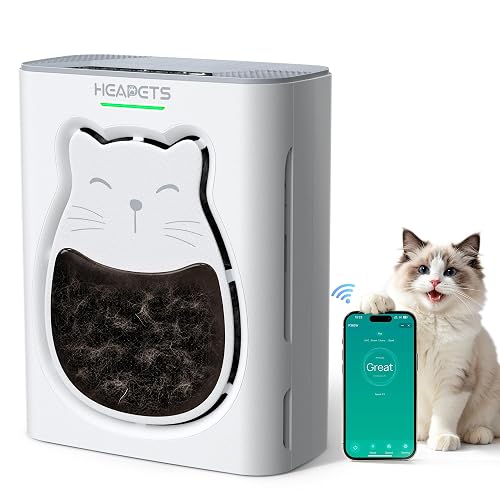
HEAPETS P365 Pet Air Purifier White
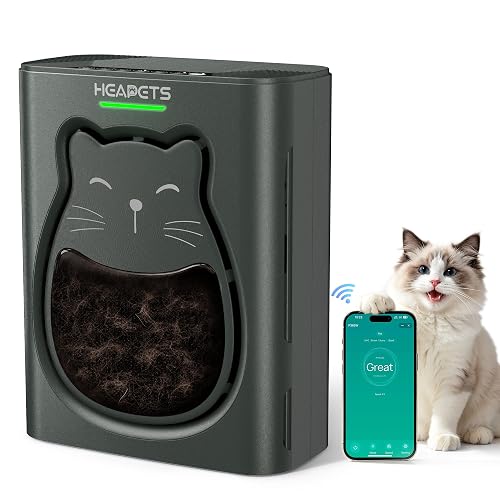
HEAPETS P365 Pet Air Purifier Black

HEAPETS P358 Large Room Purifier Grey

Morrerfresh Pet Odor and Litter Deodorizer
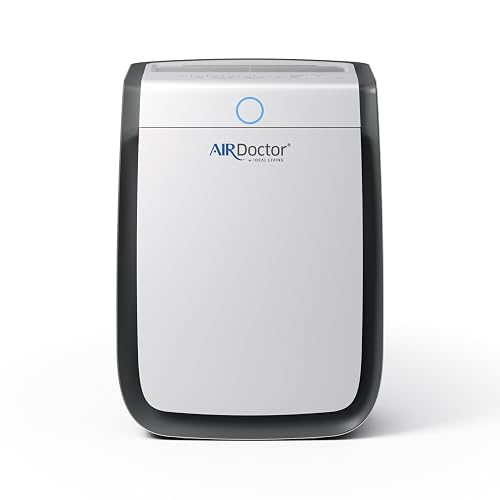
AIRDOCTOR AD3500 UltraHEPA Purifier
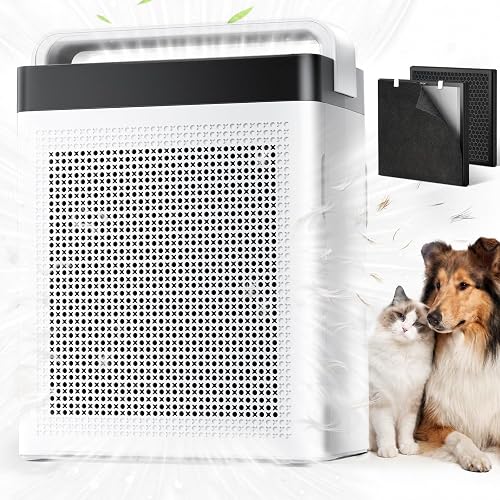
Cypcat Dual-Intake HEPA Carbon Purifier
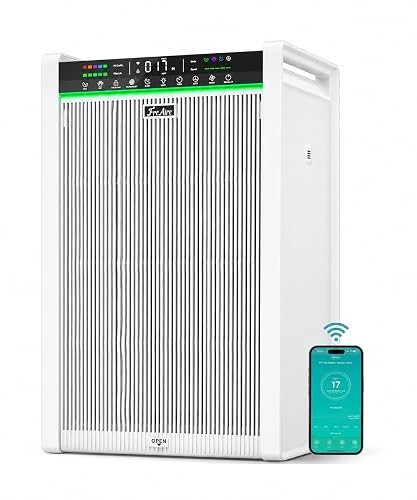
FreAire HAP611WF Large Room Purifier
A Breakdown Of The Leading Choices
Clarifion takes a different approach from every other pick on this list, and that difference is the whole reason someone might choose it. Rather than pulling air through a HEPA filter, each unit plugs directly into a wall outlet and releases negative ions (charged particles that attach to airborne contaminants, causing them to fall out of the air or stick to surfaces). Because there’s no fan or motor, the units run nearly silent and never need a replacement filter. The six-pack format is built for distributing coverage across a small apartment or a multi-room home.
For litter box odor specifically, this is a supplementary tool rather than a primary solution. Ionizers do help reduce airborne particles and some odor molecules, but they don’t pull ammonia-laden air through a carbon filter the way a dedicated purifier will. Most shoppers place one near the litter area and one in the adjoining room for a layered effect.
What Helps Most
- Filterless design means no recurring filter purchases over time, a genuine cost-saver in the long run.
- Silent operation suits bedrooms, nurseries, and home offices where fan noise would be disruptive.
- Direct plug-in form factor keeps floor and shelf space clear, helpful in tight litter nooks.
- Six-unit bundle lets you scatter coverage across rooms without buying multiple air purifiers.
Points To Note
- Ionizers don’t capture gases the way activated carbon does, so heavy ammonia from a dirty box can still linger.
- Particles that ionize out of the air eventually settle on nearby walls, furniture, and surfaces, which some owners report noticing as light dust on dark electronics.
Best Suited To
Apartment dwellers with a single cat in a small space who want quiet, low-maintenance help between deeper cleanings.
Look Elsewhere When
You need heavy-duty ammonia removal in a busy multi-cat home, in which case the HEAPETS P358 brings real HEPA and carbon muscle.
The HEAPETS P365 targets exactly the scenario this roundup is built around: a litter box in a room that has to stay livable. Unlike the wall-plug Clarifion, this is a full-size tower purifier with a washable H13 HEPA filter (a medical-grade filter class that captures 99.97% of particles down to 0.3 microns) and an electrostatic pre-filter (a charged screen that attracts and holds pet hair before it reaches the main filter) sized to grab floating fur before it reaches the main filter. The Pet Mode ramps the fan specifically for hair and dander loads, and the on-board air quality monitor feeds real-time readings back to the companion app.
For litter odor, the carbon layer inside the filter does the heavy lifting on ammonia and other smelly compounds. The 2,200 sq ft coverage rating is generous for a single litter room, and Auto Mode adjusts fan speed based on the air quality reading so you don’t have to babysit it.
Standout Benefits
- Washable H13 HEPA filter cuts long-term ownership costs compared to disposable-only filters.
- App control and air quality readings let you confirm performance without leaving the couch.
- Wide unobstructed air intake is specifically shaped to resist pet hair clogs, a common frustration with grille-style purifiers.
- Auto Mode responds to odor spikes after scooping, helpful for hands-off daily use.
Trade Offs
- Tower size requires a clear floor spot near an outlet, not ideal in cramped litter closets.
- App-dependent features may frustrate households that prefer physical-button controls alone.
Key Advantages
Who It Suits Best
Tech-comfortable cat owners who want app visibility into litter room air quality and don’t mind a medium-sized tower on the floor.
Consider Something Else When
You need the deepest carbon filtration for a multi-cat household, where the Cypcat dual-intake model brings heavier carbon load.
This is the same HEAPETS P365 covered above, dressed in a black housing rather than white. The internal hardware is identical, so the washable H13 HEPA, electrostatic pre-filter, Pet Mode, and 2,200 sq ft coverage all carry over. The color change matters more than it sounds in a litter room context, where white plastic can yellow or stain over time from dust and litter scatter.
For shoppers who care how the unit looks against dark furniture, hardwood, or matte-black litter box furniture, this version blends in where the white one would stand out. Performance is otherwise the same as the white P365.
Bright Spots
- Dark finish hides scuffs and dust that show readily on white purifier housings.
- Identical H13 HEPA performance and Pet Mode as the white model, no compromise on function.
Honest Caveats
- No internal difference from the white version, so you’re paying for finish, not extra filtration.
- Same tower footprint, so placement challenges around the litter box remain.
Made For
Cat owners who have already committed to the HEAPETS platform but want a finish that fits a darker, more design-conscious space.
A Better Fit Elsewhere
You want the same smart features but in a room with light or neutral décor, where the white P365 disappears more easily into the background.
The P358 is HEAPETS’ larger sibling to the P365, and the spec sheet shows where the upgrade goes. It carries the same H13 HEPA filter class but in a double-sided configuration, with U-shaped intakes on both sides of the unit pulling air simultaneously. The coverage rating climbs to 2,500 sq ft, and the PM2.5 air quality monitor (a sensor that measures fine particulate matter 2.5 microns and smaller) feeds Auto Mode so the fan ramps when litter dust or odor rises.
For multi-cat homes or litter boxes in open living areas, the dual intake matters because the purifier isn’t fighting to pull air from one choked side. The washable pre-filter reduces the amount of pet hair that reaches the main filter, which extends the time between deep filter cleanings.
Features That Help
- Double-sided U-shaped intake handles heavier hair loads without choking the airflow.
- 2,500 sq ft coverage is enough for most apartments and smaller single-family homes.
- PM2.5 sensor and Auto Mode respond to dust events after litter box scooping.
Some Limits To Know
- Larger cabinet means a more visible footprint in smaller rooms.
- Higher airflow can be audible on the strongest fan setting, worth checking if your litter box sits in a quiet zone.
Key Attributes
Right Fit For
Multi-cat homes or single-cat households with heavy litter dust where a smaller purifier would struggle to keep up.
Skip It When
Your litter box lives in a small powder room and you don’t need the extra coverage, in which case the P365’s smaller footprint fits better.
Morrerfresh narrows the focus to exactly the problem on this roundup’s title. Rather than a general-purpose purifier adapted for pet homes, this unit is purpose-built as a cat litter deodorizer, combining continuous negative ion output with active oxygen technology (a process that releases ozone at controlled levels to break down odor molecules, though check local air quality guidance if you have respiratory sensitivities) aimed at breaking down ammonia and pet waste odors at the source. The five-mode control panel lets you tune the output for daytime, nighttime, and heavier litter event days.
For someone whose primary concern is a dedicated litter box room rather than whole-home air cleaning, this targeted approach has appeal. It isn’t trying to cover 2,000 sq ft; it sits near the box and works the immediate airspace hard.
What Pays Off
- Built specifically for litter odor rather than adapted from a general air purifier design.
- Multiple programmed modes let you adjust intensity for day, night, or post-scooping cleanup.
- Compact size suits placement on a shelf or counter directly beside the litter box.
Worth Bearing In Mind
- Active oxygen technology may not suit shoppers with asthma or other respiratory sensitivities, so factor that into placement decisions.
- Narrower focus means it won’t replace a whole-home purifier for general air quality.
Best Suited To
Owners who want a dedicated litter box appliance and prefer purpose-built gear over generalist purifiers.
Swap It Out When
You also want whole-room HEPA filtration for dander and dust, in which case the HEAPETS P358 covers both jobs.
The AIRDOCTOR AD3500 sits at the higher end of the category, and the spec sheet backs that up. Its UltraHEPA filter is rated to capture 100 times smaller particles than the standard HEPA threshold, paired with a premium carbon layer designed to pull odors, smoke, and VOCs (volatile organic compounds, the smelly gases released by many household sources including litter boxes) out of the air. The 2,520 sq ft coverage rating fits open-plan homes where the litter box shares space with a kitchen or living area.
For a household where the litter box sits in a main living zone rather than a closed-off room, the AD3500’s broader air cleaning reach pays off. It’s overkill for a small powder room but well-matched to a great room or loft layout.
Where It Delivers
- UltraHEPA plus dense carbon filtration handles both fine particles and gaseous litter odors in one pass.
- 2,520 sq ft coverage reaches across open layouts that smaller purifiers can’t service.
- Premium build quality is built for daily long-term use in main living areas.
Practical Considerations
- Replacement filter cost runs higher than entry-level HEPA units, a real factor over years of ownership.
- Cabinet is larger and heavier than mid-size towers, so plan placement accordingly.
Spec Overview
Perfect Match For
Owners of open-plan homes where the litter box shares air with the main living space and stronger carbon filtration is a priority.
Reach For A Different Pick When
You’re working with a smaller, contained litter area, where the HEAPETS P365 brings similar smart features at a smaller footprint.
Cypcat leans hard on the carbon side of the equation. The dual-sided intake pulls air from both sides, and a six-layer filtration stack includes a high-grade activated carbon layer (carbon that’s been heat-treated to create a porous surface that traps odor molecules as air passes through) sized to adsorb ammonia and litter odors aggressively. The 22 dB Auto Mode rating puts it in genuine bedroom territory, which matters when the litter box sits near where you sleep.
For shoppers who care more about odor capture than peak airflow, this is a focused tool. Coverage is rated for 2,500 sq ft, but the carbon emphasis is the real story.
Reasons It Performs
- High-activated carbon layer is the centerpiece for ammonia and litter odor removal.
- 22 dB Auto Mode rating is genuinely quiet enough for bedrooms and nurseries.
- Dual-sided intake boosts airflow without forcing the fan to a louder setting.
- Washable pre-filter reduces the maintenance load over time.
Points To Keep In Mind
- Carbon-heavy filtration means eventual carbon media replacement, a real ongoing cost.
- At maximum fan speed, noise rises beyond the bedroom-friendly Auto Mode rating.
Who Should Grab It
Light sleepers with a litter box near the bedroom who need carbon-grade odor control without fan noise keeping them up.
Where Another Pick Suits Better
You need app control and air quality monitoring too, where the HEAPETS P365 adds smart-home visibility.
FreAire targets the top of the coverage range on this list. The HAP611WF is rated for up to 3,850 sq ft, with a 450 CFM CADR (Clean Air Delivery Rate, a standardized measure of how quickly a purifier delivers particle-free air; higher numbers mean faster room turnover). A full-front intake pulls more air than side-grille designs, and the top outlet sends cleaner air upward for smoother circulation across larger living spaces, offices, and pet zones.
For ranch-style homes, lofts, or anywhere the litter box sits in a wide-open area, that throughput matters. The trade-off is cabinet size; this is the largest unit on the roundup.
Everyday Perks
- 3,850 sq ft coverage suits larger homes where smaller purifiers can’t keep up.
- 450 CFM CADR clears the air quickly after scooping or litter box events.
- Full-front intake and top outlet design support better circulation in open layouts.
Where It Is Less Suited
- Large cabinet footprint rules out tight litter closets or small powder rooms.
- Higher airflow capacity means more noticeable fan noise on the strongest settings.
Feature Snapshot
Whose Shelf It Belongs On
Owners of large, open-plan homes where a single litter box lives far from a closed-off room.
Not Your Match When
Your litter box sits in a small enclosed space, where the Morrerfresh deodorizer offers a more focused, compact solution.
Choosing The Right Air Purifier For Litter Box Rooms
Why Carbon Filtration Matters Most
Activated carbon is the layer that actually tackles ammonia and litter odor, since HEPA alone captures particles but lets gases pass through. Look for a unit that names carbon specifically rather than relying on HEPA-only filtration. Heavier carbon media generally means longer service life before odor breakthrough, though it does add to filter replacement cost.
Room Size And Coverage Ratings
A purifier rated for 600 sq ft won’t keep up in a 1,500 sq ft open living area, especially with litter dust cycling through. Match the coverage rating to the actual room where the litter box sits, not the whole home. Oversizing is safer than undersizing because purifiers run more efficiently at lower fan speeds.
Intake Design And Pet Hair
Side-grille intakes are notorious for clogging with pet fur, which kills airflow and forces the fan to work harder. Wide, dual-sided, or U-shaped intakes handle shedding better, and a washable pre-filter keeps the main HEPA cleaner for longer.
Noise And Bedroom Placement
Litter boxes often end up in bathrooms, hallways, or bedrooms. A 22 to 30 dB Auto Mode rating keeps the unit bedroom-friendly. Higher fan speeds will be louder and worth testing before committing to a permanent spot.
What To Watch Before You Buy
Pitfalls Shoppers Hit
Going HEPA-only is the most common slip, since HEPA filters handle dust and dander but not the ammonia that drives litter odor. Equally common is underestimating room size and ending up with a purifier that runs at full speed just to keep up. Placement matters too, since tucking a unit in a corner blocks the intake and wastes the coverage you paid for.
When Paying More Pays Off
The jump from entry-level to mid-tier purifiers usually buys denser carbon, better intake geometry, and quieter fans. For single-cat homes in small rooms, that’s often overkill. For multi-cat households, open-plan layouts, or anyone with respiratory sensitivities, the upgrade in carbon and UltraHEPA filtration is the difference between managing odor and actually clearing the air.
Frequently Asked Questions
Do air purifiers really help with litter box smell?
Yes, when the unit includes an activated carbon layer strong enough to adsorb ammonia and other odor gases. HEPA alone won’t catch the smell, so look for carbon specifically in the filter description.
Where should I place an air purifier near a litter box?
Set it on the same wall or a nearby surface with at least a foot of clearance on the intake side, and avoid corners where airflow gets choked. The goal is to pull litter room air through the filter before it spreads.
How often do litter-box purifier filters need replacing?
Most HEPA and carbon combinations last six to twelve months under normal household use, though heavy-shedding multi-cat homes may need earlier swaps. Washable pre-filters can be rinsed monthly to extend main filter life.
Are ionizers a good alternative to HEPA for litter odor?
Ionizers can supplement a HEPA setup but rarely replace it, because they handle particles rather than the gaseous ammonia that defines litter smell. Many shoppers use an ionizer in an adjoining room alongside a carbon-equipped purifier in the litter area.
Can one air purifier cover multiple litter boxes?
Generally yes, provided the unit’s coverage rating matches the combined area. Multiple boxes in the same room call for a unit with stronger carbon and higher CFM, like the AIRDOCTOR AD3500 or FreAire HAP611WF.
Closing Remarks
The right pick comes down to room size, number of cats, and how close the litter box sits to the spaces you actually use. Smaller rooms with a single cat are well-served by the HEAPETS P365 or the Cypcat. Larger open layouts and multi-cat homes benefit from the heavier carbon and broader coverage of the AIRDOCTOR AD3500 or FreAire. Match the purifier to the room, and litter odor becomes a manageable background detail rather than the first thing anyone notices walking in.