
Sinus pressure, post-nasal drip, and that stubborn morning congestion tend to flare when indoor air carries more dust, dander, and pollen than your sinuses can handle. A well-matched HEPA purifier pulls those tiny particles out of the air before they settle into your nose and sinuses, giving your airways a quieter environment to recover in.
This list mixes room-sized HEPA purifiers with a trio of nasal-rinse devices that work alongside any purifier. The goal is simple: help you pair the right room coverage and filter type with your specific triggers, whether that means nightly bedroom relief or whole-home coverage for a chronic sinus situation.
The Picks In Brief
LEVOIT Core 300 Air Purifier H13 HEPA (White)

DREO Air Purifier 1176 ft² Coverage DR-HAP009
DREO Air Purifier Scent Diffuser DR-HAP008
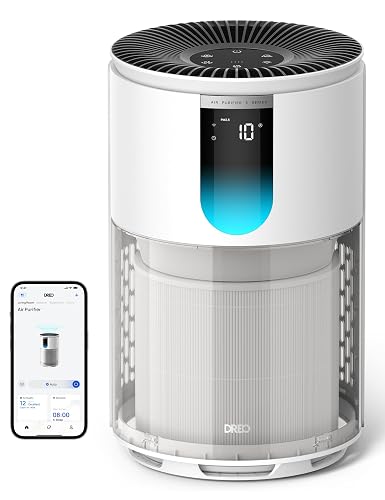
DREO Smart Air Purifier 1176 ft² DR-HAP009S
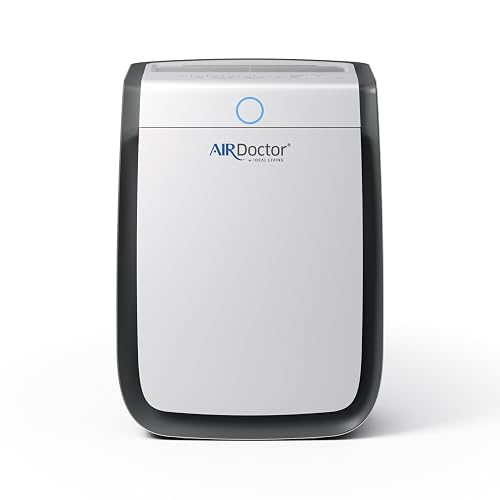
AIRDOCTOR AD3500 UltraHEPA Air Purifier

Navage Starter Bundle Nose Cleaner
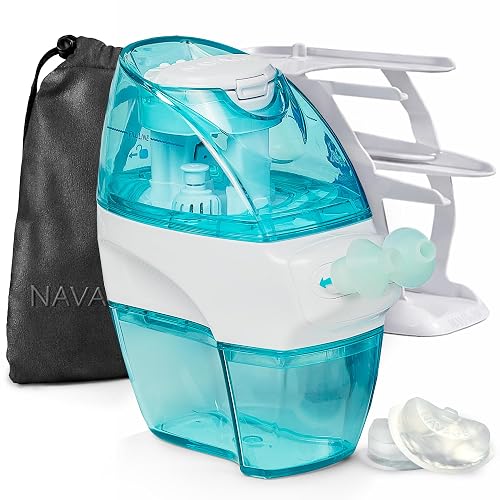
Navage Deluxe Bundle Nose Cleaner

Navage Premium Bundle 90 SaltPods
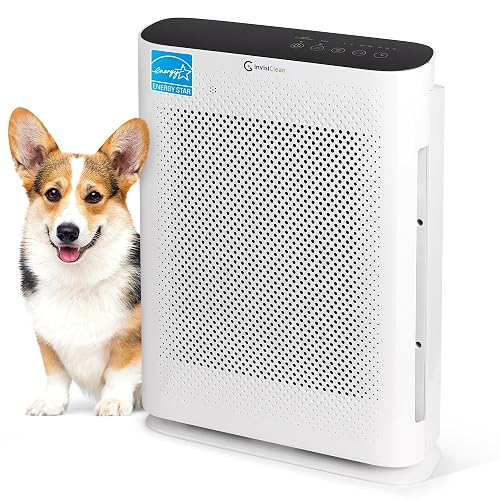
InvisiClean Aura II 4-in-1 HEPA Purifier
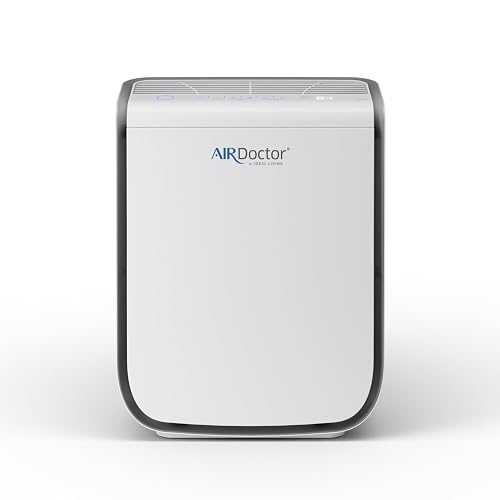
AIRDOCTOR AD2000 UltraHEPA Purifier
The Details Behind The Selections
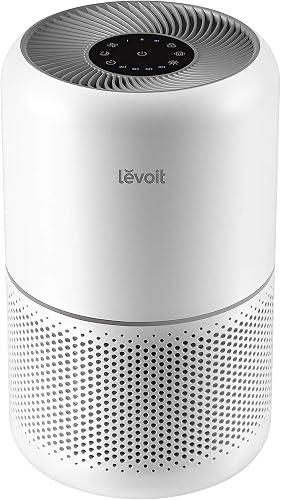
The LEVOIT Core 300 sits in a sweet spot for sinus sufferers who want a bedroom unit that doesn’t intrude on sleep. Its H13 True HEPA filter (a medical-grade grade that captures 99.97% of particles down to 0.3 microns) is paired with a sleep mode that drops output to around 24 dB, which is roughly the volume of a quiet library.
Coverage stretches up to about 1,073 square feet, though you’ll see the best air-change rates in a smaller room where the unit can cycle the air more frequently. For most apartments and mid-size bedrooms, the Core 300 keeps up without running on its highest fan setting all night.
The Value In It
- Three-stage filtration with H13 True HEPA, a pre-filter for large particles, and an activated carbon layer for odors.
- AHAM VERIFIDE, meaning an independent body tested the clean air delivery rate against a published standard.
- Compact cylindrical body that fits on a nightstand without dominating the room.
- Sleep mode dimming the indicator lights and stepping the fan down to near-silent levels.
Things To Consider
- Replacement filters are a recurring cost, and owners commonly replace them every six to eight months with regular use.
- No smart connectivity, so scheduling and air-quality readouts stay manual.
Feature Card
Who It Suits Best
Singles and couples in small-to-mid apartments who want a quiet bedroom purifier with credible third-party performance data.
Where Another Pick Suits Better
Runners of larger open-plan living spaces should consider the DREO Air Purifier DR-HAP009, which covers more square footage without losing CADR headroom.
Where the Core 300 leans gentle, the DREO DR-HAP009 leans muscular. Rated for rooms up to 1,176 square feet, it targets open living areas, lofts, and basement rec rooms where a smaller purifier would struggle to keep up.
The built-in PM2.5 display (a sensor that reads fine particulate matter smaller than 2.5 microns) gives you a live number, and the auto mode ramps the fan up only when the air quality actually drops. That’s helpful for sinus sufferers who want the unit to react to cooking smoke, candle soot, or pollen drifting in through an open window.
Everyday Wins
- Four fan speeds plus a dedicated turbo mode for fast clearing after a trigger event.
- AHAM VERIFIDE CADR of 158 CFM (cubic feet per minute), meaning it moves a lot of filtered air quickly.
- PM2.5 sensor plus auto mode for hands-off operation.
- Sleep mode that dims the panel and quiets the fan for overnight use.
Worth Noting
- Larger footprint than bedroom-focused units, so plan a corner or side table.
- Turbo mode is noticeably loud, so you’ll want auto or sleep mode most of the time.
Made For
Open-concept homes and anyone running a purifier through a combined kitchen, dining, and living area.
Skip It When
Tight nursery and dorm-room shoppers should grab the LEVOIT Core 300 instead, since its smaller body fits nightstand placement and its sound profile is even softer.
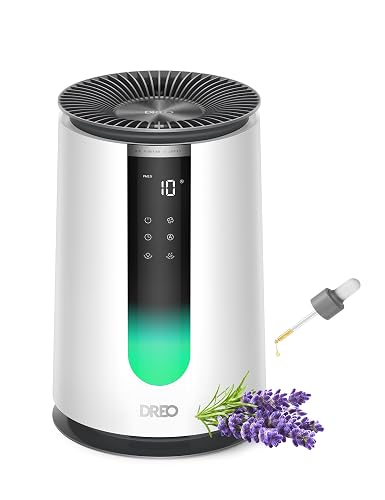
The DR-HAP008 is the middle child in DREO’s air purifier lineup, sitting between the bedroom-sized Aura and the room-spanning 539 series. It uses a H13 True HEPA filter alongside an activated carbon stage, and it adds a small scent diffuser pad so you can drop in a few drops of essential oil if you want a subtle aroma in the room.
For a bedroom or home office, the AHAM VERIFIDE CADR of 115 CFM is enough to clear the air in roughly a 178-square-foot room several times an hour. That’s the right scale for most personal spaces, and the auto mode reacts to PM2.5 shifts without you nudging the controls.
The Helpful Details
- Four fan speeds and a turbo mode for fast air turnover.
- PM2.5 monitor with auto mode for set-and-forget operation.
- Optional scent pad for light aromatherapy.
- AHAM VERIFIDE for independent CADR testing.
Room For Improvement
- Coverage tops out at smaller rooms, so it isn’t the pick for an open-plan loft.
- Filter replacements run on DREO’s specific model, which can limit third-party options.
Best Suited To
Anyone wanting a mid-size bedroom or home office unit with verifiable performance data and a few comfort extras.
Not Your Match When
Pet owners and allergy households in larger rooms should consider the DREO Smart Air Purifier DR-HAP009S, which covers more area and adds app-based control.
The DR-HAP009S is the connected sibling of the DR-HAP009, and it shares the same 1,176-square-foot coverage envelope and 158 CFM CADR rating. What it adds is Wi-Fi, voice compatibility, and app control, so you can adjust fan speed, check the air quality, or set schedules from your phone.
For a sinus sufferer, the practical value is scheduling: you can have the unit ramp to high before your usual pollen-trigger time, then drop back to sleep mode automatically. The PM2.5 display stays visible on the unit itself, so you don’t need to open an app just to read the number.
Useful Highlights
- App and voice compatibility for hands-free scheduling and mode changes.
- Same strong CADR and AHAM VERIFIDE performance as the non-smart sibling.
- Live PM2.5 display on the unit body for quick reference.
- Auto and turbo modes that react to real-time air quality shifts.
Points To Note
- Smart features depend on a stable Wi-Fi connection, so setup matters in older routers.
- Higher recurring cost than the non-smart version if you use the companion replacement filter schedule.
Who Should Grab It
Smart-home households and busy professionals who want scheduling, remote control, and the same large-room performance of the standard DR-HAP009.
Look Elsewhere When
Shoppers wanting a simpler bedroom unit without app setup should consider the LEVOIT Core 300, which covers smaller spaces at a more accessible cost.
The AirDoctor AD3500 is built for whole-floor living. With coverage up to 2,520 square feet and a sealed system that uses UltraHEPA filtration, it pulls particles down to 0.003 microns, which is roughly 100 times smaller than the standard HEPA threshold.
The dual-intake design moves more air per minute than most home units, and the carbon pre-filter handles odors from cooking, pets, and wildfire smoke. For chronic sinus sufferers dealing with poor outdoor air quality, the AD3500’s scale is genuinely useful rather than marketing.
A Few Highlights
- UltraHEPA filter rated to capture particles at 0.003 microns, well past standard HEPA.
- Coverage up to 2,520 square feet for open layouts and basements.
- Premium carbon stage for smoke and VOC (volatile organic compound) reduction.
- Auto mode tied to a particle sensor for hands-off operation.
Honest Caveats
- Body is taller and heavier than typical purifiers, so plan floor placement carefully.
- Replacement UltraHEPA filters carry a higher price than standard HEPA cartridges.
Feature Card
Right Fit For
Homeowners in wildfire-prone regions or anyone running a purifier across an open floor plan who wants a single unit to do the work.
Reach For A Different Pick When
Studio and small-bedroom shoppers should look at the AIRDOCTOR AD2000, which is sized for tighter rooms and uses the same UltraHEPA media.
Air purifiers handle the air around you. Navage handles the air inside your nose. The starter bundle pairs the powered nasal irrigator with 30 pre-measured salt pods, so first-time users don’t have to mix their own saline or measure anything.
The device uses gentle powered suction to draw saline through one nostril and out the other, flushing out mucus, allergens, and irritants. For a sinus sufferer whose congestion keeps coming back, a quick daily rinse can complement a HEPA purifier by physically clearing the passages.
What It Does Well
- Battery-powered suction simplifies the rinse compared to a squeeze bottle.
- Pre-measured salt pods remove any guesswork from saline prep.
- Compact counter-top form that stores next to a bathroom sink.
Soft Spots
- Salt pods are a proprietary consumable, so you can’t swap in generic saline.
- Learning curve for first-time users who aren’t used to nasal irrigation.
Perfect Match For
Sinus sufferers curious about nasal rinsing who want a complete, low-fuss starter kit before committing to a full routine.
A Better Fit Elsewhere
Households already committed to daily rinsing should look at the Navage Premium Bundle, which ships with 90 pods and a caddy for the long haul.
The Deluxe Bundle adds a storage caddy and a black travel bag to the same core Navage device, so the unit and its pods stay organized on the counter or pack cleanly into a suitcase. That’s a small thing until you’ve tried storing a nasal irrigator in a shared bathroom with limited drawer space.
Operation is identical to the Starter Bundle: powered suction pulls saline through one nostril and out the other. For a sinus sufferer who travels for work or splits time between homes, the bag makes the device feel like an actual travel product rather than a bathroom fixture.
What Stands Out
- Includes a dedicated caddy for counter-top organization.
- Black travel bag for packing alongside other toiletries.
- Same reliable powered-suction core as the standard Navage unit.
Small Caveats
- Pods are still proprietary, so ongoing supply matters.
- 30 pods may run out quickly for daily users.
Feature Card
Whose Shelf It Belongs On
Frequent travelers and shared-bathroom households who want a tidy, portable nasal rinse setup.
Swap It Out When
Daily-rinse users who burn through pods quickly should grab the Navage Premium Bundle, which triples the included pod count.
The Premium Bundle is the kit for committed daily rinsers. The big change is the 90-pod supply, which at one pod per session runs about three months before you need a refill. The bundle also adds an extra dock, so you can keep one dock in the bathroom and another on a nightstand or guest-room counter.
Like the other Navage kits, the device runs on battery-powered suction, so the rinse flow stays consistent. For someone whose sinus routine is non-negotiable, having multiple docks and a deep pod supply means the device is always ready.
A Favorable Mix
- 90 pods included for a long first stretch of daily use.
- Two docks so you can stage the device in multiple rooms.
- Caddy included for counter organization.
Less Ideal Details
- Higher upfront cost than the Starter or Deluxe bundles.
- Pods remain a recurring purchase after the initial supply runs out.
Who Will Love This
Sinus sufferers who have already built a daily rinse habit and want the supply and dock count to match.
Another Choice May Suit
First-timers should start with the Navage Starter Bundle to learn the routine before scaling up to a larger pod count.
The InvisiClean Aura II stacks four filter stages into one tower: a pre-filter, an H13 True HEPA layer, a carbon stage, and a UV-C light. The combination targets particles, odors, and a portion of airborne microorganisms, which is a useful mix for pet households where dander and litter-box smells stack on top of dust.
An ionizer is also included, though some sinus sufferers find ionizers irritating. The unit is small enough to move between rooms, so you can park it in the bedroom at night and shift it to a living area during the day.
Bright Spots
- Four filter stages in one unit, including UV-C for added microorganism control.
- H13 True HEPA media for fine particle capture.
- Carbon layer that helps with pet and cooking odors.
- Portable tower body that moves easily between rooms.
Where It May Fall Short
- Ionizer mode can bother some users with chemical sensitivities, so you may want it off.
- UV-C lamp adds a small replacement cost over the life of the unit.
Feature Card
Built With In Mind
Pet owners and multi-room households who want a single unit they can shift around the house as needed.
Not Your Match When
Larger open-floor-plan homes should consider the AIRDOCTOR AD3500, which covers far more square footage per cycle.
The AD2000 is the smaller cousin of the AD3500, and it brings the same UltraHEPA filter media to a bedroom-friendly footprint. Coverage tops out at about 1,220 square feet, so it’s well-sized for bedrooms, nurseries, and home offices rather than full open-floor living.
You get a pre-filter, the UltraHEPA stage, and a carbon/VOC layer in a three-stage setup. For a sinus sufferer who wants ultrafine-particle filtering in a small-room form, this hits a useful middle ground between a basic HEPA tower and the full-size AD3500.
What Helps Most
- UltraHEPA media in a small-room-friendly body.
- Carbon/VOC stage for odors and chemical fumes.
- Pre-filter extends the life of the main UltraHEPA cartridge.
- Coverage up to 1,220 square feet fits bedrooms and offices.
Points To Keep In Mind
- Not the right scale for very large or open-concept living areas.
- UltraHEPA replacement filters cost more than standard HEPA cartridges.
Feature Card
The Right Fit
Bedroom and home office shoppers who want UltraHEPA filtering without stepping up to a whole-home unit.
Consider Something Else When
Whole-home coverage shoppers should consider the AIRDOCTOR AD3500, which scales the same UltraHEPA media up to 2,520 square feet.
What Matters Most Before Choosing Air Purifiers For Sinus Infections
Match Coverage To The Actual Room
Square-foot ratings on air purifiers describe the largest space where the unit can still cycle the air at a useful rate. For sinus relief, a tighter match works better than oversizing. A bedroom purifier rated for 1,000 square feet running in a 200-square-foot room cycles the air more often, which clears particles faster after you close the door at night.
HEPA Grade And Particle Size
A True HEPA filter (H13 or H14 grade) is the baseline for trapping the dust, pollen, and pet dander that aggravate sinuses. Some purifiers go further with UltraHEPA media, which captures particles down to 0.003 microns, well past the standard 0.3-micron HEPA threshold. If you live near wildfire smoke or heavy traffic, that extra step can matter.
Sound Profile In Sleep Mode
A purifier that runs at 50 dB all night defeats the purpose for a light sleeper. Look for sleep modes that drop output to 24 to 30 dB, which is close to the sound of a quiet library. Most of the units in this list publish a sleep-mode rating, so it’s a real spec to compare.
Filter Replacement Reality
Every HEPA purifier needs new filters on a schedule, typically every six to twelve months depending on use and air quality. Factor the cost of replacement cartridges into the total ownership picture, especially for units with proprietary or UltraHEPA media where off-brand filters aren’t an option.
Key Considerations Across These Picks
Mistakes Worth Dodging
The most common slip is buying a purifier rated for a much larger room than you actually have, then wondering why it doesn’t seem to clear the air. CADR (clean air delivery rate) and room coverage work together, so match the unit to the space. A second trap is forgetting the nasal-rinse side of the routine: a purifier cleans the air you breathe, but it doesn’t clear mucus already settled in your passages, which is where a Navage unit earns its place.
What Separates Premium From Basic
Higher-tier models like the AirDoctor AD3500 and the smart DREO units earn their cost through larger room coverage, finer particle filtering, and extras like air-quality sensors and app control. For a chronic sinus sufferer dealing with wildfire smoke or a multi-room home, that scale and automation is worth the upgrade. For a single bedroom, a quieter H13 unit at a smaller scale often does the job just as well without the extra spend.
Frequently Asked Questions
How Often Should HEPA Filters Be Replaced On Air Purifiers For Sinus Infections?
Most True HEPA filters last six to twelve months with regular use, depending on air quality and how many hours the purifier runs each day. In homes with pets, smokers, or wildfire smoke exposure, plan on the shorter end of that range.
Can An Air Purifier Help With Sinus Pressure At Night?
A bedroom purifier with a quiet sleep mode reduces airborne irritants while you sleep, which can lower the post-nasal drip and morning congestion that drive sinus pressure. Pairing it with a nasal rinse before bed tends to give a more noticeable improvement than the purifier alone.
Are Ionizers Safe For Sinus Sufferers?
Ionizers release charged particles into the air, and some people with chemical sensitivities or asthma find them irritating. The InvisiClean Aura II includes an ionizer that you can switch off, which is the safer default for anyone with reactive sinuses.
Do I Need A Purifier In Every Room?
A single properly sized unit in the room where you spend the most hours usually helps more than one underpowered unit scattered around. Bedrooms and home offices are the priority for most sinus sufferers, since that’s where overnight and focused-work exposure happens.
Is A Nasal Irrigator Necessary Alongside An Air Purifier?
Not strictly necessary, but the two work on different parts of the problem. A purifier reduces what lands in your nose, while a Navage rinse clears what already settled there, so combining them tends to give faster relief during a flare-up than either alone.
Bottom Line
Your sinuses react to whatever is in the air around you, and the right HEPA purifier is the cleanest way to lower that daily load. Match the room size to the unit, pick a filter grade that handles your worst trigger, and consider a Navage rinse if mucus keeps building up overnight. With those pieces in place, the difference in how you feel waking up is usually noticeable within a week or two.