

Running new low-voltage wire to a thermostat sounds like a small job until you crack open the wall and realize the old run is wrong gauge, sun-damaged, or simply too short. A dependable 18 AWG control cable solves the headache in one pull, keeping 24V signals clean between the furnace, air handler, and the wall plate. The picks below cover short patch runs, whole-home rewires, and multistage systems that need extra conductors for heat pump reversing valves, dehumidifiers, or continuous-fan control.
The Choices Worth Comparing
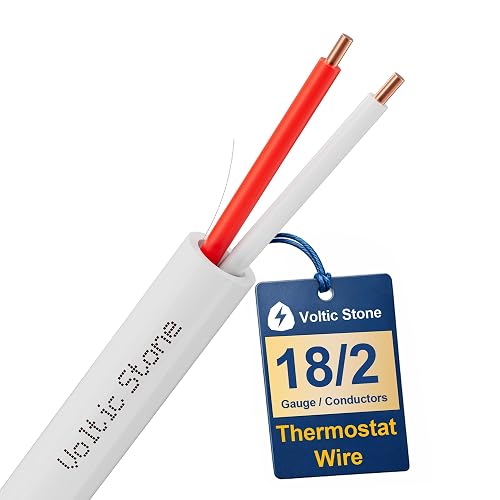
Voltic Stone 18/2 Thermostat Wire 18 AWG 2 Conductor 50FT

Voltic Stone 18/2 Thermostat Wire 18 AWG 2 Conductor 20FT
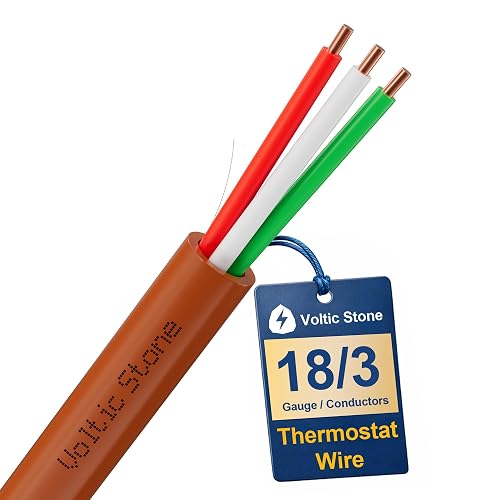
Voltic Stone 18/3 Thermostat Wire 18 AWG 3 Conductor 20FT
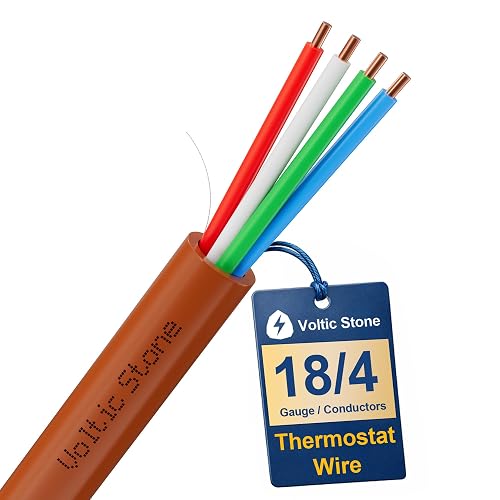
Voltic Stone 18/4 Thermostat Wire 18 AWG 4 Conductor 50FT

Voltic Stone 18/5 Thermostat Wire 18 AWG 5 Conductor 20FT
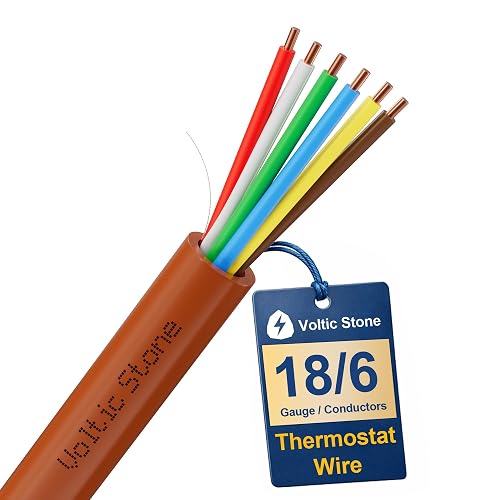
Voltic Stone 18/6 Thermostat Wire 18 AWG 6 Conductor 100FT
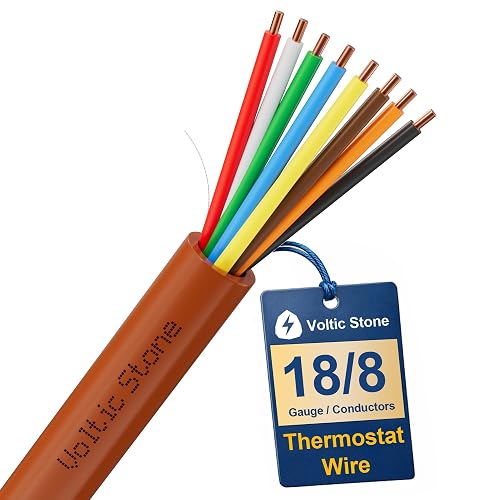
Voltic Stone 18/8 Thermostat Wire 18 AWG 8 Conductor 20FT
The Strengths Of Each Pick
Most homes running a basic forced-air furnace still rely on a classic two-wire hookup, red and white, sending 24 volts from the furnace transformer back to the wall thermostat. This 50-foot reel from Voltic Stone handles that scenario without overcomplicating things, leaving you slack for an unexpected detour around a stud or joist.
The 1.02mm solid copper core keeps resistance low across typical residential runs, which matters more than people expect for a low-voltage circuit. Voltage drop on a long pull can cause a smart thermostat to lose Wi-Fi connectivity or read sensor temps incorrectly. You may find the 50-foot length slightly excessive for a single-story ranch, but that surplus is genuinely useful if the path through the attic adds hidden length.
Points In Its Favor
- Two-conductor design matches a standard single-stage heating or cooling hookup
- True 18 AWG solid copper keeps voltage drop in check over longer pulls
- UV-resistant PVC jacket holds up in attics and sunny exterior chases
- Includes 10 wire nuts and electrical tape, so you start the job immediately
Things To Consider
- Only two conductors limit future upgrades, since smart stats often need a common wire
- Owners commonly report the jacket stiffness makes tight 90-degree corners harder to negotiate in old plaster walls
Made For
Homeowners replacing a failed two-wire run on a single-stage furnace or basic air conditioning system.
Look Elsewhere When
You are wiring a heat pump or a Wi-Fi thermostat, in which case the 18/3 Voltic Stone pick gives you the extra conductor most modern stats need.
Sometimes the job is genuinely small. Pulling 20 feet for a thermostat relocation across one wall, or repairing a section chewed by a remodel, does not justify wrestling with a 250-foot spool. This short reel from Voltic Stone targets exactly that work, which is more common than full rewires.
The same 1.02mm solid copper conductor and CL3R/CMR-rated jacket carry over from the longer pick, so you do not sacrifice build quality for the shorter length. In a tight wall cavity with one stud bay to cross, you may find 20 feet leaves just enough slack without coiling extra wire behind the plate, where it can interfere with the mounting surface.
Positive Takeaways
- Right-sized for patch jobs and single-bay wall runs
- Same solid copper and riser-rated jacket as the longer reels
- Bonus tape and wire nuts included for a one-trip install
Room For Improvement
- Too short for most attic-to-furnace pulls, even in compact homes
- If the path turns out longer than expected, there is no spare to absorb the surprise
Right Fit For
DIYers handling a quick thermostat swap or a short repair where extra wire would just be coiled waste.
Consider Something Else When
You anticipate running the wire through multiple stud bays or around a corner, where the 50-foot Voltic Stone 18/2 offers more forgiveness.
Heat pumps change the conductor count requirement because of the reversing valve, the orange wire that tells the outdoor unit whether to run in heating or cooling mode. A standard 18/2 cable cannot carry that signal alongside the standard red power and white heat calls, so the 18/3 configuration becomes the minimum useful bundle.
This 20-foot 18/3 Voltic Stone reel covers the typical heat pump run from an indoor air handler to a wall-mounted thermostat in a single-story layout. The 1.02mm solid copper cores keep the thermostat signal stable, and the UV-resistant jacket protects the run if the chase crosses a sun-warmed exterior wall.
What Pays Off
- Three conductors support the reversing valve signal heat pumps require
- Forward-compatible if a future owner swaps in a communicating thermostat
- Same RoHS-compliant materials and riser-rated jacket as the other Voltic Stone cables
Trade Offs
- Short length limits it to compact heat pump installations
- Still lacks a dedicated common wire for power-hungry smart thermostats
Quick Facts
Best Suited To
Homeowners with a single-zone heat pump who need a short, code-compliant control cable without buying a full multi-conductor reel.
A Better Fit Elsewhere
Anyone adding Wi-Fi control to a heat pump should step up to the Voltic Stone 18/5, which leaves a dedicated common wire for the smart stat.
Two-stage heating and cooling systems need separate call wires for first-stage and second-stage operation, plus a fan signal and a power return. That adds up to four conductors minimum, which is exactly what this 18/4 Voltic Stone cable provides in a 50-foot run.
The mid-length reel works well for a two-story home with the thermostat upstairs and the air handler in a basement or utility closet. You get enough slack to navigate around ductwork without buying the long 100-foot reel that would leave awkward excess coiled in the wall box.
The Helpful Details
- Four conductors support conventional multi-stage systems and dedicated fan control
- 50-foot length fits typical two-story layouts without wasted slack
- CL3R/CMR jacket and RoHS-compliant build match commercial low-voltage standards
- Includes installation kit for a clean, one-trip install
Points To Note
- Still leaves no spare conductor for accessory equipment like a humidifier control wire
Who It Suits Best
Homeowners upgrading a two-stage conventional HVAC system who want a clean, properly-conductor-counted run without paying for an 8-conductor overkill reel.
Swap It Out When
Your system also needs a continuous-common power wire for a Wi-Fi stat, since the 18/5 Voltic Stone pick includes that fifth conductor.
The fifth conductor in an 18/5 cable is what unlocks a proper common wire, often called the C-wire, that continuously powers Wi-Fi and touchscreen thermostats. Many older homes run four conductors and rely on a “power-stealing” workaround, which can cause Wi-Fi dropouts, screen flickering, and short cycling. Running fresh 18/5 eliminates that compromise from day one.
The 20-foot length suits a thermostat relocation inside the same room or an adjacent wall, where the stat mounts near the air handler in a closet or basement. You may find the short reel a touch limiting if the run crosses a long hallway, but for the typical retrofit it lands in a usable range.
Real Benefits
- Five conductors deliver a dedicated C-wire for steady smart stat power
- Future-proofs the run if a communicating stat replaces the current one
- Matches the same conductor and jacket specs as the rest of the line
Worth Bearing In Mind
- 20 feet is tight for a basement-to-upstairs pull
- One unused conductor at install becomes a stranded wire that must be capped safely at both ends
Perfect Match For
Homeowners installing a learning thermostat or a Wi-Fi stat in a compact space where a dedicated common wire solves prior power issues.
Reach For A Different Pick When
You need a longer run for an attic or basement retrofit, where the 50-foot Voltic Stone 18/4 or 100-foot 18/6 leaves more slack for routing decisions.
A full 100-foot reel of 18/6 cable is overkill for many single-zone homes, but for whole-house retrofits, multi-room zoning, or long attic drops it earns its place. The 18/6 count handles conventional multi-stage equipment, a heat pump reversing valve, a fan relay, and a common wire all in one jacket.
The 1.02mm solid copper cores hold voltage steady across the longer run, which matters because long thermostat pulls can suffer voltage drop that confuses sensitive electronics. Pulling this through existing conduit or stapling it along joists is straightforward, and the 100-foot length absorbs the unexpected detours that always appear once a wall is open.
Where It Excels
- Six conductors handle nearly any residential HVAC control configuration
- 100-foot length absorbs routing detours and multi-floor runs
- Solid copper and riser-rated jacket match commercial-grade requirements
A Few Limitations
- Excess length means leftover cable that must be stored or capped properly
- Larger bundle is stiffer to fish through tight old-work cavities
Feature Snapshot
Who Should Grab It
Contractors and serious DIYers running long thermostat pulls for zoning, accessory humidifiers, or full-system upgrades.
Where A Sibling Pick Shines
For a simple single-stage heat-only swap, the 50-foot Voltic Stone 18/2 is plenty and skips the cost of unused conductors.
Eight conductors is a specialized count, used for advanced zoning systems, communicating HVAC equipment, or accessories like fresh-air dampers andERV controllers. This 18/8 Voltic Stone reel keeps a healthy headroom of unused wires, which installers can tap later for add-ons without pulling a fresh run.
The 20-foot length limits it to compact equipment closets, indoor air handler cabinets, or short patch jobs where the stat sits very close to the control board. The thicker bundle is stiffer than smaller cables, so planning the bend radius before stapling avoids kinks that can stress the copper.
Well-Handled Touches
- Eight conductors cover the most complex residential control configurations
- Spare wires future-proof the install for accessory additions
- Same quality copper and riser-rated jacket as the rest of the line
Softer Spots
- Overkill for typical single-zone homes
- Shorter reel and thicker jacket make it harder to route through narrow cavities
- Unused conductors at the stat end must be safely capped and tucked to prevent shorts
Whose Shelf It Belongs On
Installers wiring zoning panels, communicating thermostats, or accessory-heavy HVAC setups where extra conductors are a deliberate part of the plan.
Skip It When
The job is a basic two-wire heat-only replacement, where the Voltic Stone 18/2 50-foot reel handles the work at a fraction of the conductor count.
What To Weigh Before Buying Thermostat Wire
Conductor Count vs. System Demands
The number after the slash in a thermostat wire label tells you how many conductors sit inside the jacket, and that number must match what the control board and thermostat require. A two-wire run handles a basic single-stage system with a single call for heat or cool. Three wires add support for a heat pump reversing valve. Five wires include a dedicated C-wire that delivers continuous 24V power to Wi-Fi and touchscreen thermostats. Counting conductors in the wall before you buy prevents the classic mistake of finishing a pull only to discover you are one wire short for the new stat.
Conductor Material and Gauge
Pure solid copper at true 18 AWG (a wire thickness standard where smaller numbers mean thicker wire), about 1.02mm in diameter, gives the most reliable signal over typical residential distances. Oxygen-free copper reduces internal resistance and helps avoid voltage drop that confuses smart thermostats. Stranded wire is more flexible but is rarely used inside walls for fixed thermostat runs. For a 24V control circuit, gauge matters less for safety than for signal quality on the longest pulls, especially in homes where the stat sits far from the air handler.
Jacket Rating and Installation Environment
A CL3R (Class 3 Riser) jacket rating means the cable is approved for vertical runs between floors and inside walls, which covers nearly every residential thermostat installation. UV-resistant PVC (polyvinyl chloride, the plastic jacket surrounding the conductors) protects the cable in attics and sunlit exterior chases where standard jacket material can crack over time. RoHS (Restriction of Hazardous Substances) compliance signals that the cable meets modern environmental material standards. For most homes, these ratings are simply the baseline; check local code if you are running cable through a commercial space or in plenum areas where air circulates for HVAC.
Length and Routing Realities
A 50-foot reel covers most single-family homes with a single-zone thermostat, but routing rarely runs in a straight line. Measure the actual path through studs, around joists, and up into the attic before committing to a length, then add 10 to 15 percent slack for unexpected detours. A too-short reel forces a junction or a second pull, while a too-long reel leaves coiled wire behind the wall plate that can interfere with mounting.
Key Considerations Across These Picks
Where Shoppers Go Wrong
The most common error is grabbing a two-wire cable for a smart thermostat install, then discovering the C-wire requirement mid-project. Another frequent slip is buying stranded wire for a fixed in-wall run, which technically works but is harder to land on screw terminals and is not what most codes expect for permanent installations. Always confirm the conductor count your new stat needs, including any accessories like a humidifier or dehumidifier, before selecting cable.
Where The Extra Money Goes
Higher conductor counts and longer reels cost more, but the premium reflects more copper, thicker jackets, and additional installation flexibility. Stepping up from 18/4 to 18/5 is a small jump that solves C-wire headaches for years. Moving from a 20-foot to a 100-foot reel is a bigger spend, but it removes the anxiety of an under-length pull mid-job. The honest read is that the upgrade pays off most when you cannot easily re-access the wall, which is almost always the case once the drywall is closed up.
Frequently Asked Questions
What does the “18” in 18/2 or 18/5 mean?
The 18 refers to the American Wire Gauge (AWG) thickness of each conductor, with 18 AWG being the residential standard for low-voltage thermostat circuits. The number after the slash is the conductor count inside the jacket.
Can I use 18/2 wire for a smart thermostat?
Most smart thermostats require a common wire (C-wire) for continuous power, which 18/2 does not provide. An 18/5 cable is the more compatible choice, or use an 18/2 plus a power adapter kit designed for the C-wire problem.
Is thermostat wire the same as doorbell wire?
The two share similar low-voltage characteristics, but thermostat wire is typically rated CL3R for in-wall and riser use. Standard doorbell wire may not carry the same flame-retardant rating and may not pass inspection in concealed locations.
How far can I run 18 AWG thermostat wire?
For 24V control circuits, 18 AWG is generally reliable up to about 200 feet without significant voltage drop. Beyond that, voltage-sensitive smart thermostats may show errors or lose Wi-Fi connectivity.
Do I need to put thermostat wire in conduit?
In most residential in-wall installations, the CL3R jacket rating allows direct routing without conduit. Local codes vary, so check with your municipality if running through plenum spaces or commercial buildings.
The Takeaway
Pick the conductor count that matches your system today, then add one or two for headroom if the cost difference is small. Match the length to the measured path with slack to spare, and confirm the jacket rating covers your wall and attic environment. Done thoughtfully, the right cable turns a thermostat swap into a 30-minute job instead of a weekend wall-opening adventure.