
Basements earn a reputation for feeling heavy, damp, and a little hard to breathe in, especially after a long summer or a wet stretch of weather. Stale air, lingering odors from storage, and allergens settling where you least want them are common headaches. The right air purifier can genuinely change how a basement feels, cutting through the stuffiness and giving the room a purpose beyond laundry and shelving. This list rounds up ten solid options that handle the realities of below-grade spaces, from compact cubes to heavy-duty machines built for wide square footage.
A Side-By-Side Look
LEVOIT Vital 100S-P Air Purifier Washable Pre-Filter
PuroAir 400 HEPA Air Purifier for Large Rooms

LEVOIT Vital 200S-P Smart Air Purifier 1875 ft²
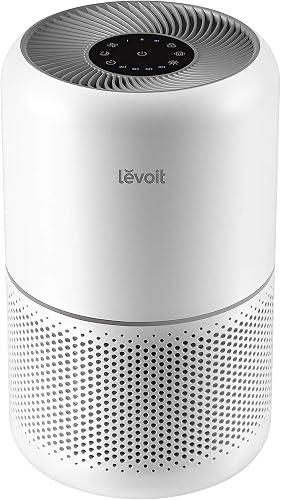
LEVOIT Core 300-P Air Purifier H13 HEPA Filter
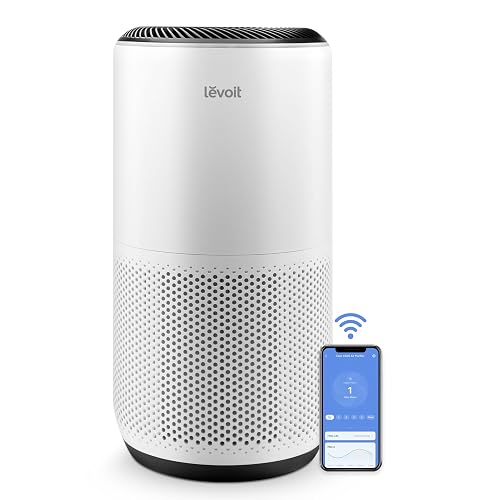
LEVOIT Core 400S-P Smart Air Purifier 1733 ft²
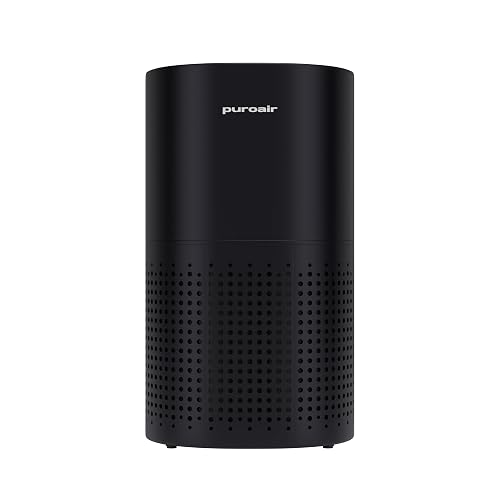
PuroAir 240 HEPA Air Purifier with CarbonTech
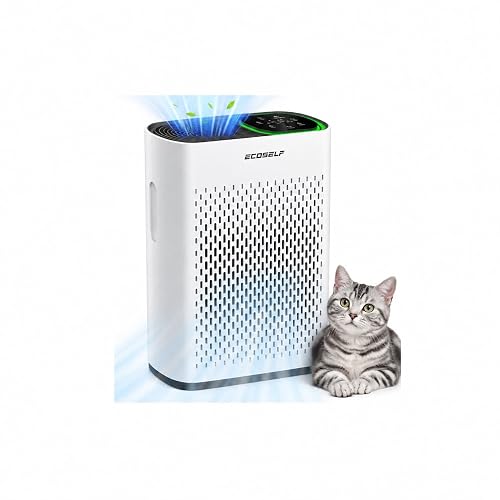
ECOSELF HAP602 Air Purifier 2400 ft² Coverage
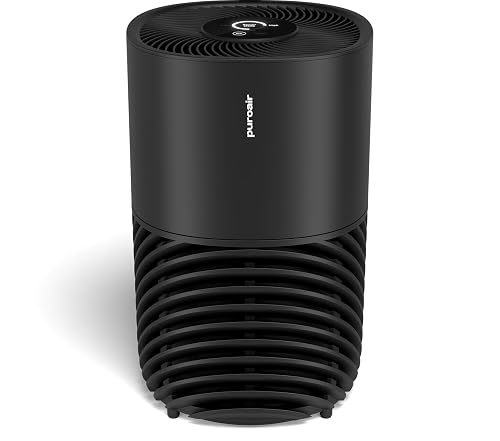
PuroAir 130i Smart HEPA Air Purifier 600 ft²
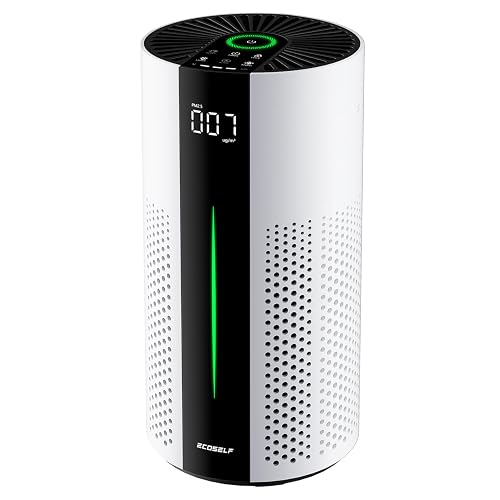
ECOSELF 1800 ft² HEPA Air Purifier with PM2.5 Sensor
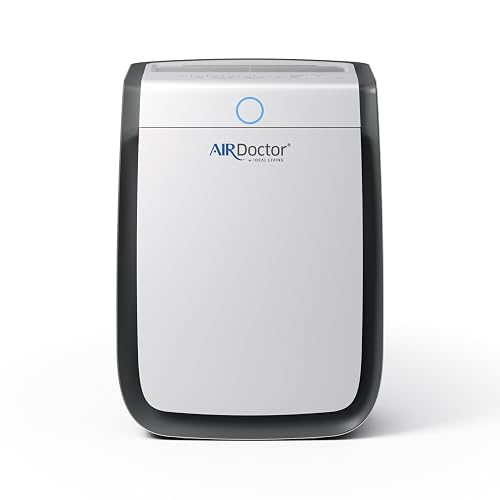
AIRDOCTOR AD3500 UltraHEPA Air Purifier 2520 ft²
The Picks, Examined More Closely
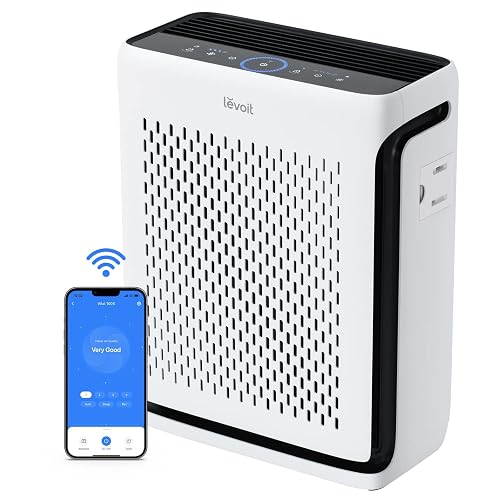
The LEVOIT Vital 100S-P punches above its price class, making it a smart starting point for a basement that mostly needs the basics handled. Coverage stretches up to 1,073 square feet, which suits most below-grade rec rooms without forcing the motor to strain. The unit’s pre-filter rinses clean under a faucet, a small detail that ends up mattering a lot once pet hair starts collecting around the intake.
It carries AHAM Verifide certification, meaning a third party has measured the clean-air delivery rate and energy draw against a published standard. For anyone comparing spec sheets, that third-party seal removes a layer of guesswork. The Vital 100S-P also pairs with a smart monitor that displays air quality readings in real time on the top of the unit.
Everyday Perks
- Washable pre-filter trims long-term filter costs and keeps pet hair from choking the main HEPA layer.
- AHAM Verifide badge confirms the CADR (Clean Air Delivery Rate) and efficiency claims under independent lab conditions.
- Smart air quality monitor shifts fan speed automatically when particulates spike.
- Quiet sleep mode drops output low enough to run near a home gym or media area without distraction.
Things To Consider
- The 1,073 ft² rating assumes a single air pass per hour, so very damp or heavily trafficked basements may feel underpowered.
- Replacement HEPA filters add to ownership cost over a two- to three-year window, a common trade-off in this category.
Who It Suits Best
Pet owners and small households running a modestly sized finished basement will find this LEVOIT fits the bill without overpaying for capacity they don’t need.
Consider Something Else When
Anyone with a sprawling 1,500+ ft² open basement should look at the PuroAir 400, which handles wider layouts with more headroom.
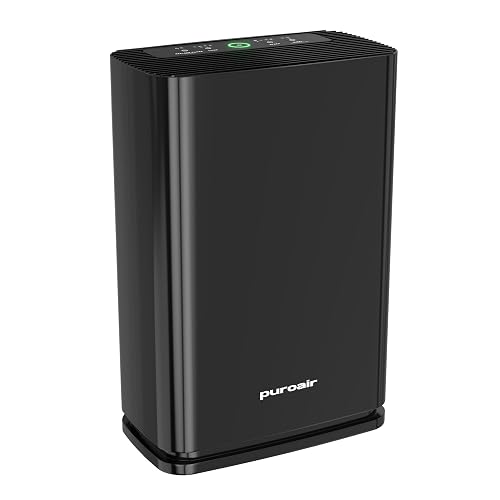
The PuroAir 400 is built for basements that feel more like a converted warehouse than a rec room. Rated for spaces up to 2,000 square feet, it pulls particulates from a wide area without needing to be repositioned constantly. The HEPA filter is the heart of the system, and PuroAir’s lab-tested claims put the unit in the upper tier for raw filtration muscle.
Compared to the LEVOIT Vital 100S-P reviewed above, this PuroAir trades compactness for reach. The trade-off shows up in physical size and noise on higher settings, but for cavernous basements with workshop benches or workout gear, that extra reach is the point. You can run it on lower speeds during quiet hours and crank it up when activities kick up dust.
Points In Its Favor
- 2,000 ft² coverage handles open layouts, home gyms, and multi-zone basements in a single unit.
- HEPA-grade filter captures fine particles including pollen, pet dander, and smoke residue.
- Strong airflow lets the purifier clear a room after a project kicks up sawdust or drywall dust.
Worth Noting
- Larger footprint than smaller-room picks, so placement near a wall outlet matters for setup.
- Higher fan speeds produce noticeable hum, which may bother light sleepers on the lowest-level floor.
Made For
Workshop owners and families with wide-open basements who need serious cleaning power without chaining multiple units together.
Look Elsewhere When
Anyone running a smaller, sealed basement bedroom will be happier with the LEVOIT Core 300-P, which is tuned for quiet over reach.
The Vital 200S-P sits in a sweet spot for people who want coverage and connectivity without overspending. Rated for rooms up to 1,875 square feet, it covers most finished basements in a single pass, and the 27dB sleep mode is genuinely quiet. The smart features feel useful rather than gimmicky, with app control that lets you tweak settings without walking downstairs.
Where the smaller Vital 100S-P is a budget-friendly workhorse, the 200S-P steps up with app-based scheduling, real-time air quality monitoring, and voice assistant compatibility. The HEPA filter is paired with an activated carbon pre-layer to help with odors, a real bonus for basements that hold musty storage or workout gear.
Benefits That Matter
- 1,875 ft² capacity covers most finished basements, eliminating the need for multiple units.
- 27dB sleep mode runs quietly enough to support a basement bedroom or media space.
- Smart scheduling lets you automate fan speeds around work hours or sleep routines.
- AHAM Verifide certification adds confidence to the published clean-air claims.
Trade Offs
- Larger body requires thoughtful placement away from foot traffic in tighter basements.
- Replacement filters cost more than smaller LEVOIT models, given the larger filter surface area.
Right Fit For
Tech-comfortable homeowners with finished basements who want app-driven control and serious coverage in one unit.
Skip It When
Anyone running a small basement corner or utility space will find the LEVOIT Core 300-P a more proportional fit.
The Core 300-P earned its spot on this list by doing the obvious things extremely well. The 24dB sleep mode is one of the quietest in the category, and the H13 True HEPA filter captures 99.97% of particles down to 0.3 microns. For a finished basement that doubles as a guest room, that low hum is the difference between a peaceful space and a restless one.
Unlike the broader-coverage picks earlier, the Core 300-P is sized for rooms up to 1,073 square feet. That puts it in the same class as the Vital 100S-P, but with a tighter focus on noise reduction and a more compact cylinder shape. Owners commonly report the filter lasting around six to eight months under normal residential conditions before a swap is needed.
Strengths Worth Knowing
- 24dB sleep mode is genuinely whisper-quiet, suitable for bedrooms or study nooks.
- H13 True HEPA filter captures allergens, pet dander, and smoke particles at a high rate.
- Compact cylinder shape fits on side tables or low shelving without dominating the room.
- AHAM Verifide certification verifies published CADR claims against an independent standard.
Points To Note
- Coverage tops out at 1,073 ft², so very large basements need a more powerful unit.
- Filter replacements are a recurring ownership cost that adds up over multi-year use.
Best Suited To
Anyone converting a basement corner into a quiet bedroom, study, or meditation space will appreciate the near-silent operation.
Not Your Match When
You need a unit that covers an entire basement without repositioning, in which case the LEVOIT Vital 200S-P is a smarter reach.
The Core 400S-P earns its place as a basement workhorse for households that treat the lower level as a multipurpose zone. Coverage stretches to 1,733 square feet, the auto mode handles day-to-day air shifts on its own, and the child lock keeps curious hands from messing with settings. For families running a basement playroom, laundry, and storage area all at once, that hands-off operation matters.
Compared to the Vital 200S-P reviewed earlier, the 400S-P adds the child lock feature and a slightly different 3-in-1 filter configuration. The auto mode is more responsive in real-world conditions, accelerating the fan when smoke, pollen, or pet dander increases. You may find the touch controls take a small learning curve if you’ve never used a LEVOIT smart unit before.
Positive Takeaways
- 1,733 ft² coverage handles most full-basement layouts without extra units.
- Auto mode adjusts fan speed in real time based on detected air quality shifts.
- Child lock prevents accidental changes during playroom hours or family gatherings.
- 3-in-1 filter tackles particles and odors in a single replacement cycle.
Honest Caveats
- Filter replacements run higher in cost than smaller LEVOIT models, given the larger filter size.
- Body is bulky, so it needs a dedicated corner or against-wall placement to stay out of foot traffic.
Who Will Love This
Multi-use family basements where kids, pets, and laundry all share the same air space will benefit most from the auto mode and child lock.
Another Choice May Suit
Single-purpose basement workshops or gyms that don’t need smart features will find the PuroAir 400 a more direct fit for the use case.
The PuroAir 240 is a middleweight that punches above its class for odor control, thanks to a 3-layer filtration system with a heavy activated carbon stage. Coverage tops out at 1,000 square feet, putting it in the same class as the LEVOIT Core 300-P reviewed above, but with a more aggressive focus on smells. For basement cigar rooms, hobby workshops, or laundry zones, that carbon layer is the reason to pick this one.
The auto air quality sensor is a practical touch, ramping up the fan when particulates or odors rise. The quiet sleep mode helps if the basement doubles as a guest space, though the highest fan setting is louder than smaller LEVOIT units running flat out. Owners commonly report the carbon filter needing replacement sooner than the HEPA layer, a typical trade-off in this category.
Bright Spots
- 3-layer filtration with activated carbon tackles stubborn smoke and storage odors at the source.
- Auto sensor adjusts fan speed as particulates and smells fluctuate during the day.
- 1,000 ft² coverage suits mid-sized basements without oversizing the unit for the space.
Room For Improvement
- Carbon filter life is shorter than the HEPA layer, so budget for more frequent carbon replacements.
- Top fan speeds are louder than the LEVOIT Core 300-P, which may be noticeable in quiet spaces.
Perfect Match For
Basement cigar lounges, hobby workshops, and laundry areas where odors are the primary concern, not just particulates.
Reach For A Different Pick When
You’re fighting allergies more than smells, in which case the LEVOIT Core 300-P delivers a quieter, more allergen-focused result.
The HAP602 brings serious reach and a real-time PM2.5 display to the basement table, cleaning up to 2,400 square feet in 30 minutes under ideal conditions. The 360° airflow design pulls air from every direction, which means placement in the center of a room works just as well as a corner. For finished basements with open floor plans, that design choice eliminates dead zones.
Compared to the PuroAir 400 reviewed earlier, the HAP602 trades the larger 2,000 ft² claim for a more aggressive 2,400 ft² reach and a visible PM2.5 readout. The 20dB sleep mode is impressively quiet for a unit this size, though real-world numbers depend on the speed setting. Owners commonly report the touch display being easy to read across a dim basement media room.
Everyday Advantages
- 360° airflow pulls particulates from all directions, useful in open basement layouts.
- Real-time PM2.5 display gives a clear, on-unit readout without needing an app.
- 3-stage True HEPA filter handles fine particles, smoke, and household allergens.
- 20dB sleep mode is quiet for a unit of this size and capacity.
A Few Limitations
- Larger physical footprint demands intentional placement to avoid blocking walking paths.
- Filter replacement cost is on the higher end given the multi-stage system.
Feature Snapshot
Who Should Grab It
Owners of large, finished basements who want a high-capacity purifier with a visible air quality readout will find the HAP602 a strong match.
Swap It Out When
You want a comparable square footage at a different price point, in which case the PuroAir 400 is worth a side-by-side look.
The PuroAir 130i is the small-format pick for basements where square footage is modest or the unit needs to slot into a tight corner. Coverage runs up to 600 square feet, which suits a converted basement office, a small media room, or a corner of a larger space where you want targeted cleaning. The smart features let you schedule and monitor from a phone without walking downstairs.
Where the PuroAir 400 reviewed earlier handles wide-open layouts, the 130i is the practical choice when a single big unit feels excessive. The HEPA filter is the heart of the system, and the smaller body makes it easy to move between rooms as needed. For homeowners testing whether a basement air purifier is worth the investment, this is a low-risk starting point.
Strong Points
- 600 ft² coverage is well-matched to small basement rooms and converted offices.
- Smart controls let you adjust settings from upstairs without descending to the unit.
- Compact body fits on desks, side tables, or low basement shelving.
Some Limits To Know
- Not built for whole-basement coverage, so larger spaces will need a bigger unit or multiple 130is.
- Replacement filter cost is comparable to other small purifiers but lacks a washable pre-filter stage.
Built With In Mind
Basement offices, small media nooks, and homeowners curious about air purification without committing to a full-size unit.
Where A Sibling Pick Shines
Anyone needing whole-basement coverage will be better served by the ECOSELF HAP602 or the PuroAir 400.
This ECOSELF model sits one step below the HAP602 in capacity but shares the same 360° airflow design, pulling air from every direction at once. Coverage stretches to 1,800 square feet, which is a comfortable fit for most finished basements. The built-in PM2.5 sensor automatically ramps the fan up when particulates spike, a feature that pays off when cooking odors or hobby projects stir up the air.
Compared to the HAP602 reviewed above, this unit drops the larger 2,400 ft² rating in favor of a more approachable footprint. The auto mode reacts in real time to air quality shifts, and the body shape stays low-profile enough to slide into a corner or beside a couch. Owners commonly report the controls being straightforward, with a small learning curve for first-time smart-purifier users.
What Works In Its Favor
- 360° air intake design refreshes the entire room from one central placement.
- PM2.5 sensor triggers automatic fan adjustments as particulates rise.
- 1,800 ft² capacity fits most finished basements without oversizing.
- HEPA filtration captures the most common household allergens and smoke particles.
Things To Weigh Up
- Smaller coverage than the HAP602, so the largest basements may still want the bigger sibling.
- Replacement filters are an ongoing cost that adds up over years of regular use.
The Right Fit
Mid-sized finished basements that benefit from central placement and automatic air quality responses without the footprint of a 2,400 ft² unit.
A Better Fit Elsewhere
Anyone needing maximum reach should step up to the ECOSELF HAP602, which pushes coverage further at a similar feature set.
The AIRDOCTOR AD3500 is the most ambitious unit on this list, both in size and in filtration claims. The UltraHEPA filter captures particles down to 0.003 microns, which is far smaller than what standard HEPA filters are rated to catch. Coverage extends to 2,520 square feet, and the dual-action carbon filtration adds another layer for odors and smoke.
For basements that double as living space where allergies, smoke, or pet odors are a daily concern, this is the heavy hitter. The body is large, the price point sits well above the rest of the list, and the filter replacement cost reflects the multi-stage design. Compared to the ECOSELF HAP602, you’re paying for finer particle capture and a noticeably larger coverage area, not just a bigger fan.
Standout Benefits
- UltraHEPA filter captures particles at 0.003 microns, finer than standard HEPA at 0.3 microns.
- 2,520 ft² coverage handles the largest basements in a single unit.
- Premium carbon filtration tackles smoke and stubborn household odors.
- Suitable for basements used as primary living space where air quality is a top concern.
What To Weigh
- Premium pricing puts it well above mid-range picks, so the value depends on how much you use the basement.
- Filter replacements are costly given the multi-stage UltraHEPA and carbon configuration.
- Physical footprint is substantial, demanding dedicated placement space.
Whose Shelf It Belongs On
Allergy-heavy households, remote workers spending full days in a finished basement, and anyone treating the lower level as a primary living space.
Not Your Match When
You only need a basement utility purifier for occasional use, in which case the LEVOIT Vital 100S-P delivers solid everyday performance at a fraction of the cost.
What To Weigh Before Buying an Air Purifier for Your Basement
Square Footage and Air Changes Per Hour
The most important spec is the room size rating, expressed in square feet, but that number alone can mislead. Manufacturers usually test at one or two air changes per hour (ACH), meaning how many times the purifier filters the entire room’s air in 60 minutes. Two air changes per hour is the minimum for general comfort, while allergy sufferers benefit from four to six. If your basement sits at 1,000 square feet and the unit is rated for 1,000, you may find real-world cleaning underwhelming without bumping up to a larger model.
Filter Type and Replacement Cost
A True HEPA filter is the baseline you want. HEPA stands for High-Efficiency Particulate Air and refers to filters that capture 99.97% of particles down to 0.3 microns. An activated carbon pre-filter or stage adds odor control, which matters in basements prone to mustiness. Plan for filter replacement every six to twelve months, and check the price of those replacements before you buy, since a cheap unit with expensive filters can add up over a few years.
Noise Level and Sleep Modes
Basements often sit beneath living areas, so a noisy purifier can travel upstairs through floor joists. Look at the decibel rating in sleep or lowest mode: 24dB is library-quiet, 27dB is a soft hum, and anything above 35dB will register as background noise. If your basement doubles as a bedroom or media room, prioritize units with verified low-dB sleep modes.
Smart Features That Actually Help
Auto mode, air quality sensors, and app control are worth paying for when they reduce the need to fiddle with the unit. The honest read is that auto mode and a visible PM2.5 (particulate matter smaller than 2.5 micrometers) readout save you from guessing, while app control is convenient but rarely essential. Skip smart features if you just want a unit that runs quietly in the background.
Pitfalls Shoppers Hit and How to Sidestep Them
Mistaking Square Footage for Real Coverage
Manufacturers rate purifiers at optimal conditions, which can overstate real-world performance. Basements with low ceilings, concrete walls, or unusual layouts often need a unit rated for a larger space than the actual square footage. When in doubt, step up one size class rather than matching the rating exactly.
Forgetting About Filter Costs
The unit price is the start, not the total. Replacement filters can run anywhere from modest to significant, and a purifier that needs new filters every four months adds up faster than one with annual swaps. Factor in two to three years of filter replacements before you commit, especially for premium multi-stage units.
Where The Extra Money Goes on Premium Models
Higher-tier purifiers like the AIRDOCTOR AD3500 earn their pricing through finer particle capture, larger coverage areas, and dual-action carbon filtration. The upgrade is worth it when the basement is a primary living space or when allergies are severe. For a utility basement or occasional-use rec room, a mid-range unit like the LEVOIT Core 400S-P delivers most of the practical benefit at a lower ongoing cost.
Frequently Asked Questions
How often should I run my air purifier in the basement?
Running it continuously on auto mode is generally the most efficient approach, since the unit ramps up only when needed. For a damp basement, 24/7 operation helps prevent musty air from settling overnight. If noise is a concern, low or sleep modes use very little power and keep air moving without disrupting nearby rooms.
Can an air purifier help with basement mustiness?
A purifier addresses the airborne particles and some odors associated with mustiness, but it won’t fix the source of moisture. Pair the purifier with a dehumidifier for the best result, since reducing humidity cuts the conditions that allow musty smells to develop. The purifier then handles the residual particles and stale air.
What size air purifier do I need for a 1,000 square foot basement?
Look for a unit rated for at least 1,200 to 1,500 square feet if you want comfortable cleaning at two to three air changes per hour. Models like the PuroAir 400 or ECOSELF HAP602 handle that size with room to spare. Allergy sufferers benefit from stepping up another size class for more frequent air exchanges.
Are washable pre-filters worth it?
Washable pre-filters catch larger particles like pet hair and dust before they reach the main HEPA layer, extending the life of the more expensive filter. For pet owners, this feature pays for itself quickly by reducing how often you replace the primary filter. A quick rinse under the faucet every few weeks is all the maintenance required.
Do air purifiers use a lot of electricity?
Most modern purifiers draw between 30 and 80 watts on high settings, similar to a standard light bulb. Running a unit 24/7 adds a modest amount to your electricity bill, often less than the cost of a single filter replacement over the same period. Sleep and auto modes use even less, since the fan runs at lower RPMs.
Closing Thoughts
The right air purifier depends on how your basement gets used. A small finished bedroom rewards a quiet, compact unit, while a wide-open rec room or workshop calls for serious coverage. Match the purifier to the square footage, factor in the filter cost over time, and lean toward auto mode if you want the unit to handle itself. Once you set it up, the difference in how the air feels is noticeable within a day, and the right choice quietly does its job without taking over the room.