
Cigarette smoke is one of the toughest indoor pollutants to scrub out. The fine particles settle into fabrics, the odor clings to walls, and a standard fan just moves the problem around. The right air purifier pulls those particles and gases through a sealed filter, then keeps cycling the room air until the air actually smells and feels different.
This list covers seven solid options across different room sizes, budgets, and feature preferences. Each one has been reviewed for the realities of smoke: how fast it clears visible haze, whether it tackles odor, how loud it gets, and what long-term filter costs look like. The goal is straightforward: matching you with a model that fits your space and your tolerance for noise, maintenance, and ongoing expense.
An Overview Of The Picks
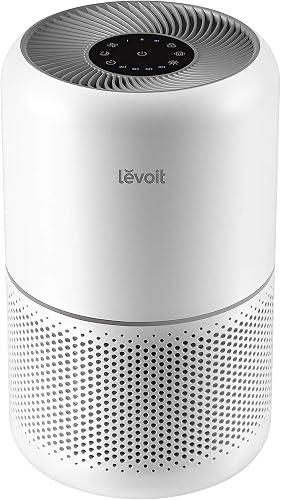
LEVOIT Core 300-P H13 True HEPA Air Purifier (White)

DREO DR-HAP009 Air Purifier for Large Rooms
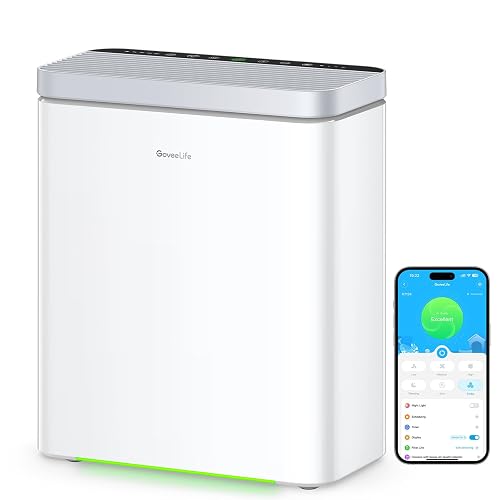
GoveeLife Smart Air Purifier for Home Large Rooms
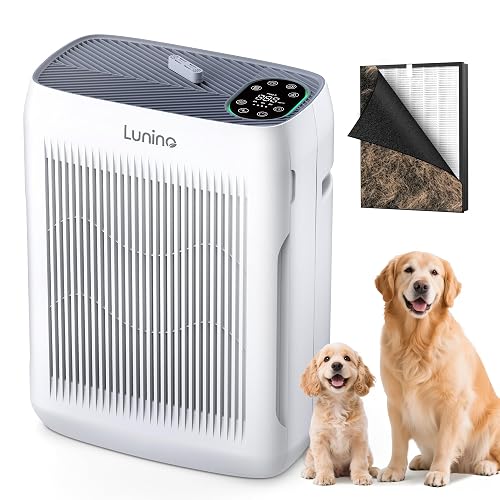
LUNINO H13 HEPA Air Purifier for Large Rooms

SILVERONYX 5-in-1 HEPA Air Purifier (Black)
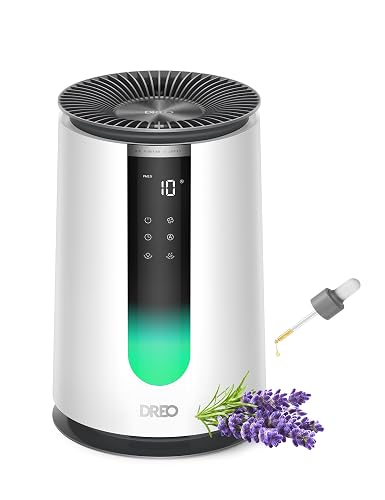
DREO DR-HAP008 Air Purifier with Scent Diffuser
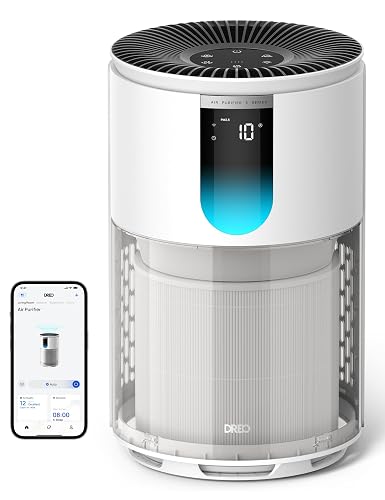
DREO DR-HAP009S Smart Air Purifier with Wi-Fi
More On The Choices That Made The List
The LEVOIT Core 300-P is a compact tower that fits easily on a nightstand or shelf, yet it covers rooms up to 1073 square feet according to the manufacturer. Its H13 True HEPA filter, which captures at least 99.97% of airborne particles down to 0.3 microns, makes it well-suited for smoke, dust, and pet dander. A 24-decibel sleep mode keeps it quiet enough that most sleepers won’t notice it running overnight.
For households with one or two smokers, a nursery, or a small apartment, this model handles daily odor and particulate without dominating the room. Replacement filters are widely available, though owners commonly replace them every six to eight months in smoke-heavy environments.
Bright Spots
- H13 True HEPA captures fine smoke particles that escape lower-grade filters.
- Low 24 dB sleep setting supports bedrooms and shift workers sleeping at odd hours.
- Coverage up to 1073 ft² suits open studios and small living areas.
- Compact footprint fits on nightstands and counters.
Worth Noting
- Filter replacements add up over years of heavy smoke use, so plan for ongoing cost.
- No built-in air quality indicator means you estimate settings manually.
- Smoke-heavy rooms may require running on higher fan speeds, which raises noise.
Key Specs
Who It Suits Best
Apartment dwellers and bedroom users who want quiet, proven smoke filtration without bulk.
A Better Fit Elsewhere
The LUNINO H13 HEPA Air Purifier suits open-concept homes where coverage above 2000 ft² is the priority.
The DREO DR-HAP009 steps up to 1176 square feet of coverage and brings a real-time PM2.5 display, a particulate matter measurement that quantifies the fine particles responsible for most smoke haze. Auto mode reads the air and ramps the fan up or down, while a Turbo setting kicks in for fast post-smoke clearing. Four speed options let you match output to time of day.
Where the LEVOIT Core 300-P feels right for a bedroom, this DREO thrives in a living room or main floor. Owners who smoke indoors regularly will likely appreciate the visible air quality feedback and the larger filter surface. In our view, it’s a strong middle-ground choice for anyone who wants more than a tabletop unit without going to commercial sizing.
The Case For It
- PM2.5 monitor gives a visible reading of how smoke levels change over time.
- Auto mode adjusts fan speed to current air quality, useful when smoke levels shift.
- 1176 ft² coverage handles open living areas and lofts.
- Turbo mode clears visible haze faster after a heavy smoking session.
Trade Offs
- Larger footprint than bedroom units, so plan a permanent spot for it.
- Higher fan speeds produce noticeable noise, especially on Turbo.
- Replacement filters cost more than smaller-room models.
Feature Snapshot
Made For
Main-floor households in open-plan homes who want visible air quality feedback and serious smoke throughput.
Look Elsewhere When
Pick the LEVOIT Core 300-P when bedroom quietness matters more than coverage or display readouts.
The GoveeLife Smart Air Purifier covers up to 1046 square feet and ties directly into the Govee app and Alexa ecosystem. If your home is already running routines, automations, and voice control, this model slips in without friction. A CADR of 135 CFM keeps the smoke clearing brisk in typical living spaces.
Compared to the DREO DR-HAP009 just above, the GoveeLife trades a slight drop in CADR for deeper smart-home integration. You may find the app-based scheduling and remote control more useful than a physical display, especially if your air purifier sits out of sight. Filter changes are tracked through the app, which takes the guesswork out of maintenance timing.
What It Does Well
- App and voice control let you check air quality and adjust settings from anywhere.
- Schedule routines around your smoking patterns or work hours.
- 1046 ft² coverage handles most living rooms and combined spaces.
- Filter life tracking through the app simplifies maintenance.
Points To Note
- Smart features depend on Wi-Fi, so a router hiccup limits remote control.
- App setup can feel involved for anyone new to smart home platforms.
- Slightly lower CADR than the DREO DR-HAP009 at similar coverage.
Best Suited To
Smart-home enthusiasts who prefer app and voice control over physical buttons and displays.
Another Choice May Suit
The DREO DR-HAP009S fits shoppers who want both smart features and a higher CADR in a similar footprint.
The LUNINO H13 targets the largest spaces in this roundup with up to 3000 square feet of claimed coverage. It also brings a washable pre-filter, four fan speeds, an Auto mode, and an aromatherapy add-on for those who want to layer a scent into the room. The H13 HEPA element still does the heavy lifting on smoke particles.
This is the unit to consider for finished basements, open lofts, or homes with adjoining living and dining areas. Aromatherapy aside, the washable pre-filter is the practical standout: it catches the bigger particles and extends the life of the more expensive HEPA element. In smoke-heavy households, owners commonly report that washable pre-filters need monthly rinsing to keep airflow strong.
Advantages To Know
- 3000 ft² coverage handles very large rooms or open floor plans.
- Washable pre-filter reduces long-term consumable cost.
- Aromatherapy slot adds a scent option beyond plain air cleaning.
- Auto mode adjusts output based on detected air quality.
Worth Bearing In Mind
- The unit’s physical size demands floor space and a permanent spot.
- Aromatherapy is optional and adds a small maintenance step.
- Higher fan speeds produce more noise than compact units.
Quick Facts
Whose Shelf It Belongs On
Large-home owners and basement dwellers who need maximum coverage and are willing to give the unit floor space.
Where A Sibling Pick Shines
The SILVERONYX 5-in-1 fits better in compact home offices and small dens.
The SILVERONYX 5-in-1 covers up to 500 square feet and layers a five-stage filtration system into a small, dark-finish tower. The pre-filter, HEPA layer, and activated carbon stage work in sequence, which is particularly useful for smoke, where particles and gases both need attention. Activated carbon is the filter type that traps odor molecules, the part plain HEPA often misses.
This unit lands well in home offices, dens, or bedrooms where space is at a premium. The black housing blends into darker décor better than white-box competitors, which is a small but real consideration in finished rooms. Expect filter changes roughly every six months in normal smoke conditions, and consider a more frequent schedule if you smoke indoors daily.
Why It Works Well
- Five-stage filtration addresses both particles and smoke odor in one pass.
- Compact tower fits in tight corners and small rooms.
- 500 ft² coverage suits bedrooms, offices, and dens.
- Dark housing blends into a range of interior styles.
Honest Caveats
- Smaller coverage than larger units, so a single room is the practical ceiling.
- No smart features or app control, just manual operation.
- Five stages mean filter replacements can run higher than simpler models.
Perfect Match For
Single-room users in offices, bedrooms, or dens who want thorough filtration without bulk.
Skip It When
Step up to the LUNINO H13 for open floor plans over 1000 ft².
The DREO DR-HAP008 sits at the compact end of the DREO line, with a 115 CFM CADR and AHAM Verifide performance. A built-in scent diffuser adds a light fragrance option for users who want a fresh-smelling room without masking smoke with sprays. Auto mode, four fan speeds, and a PM2.5 display cover the same basics as the larger DR-HAP009 in a smaller package.
Where the DREO DR-HAP009 above targets a living room, this model targets the bedside table. It’s a thoughtful fit for bedrooms and nurseries where you want real performance data but don’t need open-plan reach. The honest read is that the smaller CADR limits you to genuinely small rooms, so don’t expect it to cover a loft.
Features That Help
- AHAM Verifide CADR of 115 CFM confirms real-world performance.
- Built-in scent diffuser adds fragrance without separate hardware.
- PM2.5 monitor keeps you informed on smoke levels in real time.
- Compact size fits on nightstands and small side tables.
Some Limits To Know
- Lower CADR than the larger DREO DR-HAP009, so it suits smaller rooms only.
- Scent diffuser pads are a recurring consumable.
- No smart connectivity, so control is on-device only.
Who Will Love This
Bedroom and nursery users who want verified smoke filtration with a compact footprint.
Reach For A Different Pick When
The DREO DR-HAP009S suits you better if you want large-room reach plus smart features.
The DREO DR-HAP009S keeps the same 1176 square foot coverage and 158 CFM CADR as the non-smart DR-HAP009, then layers in Wi-Fi, voice, and app control. For households already running Alexa routines, this unit slots in as a controllable member of the smart home. Auto and Turbo modes still work directly on the unit, so you’re not dependent on the app for daily use.
Set against the GoveeLife Smart Air Purifier above, the DREO offers a higher CADR at similar coverage, while the GoveeLife leans into deeper Govee ecosystem features. The choice depends on whether raw throughput or ecosystem matters more to you. In our view, the DREO is the stronger all-around pick for smoke-heavy spaces, with smart features as a meaningful bonus.
Noteworthy Benefits
- 158 CFM CADR delivers fast smoke clearing in large rooms.
- Wi-Fi, app, and voice control fit existing smart home routines.
- PM2.5 monitor provides real-time particulate feedback.
- Auto and Turbo modes cover both background cleaning and rapid response.
Factors To Consider
- Filter replacements cost more than smaller units, so budget ongoing.
- Smart features add setup steps for households new to connected devices.
- Footprint is larger than bedroom-focused options.
Spec Overview
Right Fit For
Connected households that want both large-room smoke throughput and full smart home integration.
Swap It Out When
The GoveeLife Smart Air Purifier is the better match when Govee ecosystem routines are the priority.
What To Weigh Before Choosing An Air Purifier For Smoke
Room Size Drives Coverage Decisions
Match the purifier’s coverage area to the actual room, not the whole home. A 500 ft² unit in a 1200 ft² open plan will run constantly without clearing the air. Measure length times width for the primary room you want to clean, and add roughly 20% headroom for smoke-heavy use.
HEPA Grade And Carbon Layers Matter
H13 True HEPA captures at least 99.97% of particles down to 0.3 microns, which is the size range that carries most smoke. Activated carbon is what removes the smell. A purifier with HEPA but no carbon will clear haze yet leave odor behind, so look for both stages if smell is a concern.
Noise Tolerance Shapes Speed Choices
A bedroom unit should sit around 24 dB on its lowest setting, while living room models often run louder at higher speeds. Turbo and Auto modes are useful for rapid clearing after a smoking session, but they’re typically too loud for sleep. Plan for a unit that handles both quiet background work and faster clearing.
Smart Features Are Optional, Not Essential
Wi-Fi, app, and voice control add convenience but don’t change filtration. For households already running smart home routines, they simplify scheduling and remote control. For everyone else, a clean physical interface and a visible PM2.5 readout are usually enough.
Key Considerations Across These Picks
Pitfalls Shoppers Hit
Choosing coverage by price rather than by room size is the most common mistake. A cheap 300 ft² unit placed in a 900 ft² living room will run nonstop and still leave haze behind. Filter cost is the other hidden factor. Some units look affordable up front but use expensive replacement filters every few months, which adds up over years of smoke exposure.
Where The Extra Money Goes
Higher-tier models bring independent verification, larger filters, and visible air quality feedback. AHAM Verifide, a third-party certification program that tests air purifier performance, gives a real baseline for CADR and coverage claims, which matters in a category full of exaggerated numbers. Faster CADR, PM2.5 displays, and smart features also explain the price gap. For smoke-heavy households, the upgrade tends to pay off in faster clearing and better long-term filter life.
Frequently Asked Questions
How Often Do Filters Need Changing In A Smoking Household?
Most HEPA filters last six to eight months under normal use, but smoke-heavy homes often shorten that to three to four months. Activated carbon stages typically need swapping more frequently than HEPA, since odor molecules clog carbon faster than particulate clogs HEPA. Check the filter indicator on your unit if it has one, and inspect the filter visually if it doesn’t.
Can An Air Purifier Eliminate Cigarette Smell Completely?
A purifier with a substantial activated carbon stage can reduce odor significantly, but complete elimination depends on ventilation, room size, and smoking frequency. Opening windows during and after smoking helps the purifier work more effectively. Expect noticeable improvement rather than total removal in most indoor setups.
Is A Higher CADR Always Better?
Higher CADR means faster air changes, which matters in smoke-heavy rooms where you want haze cleared quickly. For a small bedroom with light smoking, a moderate CADR is plenty. For open living areas or frequent indoor smoking, higher CADR shortens the time it takes to get the air back to clean.
Do Air Purifiers Help With Secondhand Smoke In Apartments?
Yes, but they can’t seal the apartment from neighboring units. A purifier handles the air inside your space, including shared air that drifts in through doors and older ventilation systems. For shared walls and HVAC, sealed door sweeps and a purifier with both HEPA and carbon give the best practical result.
Where Should The Purifier Be Placed For Best Results?
Set the unit where air circulates freely, away from walls and corners, ideally in the room where smoking occurs. For multi-room coverage, place it between rooms or in the area you spend the most time. Keep intake and output vents clear of furniture to maintain airflow.
Closing Thoughts
The right air purifier for cigarette smoke comes down to your room size, your tolerance for noise, and how much you want to spend on filters over time. A compact, quiet HEPA unit handles a bedroom well, while a higher-CADR model with a PM2.5 display earns its keep in an open living area. Start with where the smoke actually is, then pick the unit that matches that space and your daily routine.