
Ozone is a tricky pollutant. It smells sharp near printers, copy machines, or the moment lightning has just cracked outside, and it irritates lungs faster than most particles you can see. A standard HEPA filter alone won’t touch it, which is why the picks below lean on carbon stages and, in some cases, ionizer-free designs that don’t add ozone while they clean. Open-space lofts, basements with laser printers, and bedrooms near busy streets tend to benefit most. Whatever your space looks like, this roundup narrows down solid options that handle gas-phase pollutants alongside everyday particulates.
A Snapshot Of The Selections
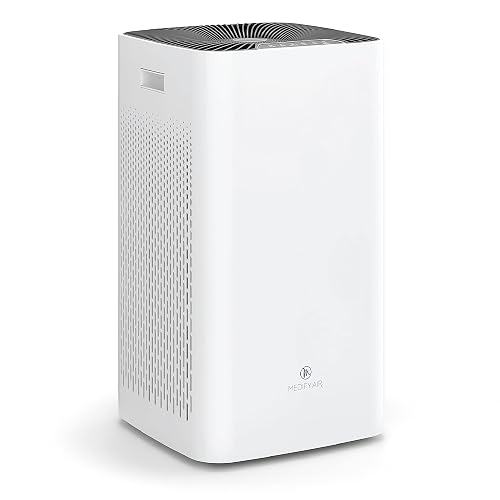
Medify MA-112 Air Purifier V3.0 with HEPA Filter

DREO Air Purifier for Home Up to 1176 ft²
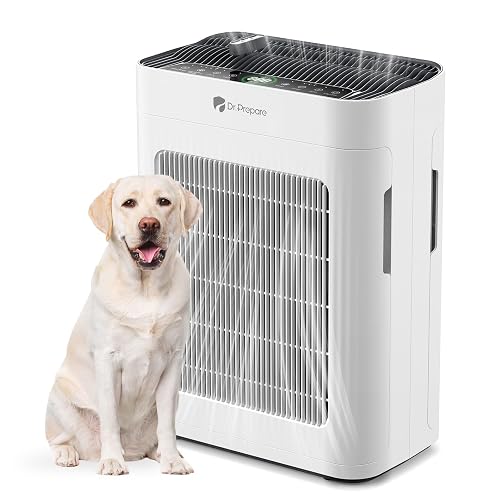
Dr.Prepare Air Purifier for Home Large Room Up to 3,000 ft²
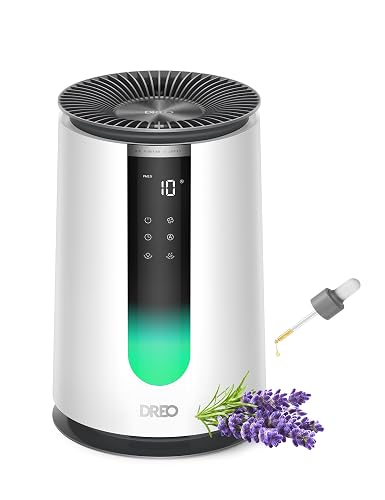
DREO Air Purifier for Home HEPA Sleep Mode DR-HAP008
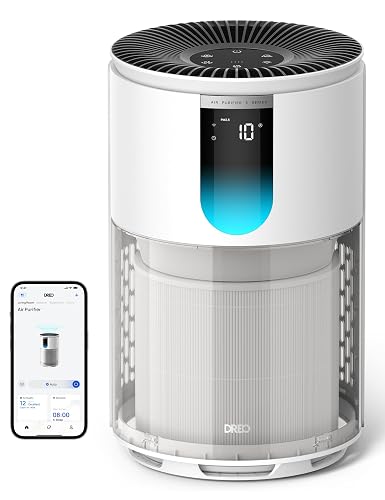
DREO Smart Air Purifier for Home Up to 1176 ft²
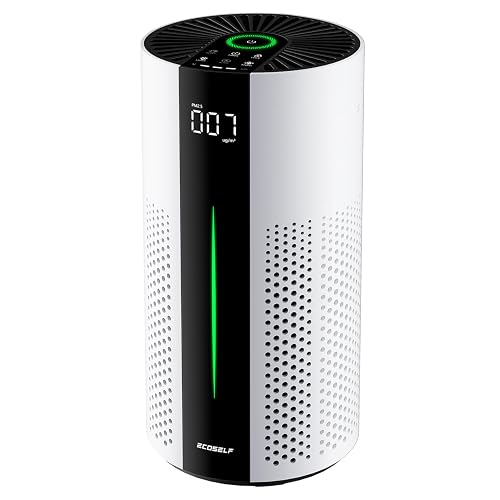
ECOSELF Air Purifiers for Home Large Room Up to 1800 ft²
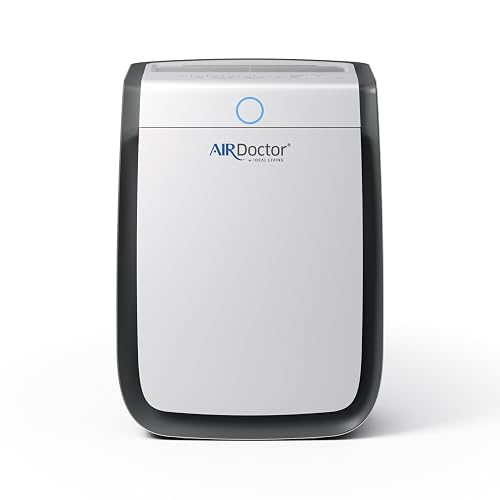
AIRDOCTOR AD3500 Air Purifier
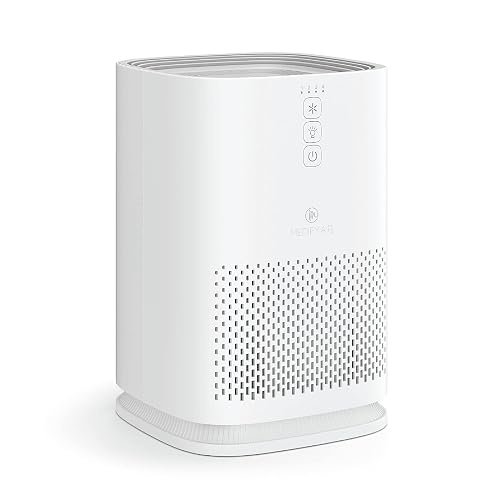
Medify MA-14 Air Purifier with HEPA Filter
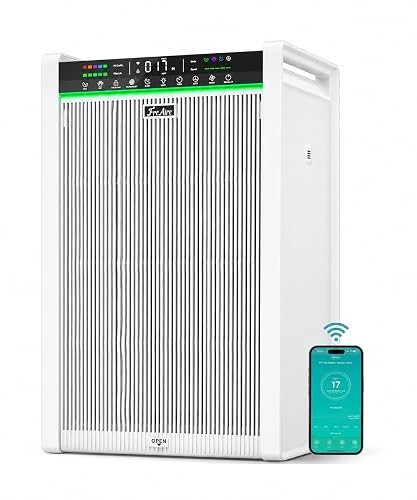
FreAire Air Purifiers for Home Large Room Up to 3850 ft²
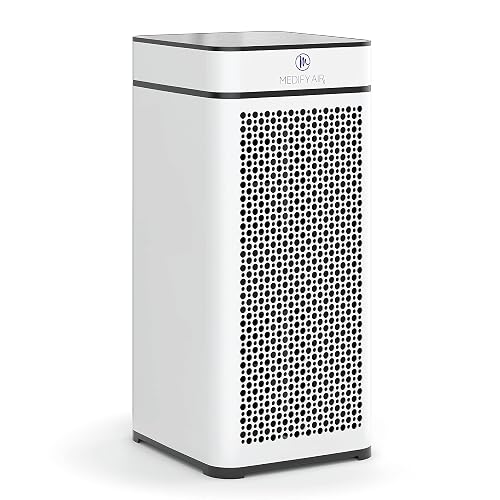
Medify MA-40 Air Purifier with HEPA Filter
More Details On Our Top Picks
The Medify MA-112 sits at the top of this list for sheer reach. Where most units on the market target a single room, this one is rated to handle very large open spaces in an hour, which makes it a smart anchor for a loft apartment or a sprawling living-and-dining layout. The dual HEPA H13 filtration stages are matched with a carbon layer that helps with gases like ozone, smoke, and lingering cooking odors. In a home with hardwood floors and a printer-heavy home office, you can leave it running without it feeling underpowered.
It is a tall, substantial unit, so you’ll want to plan its corner placement before unboxing. The control panel is straightforward, with a fan-speed indicator and a filter-change reminder that takes the guesswork out of upkeep.
Practical Pluses
- Covers very large open areas in a single hour, so you don’t need multiple units for one zone
- Dual HEPA H13 stages pull fine particles down to 0.3 microns, which matters during wildfire season
- Built-in carbon layer addresses ozone and VOCs that basic HEPA filters miss entirely
- Filter life indicator removes the maintenance guesswork common with budget models
Things To Consider
- The footprint is large, so small apartments will lose usable floor space
- Filter replacements tend to cost more than mid-tier picks, which adds up over years of ownership
Who It Suits Best
Owners of large open-plan homes, open offices, and anyone dealing with wildfire smoke drifting in from outside.
Where Another Pick Suits Better
The Medify MA-40 is a better fit for tighter floor plans where the MA-112 would overpower the room and waste energy.
Where the Medify MA-112 feels industrial, the DREO DR-HAP009 leans smart and modern. It carries an independently tested CADR of 158 CFM, which is generous for a mid-size tower, and the built-in PM2.5 monitor reads the air in real time and shifts the fan automatically. For anyone who works from home near a laser printer, that reactive behavior is the difference between remembering to crank the fan and never thinking about it.
Compared with the Medify MA-112, this one trades raw square-footage for polish: a quieter sleep mode, an LED that dims at night, and a fan curve that ramps up smoothly when smoke or pollen spikes. You also get four manual speeds plus Auto and Turbo, which is more flexibility than most units in this range.
Benefits That Matter
- AHAM-verified CADR gives a credible airflow number, not a marketing guess
- PM2.5 auto mode takes the dial-twiddling out of running an air purifier day to day
- Sleep mode drops the noise floor low enough for light sleepers in most bedrooms
- Carbon pre-filter stage pulls gases like ozone that pure HEPA filters pass right through
Worth Noting
- Reaches its noise-comfort sweet spot in rooms under 400 square feet
- Filter replacements are proprietary, so you can’t swap in off-brand cartridges
Right Fit For
Homeowners with medium bedrooms or living rooms who want set-and-forget automation and a verified airflow number to trust.
Look Elsewhere When
The DREO DR-HAP009S is the smarter choice if app control and voice integration matter more to you than the lower price.
The Dr.Prepare model earns its spot with a different design idea: a dual-sided air inlet that pulls from both flanks instead of one face. In a real home with two shedding dogs and a couch pushed against a wall, that means airflow doesn’t get choked off by the closest piece of furniture. The washable pre-filter is the underappreciated detail. Pet hair collects on it instead of strangling the HEPA layer, and a quick rinse every few weeks extends the life of the more expensive cartridge behind it.
Its Pet Mode ramps the fan harder during dander-heavy hours, and the PM2.5 display is large enough to read from across the room. If the Medify MA-112 feels like overkill and the DREO feels too quiet, this one threads the middle.
Reasons It Performs
- Two-sided intake prevents the airflow-starved corners you get with single-grille units
- Washable pre-filter cuts long-term filter spend in pet households
- Pet Mode response is sharper than the standard Auto curve on most competing models
- Display readability is strong, even in bright living rooms
Trade Offs
- At full speed it pushes more audible airflow than smaller DREO towers, so placement away from seating helps
- Body is wider than tower-style competitors, so narrow hallways and tight corners can be awkward
Best Suited To
Pet owners in medium to large rooms who want strong dander control without babysitting the controls.
Consider Something Else When
The ECOSELF is a quieter alternative in homes where the Dr.Prepare’s higher fan speeds become intrusive.
The DREO DR-HAP008 is the smaller sibling of the DR-HAP009 above, and that lineage shows in the build quality. The HEPA filter is paired with a carbon layer that takes a real bite out of ozone, smoke, and everyday odors, which is the part most compact purifiers skip. For a nursery, guest room, or apartment bedroom where the bigger DREO would simply be too much machine, this one is a thoughtful scale-down.
It carries a verified CADR of 115 CFM, which is solid for its size. A scent diffuser slot is a small but useful touch in a small space where you want the air to feel fresh, not just clean.
Positive Points
- Compact body fits on a nightstand or shared desk without dominating the room
- Carbon stage addresses ozone rather than relying on HEPA alone
- Sleep mode drops the indicator lights and quiets the fan enough for light sleepers
- Scent diffuser slot lets you add essential oils without a separate appliance on the counter
Room For Improvement
- Rated coverage tops out well below the larger DREO, so open lofts will under-serve you
- Turbo mode produces a noticeable high-pitch tone at close range
Made For
Apartment dwellers and parents setting up a nursery or guest bedroom in the 150 to 300 square foot range.
Skip It When
The DREO DR-HAP009 is the smarter buy for shared living spaces where you’ll want more airflow headroom.
The DR-HAP009S is the connected version of the DR-HAP009, and the difference shows up in everyday convenience rather than raw performance. You get the same AHAM-verified 158 CFM CADR, but with Wi-Fi control, scheduling, and remote fan adjustments from your phone. If you already run routines through a smart speaker, this one slots in without friction.
For households that want to trigger a cleaning cycle the moment AQI reports climb, the app-driven approach is genuinely useful. The display is clear, and the unit behaves exactly like the non-smart version when you ignore the connectivity entirely.
What Works In Its Favor
- Wi-Fi scheduling lets you pre-clean bedrooms before you get home
- Voice integration makes hands-free fan adjustments trivial in a connected home
- Same verified airflow as the non-smart DREO, so you don’t trade performance for features
- App shows historical air-quality trends, which helps you spot pollen or cooking spikes
A Few Limitations
- Smart features add cost over the otherwise-identical DR-HAP009
- Setup requires a 2.4 GHz network, which can frustrate mesh-router households
Perfect Match For
Smart home enthusiasts who want their purifier to react to AQI reports and integrate with voice assistants.
Not Your Match When
The non-smart DREO DR-HAP009 is a more sensible pick if you don’t actually use app or voice routines.
The ECOSELF unit is the most shape-shifting option in this list. Its 360-degree intake pulls air from every direction, which makes placement almost an afterthought: push it into a corner, slide it beside a media console, and the airflow still finds the room. For renters who can’t dictate furniture layouts, that flexibility pays off. The auto mode reacts to the PM2.5 sensor the moment particulates climb, so you don’t have to babysit the dial.
It targets rooms up to 1,800 square feet, which puts it between the DREO mid-size and the Medify MA-112 monster. Owners commonly report the cylindrical design feeling less obtrusive than tower-style competitors in the middle of a family room.
Useful Strengths
- 360-degree intake removes the placement guesswork of single-sided towers
- Auto mode reacts within seconds when PM2.5 climbs from cooking or outdoor smoke
- Cylindrical footprint tucks into corners where boxy units feel awkward
- Filter access is straightforward, so swap-outs don’t require moving the whole unit
Points To Note
- Filter life tends to shorten in homes with active smokers, so budget for replacements
- Top touch controls can be oversensitive during dusting
Who Should Grab It
Renters and family-room shoppers who want a flexible, low-fuss unit that doesn’t dictate furniture placement.
Another Choice May Suit
The Dr.Prepare is a better match in pet-heavy homes where the dual-sided intake earns its keep.
The AIRDOCTOR AD3500 is the only unit in this roundup that markets an UltraHEPA stage, which the brand rates for particles down to 0.003 microns. The standard HEPA H13 in most other picks already covers what most homes need, but if you live in a smoke-prone corridor or deal with severe allergies, that extra filtration headroom is meaningful. The carbon layer is dual-action and substantial, which is the part that does the actual work on ozone.
It cleans up to 2,520 square feet in an hour, putting it in the same broad-reach tier as the Medify MA-112, but with a noticeably tighter cabinet. You will pay for the privilege, and the filter replacements are not cheap, but for households that need both particulate and gas-phase cleaning done thoroughly, this is the cleanest answer.
Strong Points
- UltraHEPA stage reaches well below the standard 0.3-micron HEPA threshold
- Dual-action carbon filter makes a real difference on ozone and lingering VOCs
- Cleans a 630-square-foot room in roughly 15 minutes at high speed
- Build feels substantial, with a sealed cabinet that limits air bypass
Honest Caveats
- Replacement filters cost more than mid-tier models, so ownership adds up over time
- Cabinet is heavier than competitors, so plan a permanent spot before unboxing
The Right Fit
Allergy sufferers and households in wildfire corridors who want thorough particulate and gas-phase cleaning in one box.
Reach For A Different Pick When
The Medify MA-112 is a more practical option for large homes where you don’t need the extra UltraHEPA stage.
The Medify MA-14 is the tabletop side of the Medify family, and it does something rare for its size: it pairs a true HEPA H13 cartridge with an activated carbon pre-filter. A lot of compact purifiers quietly skip the carbon stage, which means ozone slips through unchallenged. This one doesn’t cut that corner. If you want a small purifier for a home office or a kid’s room where a printer or craft supplies can push particulates up, the MA-14 punches above its weight class.
It covers around 470 square feet in an hour, which makes it right-sized for bedrooms, dorms, and dens. The control panel is plain and readable, and the filter swap is one of the easiest in the roundup.
Real-World Strengths
- Tabletop footprint fits on a desk, dresser, or kitchen counter without crowding the surface
- HEPA H13 plus carbon stage addresses both particles and gases in one small box
- Filter replacement is among the simplest in this category, with no tools required
- Low enough output to run quietly next to a bed without disturbing light sleepers
Factors To Consider
- Square-footage ceiling is well below the Medify MA-40, so it under-serves open plans
- No smart connectivity, so all adjustments happen on the unit itself
Whose Shelf It Belongs On
Students, remote workers, and parents who want a focused purifier for a single small room rather than whole-home coverage.
Swap It Out When
The DREO DR-HAP008 is a stronger fit in a nursery where you want a scent diffuser slot and quieter sleep mode.
The FreAire HAP611WF is the airflow heavyweight of this roundup, with a 450 CFM CADR rating that outpaces every other unit here. In a high-ceiling living room or a basement with a treadmill and a printer, that throughput is the difference between a purifier keeping up and one falling behind. The full-front intake grille keeps the air path unobstructed even when the cabinet sits close to a wall, and the top outlet sends clean air upward for natural circulation.
For an open-concept ground floor, the FreAire is the kind of single-unit solution that often takes two smaller purifiers to match. The display is large, the touch controls are responsive, and the cabinet looks at home next to modern furniture.
What It Does Well
- Highest CADR in this roundup, which matters in spaces with high ceilings or open layouts
- Full-front intake tolerates tight placement against furniture
- Top outlet design supports natural upward circulation without drafts at floor level
- Display is large enough to read across a wide living room
Possible Compromises
- At full speed it can overpower a small bedroom, so use lower settings there
- Filter costs trend higher than the Medify MA-40, so plan for ongoing ownership spend
Built With In Mind
Owners of open-concept homes, finished basements, and bonus rooms with high ceilings or unusual layouts.
Where A Sibling Pick Shines
The AIRDOCTOR AD3500 is a better fit when UltraHEPA-grade particulate capture matters more than raw airflow.
The Medify MA-40 is the unit most medium-sized homes probably want, and it closes out this list for that exact reason. It covers up to 1,793 square feet in an hour, which fits a typical living room, primary bedroom, and adjacent hallway without breaking a sweat. The HEPA H13 filter handles particulates down to 0.3 microns, and the carbon pre-filter does the quiet work of catching ozone and other gases that basic HEPA filters miss.
It is quieter than the larger MA-112 and more capable than the MA-14, which is a comfortable middle for most households. Owners commonly report the filter indicator being a genuinely useful feature, since it removes the “is it time yet?” guesswork.
What Pays Off
- Right-sized coverage for most apartments, condos, and medium single-family homes
- Carbon pre-filter stage targets ozone without forcing a separate appliance
- Filter change indicator eliminates the maintenance guesswork that plagues cheaper units
- Quieter operation than the larger MA-112, so bedrooms stay comfortable
Soft Spots
- No smart connectivity, which is a real gap for app-driven households
- Filter replacements are proprietary and priced accordingly
Who Will Love This
Owners of medium homes who want dependable whole-room coverage without the size and cost of a flagship unit.
A Better Fit Elsewhere
The DREO DR-HAP009S makes more sense if you want app control and don’t need the MA-40’s extra square footage.
What Matters Most When Shopping For Ozone-Focused Air Purifiers
Ozone is a gas, not a particle, and that detail changes the entire buying logic. A standard HEPA filter physically traps solid matter, so it does nothing for ozone molecules passing through. Look for a unit that pairs a HEPA stage with a substantial activated carbon filter, since carbon adsorbs (holds onto) gases through a chemical attraction rather than a mechanical one.
The depth and weight of the carbon layer matter more than the marketing language around it. A thin carbon coating on a pre-filter handles light odors and trace gases, but meaningful ozone reduction usually requires a thicker, denser carbon bed. For printers, copiers, and lightning-prone regions, the carbon stage should be the deciding factor, not the HEPA rating alone.
Watch out for ionizers and plasma stages marketed as air-cleaning extras. Some of these actually generate ozone as a byproduct, which works against the goal. Ozone-focused buyers should look for filtration-only designs, ideally with the carbon stage made explicit in the spec sheet rather than buried in marketing language.
Room size still matters, but match the rating to your actual space rather than the biggest number on the box. A purifier rated for 3,000 square feet running in a 200-square-foot bedroom will short-cycle, waste energy, and wake you up at night. For most homes, a mid-size unit with strong carbon filtration and a verified CADR is the practical sweet spot.
Key Considerations Across These Picks
Mistakes Worth Dodging
The most common slip in this category is buying on HEPA rating alone. A purifier that catches 99.97% of particles down to 0.3 microns is doing exactly what it says, and that includes doing nothing about ozone. Always check whether the unit includes a carbon stage substantial enough to handle gas-phase pollutants, and be skeptical of “odor reducing” language that doesn’t point to a real carbon filter.
Another trap is confusing square-footage ratings. Manufacturers often quote the largest possible coverage at a low air-change rate, which doesn’t reflect how the purifier feels in daily use. A 1,500-square-foot rating at one air change per hour is a much weaker result than the same rating at four or five air changes per hour. Look for the ACH number when it’s published.
When Paying More Pays Off
The jump from budget to mid-tier usually buys a better carbon stage, a verified CADR, and a more usable Auto mode. The jump from mid-tier to premium picks like the AIRDOCTOR AD3500 typically adds an UltraHEPA-grade particulate stage and a dual-action carbon bed, which translates to faster cleaning in real-world conditions.
For most households dealing with everyday ozone from printers or outdoor air, the mid-tier offers the best balance. Premium models earn their keep in allergy-heavy homes, smoke-prone corridors, and spaces with high ceilings where one mid-tier unit simply can’t keep up.
Frequently Asked Questions
Do HEPA filters remove ozone on their own?
No. HEPA filters trap solid particles, but ozone is a gas that passes straight through. You need an activated carbon filter alongside the HEPA stage to actually reduce ozone in your indoor air.
Is a higher CADR always better for ozone?
Not necessarily. CADR measures how fast the purifier cycles air, which affects particulate and gas-phase cleaning speed together. A high CADR with a thin carbon stage can still underperform on ozone compared to a moderate CADR paired with a thick carbon bed.
Can an air purifier make ozone worse?
Some can. Ionizers, plasma stages, and certain UV configurations generate ozone as a byproduct, which works against your goal. For ozone-focused cleaning, stick with filtration-only designs that use HEPA and carbon without ionization.
How often do carbon filters need replacement?
It depends on how hard the filter is working. In homes with printers, smokers, or heavy cooking, carbon stages typically need replacement every 6 to 12 months. In lighter-use environments, you may stretch that to 12 to 18 months before noticing reduced odor and gas-phase performance.
Will one air purifier handle a whole home?
Usually not, unless the home is small and open. Most homes benefit from one unit per frequently used room, with larger units covering open living areas. Treating one large purifier as a whole-home solution often leaves bedrooms and home offices under-served.
Closing Remarks
The right pick comes down to your space and your ozone sources. A medium bedroom with a laser printer calls for a different unit than a vaulted great room with wildfire smoke drifting in. Match the carbon stage to the gas-phase problem, the CADR to your room size, and the smart features to how you actually live. Whichever way you go, a real carbon filter is non-negotiable for ozone, and the rest is just fine-tuning for your home.