
Rats are sensitive to ammonia from bedding, dust from paper substrate, and dander that lingers in the room. A proper purifier pulls those particles down before your pets breathe them in, and a good carbon stage knocks back odor so the room doesn’t smell like a cage. Most keepers land on a small-room HEPA unit with a real activated carbon layer, and a few ramp up to whole-room coverage for larger rat rooms or basements. These ten options cover the spread from a single-cage setup in a bedroom to a multi-cage colony space.
Your Options, Compared
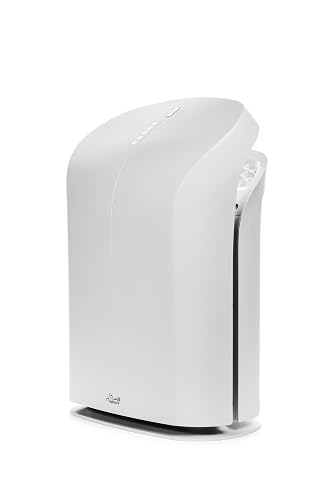
Rabbit Air BioGS 2.0 SPA-550A HEPA Air Purifier (White)
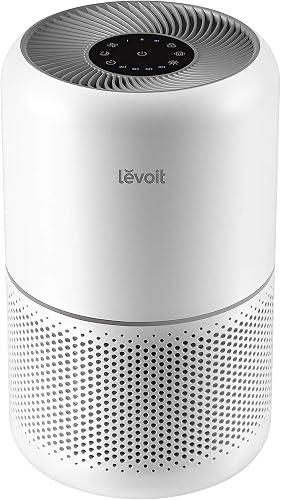
LEVOIT Core 300-P H13 True HEPA Air Purifier
GermGuardian AC4300WPT Pet HEPA Air Purifier, 22-Inch

DREO DR-HAP009 539 HEPA Air Purifier
Dr.Prepare Dual-Sided Pre-Filter Air Purifier, 3,000 ft²
DBFIT AP2410 HEPA Air Purifier with PM2.5 Sensor
DREO DR-HAP008 338 Air Purifier with Scent Diffuser
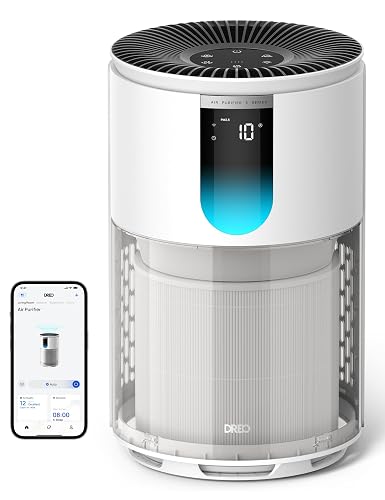
DREO DR-HAP009S 539S Smart Air Purifier
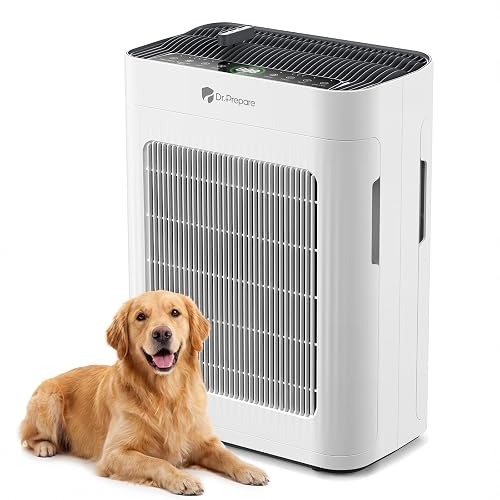
Dr.Prepare H13 Air Purifier with Fragrance & AQI

Rabbit Air A3 SPA-1000N HEPA Air Purifier (White)
The Strengths Of Each Pick
Built for rooms up to 550 square feet, the BioGS 2.0 SPA-550A brings a washable pre-filter, a BioGS HEPA stage, and an activated carbon layer into a wall-mountable frame. For a mid-size rat room with a single double-cage setup, it cycles the air twice per hour at top speed, which keeps bedding dust from settling on every surface. Unlike smaller desk units, this one is sized for a real animal room rather than a bedside table.
The BioGS HEPA media is rated for roughly 18 months of use before replacement, which trims filter cost over a couple of years of ownership. Owners commonly report a noticeable drop in stale-cage odor within the first week, and the carbon layer handles the bulk of ammonia when bedding changes stay on a steady schedule. The unit also runs quieter than its mid-size footprint suggests, so it fits in shared living areas without dominating the room.
Bright Spots
- Long-life BioGS HEPA reduces filter swap frequency over years of use
- Activated carbon stage absorbs ammonia and cage odor at a steady clip
- 550 sq ft coverage suits mid-size rat rooms and open basements
- Wall-mountable design saves floor space in tight keeper rooms
Trade Offs
- Larger footprint than bedroom-only units, so placement takes planning
- Replacement carbon filters add ongoing ownership cost over the long run
- Heavier unit overall, which complicates moving it between rooms
Who It Suits Best
Keepers running a medium-sized rat room who want a long-life filter and steady carbon performance without daily babysitting.
Where Another Pick Suits Better
The LEVOIT Core 300-P makes more sense for a single-cage bedroom where a 24dB sleep mode matters more than coverage square footage.
The Core 300-P is a compact H13 True HEPA unit built for bedrooms, where a single rat cage sits close to your sleeping area. A 24dB sleep mode keeps the fan from waking light-sleeper rats or restless owners, and the AHAM-verified performance label gives you a third-party CADR number to compare against other units in this size class. For most setups with one or two cages, the coverage handles a standard bedroom without running on high.
The trade-off shows up when the room expands. Coverage tops out around 1,073 square feet on a one-air-change-per-hour basis, which in real-world terms means the unit works hardest in 200 to 300 square foot bedrooms, not open colonies. The activated carbon pre-filter helps with mild odor, but heavy ammonia from multiple cages in an enclosed room pushes it harder than the spec sheet suggests.
A Few Highlights
- 24dB sleep mode stays quiet next to a rat cage overnight
- AHAM-verified CADR provides a real performance benchmark
- Compact cylinder fits on a dresser or shared side table
- Three-stage filter swaps in seconds without tools
Points To Note
- Carbon stage is light, so multi-cage ammonia calls for a larger unit
- Smaller coverage footprint struggles in open living areas
Key Specs
Made For
Single-cage rat owners who sleep in the same room and need a near-silent overnight run.
Consider Something Else When
Colony keepers with three or more cages should look at the Dr.Prepare dual-sided unit for whole-room ammonia control.
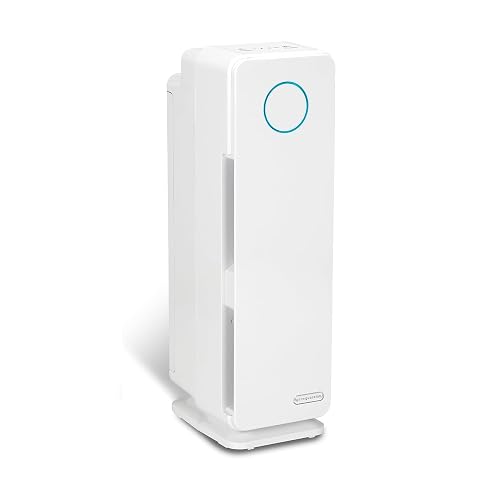
The GermGuardian AC4300WPT stands 22 inches tall and stacks a Pet Pure H13 HEPA filter with an optional UV-C bulb that targets airborne germs. The 22-inch tower shape pulls air through the full vertical column, and the carbon layer sits inside the same cartridge, simplifying replacement. Compared to the LEVOIT, this one is taller and louder on high but pulls more air per pass, which matters when a household mixes rats with dogs or cats.
Three speed settings plus an ultra-quiet mode give you real flexibility, and the UV-C feature toggles on and off depending on whether you want the bulb running. Owners commonly report that the Pet Pure treatment layer keeps the filter media from holding onto odors the way plain HEPA cartridges do, so the unit itself stays fresher between swaps. For multi-pet homes, that detail makes a bigger difference than it sounds.
Positive Points
- UV-C light adds a germ-targeting stage beyond standard HEPA
- Pet Pure-treated filter resists odor buildup inside the cartridge
- Tall tower design pulls more air per pass than compact cylinders
- Three speed settings plus an ultra-quiet mode cover day and night
Less-Strong Areas
- Taller footprint needs a stable spot away from curious rats
- UV-C bulb replacement is a separate recurring cost
Right Fit For
Multi-pet households with rats plus other animals that need stronger air throughput than a bedroom unit delivers.
Look Elsewhere When
Single-cage bedroom keepers who want the quietest possible fan will get more from the LEVOIT Core 300-P.
The DREO DR-HAP009 covers up to 1,176 square feet and pairs a true HEPA filter with a PM2.5 monitor, four fan speeds, and both Auto and Turbo modes. The PM2.5 display reads the room in real time, so the Auto mode can ramp the fan up when a cage cleaning kicks up dust and dial it back once the air settles. For colony keepers who want the unit to react on its own, that loop is the main reason to step up from a basic bedroom model.
AHAM-verified CADR sits at 158 CFM, which translates to a 12.4-minute refresh in a 245 square foot room, so this unit lives in the larger-room category. Compared to the LEVOIT, the DREO trades some of the bedroom quiet for bigger airflow and better automation. The Turbo mode handles a peak event like fresh bedding being poured, then Auto brings the noise floor back down without manual input.
Useful Touches
- PM2.5 sensor drives Auto mode without manual adjustments
- 158 CFM CADR handles mid-size rat rooms in 12-minute refresh cycles
- Four speeds cover whisper-quiet overnight to peak events
- AHAM verification provides independent performance numbers
Soft Spots
- Turbo mode runs loud during peak cleaning sessions
- Larger cabinet size requires a dedicated floor or shelf spot
Quick Facts
Best Suited To
Multi-cage colony owners who want automated fan control tied to a real PM2.5 reading instead of guessing.
A Better Fit Elsewhere
Single-rat owners in a small bedroom will be happier with the cheaper LEVOIT Core 300-P and a quieter fan curve.
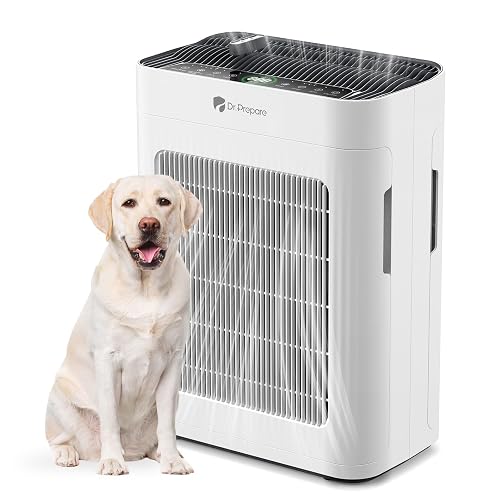
The Dr.Prepare dual-sided unit pulls air from both sides of the cabinet at once, which doubles the intake surface area over a single-intake model of the same height. The washable pre-filter catches pet hair and bedding fuzz before it reaches the HEPA cartridge, and a Pet Mode ramps the fan to match the kind of dust event that comes with multiple cage changes. For keepers running a basement rat room or a large foster setup, the dual intake keeps the air moving without starving the HEPA stage.
The 3,000 square foot rating is a 1 ACH figure, so real-world coverage lands closer to 600 to 1,000 square feet at a comfortable refresh rate. The PM2.5 display sits on the front, and the washable pre-filter rinses under a tap in seconds, which is a small ownership perk that adds up over months of use. The honest read is that this unit is overkill for a single cage, but it earns its spot when the room holds several.
Notable Gains
- Dual-sided intake doubles airflow surface over single-intake models
- Washable pre-filter reduces long-term filter cost
- Pet Mode matches fan speed to multi-cage dust events
- PM2.5 display shows real-time air quality on the front panel
Honest Caveats
- Size and weight demand a permanent spot in the room
- 3,000 ft² figure is best-case at low ACH, not comfort airflow
- HEPA replacement cartridges are brand-specific and harder to find
Feature Snapshot
Who Will Love This
Multi-cage foster keepers and basement colony owners who need steady airflow and easy pre-filter maintenance.
Skip It When
A single-cage owner in a regular bedroom will pay for capacity they never use, so the LEVOIT Core 300-P fits better.
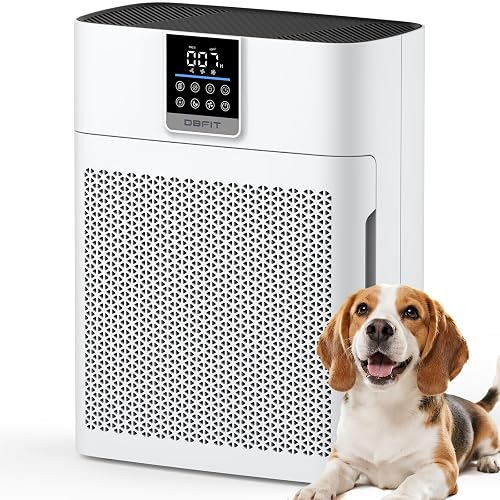
The DBFIT AP2410 covers up to 2,180 square feet at one air change per hour, with a three-stage filter system and a washable nylon pre-filter that handles pet hair without frequent HEPA changes. Wider side air inlets pull more air per pass, and the PM2.5 sensor feeds a front display so you can see what your nose already suspects. The nylon pre-filter is a real practical advantage for rat owners, because loose bedding fibers clog paper pre-filters fast.
Compared to the Dr.Prepare, the DBFIT trades the dual intake for wider side inlets and adds an upgraded motor in the same overall footprint. The trade-off is that the unit looks and runs more like a standard tower, which matters if the room has limited floor space. The PM2.5 sensor drives Auto mode in the same way the DREO does, but without the brand-name recognition.
Well-Handled Touches
- Washable nylon pre-filter handles pet hair without daily cleaning
- PM2.5 sensor enables Auto mode on real air quality readings
- Up to 2,180 ft² coverage fits large open rat rooms
- Wider side inlets improve airflow over single-grille designs
Some Limits To Know
- Brand has shorter track record than DREO or Rabbit Air
- 2,180 ft² figure assumes low ACH, not comfort airflow
Perfect Match For
Keepers with heavy pet hair and bedding dust who want a washable pre-filter that doesn’t need replacing every month.
Reach For A Different Pick When
Owners who prioritize brand trust and longer-term filter support will feel safer with the DREO DR-HAP009.
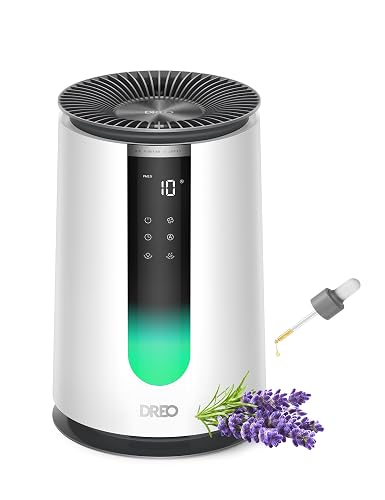
The DREO 338 is a smaller sibling to the 539, with an AHAM-verified CADR of 115 CFM and a scent diffuser built into the top of the unit. Coverage tops out around 178 square feet for a 4.8 ACH refresh, which keeps it squarely in the single-room category. The scent slot is the unusual feature here, and it lets owners add a few drops of pet-safe fragrance without leaving an open diffuser near curious rats.
Compared to the LEVOIT Core 300-P, the DREO 338 runs a similar bedroom footprint but adds a real HEPA stage with AHAM verification on the smaller side. The honest read is that the scent diffuser is a nice-to-have rather than a must-have, and any fragrance use needs vetting against what your rats can tolerate. For most keepers, the diffusing feature is the deciding factor between this model and the LEVOIT.
Practical Pluses
- AHAM-verified CADR gives third-party performance data
- Built-in scent slot adds a controlled fragrance option
- Compact size fits on a shelf next to a rat cage
- HEPA Sleep Mode drops noise floor for overnight use
Small Caveats
- Scent option requires care to avoid irritating rat respiratory systems
- Smaller coverage than the DREO 539 for whole-room use
Feature Snapshot
Built With In Mind
Single-cage owners in a small bedroom who want AHAM verification and a controlled scent option in one unit.
Swap It Out When
Multi-cage colony keepers will want the higher airflow of the DREO 539 or the Dr.Prepare dual-sided model instead.
The DREO 539S shares the same 158 CFM AHAM-verified CADR and 1,176 square foot coverage as the 539, then layers in Wi-Fi and voice control for smart-home setups. The app lets you check the PM2.5 reading from another room, and you can drop the fan into Sleep mode with a voice command during a late-night ammonia spike. For tech-forward rat owners, that hands-off control is the main reason to step up from the standard 539.
You may find the smart features useful only if you already run a smart-home hub or use voice assistants in the same room as the cage. Compared to the DREO 338, the 539S trades the scent diffuser for app and voice control, which is the practical deciding point. The filter media is the same across both DREO models, so ongoing cost stays consistent regardless of the smart layer.
Where It Delivers
- Wi-Fi app control shows PM2.5 readings from another room
- Voice control drops fan to Sleep mode hands-free
- Same 158 CFM AHAM-verified performance as the standard 539
- Filter media matches the 539 for predictable replacement cost
Worth Bearing In Mind
- Smart features add cost that single-cage owners may not need
- App setup requires a 2.4 GHz Wi-Fi band and account creation
Whose Shelf It Belongs On
Smart-home owners with mid-size rat rooms who want hands-off control and remote air quality checks.
Where A Sibling Pick Shines
Keepers who want a built-in scent option will find the DREO 338 a better fit than the 539S for the same room size.
The Dr.Prepare H13 unit adds a 20dB sleep mode and a fragrance feature to the dual-sided intake design, with an AQI display on the front panel. The 177 CFM CADR and 3,000 square foot top-end figure match the larger Dr.Prepare, but the sleep mode drops the noise floor to library-quiet levels for overnight runs. For rat owners who want whole-room coverage plus a quiet bedroom presence, this one bridges the gap between the loud dual-intake unit and the quiet LEVOIT.
The fragrance slot is the practical difference from the standard Dr.Prepare, and it follows the same caveat as the DREO 338: any scent use needs vetting against rat respiratory sensitivity. The H13 HEPA captures particles down to 0.3 microns, which covers dander, bedding dust, and most household fibers. Owners commonly report that the 20dB sleep mode lets the unit run all night without disturbing the cage.
Advantages To Know
- 20dB sleep mode is one of the quietest in this size class
- Dual-sided intake plus fragrance feature in one cabinet
- 177 CFM CADR handles mid-size colony rooms
- AQI display shows real-time air quality
Where It May Fall Short
- Fragrance option requires caution around rat respiratory systems
- Brand-specific replacement filters are harder to source than DREO
Feature Rundown
Who Should Grab It
Multi-cage owners who want whole-room coverage plus a quiet overnight run from a single unit.
Not Your Match When
Smart-home owners will get more from the DREO 539S with its Wi-Fi and voice control layer.
The Rabbit Air A3 SPA-1000N brings a six-stage customizable filtration system and a 20.3 dBA whisper-quiet low setting into a wall-mountable frame. The six-stage layout lets owners swap filter types to match the room, so a pet allergy configuration prioritizes dander and ammonia over smoke or chemicals. Compared to the BioGS 2.0, the A3 is the upgrade tier for keepers who want configurability and a near-silent low speed.
The A3 costs more than the BioGS 2.0, and the filter media is brand-specific, which adds long-term cost. For rat keepers with allergies or asthma, the customizable stages pay off in cleaner air, but the price gap only makes sense if the room sees heavy use. The wall-mount option saves floor space, and the A3’s footprint suits a dedicated rat room over a corner of a bedroom.
Everyday Wins
- Six-stage customizable filter setup matches specific air quality needs
- 20.3 dBA low setting is genuinely whisper-quiet
- Wall-mountable frame saves floor space in small keeper rooms
- Strong brand track record in pet-allergy filtration
Practical Considerations
- Brand-specific replacement filters cost more than generic options
- Premium price point exceeds single-cage needs
Right Fit For
Allergy-sensitive keepers running a dedicated rat room who want configurability and a true whisper-quiet low speed.
A Better Fit Elsewhere
Budget-focused single-cage owners will get similar results from the LEVOIT Core 300-P at a lower cost.
What To Weigh Before Choosing An Air Purifier For Your Rats
Match The Coverage To The Cage Setup
The first number that matters is rated coverage, but the practical number is what the unit does in your actual room. A 550 square foot rating on a small bedroom purifier means 200 to 300 square feet at a comfortable refresh rate, not 550. A single-cage bedroom setup runs well on a 1,073 square foot rated unit, while a multi-cage colony in a basement needs the 1,176 to 3,000 square foot class. Size the unit to the room, not to the rating on the box.
HEPA Grade And Carbon Depth Drive Odor Control
HEPA filters are rated by class, with H13 capturing 99.97% of particles down to 0.3 microns. That grade handles dander, bedding dust, and most household fibers. The carbon stage is what tackles ammonia and cage odor, and depth matters more than the marketing claim. Light carbon pre-filters handle one or two cages, but multi-cage setups need a thick carbon layer or a dedicated odor cartridge. Match the carbon depth to the ammonia load, not to the room size.
Noise Floor And Sleep Modes Matter In Bedrooms
A unit running 35 to 50 dB on low works fine in a living room, but it disrupts light-sleeping rats and nearby owners. The 20 to 24 dB sleep mode range is the sweet spot for bedrooms, and it lets the unit run overnight without the cage becoming a stress zone. If the unit sits in a common area, the noise floor matters less, but the sleep mode still helps during quiet evenings.
Pre-Filter Maintenance Affects Long-Term Cost
Washable pre-filters, like the nylon mesh on the DBFIT and the dual-sided pre-filters on the Dr.Prepare units, cut down on HEPA replacement frequency. For rat owners, that adds up because loose bedding fibers clog standard pre-filters quickly. A washable layer that rinses under a tap every couple of weeks keeps the HEPA cartridge working at full capacity for its rated lifespan.
Key Things To Watch Before You Buy
Common Shopping Slip Ups
Picking by coverage rating alone is the most common mistake, because the headline number assumes one air change per hour, which is barely adequate for a rat room. A 1 ACH room still feels stale during a bedding change, so comfortable operation usually needs 4 to 5 ACH, which shrinks the rated coverage dramatically. Buyers also overlook the carbon stage, expecting HEPA alone to handle cage odor, when HEPA is a particle filter, not an odor filter.
Another pitfall is buying for the room and not the noise environment. A high-CADR unit that runs loud during the day may not work in a bedroom, and a quiet unit may not move enough air for a colony. Match the noise floor to the time of day the unit runs hardest, not just to the square footage of the room.
Where The Extra Money Goes
The upgrade from a 200 to 300 dollar bedroom unit to a 400 to 600 dollar mid-size model buys you a real PM2.5 sensor, a thicker carbon stage, and Auto mode that reacts to the air without manual input. The premium tier, like the Rabbit Air A3, adds configurable filter stages and longer filter lifespans, which lowers the long-term cost of ownership. The honest read is that you pay more upfront for a unit that needs less attention and fewer replacement cartridges over its lifetime.
Frequently Asked Questions
Do Rats Actually Need An Air Purifier?
Rats have sensitive respiratory systems, and bedding dust, paper substrate, and ammonia from urine build up fast in an enclosed room. A purifier pulls down particles and absorbs odor, which reduces the airborne load your rats breathe. For multi-cage rooms, the case is even stronger because ammonia accumulates faster than most owners realize.
How Often Should The Filter Be Replaced?
HEPA cartridges typically last 12 to 18 months in normal use, while carbon pre-filters need swapping every 3 to 6 months depending on cage count. Washable pre-filters rinse under a tap and last the life of the unit. Owners with several cages in one room should expect to replace carbon stages more often than the rated interval.
Is UV-C Light Useful For A Rat Room?
UV-C targets airborne germs but does not handle dust or ammonia, so it adds a stage rather than replacing HEPA or carbon. For rat keepers, the practical value is modest unless the room has recurring germ concerns. The GermGuardian AC4300WPT is the unit in this list that includes a UV-C option if that layer matters to you.
Can I Run The Purifier 24/7 Around Rats?
Most modern HEPA units are rated for continuous use, and many owners run them around the clock in animal rooms. The 20 to 24 dB sleep modes on the LEVOIT, DREO 338, and Dr.Prepare H13 are designed for overnight use without disturbing the cage. The main consideration is filter life, which shortens with continuous high-fan operation.
What About Scent Diffusers Near Rats?
Many rat owners avoid open diffusers entirely because rats react poorly to most fragrances and essential oils. The scent slots in the DREO 338 and Dr.Prepare H13 use a controlled, low-dose pad, but any fragrance use still needs vetting against what your specific rats tolerate. When in doubt, leave the diffuser empty and let the carbon stage handle odor alone.
Final Verdict
For most rat owners, the LEVOIT Core 300-P covers a single-cage bedroom well, while the DREO DR-HAP009 fits a multi-cage colony with its PM2.5-driven Auto mode. Larger setups with several cages in a basement or open room need the Dr.Prepare dual-sided intake to keep up with ammonia and dust. The right pick depends on your cage count, room size, and how much automation you want from the unit.