
Germs don’t just live on doorknobs and phone screens. They ride on dust, pet dander, and invisible particles that linger in the air you breathe every hour. For anyone managing allergies, sharing space with pets, or simply wanting a fresher home, the right air purifier makes a tangible difference in daily comfort.
True HEPA filtration captures the fine particulate that carries bacteria and many airborne irritants, while activated carbon tackles odors and volatile compounds. None of these units are medical devices, but they pull a meaningful layer of cleanup into your routine. The list below covers full-size machines, compact desktop options, and replacement filter packs, so you can match the tool to the room and the budget.
An Overview Of The Picks

iSingo 2 Pack Sprout Replacement Filters for LEVOIT Sprout
iSingo 2 Pack HAP602 Replacement Filter for ECOSELF HAP602
Jafanda HEPA Air Purifier for Home Large Room
VOOPNU 2 Pack DH-JH12 Compact Air Purifier with Night Light
ECOSELF Air Purifier for Home Large Room Up to 1800 Ft²
Rabbit Air A3 SPA-1000N HEPA Air Purifier (Black)
The Details Behind The Selections
These replacement cartridges are built specifically for the LEVOIT Sprout, a compact unit often placed in a nursery or small bedroom. The 3-in-1 design layers a pre-filter, a true HEPA media, and an activated carbon sheet into a single drop-in piece, so swapping takes seconds rather than minutes.
You already own a Sprout, so this entry is about keeping it pulling its weight. Most owners find that HEPA filters in this category need refreshing every six to eight months under normal use, and the two-pack covers roughly a year of swaps.
A Few Strong Suits
- Drop-in fit for the LEVOIT Sprout, no trimming required
- True HEPA layer captures fine particles that carry bacteria and allergen matter
- Activated carbon stage helps neutralize nursery odors and lingering cooking smells
- Two-pack format keeps a spare ready so you never run a dirty filter
Trade-Offs Worth Knowing
- Only fits the Sprout, not the wider LEVOIT Core or Top Fill lines
- Carbon layer is thinner than standalone carbon filters, so heavy smoke rooms may need more frequent changes
Right Fit For
Parents refreshing a Sprout already running in a baby’s room or small apartment bedroom.
Where Another Pick Suits Better
Shoppers without an existing Sprout should start with the Jafanda unit, which is a complete machine rather than a filter refill.
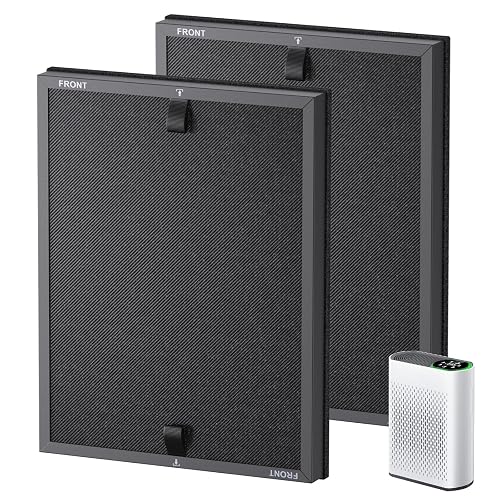
These HAP602 cartridges are tuned for owners of the ECOSELF HAP602 or HAP602WF, and they lean hard into the activated carbon side of filtration. Where the Sprout filter in the previous slot is a balanced everyday pick, this one is the right move when smells are the main complaint.
The 12.8 by 10 by 1.6 inch dimensions match the OEM spec, which matters because a sloppy fit lets unfiltered air slip past the seal. The three-stage stack handles smoke and pet odors before they spread through an open floor plan.
Everyday Wins
- Thick activated carbon bed, which is the heavy lifter for kitchen smoke and litter-box smells
- H13-class HEPA media handles fine particles in the 0.3-micron range
- Two-pack design keeps maintenance predictable across an entire year for most homes
- Dimension-matched to the OEM housing for a tight seal
Honest Caveats
- Locked to two ECOSELF models, so it has zero use for other purifier brands
- Carbon media saturates faster in heavy-smoking homes, so you may need to swap ahead of schedule
Key Attributes
Made For
Pet owners and home cooks already running the ECOSELF HAP602 in a smell-heavy space.
Reach For A Different Pick When
You need a full purifier rather than a refill, in which case the ECOSELF large-room model a few entries down is the natural step up.
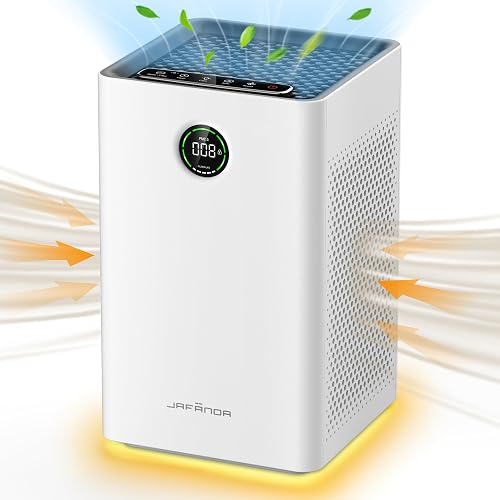
The Jafanda JF260 is the first full purifier on this list, and it lands squarely in the open-plan territory. A 153 CFM clean air delivery rate sounds like a spec sheet number, but in practice it means the unit refreshes a roughly 600 square foot living space a couple of times an hour without sounding like a desk fan on overdrive.
Its three-stage filter combines a true HEPA layer with a generous 300 gram carbon bed, which is heavier than what you find in many similarly priced competitors. The integrated PM2.5 sensor and a soft night light round it out for bedrooms and shared family rooms.
Bright Spots
- High CADR rating for the price tier, which translates to faster air turnover in real rooms
- Hefty carbon mass handles smoke and pet dander odors without losing performance within weeks
- Sleep mode keeps noise low enough for light sleepers in most bedrooms
- PM2.5 readout gives a visible signal of how the room is responding
Points To Keep In Mind
- Large coverage claim assumes standard ceiling height; vaulted rooms will see reduced effectiveness
- Filter replacements are a real ongoing cost worth budgeting for every six to twelve months
Whose Shelf It Belongs On
Families with open living areas who want one machine to cover the main shared space.
A Better Fit Elsewhere
For a smaller bedroom or dorm, the VOOPNU 2-pack handles the job at a fraction of the size and cost.
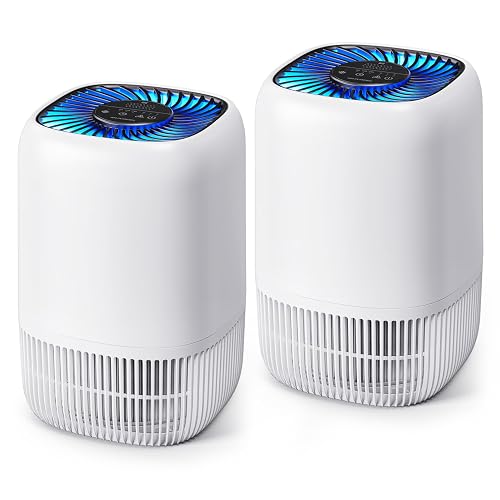
The VOOPNU DH-JH12 trades raw airflow for footprint. At roughly 6.7 inches square and under 10 inches tall, it disappears onto a desk or nightstand, and the two-pack format means you can drop one in the bedroom and one in a home office without doubling your research time.
Compared to the Jafanda’s room-eating CADR, this one runs a much gentler cycle, and that is exactly the point. A whisper-quiet 22 dB on low keeps it from competing with a baby monitor, and the fragrance sponge slot is a small but appreciated touch for anyone who likes a light scent in the room.
Reasons It Performs
- Two-pack delivery makes it easy to cover two rooms at once on one purchase
- Low 22 dB operation is friendly to shift workers and infants
- Night light function replaces a separate bedroom accessory
- Fragrance sponge adds optional aromatherapy without a separate diffuser
Small Caveats
- Not built for large or open-plan spaces; performance drops sharply past roughly 150 square feet
- Compact filters need more frequent swaps under heavy daily use, which is a practical ownership point to plan for
Feature Card
Who Should Grab It
Students, remote workers, and apartment dwellers furnishing multiple small rooms on a single order.
Skip It When
You need to clean a single large room; the Jafanda or ECOSELF will serve you much better.
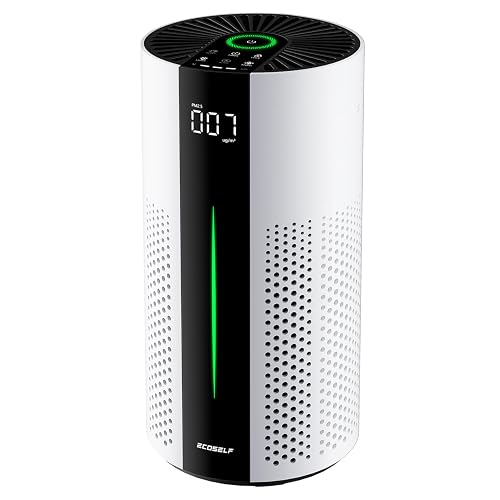
The flagship ECOSELF purifier earns its slot by covering the spaces other machines on this list cannot. With 360 degree intake pulling air from every side, it cleans a great room, finished basement, or open loft without needing to be wedged into a corner to work well.
Where this one really earns its keep is the auto mode. The PM2.5 sensor reads the air and ramps the fan up when pollen, smoke, or cooking output spikes, then drops back to a near-silent hum when things settle. You stop thinking about it, which is the highest compliment for a household appliance.
Useful Touches
- Real-time air quality response that adjusts fan speed without manual input
- 360 degree intake delivers consistent performance regardless of placement
- Coverage rating handles apartments and small homes with a single unit
- Auto mode reduces energy use during low-pollution stretches
What To Weigh
- Premium size means it commands floor space rather than tucking onto a shelf
- Replacement filter cost is the main long-term expense, so factor in a twelve-month budget
Best Suited To
Owners of open-concept homes or anyone wanting a hands-off purifier for a single primary living area.
Look Elsewhere When
You only need a nursery or office unit, where the VOOPNU’s compact build makes more sense than raw coverage.
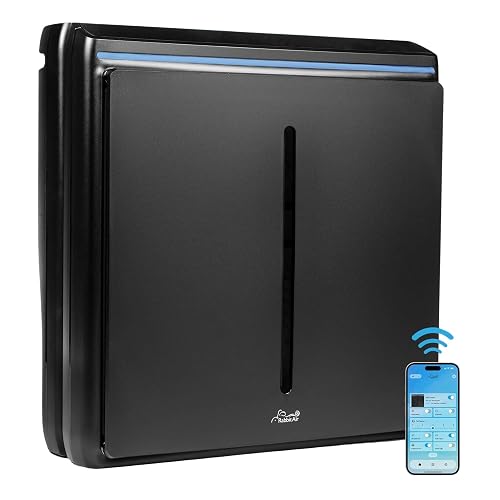
The Rabbit Air A3 closes the list as the long-term owner pick. Its six-stage filtration is genuinely customizable, so you can load a filter targeted at pet allergies, smoke, or maximum germ capture depending on the season. The wall-mountable design also makes it the most design-friendly unit here, fitting the look of a real living room rather than a utility closet.
At roughly 20 dB on the lowest setting, it is the quietest full-size unit on this list, which matters if it lives in a nursery or home office. It costs more up front than the Jafanda or ECOSELF, but the build and filter longevity change the math for anyone planning to keep a single purifier for a decade.
The Value In It
- Six-stage customizable filtration adapts to allergies, pets, or smoke as needs shift
- Ultra-quiet 20.3 dB low setting disappears into a bedroom
- Wall-mountable frame frees up floor space in tight rooms
- Long filter life offsets the higher entry cost over time
Room For Improvement
- Premium pricing puts it out of reach for casual or first-time purifier shoppers
- Custom filter cartridges cost more than generic replacements, a practical ownership cost to plan for
Feature Rundown
Perfect Match For
Design-conscious households and long-term owners who want a single purifier that adapts as their air-quality needs shift.
Swap It Out When
You are furnishing a first apartment on a tighter budget, where the Jafanda offers most of the airflow at a lower entry cost.
What To Weigh Before Choosing An Air Purifier
Match Coverage To Your Real Room Size
Square footage ratings on the box assume standard eight-foot ceilings and at least one full air exchange per hour. For most homes, picking a unit rated for slightly more square footage than your actual room gives the filter headroom to age without losing performance. The ECOSELF and Jafanda both overshoot their headline numbers, which is why they work well in open living spaces rather than tight bedrooms.
Understand What HEPA Grade Really Means
A true HEPA filter must capture 99.97 percent of particles at 0.3 microns, the most penetrating particle size. H13 is a common European designation that meets or exceeds that bar. Lower grades, often labeled “HEPA-type,” do not. For germ-focused filtration, true HEPA or H13 media is the baseline worth holding.
Activated Carbon Handles The Smell Side
HEPA alone does little for odors, smoke, or volatile organic compounds. Activated carbon absorbs those gases, and the carbon mass, often listed in grams, is a real signal of capacity. The Jafanda’s 300 gram carbon bed is heavier than many competitors at the price, and it shows up in everyday use when cooking or pets are part of the equation.
Noise, Footprint, And Ongoing Filter Cost
A purifier that gets unplugged because it is too loud or too big is not saving you anything. Match the form factor to the room, and budget for replacement filters every six to twelve months depending on usage and pollution load.
Key Considerations Across These Picks
Common Buying Slip Ups
Chasing the highest square footage rating usually leads to oversized units running on low in rooms that do not need them. They work, but they cost more up front and use more energy. The other common miss is forgetting the filter budget. A purifier is a recurring-cost purchase, and skipping the math on replacement cartridges turns a good deal into an abandoned appliance in a year.
Why Higher Tier Units Cost More
The jump from a basic compact purifier to a Rabbit Air A3 buys you quieter operation, customizable filtration, and longer filter life. For a small bedroom, that upgrade rarely justifies the price. For a primary living space where the purifier runs all day for years, the premium pays for itself in lower noise, fewer filter swaps, and a build that survives a decade of daily use. The honest read is that the upgrade earns its place when the unit is part of the household rather than a corner accessory.
Frequently Asked Questions
Do air purifiers actually help with germs?
True HEPA filters capture particles that carry bacteria and many viruses, which lowers the load in the air you breathe. They are not medical devices and do not sterilize a room, but they meaningfully reduce airborne particulates in daily use.
How often should I replace the filter?
Most true HEPA filters last six to twelve months under normal household use. Activated carbon layers often saturate faster in smoke-heavy or pet-heavy homes, so the practical answer is to watch the airflow and odor response rather than the calendar alone.
Is a larger room rating always better?
Not necessarily. Oversizing a unit for a small bedroom wastes energy and often pushes you into a louder fan curve than you need. Match the rating to the actual room and add a small safety margin rather than doubling up.
Can I run an air purifier all night?
Yes, most modern units are designed for continuous low-speed operation. Look for a sleep mode or low dB rating if the unit will live in a bedroom or nursery.
Where is the best place to put an air purifier?
Put it in the room you spend the most time in, ideally a few feet off the wall and away from corners that block intake. For whole-home coverage, run one unit on each floor rather than expecting a single machine to push air through closed doors.
Wrap Up
Air quality shows up in how a home feels at the end of a long day, not in spec sheets. Match the purifier to the room, keep fresh filters on hand, and let the unit run. Cleaner air is one of the easier daily upgrades to actually feel.