
You open the windows on the first warm day of spring and the room starts to smell like a meadow, which sounds lovely until your sinuses tighten and the cat starts sneezing. For households dealing with pollen, dander, wildfire smoke, or just the constant dust of daily life, a purifier with a washable pre-filter changes the math. The reusable layer catches the big stuff before it clogs the HEPA stage, so you swap cartridges less often and stretch every filter further. The ten picks below cover everything from compact bedroom units to whole-home performers, and they all share that same money-saving, landfill-reducing design trick.
The Shortlist At A Glance

DREO Air Purifier for Home, Up to 1176 ft², HEPA Sleep Mode (DR-HAP009)
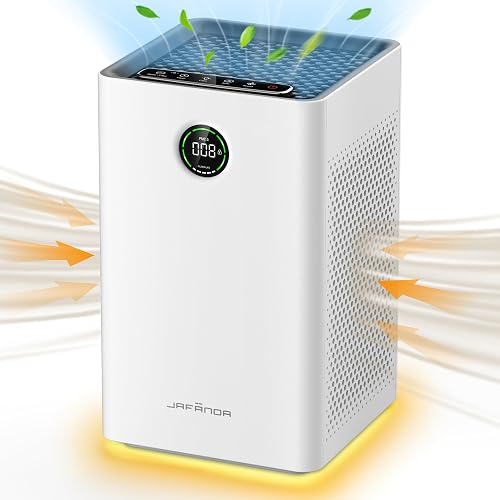
Jafanda HEPA Air Purifier for Home Large Room with Carbon Filters
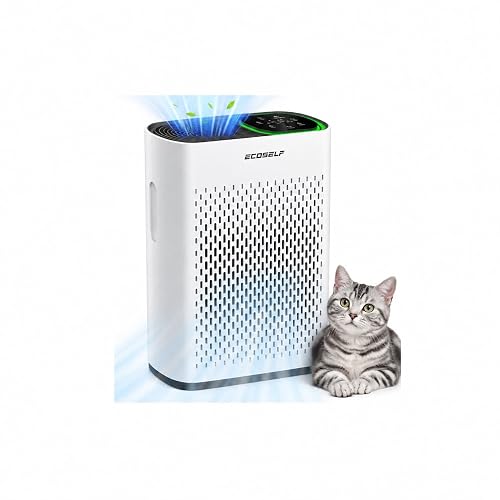
ECOSELF Air Purifier for Large Room, 360° Airflow, HAP602
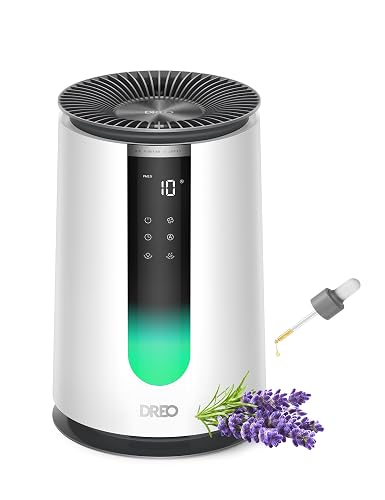
DREO Air Purifier for Bedroom, HEPA Sleep Mode (DR-HAP008)
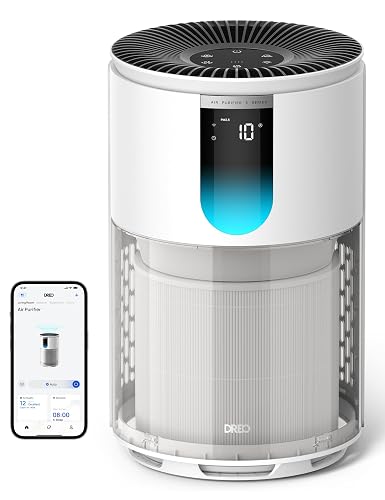
DREO Smart Air Purifier for Home, Wi-Fi/Voice (DR-HAP009S)
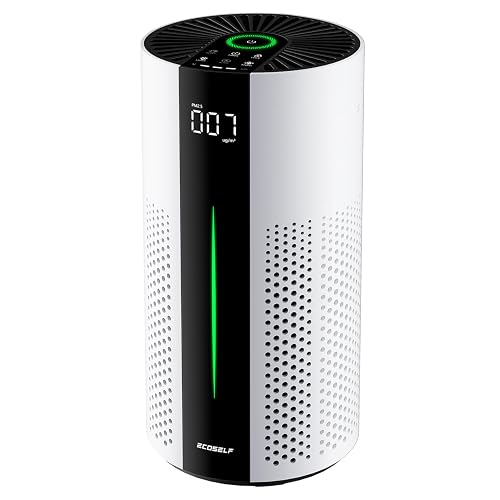
ECOSELF Air Purifier for Home Large Room Up to 1800 ft²
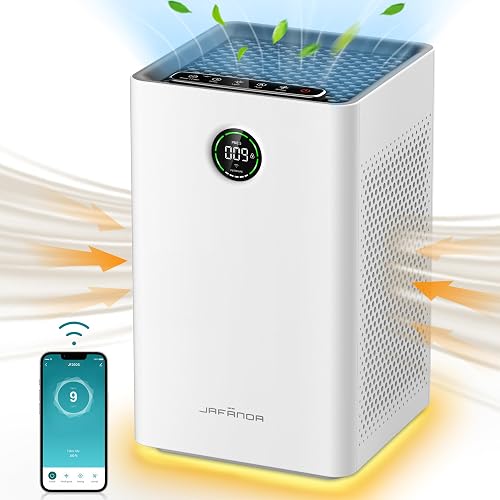
Jafanda Smart WiFi Air Purifier JF260S, Activated Carbon
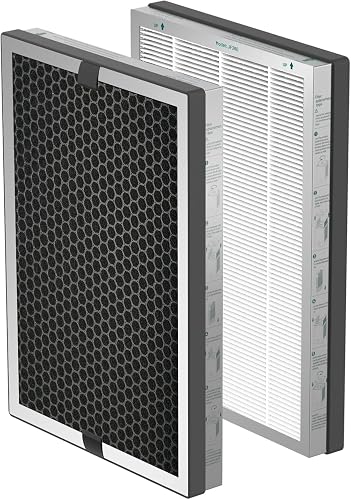
Jafanda JF260 Replacement Filter, 2-Pack, True HEPA + Carbon

Jafanda JF260 Air Purifier with 2-Pack Replacement Filters

Rabbit Air A3 SPA-1000N HEPA Air Purifier, Pet Allergy
A Closer Look At Each Pick
If you live in an open-plan space where the kitchen, living room, and entryway all blend together, the DREO DR-HAP009 is built for that exact challenge. Its AHAM-verified CADR of 158 CFM and a 1176 ft² coverage rating mean you can run it once and feel a difference across a generous footprint. The washable pre-filter catches hair and lint, the HEPA stage traps finer allergens, and the carbon layer helps with cooking smells that drift from the kitchen.
Compared to the Jafanda unit below, this DREO trades app control for a slightly higher CADR, which matters more in wide rooms. The PM2.5 display gives you a real number to look at, and four speeds plus a turbo mode let you crank it up after you burn the toast.
Positive Points
- AHAM-verified CADR of 158 CFM with independently tested room coverage up to 1176 ft².
- Washable pre-filter cuts down on replacement frequency and catches the bulky stuff first.
- PM2.5 monitor shifts fan speed automatically, so the unit reacts when smoke or pollen spikes.
- Four speeds with dedicated sleep and turbo modes for any time of day.
Things To Consider
- Turbo mode can get loud, so light sleepers may want to schedule it for daytime hours.
- HEPA and carbon filters still need eventual replacement, even with the washable pre-filter catching the worst of it.
Key Specs
Right Fit For
Households with one big open room who want a verifiable CADR rating and a washable pre-filter to stretch filter life.
Look Elsewhere When
You want app or voice control without buying a separate hub, in which case the DREO DR-HAP009S picks up that slack.
The Jafanda JF260 brings a true HEPA stage and a 300g activated carbon filter into a price range that doesn’t ask you to compromise on the carbon. The carbon weight matters here, because lighter carbon filters lose their odor-fighting power quickly. Paired with a washable composite pre-filter, the unit keeps pet dander and hair out of the deeper layers, which is a recurring pain point in homes with shedding dogs or cats.
Next to the DREO DR-HAP009, this Jafanda trades a touch of CADR for a heavier carbon dose and an integrated night light. For a bedroom that doubles as a cat nap zone, that is a fair swap. The night light is soft enough to leave on and bright enough to navigate around the room without turning on overhead lights.
Where It Excels
- True HEPA plus 300g activated carbon tackles allergens and household odors in one pass.
- Washable pre-filter extends the life of the deeper layers, lowering long-term cost.
- PM2.5 display plus sleep mode covers both daytime monitoring and nighttime quiet.
Points To Keep In Mind
- Composite pre-filter cannot be washed with water; vacuum it every couple of months instead.
- Coverage is generous but lower than the DREO flagship, so very large lofts may feel under-served.
Best Suited To
Bedroom-focused shoppers with pets, allergies, or kitchen odors who want a substantial carbon filter without overspending.
Not Your Match When
You need to control the unit from your phone, in which case the Jafanda JF260S adds Wi-Fi and voice.
The ECOSELF HAP602 is the kind of unit that earns its space in a finished basement or a converted loft. Its 360° airflow pulls dirty air in from every direction, which means placement matters less than it does with a single-sided tower. A real-time PM2.5 display sits up top on a large touch panel, and the indicator shifts through green, blue, yellow, and red so you can read the air quality from across the room.
Where the DREO 539 is a confident middle-of-the-house pick, the HAP602 leans into volume. Its 20 dB sleep mode is genuinely whisper-quiet, which is unusual for a purifier this size. Owners commonly report that the larger footprint requires a deliberate spot rather than tucking it into a corner.
What Works In Its Favor
- 360° intake captures air from all sides, so the unit is forgiving about placement.
- Real-time PM2.5 display with color-coded indicator makes status obvious at a glance.
- Three-stage true HEPA filtration handles dust, dander, and smoke in larger volumes.
- Sleep mode drops to 20 dB, which is quiet enough for a bedroom despite the room size.
Honest Caveats
- Its physical size is substantial, so smaller rooms will feel crowded around it.
- Higher fan speeds deliver serious airflow but raise the noise floor noticeably.
Feature Snapshot
Made For
Anyone outfitting an oversized room, finished basement, or open loft where a smaller purifier just cannot keep up.
Skip It When
You mostly need bedroom-scale coverage and prefer a slimmer tower like the DREO DR-HAP008.
The DREO DR-HAP008 is the smaller sibling of the DR-HAP009, and it earns its place on a nightstand or in a nursery. Its AHAM-verified CADR of 115 CFM is matched to rooms up to roughly 178 sq. ft. at 4.8 air changes per hour, which is exactly where most bedrooms land. The HEPA sleep mode dims the panel and drops the fan to a near-silent hum.
Unlike the Jafanda JF260, this DREO adds a scent diffuser pad for essential oils, which sounds like a small detail until you are trying to fall asleep with the windows closed. The PM2.5 monitor still drives auto mode, so the unit wakes up when pollen or smoke drifts in.
Well-Handled Touches
- AHAM-verified CADR of 115 CFM gives you a tested baseline rather than a marketing number.
- HEPA sleep mode with dimmed display is genuinely bedroom-friendly.
- Scent diffuser slot adds an option that most purifiers leave out.
- PM2.5 auto mode ramps the fan up when air quality dips overnight.
Trade-Offs
- Smaller coverage means it is not the right pick for an open-plan area.
- Auto mode can react to cooking smells, which feels overly sensitive in a studio apartment.
Who Should Grab It
Light sleepers, nursery setups, and small-bedroom dwellers who care about verified performance more than maximum coverage.
Reach For A Different Pick When
You need to cover a connected living and dining space, where the DREO DR-HAP009 or ECOSELF HAP602 fits better.
The DREO DR-HAP009S takes the same 158 CFM AHAM-verified core as the DR-HAP009 and adds the kind of connectivity that fits a smart home. Wi-Fi, voice assistant pairing, and an app let you check air quality from the office and bump the fan up before you walk in the door. If your household already runs on routines, this slot fits without friction.
Where the non-smart DREO flagship is a “set it and forget it” machine, this one invites tinkering. Schedules, filter life tracking, and remote mode changes show up in the app. The washable pre-filter and HEPA stack are otherwise identical, so performance does not take a back seat to the smarts.
What Helps Most
- Wi-Fi and voice control let you run the purifier from anywhere in the house.
- App-based schedules and filter tracking take the guesswork out of maintenance.
- Same AHAM-verified 158 CFM core as the flagship DREO for consistent room coverage.
Things To Weigh
- Smart features only pay off if you actually use the app, otherwise the non-smart DR-HAP009 is the same machine for less.
- Voice control requires a compatible ecosystem you may not have set up yet.
Who It Suits Best
Connected-home households who already run routines and want a purifier they can poke from the couch.
Swap It Out When
You prefer simple controls and a lower price, in which case the DREO DR-HAP009 delivers identical filtration without the app.
The ECOSELF 1800 ft² model covers the awkward middle ground between a bedroom unit and a true whole-home machine. Its 360° intake design pulls air from every direction, so it works well when placed on a low table or in the center of a multi-use room. A built-in PM2.5 sensor keeps the auto mode honest, reacting when smoke, pollen, or cooking odors shift the air.
Next to the HAP602, this ECOSELF trades a slimmer feature set for a more approachable footprint. The washable pre-filter does the heavy lifting on pet hair and lint, which is the practical ownership angle that matters most in real homes. If you have ever peeled a hairball off a HEPA grille, you know the value.
Practical Pluses
- 360° intake delivers even airflow regardless of which side faces the wall.
- Real-time PM2.5 auto mode reacts as conditions change through the day.
- Washable pre-filter cuts down on hair and lint reaching the HEPA layer.
Less-Strong Areas
- Lacks the deep feature menu of the HAP602, including the large touch panel.
- Auto mode sensitivity varies, so you may want to dial it down during heavy cooking.
Whose Shelf It Belongs On
Multi-room households that want one unit to drift between spaces and react to changes without constant tweaking.
A Better Fit Elsewhere
You want the highest coverage available in the ECOSELF range, where the HAP602 pushes further into whole-home territory.
The Jafanda JF260S is the connected version of the JF260, and it carries the same 153 CFM CADR plus 300g carbon filter. The headline addition is its 23 dB sleep mode, which is the kind of quiet that lets you put it in a shared bedroom without negotiation. Wi-Fi and voice assistant support round out the package for households already running routines.
Compared to the DREO DR-HAP009S, the JF260S leans on carbon weight and ultra-low noise rather than sheer CADR. For a household with pets and a strict bedtime, that is a fair trade. The washable composite pre-filter also helps with the constant layer of pet hair that tends to drift across every surface.
Useful Highlights
- 153 CFM CADR with a 300g carbon filter handles both allergens and stubborn household odors.
- 23 dB sleep mode is among the quietest in this class.
- Wi-Fi and voice assistant support fit households that already use routines.
- Washable pre-filter reduces the deep-filter change frequency.
Worth Noting
- Composite pre-filter needs regular vacuuming, not water washing.
- Voice control works best inside a connected ecosystem, so set-up time adds a step.
Perfect Match For
Smart-home pet households who want a quiet bedroom-grade unit with both app and voice control.
Not Your Match When
You prefer a unit with no app dependency, in which case the standard Jafanda JF260 keeps things simple.
This is a replacement filter pack rather than a full purifier, but it belongs on this list because the reusable part of the system is the composite pre-filter. The washable layer handles hair, lint, and dander, and the deep HEPA plus 300g activated carbon filter underneath does the serious work. Buying a two-pack means you are covered for roughly a year of typical use, depending on air quality and run time.
If you already own a Jafanda JF260 or JF260S, this is the consumable that keeps the system honest. The honeycomb carbon mesh is a step up from thin carbon sheets, which is where cheaper replacements tend to fall short. Owners commonly report that swapping in a fresh filter restores the room-fresh feel that fades gradually over time.
A Strong Showing
- Washable composite pre-filter extends the life of the deep filter.
- Honeycomb carbon mesh holds more odor-absorbing material than lighter replacements.
- Two-pack format covers a typical year of maintenance for most households.
Points To Note
- Pre-filter must be vacuumed, never washed with water, which can catch first-time owners off guard.
- Only fits JF260 and JF260S models, so it is not a universal replacement.
Quick Facts
The Right Fit
Current JF260 or JF260S owners who want a heavy carbon filter and a true reusable pre-filter to stretch their maintenance budget.
Where Another Pick Suits Better
You do not yet own a Jafanda unit, in which case the Jafanda JF260 bundle on slot 9 ships the machine and filters together.
The JF260 bundle is the same machine as slot 2, paired with two extra replacement filters in the box. For first-time shoppers, that means you unbox the unit, run it, and forget about consumables for roughly a year. The washable composite pre-filter and the 300g activated carbon filter work together to handle both allergens and odors.
Compared to the standalone Jafanda JF260 in slot 2, this bundle trades a touch of upfront cost for the convenience of a year of maintenance handled. Coverage up to 1190 ft² at one air change per hour makes it a genuine large-room player rather than a glorified bedroom unit.
Where It Helps
- Includes two replacement filters, so first-time owners can defer filter shopping.
- True HEPA plus 300g carbon covers allergens, dander, and household odors.
- Washable pre-filter reduces how often the deeper layers need changing.
Smaller Limitations
- Composite pre-filter cannot be washed with water, only vacuumed.
- Bundle price is higher upfront than the standalone machine alone.
Spec Overview
Best Suited To
First-time Jafanda shoppers who want the machine and a year of filters without a second order.
Where A Sibling Pick Shines
You already own a Jafanda unit and just need replacements, in which case the 2-pack filter in slot 8 is the cheaper path.
The Rabbit Air A3 is the option for households that have tried cheaper purifiers and want to step up to a customizable system. Its 6-stage filtration lets you tailor the filter stack to specific concerns like pet allergies, germs, or odor. The 20.3 dBA low-setting operation is genuinely quiet, which is the figure that matters in a nursery or a bedroom with a partner who wakes easily.
Where the DREO and Jafanda models focus on doing one or two things well, the A3 aims to be the only purifier you need. The frame design is closer to a piece of furniture than a typical tower, and you can mount it on a wall. For allergy households, the pet allergy filter configuration is the headline feature.
What Pays Off
- 6-stage customizable filtration tailors the unit to specific air quality concerns.
- 20.3 dBA on low keeps the unit unobtrusive in bedrooms and nurseries.
- Sleek, wall-mountable frame blends into living spaces rather than hiding in a corner.
Possible Compromises
- Replacement filter cost runs higher than the budget tier, depending on the chosen configuration.
- Customization is a plus only if you want to dig into filter options; otherwise it can feel like overkill.
Who Will Love This
Allergy households and design-minded shoppers who want a premium, customizable system that can run all night.
Consider Something Else When
You want a simpler set-and-forget experience, in which case the DREO DR-HAP009 or the Jafanda JF260S cover most needs.
What Matters Most Before Choosing Air Purifiers With Reusable Filter
The reusable layer does real work, but it is only as useful as the filter system it protects. CADR, short for Clean Air Delivery Rate, tells you how much clean air a purifier pushes out per minute. AHAM verifies CADR independently, so an AHAM-verified number is more trustworthy than a marketing claim. Match CADR to room size rather than the largest number on the box, and your purifier will not run itself ragged chasing particles it cannot catch.
Filtration depth matters as much as airflow. A washable pre-filter catches hair and lint, the HEPA stage traps fine particles, and activated carbon handles odors. Carbon weight tells you a lot about how long the carbon stage will keep working. Lighter carbon filters fade quickly, which is why the Jafanda units lean on 300g carbon rather than a thin sheet.
Filter Care And Long-Term Cost
Every reusable pre-filter needs occasional cleaning, and most of them respond best to a vacuum rather than water. The composite pre-filters on the Jafanda units are a good example, since water washing can damage the mesh. A quick vacuum every other month is the rhythm that keeps the deeper filters from clogging.
Noise, Routines, And Smart Features
A purifier that runs all night has to be quiet enough to sleep through. Anything under 25 dB on its lowest setting is a strong bet for shared bedrooms. Smart features like Wi-Fi, voice control, and app-based schedules help in connected homes, but they add cost you may not need if you prefer a single physical button.
Real-World Use Scenarios
A large open-plan living room, a bedroom with a shedding pet, and a nursery with a strict quiet budget are three very different jobs. Matching the room profile to a purifier profile keeps you from overspending on coverage you will not use or underspending on capacity you genuinely need.
Smart Buying Angles Across These Picks
Mistakes Worth Dodging
The most common slip is buying on coverage alone and ignoring CADR. A purifier rated for 1800 ft² at one air change per hour will only refresh that room once every 60 minutes, which is not enough for allergy households that need four or five changes per hour. Always check both numbers. Another trap is assuming all carbon filters are equal, because lighter carbon sheets lose odor-fighting power fast. Finally, do not skip the pre-filter maintenance; a clogged pre-filter chokes the whole system.
When Paying More Pays Off
Higher-tier models like the Rabbit Air A3 earn their price through customization and quieter operation, which matters if the purifier runs in your bedroom every night. Extra carbon weight, verified CADR, and longer filter life are the practical upgrades that justify stepping up. For light-use scenarios like a guest room or a small office, a budget tier is more than enough. The honest read is that the upgrade is worth it when the unit runs for many hours a day in a space where noise and allergens both matter.
Frequently Asked Questions
How does a reusable filter save money on an air purifier?
The washable pre-filter catches the bulky particles that would otherwise clog the HEPA layer, so the deeper filter lasts longer between replacements. Over a year of typical use, that stretches the consumable budget noticeably.
Can a washable pre-filter handle pet hair effectively?
Yes, in most homes a vacuum-cleaned pre-filter handles pet hair well. The key is sticking to a routine every other month so hair does not build up and block airflow to the HEPA stage.
What is CADR, and why does it matter for air purifiers?
CADR stands for Clean Air Delivery Rate, and it measures how much clean air a purifier pushes out per minute. A higher AHAM-verified CADR clears a room faster, which matters most in bedrooms and allergy-heavy spaces.
Are air purifiers with reusable filters as effective as standard models?
In most cases, yes, because the reusable layer is the pre-filter, and the HEPA plus carbon stages still do the heavy lifting. The reusable part is about extending filter life rather than replacing deep filtration.
How often should the pre-filter on an air purifier be cleaned?
For most washable pre-filters, a vacuum every other month is the practical rhythm. Check your model’s manual for the exact schedule, and never wash a pre-filter that the manufacturer rates as vacuum-only.
Closing Remarks
The right air purifier with a reusable filter is the one that matches your room, your noise tolerance, and how often you want to think about maintenance. Start with CADR and coverage, weigh the carbon weight if odors are a real concern, and decide whether smart features earn their place in your home. Whichever pick lands on your shortlist, a clean pre-filter and an honest maintenance rhythm are what keep the whole system doing its job.