

Half the junk drawer disasters in any home trace back to dead AAs. A toy goes silent, a remote gives up, a kitchen scale blinks out mid-recipe, and suddenly you’re elbow-deep in a battery graveyard. The right charging setup turns that mess into something you barely think about, dropping power back into the cells you already own and keeping spares ready for the next surprise.
The six picks below split into two camps. Three are old-school four-bay chargers paired with rechargeable cells, the kind that quietly handle the AA-and-AAA basics. The other three are charging stations built to sort, test, and refill an entire household stash at once, with one travel-friendly case thrown in for shoppers who need portability.
A Closer Look At The Lineup
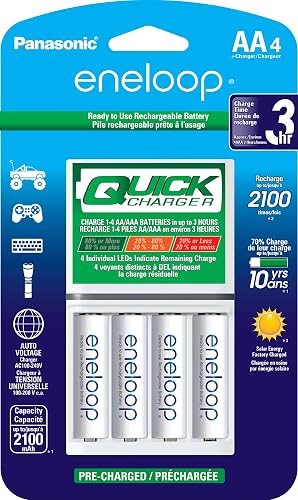
Eneloop K-KJ55MCA4BA Advanced Individual Battery Charger (White)
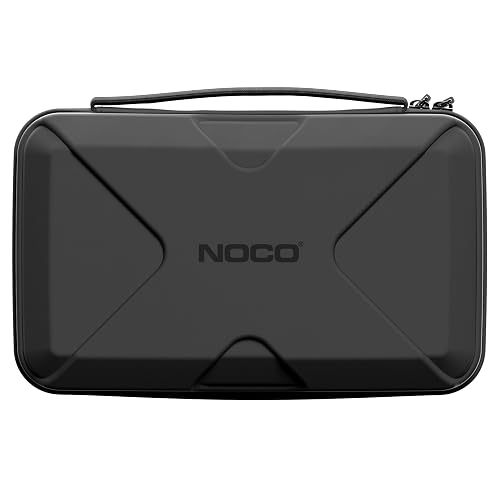
NOCO GC040 Universal EVA Protection Case
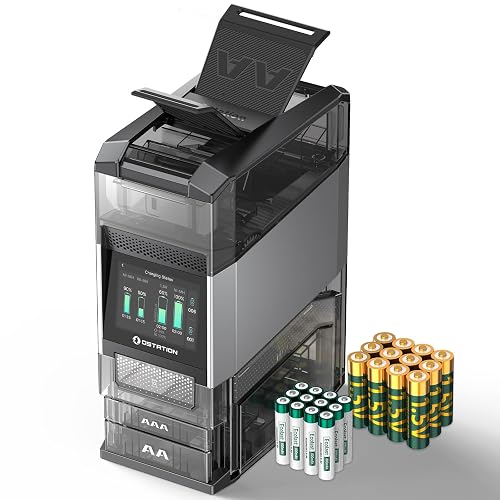
Ostation 2 Pro AA AAA Charging Station w/ 24 Batteries
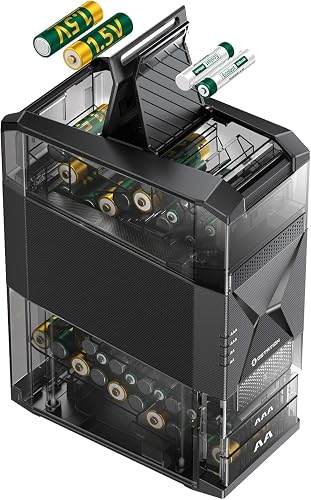
Ostation 2 Smart AA AAA Charging Station (NiMH/Lithium)
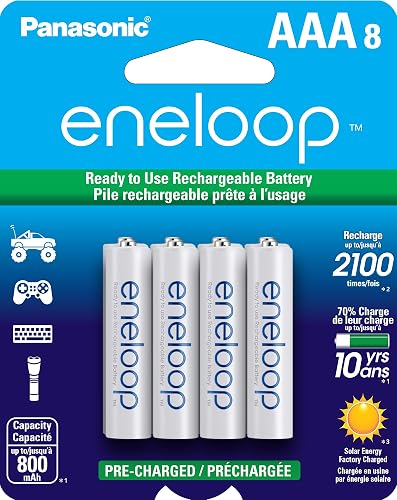
Eneloop CC55 Advanced pro Charger with 2100-Cycle AAs & AAAs
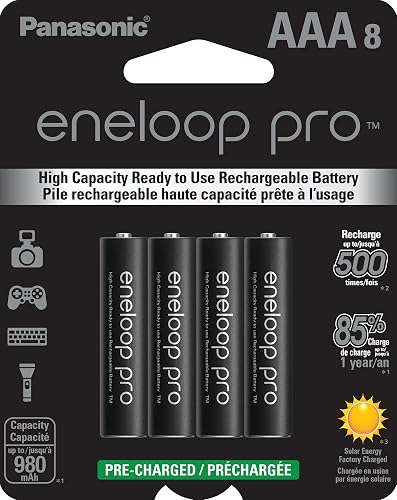
Eneloop CC55 Advanced pro Charger with High-Capacity AAs & AAAs
More On The Choices That Made The List
The K-KJ55MCA4BA is the kind of charger that gets handed down through a household. It arrives with four eneloop AA cells, slots each into its own charging channel, and finishes a full top-up in roughly three hours. Because every cell charges independently, a half-drained cell and a flat one can share the dock without either one slowing the other down.
NiMH (nickel-metal hydride) chemistry handles the slow self-discharge that used to plague rechargeables, so cells left in a drawer for a season still hold useful power. It also runs on standard household current through a folding plug, so there’s no bulky brick to lose behind the couch.
What Stands Out
- Four independent channels mean you can top off a single cell without waiting on three others.
- Pre-charged eneloop cells are usable straight out of the wrapper, no conditioning cycle required.
- NiMH chemistry holds a charge across months of storage, handy for emergency flashlights.
- Compact white housing slips into a junk drawer without dominating it.
Points To Note
- Limited to AA and AAA, so C, D, or 9V owners will need a second charger for those sizes.
- Indicator lights give a rough status only, not a precise percentage readout.
Key Specs
Right Fit For
First-time recharge households ready to retire a stack of alkalines and stop buying disposables.
Look Elsewhere When
You burn through a dozen cells a week and want hands-free sorting, where the Ostation 2 Smart takes over.
The GC040 is the one pick in this list that isn’t a charger at all. It’s a molded EVA (ethylene-vinyl acetate, a firm but slightly flexible foam) shell built to cradle a NOCO GENIUS-series smart charger and its cabling. Inside, fitted compartments keep the unit, clamps, and adapters from rattling against each other on the way to a job site or a lakeside cabin.
The carry handle and zippered closure make it behave more like a toolbox than a fragile accessory. For someone already invested in a NOCO charger, the case is the difference between a piece of gear that lives on a shelf and one that’s actually portable.
The Upside
- Tailored fit for GENIUS1, GENIUS2, GENIUS5, and GENIUS10 chargers means no shifting in transit.
- Rugged EVA exterior shrugs off scrapes in a truck bed or garage corner.
- Built-in handle makes a one-handed carry realistic across a parking lot.
Small Caveats
- Useless without a compatible NOCO charger already on hand.
- Smaller replacement parts like ring terminals may need their own pouch inside.
Whose Shelf It Belongs On
Owners of NOCO GENIUS chargers who service vehicles away from a permanent bench.
Skip It When
You’re only charging AA and AAA cells, where the Eneloop K-KJ55MCA4BA covers that ground directly.
The Ostation 2 Pro is built for homes that treat batteries like office supplies: refilled on demand, never thought about, always available. It pulls double duty as a charger, a tester, and a storage organizer that holds up to 24 cells in a single tower. Drop a handful of mixed AAs and AAAs into the top, and smart sorting sends each one to the right circuit.
Thermal-adaptive charging adjusts current as cells warm up, which matters during long sessions when 20-plus batteries are rotating through. Real-time monitoring means you can glance at the display and know which cells are full and which are still climbing.
Reasons It Performs
- Three-in-one design replaces a charger, a tester, and a battery bin on the counter.
- Smart sorting means no presorting by chemistry or charge level before each session.
- Dual MCC magnetic ports add flashlight charging for Olight Baton and Warrior series owners.
- High 24-cell capacity suits smart homes stuffed with sensors, remotes, and doorbells.
Trade Offs
- Footprint is larger than a four-bay charger, so a permanent counter spot helps.
- Premium feature set pushes it well above a basic starter kit.
Feature Snapshot
Best Suited To
Smart homes and pros juggling a constant turnover of sensors, remotes, and small electronics.
Swap It Out When
You only rotate a handful of cells at a time, where the Eneloop CC55 keeps things simpler and tidier.
The standard Ostation 2 Smart borrows the same tower format as the Pro but trims the extras. It still handles charging, testing, and storage in one shell, and the polarity-free slot design is its real party trick. A cell dropped in backward charges just the same, which removes a familiar frustration when kids raid the bin.
Auto-detection figures out the chemistry on its own, so NiMH and the brand’s 1.5V lithium rechargeables share the same bay without a setting change. For mixed households, that single detail keeps things calm.
Positive Takeaways
- Polarity-free slots kill the “which way does it go” hesitation at the charging dock.
- Auto-detection across NiMH and 1.5V lithium cells means no manual chemistry switch.
- Compact 24-cell organizer fits neatly on a desk or workshop shelf.
Things To Consider
- Doesn’t include the magnetic MCC ports found on the Pro version.
- Sells without bundled cells in many listings, so plan for an extra purchase.
Made For
Busy family workstations where anyone in the household should be able to drop a cell and walk away.
Consider Something Else When
You want bundled cells and magnetic flashlight ports in the same box, which the Ostation 2 Pro covers.
The CC55 kit is the next step up from the entry-level Eneloop charger, and the jump shows in the indicator panel. Each of the four bays wears its own color-coded LED, so a glance tells you which cells are nearly full (green), still climbing (orange), or basically empty (red). It’s the kind of feedback that keeps a household from pulling half-charged cells by accident.
Pair it with the bundled 2100-cycle AAs and AAAs, and the package becomes a long-haul investment. Eneloop rates those cells for up to 2,100 recharge cycles, which stretches years past ordinary rechargeables.
Practical Advantages
- Per-cell LED indicators remove guesswork during a charging session.
- Compatible with both eneloop and eneloop pro chemistries, so swapping brands is painless.
- Individual channel control means one weak cell never slows the rest.
- Pre-charged NiMH cells hold their charge across long storage.
A Few Limitations
- AA-only rated output may not match the highest-drain flashlights and camera grips.
- Bulkier than the K-KJ55MCA4BA, so a dedicated shelf is helpful.
Quick Facts
Who It Suits Best
Mixed-device households who want clear status feedback without the bulk of a charging tower.
A Better Fit Elsewhere
Power users running high-drain camera gear, where the Eneloop CC55 with high-capacity pro cells delivers longer runtime.
Where the previous CC55 kit trades cycle life for everyday value, this one trades capacity for stamina. The bundled pro cells push up to 2500mAh typical in AA form, a meaningful bump over the standard 2000mAh class. In real terms, that buys a wireless Xbox controller noticeably longer sessions and a camera flash faster recycle times.
The trade-off sits in cycle life. The high-capacity pro cells are rated for up to 500 recharge cycles, lower than the 2100-cycle standard cells, but for high-drain devices that trade makes sense. Charge them less often, run them harder, and the math still works out over years of use.
What Helps Most
- Up to 2500mAh typical capacity per AA cell extends runtime in demanding gear.
- Same per-cell LED feedback as the standard CC55, with no learning curve.
- Pre-charged NiMH cells arrive ready for first use.
Where It May Fall Short
- Up to 500 recharge cycles is lower than the standard pro cells, so long-term replacement adds up.
- Premium price reflects the higher capacity, not the best value for low-drain remotes.
At A Glance
Perfect Match For
Gamers, photographers, and anyone running wireless controllers or flash units that punish low-capacity cells.
Not Your Match When
Most of your cells live in TV remotes and clocks, where the Eneloop K-KJ55MCA4BA starter kit already does the job for far less.
Picking The Right Household Charger For Your Routine
Charger choice comes down to how batteries actually move through your home. A four-bay unit with bundled cells covers the basics for most people, while a charging tower pays off once the household runs through a dozen or more cells a month.
Match The Charger To Your Cell Volume
Count the devices that eat AAs and AAAs before anything else. A household with a couple of remotes and a smoke alarm gets full value from a four-bay charger and never needs more. Add a smart-home fleet of door sensors, thermostats, and game controllers, and a multi-cell station starts saving time within weeks. The Ostation 2 Pro is the one built for that kind of volume, while the Eneloop CC55 kits keep smaller operations tidy.
Capacity Versus Cycle Life
Two numbers drive long-term value: milliamp-hours (mAh, a measure of how much energy a cell stores) and recharge cycles. Higher mAh means longer runtime per charge, useful for high-drain gear. More cycles means a cell survives more years of use, useful for remotes and clocks that sip power slowly. Standard Eneloop cells favor cycles, while the high-capacity pro cells favor runtime. You may find the right balance is one of each, depending on which devices dominate.
Independent Channels And Status Feedback
Charging each cell in its own channel prevents one weak cell from slowing the rest, a real convenience in busy households. Color-coded indicators go further, letting you pull only the cells that are actually ready. The CC55 chargers and the Ostation stations both offer that visibility, while entry-level chargers tend to keep things simpler.
Key Considerations Across These Picks
Pitfalls Shoppers Hit
The most common mistake is buying a charger without checking cell compatibility. A four-bay unit designed for NiMH can choke on a 1.5V lithium rechargeable from a different brand, and mismatched chemistry is the fastest path to a dead cell. The Ostation 2 Smart sidesteps this with auto-detection, but most chargers require a closer look at the spec sheet. Another trap is underestimating how many cells a household actually rotates. A four-pack starter kit feels generous until the third gaming controller enters the picture.
Where The Extra Money Goes
Premium chargers earn their price with per-cell monitoring, thermal management, and broader chemistry support. Those features protect cells from overcharging and let you cycle through a large stash without babysitting. For low-volume households, that overhead rarely pays back. For smart homes and gear-heavy workshops, it’s the difference between a smooth routine and a daily chore. Higher-tier cells like the eneloop pro High-Capacity pack add their own premium, but deliver meaningfully longer runtime in demanding electronics.
Frequently Asked Questions
How long do rechargeable AA and AAA batteries actually last per charge?
NiMH cells in low-drain devices like remotes and clocks typically run for months on a single charge. High-drain gear such as wireless game controllers or camera flashes drains them in days, sometimes hours. Charge cycles last years either way, since the cells are rated for hundreds to thousands of recharges.
Can one charger handle both AA and AAA cells?
Most modern household chargers support both sizes in the same bay, and the picks in this roundup all do. The cells have different diameters, so the chargers use adjustable contacts or shared slots designed to fit either. Mixing sizes in the same charging session is generally fine as long as the chemistry matches.
Is it safe to leave rechargeable batteries in the charger overnight?
Smart chargers with auto shutoff and per-cell monitoring are designed for that scenario. The CC55 and Ostation stations both stop once each cell is full, so overnight charging won’t overwork the cells. Basic chargers without that logic are best treated as attended-use only.
Do higher mAh ratings always mean better batteries?
Not always. Higher mAh delivers longer runtime, but the trade-off is often fewer total recharge cycles. Standard eneloop cells hold less energy per charge but survive far more cycles, while high-capacity pro cells run longer per charge but reach end-of-life sooner. Match the rating to the device, not the spec sheet.
What’s the real benefit of a charging station over a basic four-bay charger?
A charging station adds storage, testing, and high-volume throughput to the mix. For households that constantly swap cells between devices, a station removes the manual sorting step and keeps spares organized. For smaller setups, a four-bay charger is simpler, cheaper, and easier to stash.
The Takeaway
The right charger depends less on specs and more on how batteries move through your week. A starter kit handles a small handful of devices with almost no thought, while a charging tower quietly keeps a busy household’s worth of sensors and remotes topped off in the background. Pick the one that matches the rhythm of your home, and the junk drawer problem solves itself.