

A powersport battery that sits through winter loses charge slowly, then dies right when you want to ride. The fix is a smart maintainer that tops the battery off without cooking it, and Battery Tender built the category on that simple idea. You want a charger that handles a stored motorcycle, ATV, lawn tractor, or classic car without you babysitting it.
The six options below cover a realistic spread. Some are tiny single-bank units for a single bike, others run multiple banks at once for a small fleet. The goal here is matching the right tool to how many batteries you actually own and what kind of chemistry they use.
A Snapshot Of The Selections
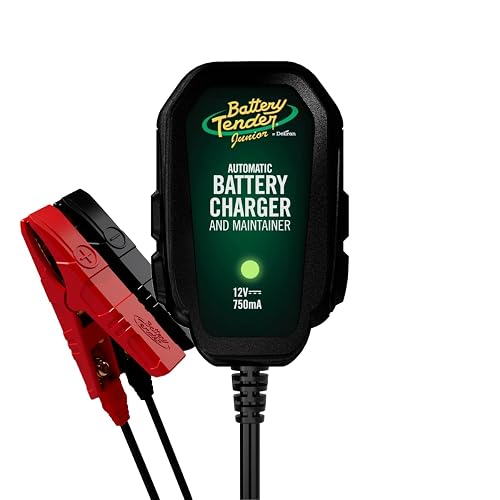
Battery Tender Junior 12V 750mA Charger and Maintainer

Battery Tender Plus 12V 1.25 AMP Battery Charger and Maintainer
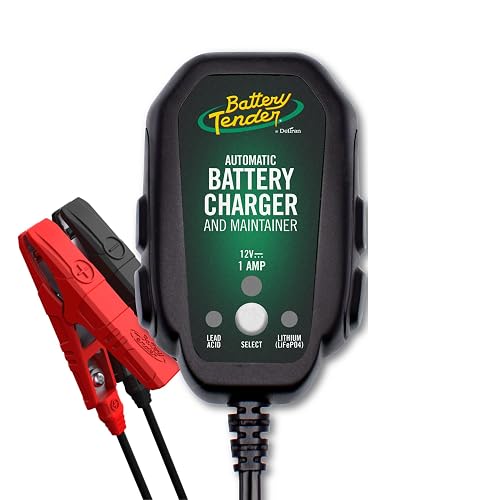
Battery Tender Junior 12V 800mA Battery Charger for Lead Acid and Lithium
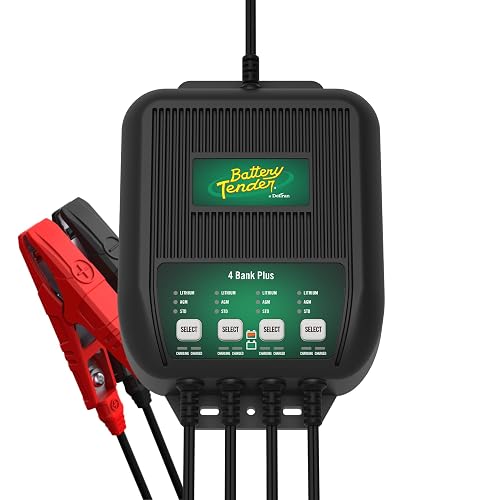
Battery Tender Plus 4 Bank Multibank Charger 5 AMP

Battery Tender 5 AMP 12V Battery Charger and Maintainer
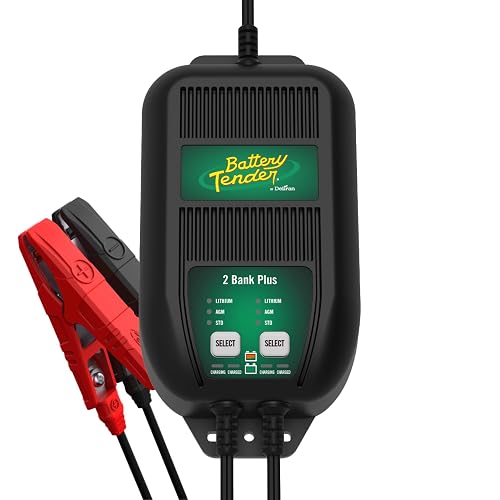
Battery Tender Plus 2 Bank Multibank Charger 2.5 AMP
The 750mA Junior is the model most people picture when they hear “Battery Tender,” and for good reason. It handles a single 12V powersport battery through months of storage without overcharging, and the four-step charging routine (initialize, bulk, absorb, float) does the kind of work a basic trickle charger cannot. You clip it on, walk away, and come back to a topped-off battery in spring.
It pairs cleanly with motorcycles, ATVs, and lawn tractors in the 12V lead-acid family, including flooded, AGM (absorbed glass mat, a sealed, low-maintenance battery design), and gel cell. The compact housing is light enough to leave tucked behind a workbench or hang on a wall hook. For most riders with a single stored machine, this is the most sensible starting point.
A Few Highlights
- 4-step program moves from full charge into float mode, which is the low-voltage holding stage that prevents long-term damage from constant charging
- Works across flooded, AGM, and gel cell lead-acid batteries, covering the chemistry most powersports machines still ship with
- Small footprint fits in a garage corner, a trailer tongue box, or a workshop shelf
- Beginner-friendly hookup with ring terminals or alligator clips, no setup screens to navigate
Things To Consider
- 750mA is on the gentle side, so a deeply discharged battery takes longer to recover than on a higher-amp unit
- No lithium mode, which means it isn’t the right match for a LiFePO4 (lithium iron phosphate) swap-in battery
- Single bank only, so you cannot charge a car and a bike from the same unit
Key Specs
Who It Suits Best
Anyone storing a single motorcycle, scooter, or ATV through the off-season on a 12V lead-acid battery.
Where Another Pick Suits Better
The Battery Tender Junior 800mA Lead Acid and Lithium charger is the better fit when your fleet includes a LiFePO4 battery, since that model switches between chemistries with a button press.
The Plus version keeps the same gentle 4-step logic as the Junior but pushes 1.25 amps, which is enough headroom for a car or SUV battery without being overkill for a bike. The adaptive smart charging adjusts to the battery’s condition over time, so a slightly neglected battery catches up faster than it would on the 750mA unit.
You will see it recommended for automotive and motorcycle use at the same time, and that breadth is the whole point. The included ring terminal and alligator clip harness makes permanent mounting on a daily driver easy enough that the car stays topped off all winter in the driveway.
Strengths Worth Knowing
- 1.25A output recovers a partially drained battery faster than the Junior
- Adaptive charging logic adjusts to the battery’s actual state instead of running a fixed routine
- Solid match for car, SUV, and larger motorcycle batteries in the same household
Worth Noting
- Single bank, so multi-vehicle households need to swap the harness or buy a second unit
- Lead-acid focused, which means no native lithium setting
Made For
Daily drivers and garage queens that sit for two to three weeks at a stretch and still need to start on the first try.
Look Elsewhere When
The Battery Tender 5 AMP 12V Battery Charger is a stronger match for a truck or large SUV with a bigger battery bank that needs faster recovery.
This Junior is the answer to the most common problem shoppers hit: a fleet that mixes old lead-acid bikes with one newer machine on a lithium battery. A push-button chemistry selector lets you flip between lead-acid and LiFePO4 profiles, which keeps the charging algorithm matched to the battery’s actual needs.
You trade the simplicity of the original Junior for that flexibility, and the form factor stays small enough for a shelf. The 800mA output is a touch higher than the 750mA Junior, which is a small but real difference when recovering a deeper discharge.
What It Does Well
- Switchable lead-acid and lithium profiles in one unit
- Handles AGM, flooded, gel, and LiFePO4 chemistries
- Slightly higher 800mA output than the basic Junior
- Small enough to leave clipped on a stored bike year-round
Trade Offs
- Single bank, so it still cannot run two batteries at once
- 800mA is fine for powersport batteries but light for a full-size car
Feature Snapshot
Best Suited To
Households with at least one LiFePO4 battery alongside older lead-acid machines, especially riders who upgrade one bike at a time.
Skip It When
The Battery Tender Plus 4 Bank Multibank Charger makes more sense once you cross two or more vehicles needing simultaneous maintenance.
Once you have more than two stored vehicles, a stack of single-bank chargers gets unwieldy. The 4-bank unit splits 5 amps across four independent 1.25A outputs, so each battery gets its own charging channel and its own float maintenance. The shift from full charge to float happens automatically per bank, which matters when one battery is full and another still needs a top-up.
For a small workshop, a classic car collection, or a household with a snowmobile, ATV, motorcycle, and a project truck, this is a real workflow upgrade. The compact encased design is meant to live on a bench rather than a shelf, but the four lead sets can be routed to wherever each battery sits.
The Good Stuff
- Four independent 1.25A channels, each with its own float logic
- Handles standard, AGM, and lithium LiFePO4 batteries per bank
- Compact all-in-one housing replaces four separate chargers
Minor Gripes
- Output per bank is still 1.25A, which can feel slow for a large discharged battery
- Lead length and routing take some planning in a tight garage
Perfect Match For
Small fleet owners, workshops, and multi-vehicle households that want one bench unit instead of a tangle of single-bank chargers.
Reach For A Different Pick When
The Battery Tender Plus 2 Bank Multibank Charger is the cleaner choice for a two-vehicle household, since the 4-bank unit is overkill in that case.
The 5 AMP charger is built for full-size automotive work, and the higher-frequency switching design handles the larger capacity of a car or SUV battery with more authority than the 1.25A Plus can muster. The 4-stage routine (qualification, bulk, absorption, float) maps the same logic the smaller units use, just at a heavier current. The float mode holds the battery at full charge without the slow cook-down that plagues cheaper units.
This is the one to leave on a car in a garage over the winter. It also covers motorcycles and lawn equipment, but it really earns its place on a battery big enough to need a real charge current.
Points In Its Favor
- 5A output handles full-size car and SUV battery capacity
- Charges lead-acid, AGM, gel, and lithium chemistries in one unit
- High-frequency switch mode runs cooler than older transformer designs
Points To Keep In Mind
- Bigger and heavier than the Junior or Plus models, so it lives on a bench, not a shelf
- Single bank, which makes a multi-vehicle household juggle harnesses
Who Should Grab It
Drivers with a garage-kept daily driver, a classic car, or a truck that sits for weeks between trips and needs a real recovery charge when it returns.
Not Your Match When
The Battery Tender Plus 1.25 AMP unit is the smarter buy for someone who only owns motorcycles or lawn equipment and does not need the extra current.
The 2-bank unit splits 2.5 amps across two 1.25A channels, so it lands in the practical middle between the single-bank Plus and the 4-bank shop unit. For a two-vehicle household, a bike and a lawn tractor, or a car and a motorcycle in the same garage, the math works out cleanly.
It supports standard, AGM, and LiFePO4 batteries per bank, and the automatic shift into float mode prevents the kind of slow overcharge that kills batteries left on old-school trickle units for months. Compared to the 4-bank charger, this version is more compact and easier to tuck against a wall, which is the right size for a home garage rather than a workshop.
Standout Benefits
- Two independent 1.25A banks, each with its own float logic
- Standard, AGM, and LiFePO4 coverage per channel
- More compact than the 4-bank model for tight garage corners
Room For Improvement
- 1.25A per bank is gentle for any deeply discharged large battery
- Only two channels, so a third stored vehicle needs another solution
Quick Facts
Whose Shelf It Belongs On
Two-vehicle households that want a single plug-in unit on a workbench instead of a pair of single-bank chargers.
Swap It Out When
The Battery Tender Plus 4 Bank Multibank Charger fits better once the household runs three or four stored vehicles at the same time.
## What To Weigh Before Choosing A MaintainerThe first thing to match is battery chemistry, since the charging profile for a flooded lead-acid battery is different from AGM, gel, or LiFePO4. Using the wrong profile on a lithium battery can damage the cells, so any unit that does not clearly state lithium support should stay away from lithium packs. Most riders running stock powersport batteries are fine with a lead-acid-only model.The second thing to match is amp output to battery size. A 750mA trickle is enough to maintain a small motorcycle battery already in good shape, but a deeply discharged or larger automotive battery wants 1.25A or higher to recover in a reasonable window. The honest trade-off is that higher amps shorten recovery time but add size and weight to the unit.Finally, count the vehicles. Single-bank units are tidy for one bike, but a household with two or more stored machines quickly runs out of outlets and patience. A multi-bank unit costs more up front and replaces several single-bank chargers, which is usually the better math once you cross two batteries.## Smart Habits That Save Real Money### Pitfalls Shoppers HitThe most common mistake is reaching for a basic trickle charger instead of a smart maintainer, since a true trickle keeps pushing current indefinitely and slowly cooks a battery over months. Float mode is the difference, and it is the feature that justifies spending a bit more. Another slip-up is grabbing a unit without checking the included lead length, which sounds minor until the unit is on the bench and the battery is two feet further than the harness allows.### Where The Extra Money GoesPaying up for a higher-tier Battery Tender usually buys you one of three things: more amps for larger batteries, more banks for multi-vehicle households, or lithium compatibility for newer LiFePO4 batteries. For a single stored bike on a stock lead-acid battery, the entry-level Junior genuinely covers the job. For a garage full of mixed-chemistry machines, the upgraded output and bank count earn their keep.## Frequently Asked Questions### How long can a Battery Tender stay connected? A smart maintainer with float mode can stay connected indefinitely, since it drops to a low holding voltage once the battery is full. That is the whole point of the design, and it is why these units work for seasonal storage.### Will a Battery Tender Junior charge a completely dead battery? A deeply discharged battery can take many hours on a 750mA or 800mA unit, and a deeply sulfated battery may not recover at all. For a battery that has been sitting dead for months, a higher-amp charger or a professional load test is the safer path.### Can I use one charger for both my car and my motorcycle? Only with a multi-bank unit like the 2-bank or 4-bank models. A single-bank unit can only maintain one battery at a time, and you would have to swap the harness between vehicles.### Are these units safe to leave plugged in indoors? Yes, the sealed units run cool enough for garage or workshop use, and the float logic prevents the overcharge that older chargers risked. Ventilation around the unit is still worth keeping in mind.### Do lithium batteries need a different charger profile? Yes, lithium iron phosphate batteries want a different voltage curve than lead-acid, and a charger without a lithium setting can damage the cells. Pick the switchable Junior or any model that explicitly lists LiFePO4 support if your fleet includes lithium.## Wrap UpThe right Battery Tender comes down to how many batteries you maintain and what chemistry they use. A single stored motorcycle on lead-acid is a Junior problem, a mixed-chemistry garage is a switchable problem, and a multi-vehicle household is a multi-bank problem. Match the unit to the use case and the rest is easy.