
Damp air and slow-drying laundry are a familiar combination in many households, especially in basements, converted garages, and homes without proper ventilation. A clothes drying dehumidifier pulls moisture out of the air, which shortens drying time on an indoor rack and reduces that clammy feeling on towels and linens. Picking the right capacity matters: too small and the unit runs nonstop, too large and you waste electricity on a room that doesn’t need it. The picks below span tight apartments, mid-size basements, and very large spaces, each matched to a realistic use case.
A Quick View Of The Lineup
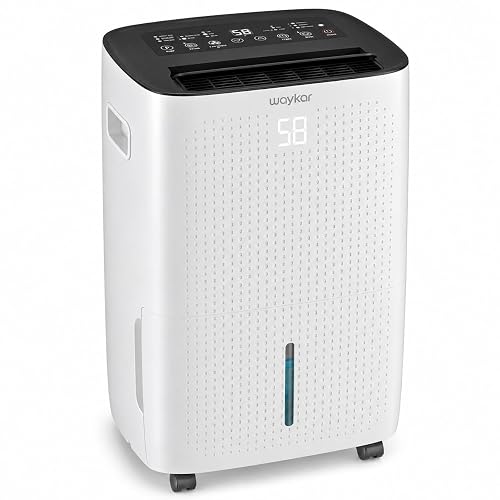
Waykar 145 Pints 6,500 Sq. Ft Dehumidifier with Pump
1,500 Sq. Ft 21 Pint Dehumidifier with Drain Hose
avylo 5000 Sq.Ft Dehumidifier with Pump and Drain Hose (Black)
FreAire 34 Pint Dehumidifier for 2,500 Sq.Ft
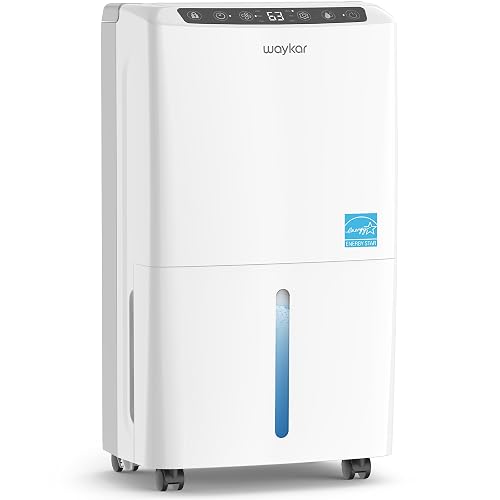
Waykar 34 Pints 2025 Energy Star Dehumidifier for Home & Basement
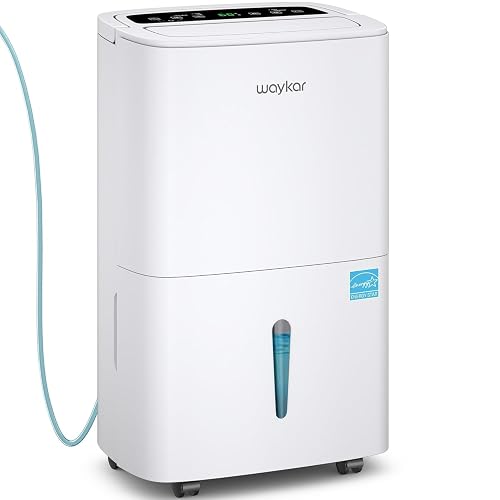
Waykar 150 Pints 2025 Energy Star Dehumidifier with Pump
avylo Dehumidifier for Basement with Pump and Hose (White)
Taking A Closer Look At The Options
This Waykar is sized for serious square footage, pulling up to 145 pints of moisture per day in conditions that mimic a hot, sticky summer basement. The built-in pump and included drain hose mean you can route water to a sink, floor drain, or sump without babysitting a tank. Compared to the 1,500 sq. ft pick that follows, this one is built for spaces where a smaller compressor would run itself ragged.
For a family running a dryer-free laundry routine in a damp basement, the constant extraction keeps towels from smelling musty. The trade-off is size and weight: this is a floor unit, not a tabletop pick, so you will want to place it once and leave it. In most setups, you point the hose downhill to a drain and let the pump carry the rest.
Strengths Worth Knowing
- 145-pint daily extraction handles large, humid basements without constant cycling
- Built-in pump removes the need to manually empty a collection tank
- Adjustable humidity range from 30% to 80% lets you fine-tune for a drying rack
- Drain hose included for flexible placement near a floor drain
Things To Consider
- Large footprint requires a permanent spot rather than portable use
- Pump adds a small mechanical component that may need periodic inspection
Who Should Grab It
Owners of very large basements, small warehouses, or storage rooms where damp air stalls laundry drying on a rack.
Where Another Pick Suits Better
For a smaller bedroom or apartment, the 1,500 Sq. Ft 21 Pint Dehumidifier is a more practical fit without the industrial footprint.
PLUSCENT’s 21-pint unit is a quiet workhorse for modest spaces, drawing only 160 watts while moving air through a single room or small basement. The continuous drain option keeps it running unattended, which matters when you are drying a load of laundry overnight. Unlike the Waykar 145 earlier in this list, this is the kind of unit you can slide beside a drying rack and forget about.
For a renter drying delicates indoors, the 1,500 sq. ft ceiling is generous and rarely fully taxed in a real bedroom. You may find the 21-pint ceiling limiting in a basement that floods every spring, but for everyday dampness it keeps up. The compact shell and lighter weight make it easy to move from a bathroom to a closet as the season shifts.
Positive Takeaways
- Low 160-watt draw keeps electricity use modest during long drying cycles
- Drain hose included for set-and-forget operation
- Compact cabinet fits in tight spots beside a drying rack
- 21-pint daily removal handles bedroom-level humidity well
Worth Noting
- Extraction rate falls short for severe basement flooding
- No internal pump, so the drain hose relies on gravity
Best Suited To
Studio dwellers, small-home owners, and anyone drying indoor laundry in a single bedroom or living area.
Skip It When
You have a 5,000 sq. ft basement that regularly reads above 70% humidity, where the avylo 5000 Sq.Ft Dehumidifier makes more sense.
avylo’s 90-pint model is the sweet spot for full basements that double as workshop or hobby space. Sensors read the current humidity and temperature, then the compressor adjusts output to hold a setpoint you choose, which matters when you are running a dehumidifier alongside a clothes-drying rack for hours. The pump carries water up and out, freeing you from emptying a tank on the heaviest days.
Compared to the Waykar 145, this unit sits in a more practical size class for a typical home basement without giving up the pump convenience. You may find the 90-pint ceiling slightly conservative for a damp garage, but it is well matched to a 5,000 sq. ft finished basement. The LED display is clear enough to glance at from across the room while folding sheets.
Everyday Perks
- Automatic humidity control removes guesswork during long drying sessions
- Built-in pump simplifies drainage to a sink or window
- 90-pint daily capacity covers most full-size basements
- LED panel shows humidity and temperature at a glance
Honest Caveats
- Higher capacity means louder operation in a quiet living area
- Filter requires monthly cleaning to keep airflow strong
Right Fit For
Homeowners with a finished basement, hobby workshop, or garage who run a drying rack regularly and want a hands-off unit.
Look Elsewhere When
You only need coverage for a 2,000 sq. ft living area, where the FreAire 34 Pint Dehumidifier is a quieter, more efficient match.
FreAire hits a comfortable middle of the market with 34 pints of daily removal and a coverage area suited to mid-size basements or large bedrooms. The 6.56-foot drain hose is long enough to reach most floor drains or utility sinks without buying an extension, a small but useful detail for placement flexibility. Compared to the PLUSCENT 21-pint earlier, this unit handles a more humid room without overworking.
For a family drying towels and school uniforms on a basement rack, the 12-liter reservoir and adjustable setpoints keep things consistent. You may find the controls simpler than premium models, but most users will only touch the humidity dial anyway. The plastic shell feels light enough to relocate between rooms seasonally.
Noteworthy Benefits
- 34-pint daily extraction covers humid basements and large bedrooms
- Long 6.56-foot drain hose reaches awkward drain locations
- 2,500 sq. ft capacity suits most mid-size homes
- Adjustable humidity setpoint for steady drying conditions
Points To Note
- No internal pump, so drain routing depends on gravity
- Lightweight cabinet may shift on uneven basement floors
Who Will Love This
Mid-size homeowners and renters who want stronger extraction than a basic 21-pint unit without jumping to commercial capacity.
A Better Fit Elsewhere
For a much larger space with a pump requirement, the avylo 5000 Sq.Ft Dehumidifier offers more extraction and active drainage.
Waykar’s 2025 redesign leans on a rotary compressor to deliver 34 pints of daily extraction while keeping the cabinet noticeably smaller than older models. The Energy Star rating matters when a dehumidifier runs ten or twelve hours a day to keep a drying rack productive, since every watt compounds over a month. Compared to the FreAire unit above, this one is built for efficiency-focused homes rather than max capacity.
For a household trying to keep utility bills down without giving up the laundry-drying benefit, the smaller shell and 0.62-gallon tank make a real difference in a tight utility room. You may find the 2,000 sq. ft ceiling tight for open-plan basements, but for a finished living area it pulls well. Both auto and manual drainage are supported, which is rare at this size class.
Where It Helps
- Energy Star rating cuts long-term operating cost for heavy daily use
- Compact rotary compressor allows a smaller cabinet footprint
- Auto or manual drainage options add setup flexibility
- Adjustable humidity range from 30% to 80%
Trade Offs
- 0.62-gallon tank fills quickly without a drain connection
- 2,000 sq. ft ceiling is conservative for open floor plans
Perfect Match For
Energy-conscious homeowners who run a dehumidifier daily to speed indoor drying and want the lowest possible electric bill.
Swap It Out When
You need to cover a sprawling 7,000 sq. ft warehouse space, where the Waykar 150 Pints 2025 Energy Star Dehumidifier is the right call.
At 150 pints of daily extraction and 7,000 sq. ft of coverage, this Waykar is sized for true commercial and industrial spaces, including warehouses, concourses, and oversized cellars. Auto defrost keeps the coils running in cooler corners where lesser units ice up, and self-drying clears residual moisture when you shut the unit down. Relative to the Waykar 145 earlier in this list, the added defrost cycle makes it a better pick for unheated spaces.
For a workshop drying heavy cotton coveralls or a multi-room basement used for a home business, the pump and drain hose combo eliminate manual tank emptying. The trade-off is significant power draw and noise, which limits placement to utility spaces. The included drain hose still needs a nearby floor drain or condensate pump to carry water away.
The Helpful Details
- 150-pint daily extraction covers very large basements and commercial rooms
- Auto defrost prevents coil icing in cool, damp environments
- Self-drying function reduces internal moisture after shutdown
- Built-in pump supports continuous drainage
Practical Considerations
- Higher noise output makes it unsuitable near living areas
- Energy draw rises sharply at full extraction rate
Built With In Mind
Owners of large warehouses, workshops, and oversized basements who need serious extraction and don’t mind the operational footprint.
Not Your Match When
You just need to keep a 2,000 sq. ft living room dry for drying delicates, where the Waykar 34 Pints 2025 Energy Star Dehumidifier is the smarter size.
avylo’s white 90-pint model shares the capacity of the black unit reviewed earlier but earns a separate ENERGY STAR Most Efficient 2025 designation, with an EER of 2.05 L/kWh. The pump and hose combination handles continuous drainage, which matters when the unit runs overnight to dry a load of laundry on a rack. The clean white shell blends better in finished basement living areas than industrial-looking cabinets.
For a homeowner focused on both performance and running cost, the efficiency rating translates into noticeable savings over a year of daily use. You may find the controls slightly more involved than basic dials, but the readouts pay off when fine-tuning for fabric drying. Coverage of up to 5,000 sq. ft handles most full basements without the unit straining.
The Value In It
- ENERGY STAR Most Efficient 2025 designation reduces long-term costs
- 90-pint capacity covers a 5,000 sq. ft basement comfortably
- Built-in pump supports continuous drainage setup
- White cabinet suits finished living spaces
Some Limits To Know
- At 90°F and 90% RH capacity is robust but not for warehouse-scale spaces
- Filter cleaning schedule needs attention to maintain efficiency
Whose Shelf It Belongs On
Homeowners with large basements who want both strong extraction and certified efficiency for daily clothes drying.
Another Choice May Suit
For a smaller 2,000 sq. ft finished space, the Waykar 34 Pints 2025 Energy Star Dehumidifier saves floor space and cost.
What To Match Against Your Space And Laundry Habits
Capacity is the first decision. A 21-pint unit moves roughly 10 liters of water a day, which is fine for a bedroom but stalls in a basement that holds 60% humidity. For a 2,000 to 2,500 sq. ft area, a 30 to 40-pint unit generally keeps up with a drying rack. Anything above 5,000 sq. ft with serious dampness benefits from 90 to 150 pints.
Drainage setup changes daily use. A tank-only model means walking to empty it, sometimes daily, while a drain hose or pump lets you run the unit unattended for days. Pumps matter when your drain is uphill or far from a floor drain. Noise and footprint are practical filters: a 90-pint compressor in a finished living area is louder than a 34-pint rotary unit, and size dictates where you can place it.
Efficiency ratings matter for daily users. An ENERGY STAR Most Efficient designation, like the avylo white unit, cuts long-term electric cost when the dehumidifier runs ten or more hours a day. A rotary compressor, found in the Waykar 34, tends to run cooler and quieter than traditional piston compressors at similar capacity.
Key Considerations Across These Picks
Pitfalls Shoppers Hit
A common slip is choosing capacity based on the room size, not the actual humidity level. A 2,000 sq. ft basement in a coastal climate behaves very differently from the same square footage in a desert region, so undersized units run constantly and still fall behind. The opposite mistake is buying a 150-pint commercial unit for a 1,500 sq. ft apartment, where the compressor short-cycles and wastes energy. Always match capacity to humidity, not just square footage.
Where The Extra Money Goes
Higher-tier dehumidifiers add pumps, auto defrost, and self-drying routines that prevent coil icing in cool basements, plus ENERGY STAR efficiency that compounds over years of daily use. A premium rotary compressor runs quieter and cooler, which matters when the unit sits near a living area. If your space is small and humidity is mild, the basic tier performs well and the extra cost is hard to justify.
Frequently Asked Questions
How big a dehumidifier do you need to dry clothes indoors?
A 30 to 50-pint unit is usually enough for a drying rack in a 1,500 to 2,500 sq. ft room, while larger basements benefit from 90 pints or more. In humid climates, sizing up one tier is a safe call.
Do dehumidifiers actually speed up indoor drying?
Yes, by pulling moisture out of the air, a dehumidifier keeps the rack environment dry enough for water to evaporate faster from fabric. Warm moving air plus low humidity cuts drying time noticeably compared to a still, damp room.
Can you run a clothes drying dehumidifier continuously?
Most modern units are designed for continuous use with a drain hose or pump routing, so the tank does not need to be emptied. Without drainage, plan to empty the tank once a day or more depending on capacity.
Where is the best place to put a dehumidifier for laundry drying?
Place it near the drying rack but with enough clearance for airflow, ideally in a closed room so it conditions the air the rack is pulling from. A basement utility room or spare bedroom works well.
How noisy are basement dehumidifiers?
A 34-pint rotary compressor typically runs around 38 to 45 dB, similar to a quiet refrigerator, while larger 90 to 150-pint units are noticeably louder. Placement in a utility space or basement keeps the noise out of living areas.
Final Verdict
Run a humid basement or air-dry laundry regularly and the right dehumidifier pays for itself in faster drying and less musty smell. Match capacity to your actual humidity and room size, choose drainage that fits your layout, and prioritize efficiency if the unit runs daily. Any of the seven picks above is a solid starting point once those three filters are in place.