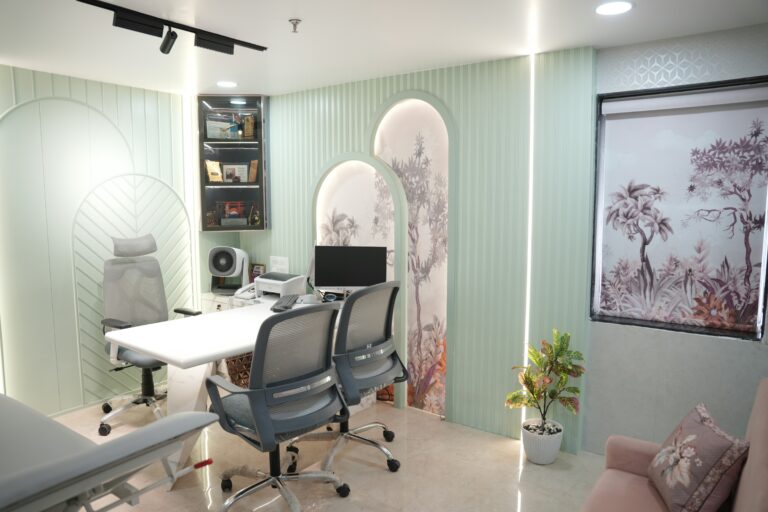

A damp basement corner, a musty closet, a workshop that never quite dries out. Continuous drain dehumidifiers solve the most annoying part of moisture control by routing water straight to a floor drain, sink, or condensate pump instead of asking you to empty a tank every few hours. This roundup lines up seven models that handle unattended drying across different room sizes, from small bedrooms to warehouse-scale spaces.
The Main Contenders
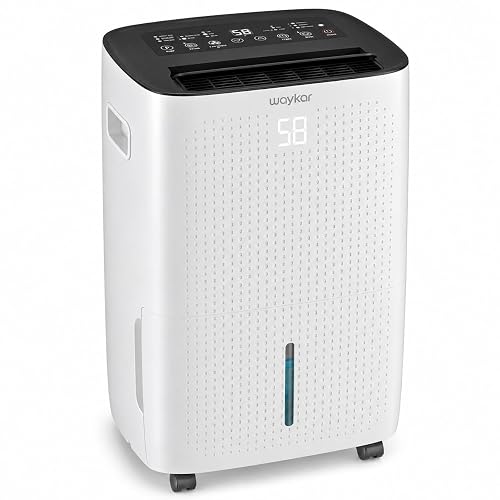
Waykar 145 Pints 6,500 Sq. Ft High Efficiency Dehumidifier with Pump
1,500 Sq. Ft 21 Pint Dehumidifier with Drain Hose
FreAire 34 Pint Dehumidifier for 2,500 Sq. Ft
PSOS 98 OZ Quiet Dehumidifier for Home
Vellgoo 100 Pint Dehumidifier for 5,000 Sq. Ft
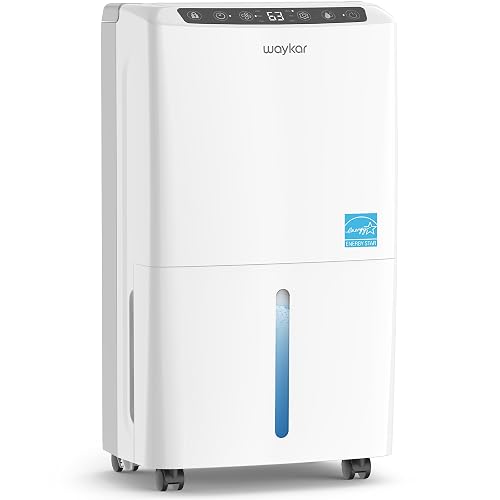
Waykar 34 Pints 2025 Energy Star Dehumidifier for Home
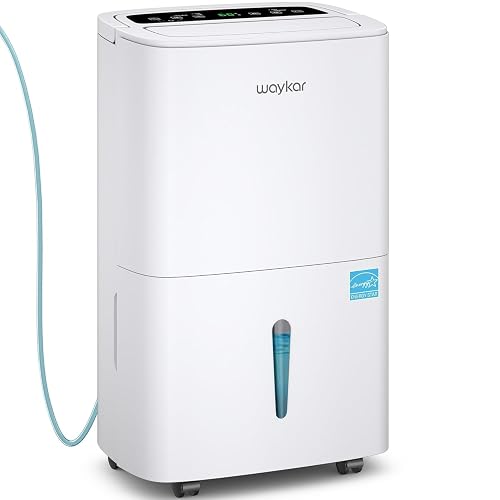
Waykar 150 Pints 2025 Energy Star Dehumidifier with Pump
A Deeper Look At The Lineup
The Waykar 145 Pints 6,500 Sq. Ft High Efficiency Dehumidifier with Pump earns its heavy-duty reputation by combining a built-in condensate pump with a daily extraction rate that handles the kind of space most home units cannot touch. If you own a sprawling basement, a multi-room storage area, or a workshop that sweats every summer, this machine is designed to run unattended. The pump pushes water upward through the included drain hose, so you can route condensate to a sink, window drain, or ceiling cavity without needing a floor-level gravity drop.
Owners commonly rely on the 30% to 80% humidity range to fine-tune comfort in spaces that swing between damp and bone-dry by season. The unit pairs continuous drainage with a backup tank, so a power loss or hose clog does not turn into a flood on your utility-room floor.
A Favorable Mix
- Built-in pump pushes water upward, freeing placement from floor-drain constraints
- 145-pint daily capacity covers commercial-scale rooms and full basements
- Adjustable humidity target from 30% to 80% prevents over-drying wood furniture
- Continuous-drain and reservoir backup protect against hose clogs during long runs
Worth Noting
- Physical footprint is substantial; you will want to plan floor space before delivery
- Compressor noise reads louder than the bedroom-rated picks further down this list
- Setup of the pump routing is easiest with a helper on first install
Feature Snapshot
Who It Suits Best
Owners of 2,500-plus-square-foot basements, multi-zone storage areas, and serious hobby workshops who want the unit parked and ignored for weeks at a stretch.
A Better Fit Elsewhere
Studio apartment dwellers are better served by the PSOS 98 OZ Quiet Dehumidifier for Home, which prioritizes silence over raw capacity.
Where the Waykar 145 Pints 6,500 Sq. Ft High Efficiency Dehumidifier with Pump is built for warehouse duty, this 21-pint unit is the sensible middleweight. It pulls 21 pints of moisture per day at 95°F and 90% relative humidity, which lines up nicely with mid-size basements, finished bedrooms, and RVs. The included drain hose means you can wire it into a sink or floor drain and never think about the tank again, provided your layout allows for gravity drainage.
The 160W compressor is the kind of modest draw that makes sense for spaces where electricity costs actually add up. For most apartments and small homes, it is the right size without being oversized.
Useful Highlights
- 21-pint daily removal matches 1,500 sq ft footprints without over-drying
- Continuous drain hose included, so unattended operation is the default
- 160W draw keeps operating cost in check for long-running households
- Compact frame fits inside closets and RV storage bays
Points To Note
- No built-in pump, so the drain must be at or below unit height for gravity flow
- Not built for whole-house or large basement coverage
Feature Snapshot
Made For
First-time dehumidifier owners in apartments, small basements, or RV owners who want a no-frills set-and-forget setup on a tight budget.
Skip It When
You need upward water routing, in which case the Waykar 145 Pints 6,500 Sq. Ft High Efficiency Dehumidifier with Pump is the smarter spend.
FreAire’s 34-pint dehumidifier sits in the comfort zone between the compact 21-pint PLUSCENT and the commercial Waykar 145. The 6.56-foot drain hose is longer than the typical included line, which matters more than most people realize: it gives you real flexibility to route condensate to a utility sink, basement floor drain, or condensation pump across the room without buying extra tubing. The compression system pulls 34 pints per day at 95°F and 90% RH, which keeps up with active drying in 2,500 sq ft living areas, finished basements, and oversized master suites.
Compared to the Waykar 34 Pints 2025 Energy Star Dehumidifier for Home further down the list, this FreAire trades a few efficiency gains for that generous hose reach, which is a real-world upgrade worth caring about.
Everyday Wins
- 6.56-foot drain hose reaches drains across most finished basements without extensions
- 34-pint daily output handles 2,500 sq ft layouts that overwhelm 21-pint units
- Mid-size body fits through standard doorways for seasonal relocation
- Continuous-drain mode eliminates tank-emptying during humid stretches
Honest Caveats
- Gravity-only drainage means no pump assist for upward routing
- Larger than the 21-pint pick, so closet placement requires measuring first
Right Fit For
Homeowners with finished basements or open-plan living areas up to 2,500 sq ft who want a single unit that disappears into the background.
Consider Something Else When
Energy-conscious users will find the Waykar 34 Pints 2025 Energy Star Dehumidifier for Home a slightly more efficient match for similar square footage.
The PSOS 98 OZ Quiet Dehumidifier for Home takes a different approach from every other pick on this list. Instead of a refrigerant compressor, it uses dual semiconductor condensation (a thermoelectric cooling method that runs without a mechanical pump) to pull moisture from the air, which is why it earns the quietest operating profile in the lineup. The 98-ounce reservoir is large for a thermoelectric unit, and the 7-color ambient light is a small but genuine touch for nurseries or bedrooms where a tiny glow beats a bright display.
Coverage tops out around 1,000 sq ft, so this is firmly a personal-room dehumidifier rather than a whole-basement workhorse. Continuous drain capability is built in, which is unusual at this size and price tier, making it a real option for overnight bedroom operation.
Where It Helps
- Thermoelectric design runs nearly silent, ideal for sleep and nursery settings
- Continuous drain option adds unattended operation in a bedroom-sized footprint
- Auto shutoff protects the unit when the internal tank reaches capacity
- Compact housing slides into closets and small bathroom corners
Trade Offs
- Thermoelectric extraction is slower than compressor-based picks, so humidity drops take patience
- Best for small rooms; whole-basement duty belongs to the Waykar or Vellgoo entries
- Lower ambient temperatures reduce effectiveness, making it less ideal for unheated basements
Feature Snapshot
Best Suited To
Light sleepers, nursery parents, and home-office workers who want moisture control without compressor noise echoing through the room.
Reach For A Different Pick When
You need serious extraction in a 2,000-plus-square-foot basement, in which case the FreAire 34 Pint Dehumidifier for 2,500 Sq. Ft is the better match.
The Vellgoo 100 Pint Dehumidifier for 5,000 Sq. Ft is the bridge between household and light-commercial capacity, pulling 100 pints per day at 95°F and 95% relative humidity. It is the right size for multi-room basements, attached garages, and laundry rooms where damp air actually causes problems, not just minor inconvenience. Continuous drain capability turns it into a true install-once-and-forget appliance, provided you can route the hose to a floor drain or utility sink.
Compared to the Waykar 145 Pints 6,500 Sq. Ft High Efficiency Dehumidifier with Pump, this Vellgoo skips the pump assist, so you trade vertical routing freedom for a more efficient operating cost on long, unattended runs. For most garage-and-basement owners that is a worthwhile exchange.
What Works In Its Favor
- 100-pint daily output is the sweet spot for whole-basement or attached-garage layouts
- Designed for continuous use without driving electricity bills upward
- Garage-ready construction handles cooler ambient temperatures better than bedroom picks
- Large-capacity reservoir backs up continuous drain during hose maintenance
Practical Considerations
- No internal pump, so drain routing depends on gravity or your own condensate pump
- Heavier than mid-size picks; plan a permanent spot before setup
Feature Snapshot
Whose Shelf It Belongs On
Garage tinkerers, basement home-gym owners, and homeowners running multi-room moisture control on a sensible energy budget.
Where Another Pick Suits Better
Very large basements with no nearby floor drain benefit from the Waykar 145 Pints 6,500 Sq. Ft High Efficiency Dehumidifier with Pump, which can push water upward.
The Waykar 34 Pints 2025 Energy Star Dehumidifier for Home is the everyday choice for most people reading this roundup. The 2025 redesign uses a rotary compressor (a quieter, more efficient compressor type than older reciprocating designs) to keep daily extraction at 34 pints while trimming power draw, and the unit is compact enough to roll from living room to basement without a second person helping. Coverage of 2,000 sq ft fits most suburban homes, and the 0.62-gallon internal tank is small by design, because the whole point is continuous drainage.
Versus the FreAire 34 Pint Dehumidifier for 2,500 Sq. Ft, this Waykar offers slightly less reach and a smaller tank in exchange for tighter energy use. For households running a dehumidifier six months a year, that trade usually pays for itself.
The Upside
- Rotary compressor design runs quieter and more efficiently than older reciprocating units
- Auto or manual drainage lets you switch between continuous and tank-based use
- Adjustable humidity range from 30% to 80% matches season-to-season comfort
- Compact frame fits inside closets and finished basements without dominating the room
Things To Consider
- 0.62-gallon internal tank empties quickly, so hose setup is the realistic default
- Coverage plateaus around 2,000 sq ft, leaving larger spaces to the Waykar 150 or 145
Feature Snapshot
Perfect Match For
Suburban homeowners running a dehumidifier most of the year in a 1,500 to 2,000 sq ft basement or open living area who care about both noise and electricity cost.
Not Your Match When
You need to cover a 5,000-plus-square-foot space, in which case the Vellgoo 100 Pint Dehumidifier for 5,000 Sq. Ft is the more honest match.
The Waykar 150 Pints 2025 Energy Star Dehumidifier with Pump is the largest, most capable unit in this lineup, and it is the one to reach for when “basement” gives way to “warehouse” or “workshop.” At 150 pints per day and 7,000 sq ft of coverage, it handles spaces that smaller units simply cannot keep up with, especially during peak summer humidity. The built-in pump pairs with the included drain hose, and the auto-defrost plus self-drying functions protect the coils during long runs in cooler environments like garages and crawl spaces.
Versus the Waykar 145 Pints 6,500 Sq. Ft High Efficiency Dehumidifier with Pump, this 150-pint sibling adds self-drying, auto-defrost, and 500 extra square feet of coverage. For most homes that delta is overkill, but for a commercial shop or wine cellar it is the difference between barely keeping up and staying comfortably dry.
What Earns Its Place
- 150-pint daily output covers warehouses, large basements, and wine cellars in a single pass
- Built-in pump with included hose routes water vertically to overhead drains
- Auto defrost keeps the unit effective in cooler ambient temperatures
- Self-drying cycle protects internal components during long unattended runs
- Adjustable humidity target from 30% to 80% covers everything from musty to dry storage
Worth Bearing In Mind
- Compressor noise reads louder than any other pick on this list; not a bedroom unit
- Physical size requires planning for permanent floor placement
- Excess capacity becomes wasted energy if the space is significantly under 5,000 sq ft
Feature Snapshot
Who Should Grab It
Commercial shop owners, warehouse managers, and homeowners with very large or unusually damp spaces who need unattended, around-the-clock moisture control.
Swap It Out When
Your space is 2,000 sq ft or less, in which case the Waykar 34 Pints 2025 Energy Star Dehumidifier for Home is the better-calibrated alternative.
How To Choose A Continuous Drain Dehumidifier That Actually Fits
Start With The Square Footage, Not The Pint Count
Pint ratings are an extraction speed, not a coverage guarantee. A 21-pint unit pulling 21 pints in a 1,500 sq ft basement makes sense; the same unit in a 4,000 sq ft open layout will run continuously and still leave you with damp corners. Match the listed coverage area to your room measurement, and round up if your space has high ceilings, poor ventilation, or persistent moisture sources like a sump pit.
Compressor vs. Thermoelectric Matters More Than People Expect
The PSOS 98 OZ Quiet Dehumidifier for Home uses semiconductor condensation, which runs silent but extracts slowly. Every other pick on this list uses a compressor, which is louder but pulls moisture fast even in cool basements. Bedrooms and nurseries lean thermoelectric; basements, garages, and warehouses lean compressor. The trade-off is direct: more noise buys you more extraction.
Pump vs. Gravity Drainage Is The Real Decision
A unit with a built-in pump, like the Waykar 145 or 150, can push water upward through a hose to a sink or ceiling drain. A gravity-only unit needs the drain at or below the unit height. If your only nearby drain is a floor drain, gravity works fine. If your only option is a utility sink three feet above the unit, skip the headache and buy a pumped model.
Daily Extraction Tells You How Fast The Space Dries
A 100-pint unit in a moderately damp 3,000 sq ft basement will hit your target humidity in a few hours; a 21-pint unit in the same space will run all day. Faster extraction means shorter compressor cycles, which generally means longer component life. For chronically damp spaces, overspec the daily removal rather than underspec it.
Key Considerations Across These Picks
Common Slip-Ups When Buying A Continuous Drain Unit
The most common miss is buying a compressor-based unit for a bedroom and then wondering why sleep suffers. Conversely, picking a thermoelectric unit for a damp basement leaves owners convinced dehumidifiers “just do not work,” when really the technology was the wrong match. The other repeat mistake is forgetting about drain routing entirely: many people assume any hose setup works, only to find their unit sits higher than the nearest drain.
Where The Higher Price Tier Earns Its Cost
The jump from a 21-pint budget unit to a 100- or 150-pint commercial model is not just faster drying. Pump-equipped designs, auto-defrost cycles, and self-drying functions extend component life and reduce the maintenance you would otherwise handle yourself. For spaces that run a dehumidifier six months a year, the energy efficiency gap alone closes the price difference faster than most people expect.
Frequently Asked Questions
What is a continuous drain dehumidifier?
A continuous drain dehumidifier routes the extracted water through a hose to a sink, floor drain, or external pump instead of collecting it in an internal tank. It lets the unit run unattended for days or weeks without manual emptying, provided the drain routing is set up correctly.
Do continuous drain dehumidifiers need a floor drain nearby?
Not necessarily. Gravity-drain units need a drain at or below the unit, but pumped models like the Waykar 145 and 150 can push water upward to a sink or overhead drain. Without a pump, you can also add your own condensate pump if a floor drain is unavailable.
Can I leave a continuous drain dehumidifier running all the time?
Yes, that is the design intent. The compressor cycles on and off based on your humidity target, and the drain hose carries water away continuously. Most owners set the target humidity around 45 to 50% and let the unit manage itself.
How often should I clean a continuous drain dehumidifier?
Wipe down the exterior and rinse the air filter every two to four weeks during heavy use. The drain hose should be flushed occasionally to prevent biofilm buildup, and the coils benefit from an annual light vacuuming to keep airflow unrestricted.
Is a thermoelectric dehumidifier as effective as a compressor model?
For small, warm rooms a thermoelectric model like the PSOS 98 OZ Quiet Dehumidifier for Home works well, but extraction is much slower than a compressor unit. In basements, garages, or any space larger than about 500 sq ft, compressor models are the realistic choice.
Bottom Line
Continuous drain dehumidifiers take the daily chore out of moisture control, but the right model depends entirely on your space, your noise tolerance, and your drain layout. For most suburban homes the Waykar 34 Pints 2025 Energy Star Dehumidifier for Home is the well-rounded choice, while very large or commercial spaces point toward the Waykar 150. Pick based on where you need it to live, and the rest tends to fall into place.