A damp apartment doesn’t just feel sticky, it slowly ruins curtains, breeds mildew in closets, and makes bedrooms miserable on humid nights. The right unit pulls moisture out of the air without running up your power bill or drowning out your favorite show. These seven options cover everything from compact studio setups to oversized living spaces, with honest notes on who each one actually serves.
A Fast Comparison Of The Options
PickWhy We Picked ItBest ForAction

Apartment FriendlyPLUSCENT 21 Pint Dehumidifier for Basement and Home
Compact footprint, easy drainage
Studio and small one-bedrooms
Well Rounded PickFreAire 34Pint Dehumidifier for 2500Sq.Ft With Drain Hose
Mid-size capacity, included drain hose
Two-bedroom apartments and open plans
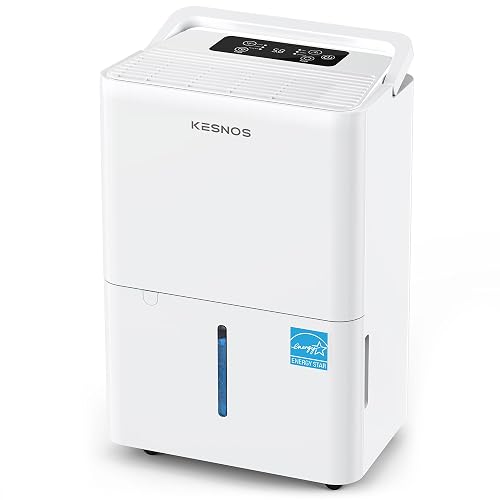
Heavy Duty PickKesnos 120 Pint Energy Star Dehumidifier for Basement, 6500 Sq. Ft.
Strong output for large floor plans
Loft apartments and big shared spaces
Practical PickKesnos 80 Pints Energy Star Dehumidifier for Basement & Home
Generous coverage, efficient operation
Large apartments with damp corners
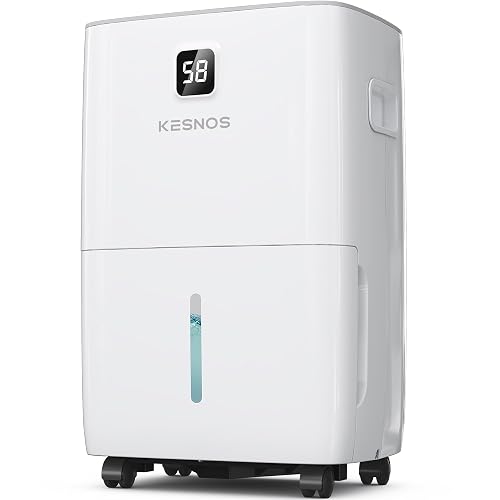
Thoughtful DesignKesnos 80 Pints Energy Star Dehumidifier with Front Humidity Display
Front-facing humidity readout
Anyone who likes at-a-glance readings
Quiet AchieverKesnos 30 Pints Energy Star Dehumidifier, Ultra-Quiet 36 dB
Quiet Achiever
Low-noise profile for living spaces
Bedrooms and studio setups
Performance LeaderKesnos 150 Pint Dehumidifier for Basement, 7,500 Sq. Ft.
Highest output on the list
Severely damp apartments and basements
Why These Options Stand Out
Small apartments rarely need a basement-grade workhorse, and that’s where the PLUSCENT 21 Pint fits. Rated for rooms up to 1,500 sq. ft., it pulls up to 21 pints of moisture a day without the bulky footprint of larger units. For most studios and one-bedrooms, that daily extraction covers a damp kitchen, a steamy bathroom, and a humid bedroom on a single run.
The included drain hose changes the ownership experience. Owners can route the hose to a sink, bucket, or floor drain and skip the daily empty-the-tank routine. That setup makes a real difference in a tight apartment where nobody wants to babysit a reservoir.
What Stands Out
- ✓21-pint daily extraction covers typical apartment humidity without overworking the compressor.
- ✓1,500 sq. ft. capacity matches most small-space floor plans, so you don’t pay for unused coverage.
- ✓Drain hose hookup turns it into a near-set-and-forget appliance once positioned.
- ✓160W draw keeps operating costs modest for a unit that may run many hours a day.
Points To Note
- •Without the drain hose routed, you’ll empty the tank yourself, which matters in tight layouts.
- •For very damp basements, the 21-pint ceiling may feel modest compared to the Kesnos models below.
Who Should Grab It
Studio dwellers and small-apartment renters who want competent moisture control without a bulky tank taking up floor space.
Consider Something Else When
The Kesnos 30 Pints Energy Star Dehumidifier is a smarter match for anyone who needs noticeably quieter operation in a bedroom.
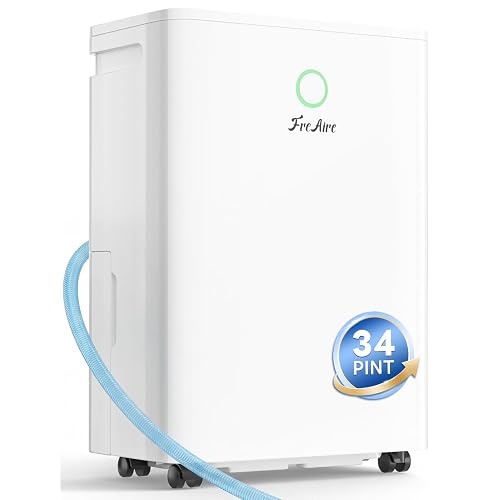
The FreAire 34 Pint lands in a useful middle ground between the compact PLUSCENT and the basement-focused Kesnos units. Rated for 2,500 sq. ft. spaces, it suits two-bedroom apartments with open kitchen-living areas where humidity drifts from one zone to the next. The 12-liter tank combined with a 6.56-foot drain hose gives you two ways to handle runoff.
Compared to the PLUSCENT, this one trades a smaller footprint for noticeably more extraction headroom. For households that cook a lot, run humidifiers, or dry laundry indoors, that extra capacity keeps up on busy days.
Features That Help
- ✓34-pint daily capacity covers active households where moisture builds fast.
- ✓2,500 sq. ft. ceiling fits larger open-plan apartments without sweating the spec.
- ✓6.56-foot drain hose reaches a utility sink or window condensate line in most layouts.
- ✓Compression-based system handles consistently humid climates that lighter units struggle with.
Worth Noting
- •The larger body needs a deliberate parking spot, which can be tricky in tight hallways.
- •Noise output climbs on high fan settings, so bedroom placement may be a compromise.
Built With In Mind
Two-bedroom renters with open layouts who cook frequently and need a unit that can keep pace with daily moisture swings.
A Better Fit Elsewhere
The Kesnos 80 Pints Energy Star Dehumidifier for Basement & Home is a stronger match for very large apartments with persistent damp issues.
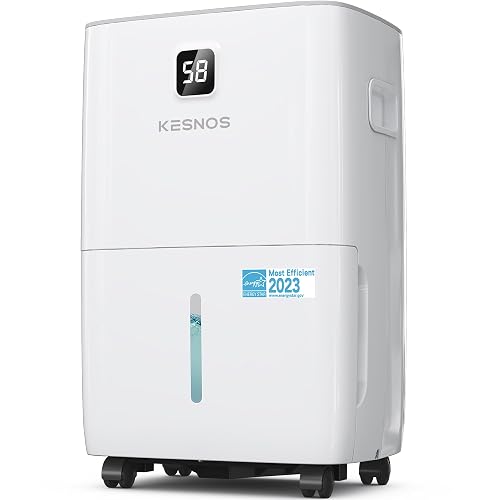
The Kesnos 120 Pint steps firmly into heavy-duty territory, and it earns that label honestly. Rated for spaces up to 6,500 sq. ft. with a 30% to 80% humidity adjustment range, it tackles lofts, garden apartments, and ground-floor units where moisture seeps in from below. Energy Star certification means it works hard without inflating the electric bill.
For most apartments, this is overkill, but that’s the point. Residents of ground-floor units with chronic dampness usually need brute force, not finesse. Compared to the FreAire, this one runs longer cycles more efficiently and shrugs off the kind of humidity that smaller units can’t quite tame.
A Few Strong Suits
- ✓120-pint daily extraction handles severe moisture that lighter units leave behind.
- ✓6,500 sq. ft. coverage dwarfs most apartment floor plans, so it never feels strained.
- ✓Energy Star rating keeps long-run electricity costs reasonable for a unit this capable.
- ✓Wide 30% to 80% humidity range lets you dial in the exact comfort level.
Practical Considerations
- •The physical size demands a dedicated corner or utility area, which small apartments may lack.
- •Compressor noise on high settings is noticeable, so positioning away from living areas helps.
Key Specs
| | Feature | Specification | Why It Matters |
|---|
| Daily moisture removal | Up to 120 pints | Handles heavy, persistent damp in ground-floor units |
| Coverage area | Up to 6,500 sq. ft. | Comfortably covers large lofts and shared spaces |
| Humidity range | 30% to 80% adjustable | Lets you match comfort levels room by room |
| Energy certification | Energy Star | Reduces operating costs during long dehumidifier seasons |
Right Fit For
Ground-floor and basement-style apartment residents dealing with stubborn, recurring moisture that smaller machines can’t keep up with.
Look Elsewhere When
The Kesnos 30 Pints Energy Star Dehumidifier makes more sense for anyone whose main concern is bedroom-level quiet, not raw extraction power.
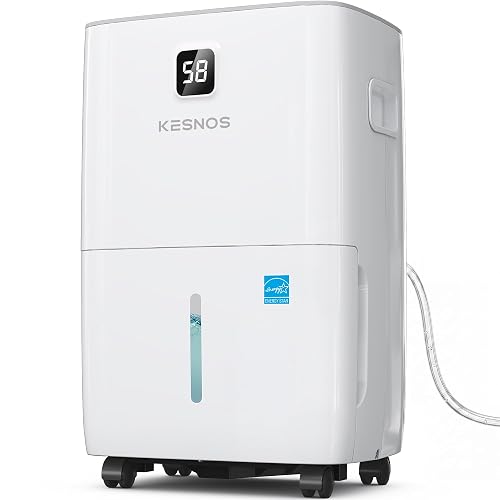
The Kesnos 80 Pint sits in a comfortable sweet spot for larger apartments that don’t need full basement-grade output. With 6,000 sq. ft. of coverage and an adjustable 30% to 80% humidity range, it handles everything from steamy summer months to shoulder-season condensation. The Energy Star rating keeps long operating cycles affordable.
Think of it as the FreAire’s bigger sibling. Where the FreAire targets 2,500 sq. ft., this Kesnos triples that footprint without tripling your electricity usage. For apartments with multiple humidity trouble spots, that headroom pays off.
Practical Advantages
- ✓80-pint daily capacity handles bigger floor plans without running constantly at full tilt.
- ✓6,000 sq. ft. coverage suits loft-style apartments and duplex layouts.
- ✓Energy Star efficiency softens the impact of running the unit for hours on end.
- ✓Wide humidity adjustment range supports fine-tuned comfort control.
Trade Offs
- •Bulk and weight make this a stationary choice, not something you shuffle between rooms.
- •Higher extraction rates bring longer compressor cycles, which produce steady background hum.
Key Specs
| | Feature | Specification | Why It Matters |
|---|
| Daily moisture removal | Up to 80 pints | Plenty of capacity for humid climates and large rooms |
| Coverage area | Up to 6,000 sq. ft. | Matches loft apartments and combined living areas |
| Humidity range | 30% to 80% adjustable | Allows precise target setting by season |
| Energy certification | Energy Star | Keeps power draw reasonable during long cycles |
Made For
Apartment households with multiple humidity sources (cooking, showers, indoor drying) who want one strong unit to handle the whole space.
Skip It When
The Kesnos 80 Pints Energy Star Dehumidifier with Front Humidity Display is a smarter pick for anyone who wants a visible humidity readout from across the room.
Same engine as the previous Kesnos, but with a front-mounted humidity display that changes how you interact with the unit. You can read the current room humidity from across the living room without walking over, which sounds small until you’ve lived with a dehumidifier hidden in a corner. Rated for 5,500 sq. ft. with 30% to 80% adjustability.
The display pairs well with a 5% adjustment increment, so you can nudge humidity settings in small steps instead of overshooting your target. Two fan speeds give you a low-noise option for evenings and a higher-output mode for damp mornings.
Where It Excels
- ✓Front humidity readout removes guesswork from daily operation.
- ✓80-pint daily capacity handles active households and humid climates.
- ✓5% adjustment increments support fine-tuning toward your comfort level.
- ✓Dual fan speeds let you trade off noise against extraction when needed.
Honest Caveats
- •5,500 sq. ft. coverage is slightly less generous than the previous Kesnos on this list.
- •Display illumination may bother light-sensitive sleepers in nearby bedrooms.
Best Suited To
Curious owners who like visible feedback and want to fine-tune humidity in small steps rather than coarse jumps.
Another Choice May Suit
The FreAire 34Pint Dehumidifier fits better for smaller apartments where 80-pint extraction is simply more machine than the space needs.
The Kesnos 30 Pint is the bedroom-friendly answer for renters who care about noise. Rated at roughly 36 dB on its quietest setting, it hums along at a level most people find easy to sleep through, which is rarer than it sounds in this category. Coverage of 2,500 sq. ft. and a target humidity floor of 30% keep it effective.
Compared to the PLUSCENT at the top of the list, this one costs a bit more but trades up to a noticeably quieter experience. For anyone whose dehumidifier has to coexist with light sleepers, video calls, or a nursery, that tradeoff is worth weighing.
A Strong Showing
- ✓36 dB operation keeps bedrooms and home offices peaceful.
- ✓30-pint daily capacity fits typical apartment humidity demands.
- ✓2,500 sq. ft. coverage suits medium-sized open living areas.
- ✓Energy Star certification keeps overnight running costs low.
Small Caveats
- •Higher fan setting will be louder than the advertised quiet mode, so placement still matters.
- •30-pint ceiling may feel modest during peak summer humidity in some climates.
Perfect Match For
Light sleepers, remote workers, and nursery households who refuse to compromise on quiet operation.
Where Another Pick Suits Better
The Kesnos 120 Pint Energy Star Dehumidifier is the smarter call for ground-floor apartments with truly stubborn, year-round moisture problems.
The Kesnos 150 Pint is the largest unit on this list, and it earns that spot. Rated for 7,500 sq. ft. with up to 150 pints of daily extraction, it covers the kind of severe moisture problems most apartments never see, but ground-floor and basement-level units sometimes do. The included drain hose and front humidity display round out the package.
For typical upstairs apartments, this is genuinely too much machine. For the right scenario, though, nothing else on this list matches its brute-force capability. The MIRAGE sleep mode also helps tame compressor noise when the unit runs overnight.
The Case For It
- ✓150-pint daily extraction handles the most stubborn moisture problems an apartment can throw at it.
- ✓7,500 sq. ft. coverage is comfortably oversized for nearly any residential setting.
- ✓Front humidity display gives you at-a-glance readings without crossing the room.
- ✓Sleep mode softens compressor noise for overnight operation.
Factors To Consider
- •Physical size and weight rule out frequent room-to-room moves.
- •Power draw is higher than smaller units, even with efficiency features.
- •Most renters won’t fully use the capacity, which means paying for headroom you don’t need.
Key Specs
| | Feature | Specification | Why It Matters |
|---|
| Daily moisture removal | Up to 150 pints | Tackles severe damp in basement-style apartments |
| Coverage area | Up to 7,500 sq. ft. | Covers oversized layouts and combined living zones |
| Humidity range | 30% to 80% adjustable | Supports precise seasonal comfort control |
| Noise profile | Includes sleep mode | Reduces compressor noise for overnight use |
Whose Shelf It Belongs On
Ground-floor apartment residents with documented moisture issues, and anyone whose previous smaller dehumidifier simply couldn’t keep up.
Reach For A Different Pick When
The Kesnos 30 Pints Energy Star Dehumidifier is the right call for upstairs units where quiet matters more than raw capacity.
What To Weigh Before Buying A Dehumidifier For Your Apartment
Match Capacity To Your Square Footage
Dehumidifier capacity is measured in pints of moisture removed per day, and overshooting hurts more than people expect. A 150-pint unit in a 600 sq. ft. studio cycles on and off constantly, which shortens compressor life and drives up energy costs. Apartment dwellers in compact layouts typically land in the 20 to 35 pint range, while larger two-bedrooms benefit from 50 to 80 pints. Save the basement-grade units for genuinely damp ground-floor spaces.
Plan For Drainage Before You Buy
The tank-versus-drain decision shapes daily life with the unit. Tank-only models force you to empty reservoirs regularly, which becomes tedious fast in humid seasons. Drain hose hookups route condensate directly to a sink, bucket, or floor drain, and they turn a dehumidifier into something you can ignore for weeks. In apartments, a nearby utility sink or condensate line makes drainage setups far easier.
Consider Noise For Living Spaces
Compressor-based dehumidifiers produce steady background hum, and the difference between a 36 dB unit and a 50 dB unit is huge in a quiet bedroom. Lower fan speeds help but cap extraction power. Bedrooms, nurseries, and home offices benefit from units specifically rated under 40 dB on low settings. Living rooms tolerate more noise, which is where higher-output units become reasonable.
Energy Efficiency Adds Up
Dehumidifiers run for many hours daily, sometimes around the clock during humid months. Energy Star certified models cost a bit more up front but save meaningful amounts over a year of continuous operation. For renters paying their own electric bill, that efficiency gap closes the price difference surprisingly fast.
Key Considerations Across These Picks
Pitfalls Shoppers Hit
The most common mistake is choosing a unit based on coverage area alone, ignoring tank size and drainage options. A “1,500 sq. ft.” dehumidifier with a tiny tank becomes a daily chore to empty. Another slip-up is placing a noisy compressor unit in a bedroom and assuming it will be fine. Measure your space, plan your drainage route, and test noise tolerance before committing.
Where The Extra Money Goes
Higher-tier models in this category earn their premium through better compressors, longer drainage runs, and quieter operation. The jump from a 30-pint to an 80-pint unit usually means a sturdier build, more consistent humidity control, and a longer service life. For most apartments, the mid-tier offers the best balance. The premium tier pays off when you genuinely need the capacity or want noticeably quieter operation.
Frequently Asked Questions
QHow Many Pints Do I Need For A Typical Apartment?
Most apartments fall into the 20 to 50 pint range, depending on square footage and humidity levels. A 30-pint unit covers many one-bedrooms comfortably, while larger two-bedroom layouts benefit from 50 pints or more. Match the number to your space, not to marketing claims.
QWhere Should I Place A Dehumidifier In An Apartment?
Central locations work best, since the unit pulls moisture from surrounding air. Place it a few feet from walls, away from direct sunlight, and somewhere with decent airflow. Bedrooms benefit from quieter units, while living rooms tolerate more powerful options.
QCan A Dehumidifier Run Continuously?
Yes, most modern units are designed for continuous operation, especially when connected to a drain hose. Without drainage, the unit shuts off when the tank fills and restarts after emptying. Drain hose setups are far more hands-off for long-term use.
QDo I Need A Dehumidifier In Winter?
Indoor heating usually drops humidity in winter, so many apartments need less dehumidification. Basement-level and ground-floor units with persistent dampness may still benefit year-round. Monitor your humidity levels with a simple hygrometer to decide.
QHow Often Do I Need To Clean The Filter?
Most manufacturers recommend checking the filter every two to four weeks during heavy use. A clogged filter reduces performance and strains the compressor. Cleaning usually takes only a few minutes and is the single biggest maintenance task for any dehumidifier.
Bottom Line
The right dehumidifier for your apartment comes down to square footage, drainage setup, and how much noise you can tolerate. Match capacity to your space, route a drain hose when possible, and prioritize quiet operation for bedrooms. A thoughtful match here means drier air, lower energy bills, and a much more comfortable home.