
A foggy mirror after a hot shower is more than a small annoyance. Lingering bathroom moisture feeds mildew, peels paint, and slowly damages grout and wood trim. The right dehumidifier pulls that water out of the air before it becomes a problem, and you don’t need a massive unit to do it. The six options below cover everything from compact quiet models for small baths to heavy-duty pumps for damp basements and oversized living spaces.
A Side-By-Side Look
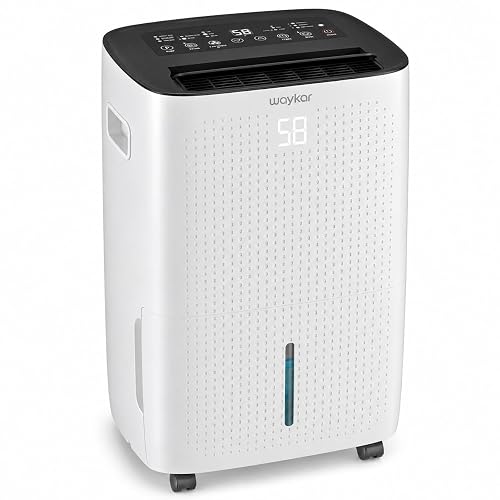
Waykar 145 Pints 6,500 Sq. Ft Dehumidifier with Pump

PLUSCENT 1,500 Sq. Ft 21 Pint Dehumidifier with Drain Hose
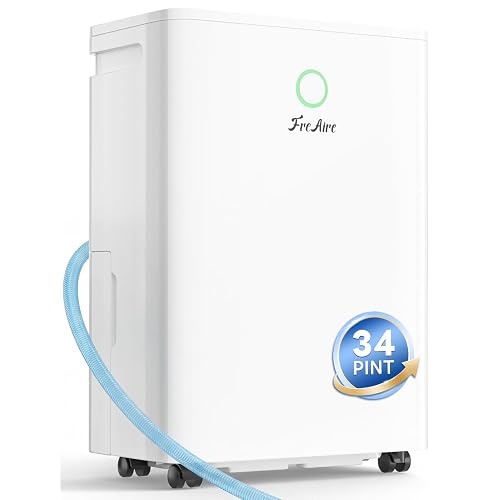
FreAire 34 Pint Dehumidifier for 2,500 Sq. Ft
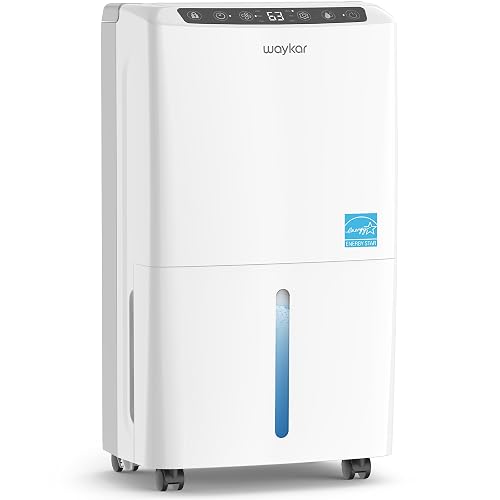
Waykar 34 Pints 2025 Energy Star Dehumidifier for Home & Basement
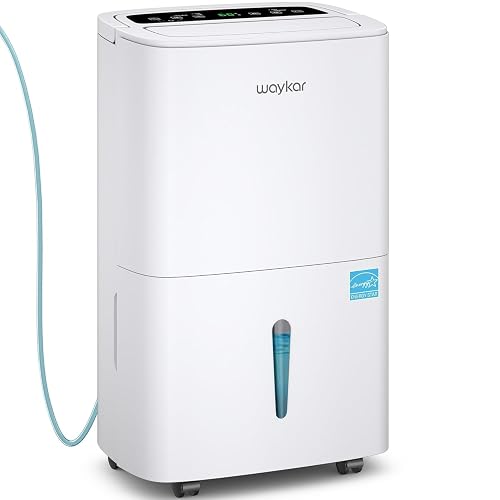
Waykar 150 Pints 2025 Energy Star Dehumidifier with Pump
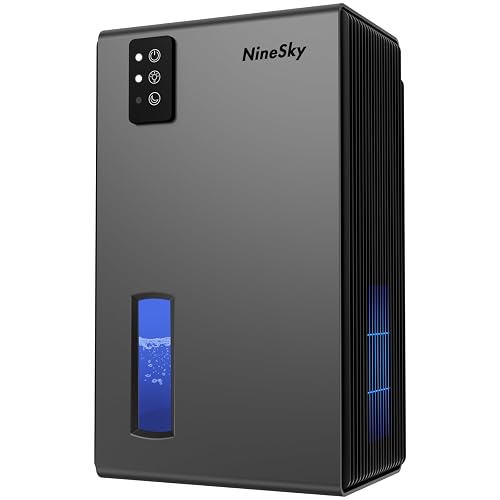
NineSky 1000 Sq.Ft Quiet Dehumidifier with Ambient Light
Why These Options Stand Out
Most room-sized dehumidifiers sit on the floor and wait for someone to empty a tank. This Waykar flips that script by adding a built-in condensate pump, which pushes collected water upward and out through a hose. In practical terms, you can route the drain line to a sink, a window, or a floor drain several feet away, and the unit keeps running without supervision.
Rated for spaces up to 6,500 square feet with 145 pints of daily extraction, it is overkill for a single bathroom but a sensible match for chronically damp basements, finished lower levels, or open-plan living areas where mildew keeps returning. Where the smaller PLUSCENT and FreAire models use manual or gravity drain setups, this one actively moves water, so placement flexibility is much higher.
A Favorable Mix
- Built-in pump pushes water uphill, freeing you from constant tank emptying
- 145-pint daily capacity handles large basements that smaller units cannot keep up with
- Adjustable humidity range from 30% to 80% suits both storage rooms and living spaces
- Continuous drain option means you can set it and mostly forget about it for months
Trade-Offs To Consider
- Larger physical footprint than mid-size picks like the PLUSCENT, so plan floor space accordingly
- Pump and high capacity push it into a price tier well above the NineSky
- Compressor units tend to be louder than thermoelectric models, so bedroom placement may be rough
At A Glance
Who It Suits Best
Homeowners with a chronically damp basement or large multi-room area who want a set-and-forget setup with pumped drainage.
Where Another Pick Suits Better
The Waykar 150 Pints 2025 model covers a similar envelope but adds auto-defrost for cold basements, so northern climates may want that one instead.
Not everyone needs a 6,500-square-foot workhorse. For a moderately sized bathroom, a small basement, or an RV, the PLUSCENT lands in a more practical middle ground. At 21 pints of daily extraction and 1,500 square feet of coverage, it sits comfortably between the tiny NineSky and the heavier Waykar units reviewed here.
The included drain hose gives you a continuous-drain option without paying for a built-in pump, which is the most common point of confusion in this category. A pump actively pushes water; gravity drainage simply lets water flow downhill to a floor drain or bucket. For most home setups where the unit sits slightly above a drain, that distinction does not matter much.
Useful Strengths
- 21-pint capacity is well-matched to typical single-room and small-basement use
- Lower power draw than larger compressor models, so utility bills stay reasonable
- Drain hose included, which many budget units charge extra for
- Compact body fits inside a bathroom closet or RV cabinet
Honest Caveats
- Gravity drain means the unit must sit higher than the drain point, limiting placement
- Not built for very damp basements where the Waykar 145 or FreAire 34 would be a better match
Right Fit For
Mid-size homes with a single problem room or a lightly damp basement where a small, affordable unit will be left to run quietly in the background.
Look Elsewhere When
The FreAire 34 Pint is the smarter call for a 2,500-square-foot open area, since the PLUSCENT will struggle to keep up with that much air volume.
The FreAire sits in the sweet spot many shoppers actually live in: not a single bathroom, not a warehouse, but a generous bedroom, finished basement, or open living area. At 34 pints of daily moisture removal and 2,500 square feet of coverage, it pushes meaningfully harder than the PLUSCENT without jumping into commercial territory.
The 6.56-foot drain hose is the unsung feature. Where the PLUSCENT’s shorter hose limits how far you can route water, this length lets you send drainage across a room to a utility sink or basement floor drain. That sounds minor until you try to position a smaller unit near the only available outlet.
What Helps Most
- 34-pint capacity is a strong match for large bedrooms and finished basements
- Long 6.56-foot drain hose gives more placement freedom than shorter bundled hoses
- Adjustable humidity setpoint lets you match conditions to a nursery, office, or workshop
- Auto-restart after a power outage preserves your settings
Softer Spots
- No internal pump, so drainage still relies on gravity
- Compressor noise is a step up from the NineSky’s thermoelectric design
- For spaces above 2,500 square feet, the Waykar 145-pint model is the right scale
Quick Facts
Who Should Grab It
Anyone with a single large room or a finished basement in the 1,500 to 2,500 square foot range who wants compressor-level extraction without stepping up to a commercial unit.
Skip It When
The Waykar 34 Pints 2025 model is the better fit for shoppers who want Energy Star efficiency and an auto/manual drainage switch in roughly the same room-size class.
The 2025 Waykar mid-size model is built around a rotary compressor, which is the part of a dehumidifier that actually pulls moisture from the air. Rotary designs tend to be smaller, lighter, and more efficient than older reciprocating compressors, and that translates into a noticeably slimmer body than the FreAire.
For 2,000 square feet of coverage and 34 pints of daily extraction, it lines up closely with the FreAire on raw capacity, then tries to win on running costs and form factor. The auto or manual drainage choice is the practical differentiator, since you can switch between a tank and a hose without buying accessories.
Real Benefits
- Energy Star rated, which usually means lower annual electricity use than non-certified peers
- Rotary compressor keeps the body compact for easier placement in tight spaces
- Drainage is selectable, so you can run a hose or use the 0.62-gallon tank on the fly
- Adjustable humidity range from 30% to 80% covers storage, living, and work environments
Worth Bearing In Mind
- 0.62-gallon tank fills quickly in very damp rooms, so the drain hose is the practical default
- Coverage caps at 2,000 sq ft, so it does not stretch to the larger open areas the Waykar 145 handles
- Compressor noise still rules it out of very quiet rooms, where the NineSky is a better match
Feature Snapshot
Best Suited To
Energy-conscious homeowners with a single 1,500 to 2,000 square foot floor who want efficient operation and flexible drainage in one unit.
Another Choice May Suit
For oversized basements and warehouse-style spaces, the Waykar 150 Pints 2025 model is the right scale-up, since it covers 7,000 square feet and includes a built-in pump.
This is the unit you bring home when a small basement dehumidifier is not enough. Rated for 7,000 square feet with 150 pints of daily extraction, the Waykar 150 Pints is a serious machine, the kind you find in workshops, large basements, and small commercial spaces. For a typical bathroom, it is way more than you need; for a damp warehouse or finished multi-room lower level, it earns its keep.
Two features set it apart from the smaller Waykar 145 reviewed earlier. Auto-defrost lets the unit keep working in cold basement conditions where cheaper compressors would ice up and shut down. The self-drying cycle clears residual moisture from internal components after shutdown, which tends to extend service life and reduce musty odors between uses.
Notable Gains
- Auto-defrost keeps the coils clear in cold basements, so the unit does not stall in winter
- Self-drying function helps prevent the mildew smell that builds up inside idle dehumidifiers
- Built-in pump allows drainage routing even when no floor drain is nearby
- Energy Star rating helps offset the running cost of a 150-pint compressor
Possible Compromises
- Size and weight make it a poor fit for upstairs bathrooms and tight closets
- Pricier than any other option on this list, so the value math only works for genuinely large spaces
- Compressor noise rules out living-area placement near seating or sleeping zones
Spec Overview
Who Will Love This
Owners of large basements, workshops, or commercial-scale spaces who need a continuous-duty unit and want the cold-weather reliability of auto-defrost.
Swap It Out When
The Waykar 34 Pints 2025 model is the smarter pick for a single finished room under 2,000 square feet, where this unit would be overbuilt.
The NineSky is the quietest option in this roundup, and that distinction is more important than the spec sheet suggests. It uses thermoelectric cooling rather than a compressor, which is the technology most people picture when they think of a small dorm-room dehumidifier. Thermoelectric designs have no moving compressor, so they run nearly silent, which makes them a natural fit for a bathroom next to a bedroom or a nursery.
Coverage tops out at 1,000 square feet, and the 95-ounce tank is the largest in this guide, so the unit can run for stretches without attention. The seven-color ambient light is a small touch, but it doubles as a soft night light in a hallway bath, where a bright dehumidifier display would feel out of place at 2 a.m.
The Upside
- Thermoelectric operation keeps noise low enough for sleeping spaces and nurseries
- 95-ounce tank reduces how often you need to walk over and empty it
- Auto shut-off protects the unit when the tank reaches capacity
- Compact body slides into a small bathroom corner or under a vanity counter
Less-Strong Areas
- Thermoelectric extraction is gentler than compressor-based units like the FreAire or Waykar models
- Best in rooms under 1,000 sq ft, so a full basement will overwhelm it
- Cooler ambient conditions reduce effectiveness, since the design relies on a temperature differential
Perfect Match For
Apartments and small homes where a quiet unit in a bathroom, bedroom, or closet matters more than raw extraction speed.
Consider Something Else When
The PLUSCENT 21 Pint is the stronger match for a moderately damp basement, since its compressor system pulls more moisture in cooler air.
What To Weigh Before Picking A Bathroom Dehumidifier
Bathroom humidity behaves differently from basement moisture. A hot shower spikes humidity fast, then the air recovers. That changes which specs actually matter. A small thermoelectric unit like the NineSky handles those short bursts well, while a large compressor like the Waykar 150 Pints is overkill for a 60-square-foot powder room.
Room Size Versus Extraction Rate
Dehumidifier capacity is usually listed in pints per day, the amount of water the unit pulls from the air in 24 hours under standard test conditions. The higher the pint rating, the faster the unit can drop humidity in a given space. For a typical 50 to 100 square foot bathroom, 20 to 35 pints is plenty. For an open-plan lower level, you want 34 pints or more, which is where the FreAire and the Waykar 34 Pints 2025 start to make sense.
Compressor Versus Thermoelectric
Compressor dehumidifiers, like the Waykar, PLUSCENT, and FreAire models, extract more water and work well in cool basements. Thermoelectric units, like the NineSky, run quieter but produce less moisture removal, especially in cooler rooms. If your bathroom stays warm from showers, a thermoelectric unit is fine. If the room runs cool, a compressor will pull more water for the same electricity.
Drainage Setup That Matches Your Home
Tank-only units force you to empty water every day or two in damp conditions. Drain hose models let water flow out by gravity, which is what the PLUSCENT, FreAire, and Waykar 34 Pints 2025 offer. Pump-equipped units like the Waykar 145 and 150 Pints can push water up and out to a remote drain. Pick the drainage style that matches where you can actually place the unit.
Noise And Placement
A bathroom next to a bedroom is a different problem than a basement utility room. Thermoelectric designs are nearly silent, which is why the NineSky fits sleep-sensitive spaces. Compressor units cycle on and off with a low hum, so most shoppers keep them in rooms where short-term noise is acceptable. Auto-defrost, found on the Waykar 150 Pints, also matters in cool basements, since ice on the coils will eventually shut a basic compressor down.
Key Considerations Across These Picks
Common Shopping Slip Ups
The biggest mistake is sizing up too aggressively, since a 150-pint commercial unit in a small bathroom will short-cycle, which means it turns on, cools the coils below target, shuts off, and repeats. Short cycling wastes energy and wears the compressor faster. Match the pint rating to the room, not the future room. Another trap is buying a tank-only unit for a chronically damp space, then realizing the tank fills twice a day. In that case, drainage matters more than extraction speed.
Where The Extra Money Goes
Paying more in this category usually buys three things: larger compressors that pull more water per day, built-in pumps that route water to distant drains, and Energy Star efficiency that lowers annual electricity use. Cold-weather features like auto-defrost, found on the Waykar 150 Pints, also cost more, and they earn their keep only in unheated basements. For a warm, well-sealed bathroom, a mid-size compressor or a quiet thermoelectric unit is usually the right spend.
Frequently Asked Questions
How many pints per day do I need for a small bathroom?
For a standard 50 to 100 square foot bathroom, 20 to 35 pints per day is enough to keep humidity in check after showers. Larger thermoelectric units like the NineSky also work, since they run quietly and run for the long stretches between showers.
Can I leave a bathroom dehumidifier running all day?
Yes, especially models with a continuous drain option like the FreAire, the Waykar 34 Pints 2025, or the Waykar 145 Pints. Tank-only units should be set to auto shut-off so the unit does not run dry when the tank is full, which can shorten compressor life.
Where should I place a dehumidifier in a bathroom?
Aim for a spot with a few inches of clearance on all sides and some airflow, away from the direct shower spray. A corner near the door, but not inside the shower zone, is a good default. Keep electrical outlets and cords clear of standing water.
Are thermoelectric dehumidifiers worth it for bathrooms?
For warm, frequently used bathrooms, yes, since thermoelectric models like the NineSky are nearly silent and pull enough moisture between showers. In cool rooms, they lose effectiveness, and a compressor model like the PLUSCENT is the better fit.
Do I need a pump if I have a floor drain nearby?
A pump, like the one built into the Waykar 145 Pints, is only useful if you need to route water uphill or to a drain that sits above the unit. If a floor drain sits lower than the dehumidifier, a gravity drain hose is enough.
Closing Remarks
A quiet thermoelectric unit is the right call for most small, warm bathrooms, while a mid-size compressor earns its place in larger rooms with steady humidity. Match the pint rating, the drainage style, and the noise level to where the unit will actually live, and the rest of the decision tends to take care of itself.