

A damp cellar ruins storage, invites mold, and makes even a quick trip downstairs unpleasant. You need moisture gone fast, and the right machine handles it quietly in the background. Cellar humidity behaves differently from upstairs living spaces: cooler air, less airflow, and often a built-in drain point nearby. The picks below cover everything from compact 21-pint units for small wine rooms to 150-pint commercial-grade workhorses for warehouse-sized cellars, all tuned for steady, unattended operation.
A Fast Comparison Of The Options
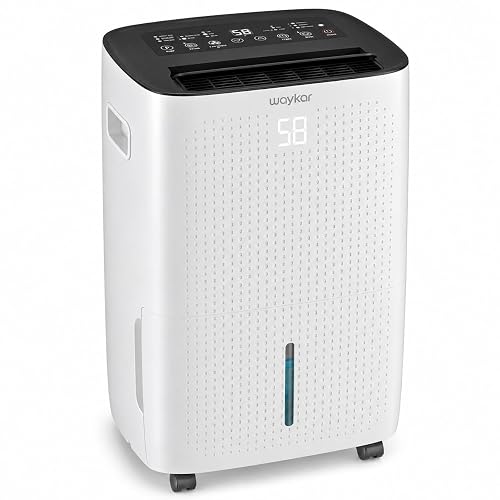
Waykar 145 Pints 6,500 Sq. Ft Dehumidifier with Pump
PLUSCENT 21 Pint Dehumidifier for 1,500 Sq. Ft
FreAire 34 Pint Dehumidifier with 6.56ft Drain Hose
Kesnos 120 Pint Energy Star Dehumidifier 6,500 Sq. Ft
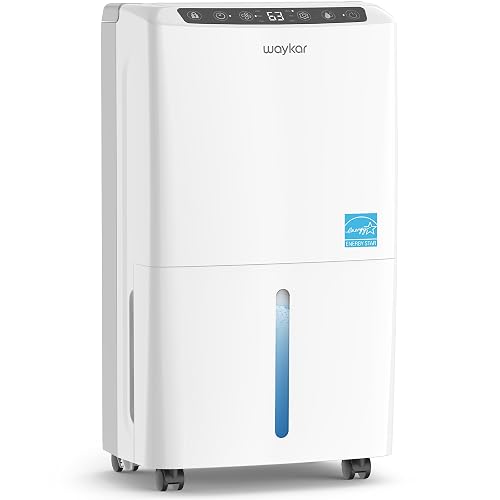
Waykar 34 Pints 2025 Energy Star Dehumidifier 2,000 Sq. Ft
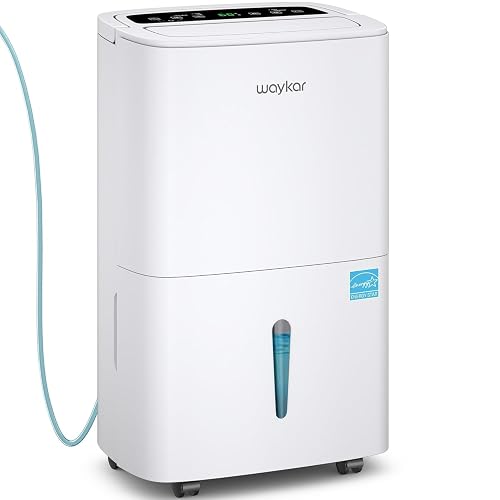
Waykar 150 Pints 2025 Energy Star Dehumidifier with Pump
Kesnos 80 Pints Energy Star Dehumidifier with Front Display
More On The Choices That Made The List
This Waykar pulls 145 pints of moisture per day in tough conditions, sized for big open cellars up to 6,500 square feet. A built-in pump pushes condensate (the water the unit collects from the air) upward through a hose, so you can route drainage to a sink, sump, or outside wall without emptying a tank by hand.
For most storage cellars that stay cool year-round, the integrated pump is the headline feature. Floor drains aren’t always nearby, and hauling a full reservoir upstairs gets old fast. The unit pairs a wide humidity range with continuous drain support, which suits a cellar where you’d rather set it and walk away.
Reasons It Performs
- Built-in condensate pump removes the need to empty a tank in finished or remote cellar corners.
- 6,500-square-foot coverage handles long, open stone-walled cellars without overworking the compressor.
- Adjustable humidity range from 30% to 80% covers both dry wine storage and general damp control.
- Includes a drain hose plus onboard tank, giving you two drainage paths depending on layout.
Points To Keep In Mind
- Larger body size means you’ll want to plan a permanent spot before running it the first time.
- Pump models tend to be louder at startup, so a back-corner placement helps in finished cellars.
At A Glance
Whose Shelf It Belongs On
Owners of large, finished cellars who want true set-and-forget moisture control without hauling water upstairs.
A Better Fit Elsewhere
Pick the Waykar 150 Pints 2025 Energy Star Dehumidifier with Pump if your cellar pushes past 7,000 square feet and you need the auto defrost cycle for cold winter nights.
The PLUSCENT is built for the small end of the cellar spectrum, extracting up to 21 pints daily in 1,500-square-foot rooms. Its 160-watt draw keeps electrical demand low, which matters in older homes where a cellar circuit may share wiring with the rest of the basement.
Unlike the larger Waykar above, this unit skips the pump and leans on a simple gravity drain hose. That keeps the cabinet lighter and easier to reposition, which is helpful if your cellar doubles as a workspace during the day. You get just enough capacity for sealed-off wine rooms or small root cellars without paying for overkill.
Benefits That Matter
- Lightweight cabinet makes it easy to move when rearranging cellar shelving.
- Low 160-watt draw eases the load on older basement circuits.
- Gravity drain hose keeps installation simple when a floor drain is within reach.
Trade-Offs
- Coverage tops out at 1,500 square feet, so larger open cellars will outpace it.
- No internal pump means you’ll need a nearby low-point drain for hands-off operation.
Who Will Love This
Wine collectors and hobbyists with a small, sealed cellar where moderate humidity is the only goal.
Skip It When
Choose the Kesnos 80 Pints Energy Star Dehumidifier with Front Humidity Display if you want a more visible humidity readout and stronger extraction in a 5,000-square-foot cellar.
FreAire’s 34-pint dehumidifier covers up to 2,500 square feet, slotting neatly between the compact PLUSCENT and the heavy-duty Waykars. The included 6.56-foot drain hose gives you more routing freedom than shorter hose kits, helpful when the nearest drain sits across a cellar walkway.
A compression-based system (the same type of pump mechanism used in refrigerators) drives the moisture extraction, and the controls are straightforward enough for cellar owners who don’t want a learning curve. It pulls double duty for basements that hold both storage and a finished corner, where humidity targets shift with the season.
The Practical Payoff
- 34-pint capacity fits mid-size cellars without the size jump to commercial units.
- Extended 6.56-foot hose reaches floor drains that sit farther from the unit.
- Compression system handles sustained runs better than smaller thermoelectric models (which use heat instead of a compressor and struggle in cool air).
Honest Caveats
- No built-in pump, so vertical drain runs are limited.
- Coverage assumes typical insulation; stone-walled cellars may need a second unit.
Feature Snapshot
Right Fit For
Cellar owners who want a mid-tier workhorse for a 2,000-square-foot basement with a usable floor drain nearby.
Look Elsewhere When
Step up to the Waykar 34 Pints 2025 Energy Star Dehumidifier if you want Energy Star efficiency and a smaller cabinet for tight cellar stair landings.
Kesnos pairs 120-pint extraction with Energy Star certification, which means it meets stricter efficiency benchmarks than uncertified rivals. For a cellar that runs 24/7 through humid summers, that translates into meaningfully lower electricity use than the Waykar 145-pint model above.
Continuous drainage runs through a standard hose hookup, and the 30% to 80% humidity range gives you fine control for sensitive storage. It runs cooler on the electricity bill while still covering up to 6,500 square feet, so the efficiency story holds even in bigger spaces.
Positive Takeaways
- Energy Star certification cuts long-term power costs in always-on setups.
- 120-pint capacity handles sustained humidity without compressor strain.
- Adjustable range down to 30% suits dry-goods storage in addition to general damp control.
Less-Strong Areas
- No internal pump, so drainage relies on gravity and a low-point drain.
- Larger cabinet takes up a meaningful corner of a finished cellar.
Quick Facts
Made For
Cellar owners who run their unit year-round and care more about electricity savings than top-end extraction speed.
Swap It Out When
Move to the Waykar 145 Pints 6,500 Sq. Ft Dehumidifier with Pump if you need a built-in pump to push water upward to a sink or window drain.
This 2025 Waykar leans into a smaller body without giving up a real compressor. It pulls 34 pints per day and covers up to 2,000 square feet, fitting tight cellar landings and short stair runs where the FreAire above might feel oversized.
Energy Star certification keeps the wattage honest, and the 0.62-gallon tank gives you buffer time when you choose manual drainage. Auto or manual modes let you decide between hands-off hose runs and the occasional tank-empty routine, depending on how your cellar is plumbed.
Where It Excels
- Compact cabinet fits cellar corners and short stair landings without blocking the walkway.
- Energy Star efficiency trims power use during long summer runs.
- Auto or manual drainage switches between continuous hose runs and tank collection as needed.
Potential Compromises
- 2,000-square-foot ceiling means larger cellars will outpace it during humid spells.
- Smaller tank fills faster in continuous-extraction mode, so a drain hookup is helpful.
Best Suited To
Cellar owners with a compact 1,500-square-foot basement who want efficient, quiet operation in a tight footprint.
Not Your Match When
Pick the Kesnos 80 Pints Energy Star Dehumidifier with Front Display if you want a visible humidity readout on the front and 5,500 square feet of coverage.
The 150-pint Waykar steps things up for serious cellar duty, covering 7,000 square feet and adding auto defrost plus a self-drying cycle. The defrost feature matters in cool cellars where frost can build on the coils and stall the unit mid-run.
A built-in pump pairs with the included drain hose, so water can travel up and over to a sink, sump, or exterior drain. Self-drying cuts down on mildew risk inside the cabinet between runs, a quiet but real plus in storage spaces where any standing moisture invites problems.
A Strong Showing
- 150-pint extraction handles the dampest cellar conditions without cycling off constantly.
- Auto defrost keeps the coils clear in cool winter cellars where other units stall.
- Self-drying mode reduces internal mildew between heavy-use periods.
Practical Considerations
- Commercial-grade size demands a dedicated spot and a reachable power outlet.
- Higher extraction means louder operation at peak, so a back wall works best.
Who Should Grab It
Cellar owners managing 5,000-plus-square-foot spaces or stone-walled basement rooms prone to severe damp and cold-season frost.
Another Choice May Suit
Step down to the Kesnos 120 Pint Energy Star Dehumidifier if your cellar tops out around 6,500 square feet and you don’t need auto defrost.
Kesnos’s 80-pint model covers up to 5,500 square feet, landing between the mid-tier FreAire and the 120-pint Energy Star unit above. The front humidity display is a small touch that pays off in a dark cellar, since you can read the current reading without crouching or pulling out a phone flashlight.
Low and high fan speeds let you balance noise against extraction speed, which is useful when the cellar shares a wall with living space. The 30% to 80% humidity range adjusts in 5% steps, fine enough to dial in a wine-cellar target or a general-purpose storage range.
What Makes Sense
- Front-mounted humidity display reads clearly in dim cellar lighting.
- Two fan speeds let you trade quiet operation for faster extraction.
- 5% adjustment increments give you precise control over target humidity.
Where It Is Less Suited
- No built-in pump, so drainage depends on gravity and a low-point drain.
- 80-pint ceiling may fall short in heavily damp stone-walled basements.
Perfect Match For
Everyday cellar owners who want a clear, visible humidity reading and balanced extraction for a 4,000-square-foot basement.
Reach For A Different Pick When
Choose the FreAire 34 Pint Dehumidifier if your cellar sits below 2,500 square feet and you don’t need a front display.
What Matters Most Before Choosing a Cellar Dehumidifier
Size And Capacity Matched To The Room
Cellar square footage is the first filter, but insulation and stone walls change the math. A bare concrete basement often needs a 50-pint-or-larger unit even at 1,500 square feet, while a sealed, insulated cellar can run on a 21-pint model. Measure the room, then check the unit’s rated coverage against the construction type.
Drainage Path: Tank, Hose, Or Pump
A removable tank works for short runs and light use, but full cellars fill tanks fast. A continuous drain hose plus a nearby floor drain gives you hands-off operation in most homes. Built-in pumps push water upward when the only drain sits higher than the unit, which is common in cellars with stairs.
Cool-Space Performance
Cellars run cooler than living areas, and cold air can frost the coils inside a standard dehumidifier. Auto defrost cycles keep the unit running through cold nights, while thermoelectric models lose efficiency fast below 60°F. Look for compressor-based units with a defrost mode if your cellar drops below that mark seasonally.
Efficiency And Continuous Run Time
Always-on cellar duty means the electricity bill compounds. Energy Star certification is the clearest efficiency signal, and a 160-watt unit will cost meaningfully less to run than a 700-watt commercial model over a humid summer. For year-round use, efficiency often matters more than peak extraction speed.
Key Considerations Across These Picks
Common Slip Ups Worth Dodging
Underestimating coverage is the most common cellar mistake, and owners often discover their unit cycles constantly without ever hitting the target humidity. Pairing a 21-pint machine with a 2,000-square-foot stone basement is a recipe for frustration. Always oversize the unit slightly rather than running it flat-out, since compressors last longer with reserve capacity.
Where The Extra Money Goes
Premium picks earn their keep with built-in pumps, auto defrost, and Energy Star efficiency, the three features that matter most in long cellar runs. A basic 30-pint model costs less up front, but you’ll pay more in electricity and tank-emptying time over a few summers. For a cellar you genuinely depend on, the upgrade typically pays back through quieter, more reliable operation rather than raw speed.
Frequently Asked Questions
How Many Pints Per Day Do I Need For A Cellar?
A 50-pint daily capacity handles most 1,500-square-foot cellars comfortably, while damp stone-walled basements often need 80 to 150 pints. The right number depends on how much moisture enters the space through walls and foundation, not just square footage.
Can A Dehumidifier Run Constantly In A Cellar?
Yes, most compressor-based units are designed for continuous operation, especially models with continuous drain and Energy Star efficiency. Built-in defrost cycles help in cold cellars where frost would otherwise stop the compressor.
Where Should The Drain Hose Go In A Cellar?
A nearby floor drain, sump pump, or sink works best. For cellars without a low-point drain, a unit with a built-in pump can push water upward through a hose to a higher drain point, eliminating the need to carry a tank upstairs.
Do Cellar Dehumidifiers Need Special Maintenance?
Routine coil cleaning and filter rinsing every few weeks keeps performance steady. Units with self-drying cycles reduce internal mildew between heavy runs, which matters in cool, closed cellars where moisture lingers.
Will A Dehumidifier Cool Down A Cellar?
The process removes some heat as a byproduct, but the temperature drop is small, usually a few degrees. A dehumidifier controls moisture, not climate, so a separate cooling or heating solution is still needed for true temperature management.
The Takeaway
The right cellar dehumidifier matches your square footage, drainage setup, and how often you want to think about it. Small sealed cellars do well with compact units, while larger damp basements benefit from pumped drainage and auto defrost. Match the machine to the room, and your cellar stays dry without constant attention.