
Condo humidity has a personality. It shows up between the concrete walls during shoulder seasons, lingers in the bathroom after long showers, and quietly feeds mildew on window sills. Choosing the right machine matters more in shared buildings where venting options are limited and noise travels through walls. This list focuses on dehumidifiers for condo living that match real square footage, drain easily in tight utility corners, and run quietly enough for open-plan spaces. Every pick below has a defined purpose, from a compact basement workhorse to a whole-home option that handles large open layouts.
The Essentials At A Glance
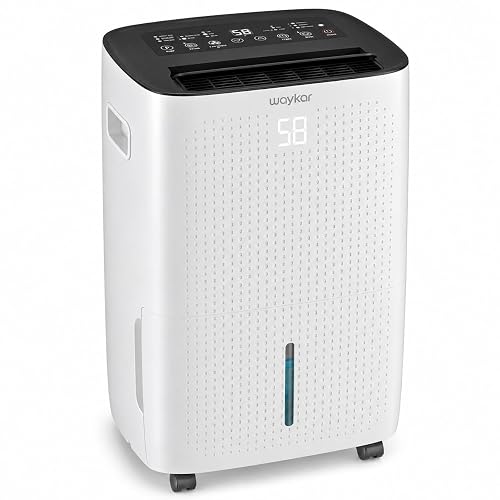
Waykar 145 Pints High Efficiency Dehumidifier with Pump
PLUSCENT 1,500 Sq. Ft 21 Pint Dehumidifier with Drain Hose
FreAire 34 Pint Dehumidifier for 2,500 Sq. Ft
Kesnos 120 Pint Energy Star Dehumidifier for Basement
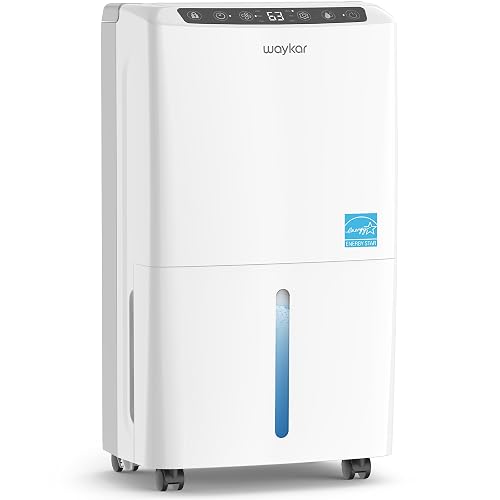
Waykar 34 Pints 2025 Energy Star Dehumidifier for Home & Basement
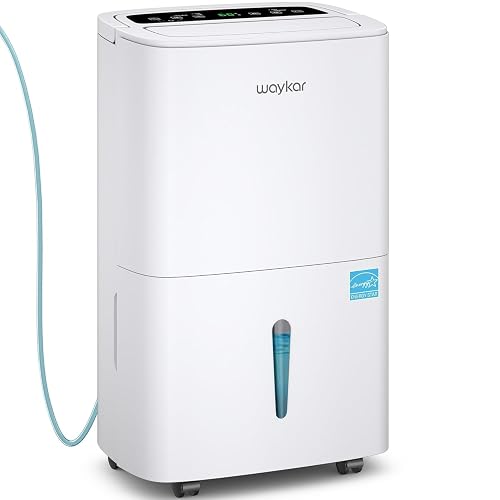
Waykar 150 Pints 2025 Energy Star Dehumidifier with Pump
Kesnos 80 Pints Energy Star Dehumidifier with Front Humidity Display
More Details On Our Top Picks
Condo owners with wide-open layouts or multi-level floor plans often run into a stubborn problem. A standard unit pulls moisture from one room while leaving a back den feeling damp. The Waykar 145-pint pushes enough air to handle up to 6,500 square feet, which is more than most full-floor condos, and pairs that capacity with an integrated pump that moves condensate (the water a dehumidifier pulls from the air) upward and out through a hose rather than relying on a tank.
For a downtown loft with a single utility closet, the pump removes one of the most common headaches of large dehumidifiers: emptying a full reservoir at inconvenient times. Compared with the smaller PLUSCENT unit below, this Waykar trades compactness for raw output, which makes more sense in a sprawling unit than a small one. The 30% to 80% humidity range covers the comfort band most residents aim for, and the rotary compressor (a quieter, longer-lasting motor style) keeps operation reasonably steady for a unit this size.
Well-Handled Touches
- Built-in pump pushes water up and out, no manual tank trips during the week
- High daily moisture removal supports wide open-concept floor plans
- Adjustable target humidity across the typical comfort range
- Includes a drain hose for hands-off continuous operation
Worth Noting
- Footprint and weight are larger than mid-size picks, so plan the placement spot in advance
- Airflow noise is noticeable in very quiet rooms; bedrooms may need a smaller secondary unit
Key Specs
Right Fit For
Owners of large, open-concept condos with persistent humidity who want set-and-forget drainage.
Swap It Out When
The Waykar 34-pint 2025 Energy Star is a better match for tighter floor plans under 2,000 square feet.
Studio apartments and one-bedroom condos rarely need a 150-pint workhorse. They need a quiet box that fits behind a reading chair. The PLUSCENT 21-pint unit covers up to 1,500 square feet and runs on a modest 160-watt draw (a measure of how much electricity it consumes; lower numbers mean lower operating cost), which keeps it friendly to older condo electrical panels. The included drain hose is the real differentiator at this size, because small units usually rely on a removable tank.
For a high-rise unit where balcony drainage is not an option, running the hose to a sink or floor drain is a clean solution. Daily moisture removal of 21 pints handles the steam from a small bathroom and a kitchen without working overtime. Where the Waykar 145-pint above feels oversized for a 700-square-foot unit, this PLUSCENT lands in the comfortable middle.
Real-World Strengths
- Right-sized for studio and one-bedroom floor plans up to 1,500 sq. ft.
- Low power draw keeps long-term operating cost down
- Included drain hose gives a permanent setup in tight utility spots
Small Caveats
- No pump, so the hose only works on a downward path to a drain
- Lower daily extraction means it struggles in basements with standing water issues
Made For
Studio and one-bedroom condo owners who want simple, continuous drainage in a small footprint.
Look Elsewhere When
The FreAire 34-pint is a smarter step up for units closer to 2,500 square feet.
Many two-bedroom condos hover right around 1,800 to 2,200 square feet, and that is the gap where mid-capacity units shine. The FreAire 34-pint pulls up to 34 pints per day and covers 2,500 square feet, which leaves comfortable headroom for a kitchen, a primary bedroom, and a small home office. The 6.56-foot drain hose that ships in the box is longer than what most competitors include, which matters in older condos where the nearest floor drain sits across a room.
Compared with the PLUSCENT 21-pint, this FreAire moves noticeably more air and handles a damp season with less cycling. Compared with the Kesnos 120-pint below, it is far more manageable in a single utility area. Owners commonly report that the rotary compressor here is steady, and the adjustable humidity range from 30% to 80% mirrors the comfort band of the larger Waykar above.
A Few Highlights
- Long included drain hose reaches far floor drains in older buildings
- Daily removal handles two-bedroom humidity without straining
- Mid-size body fits in a closet or beside a washer
Points To Keep In Mind
- No built-in pump, so routing the hose to a higher drain is not possible
- You may find fan noise noticeable on the higher setting at night
Feature Snapshot
Best Suited To
Two-bedroom condo households that need real capacity without jumping to commercial size.
Not Your Match When
The Kesnos 80-pint suits larger layouts above 4,000 square feet with steadier humidity loads.
Ground-floor and below-grade condos carry a specific challenge. Cooler air holds less moisture, and that moisture condenses on cool walls, creating a steady dampness that a small unit never catches up with. The Kesnos 120-pint pulls up to 120 pints daily and covers 6,500 square feet, which is more than enough for a basement-level unit with shared walls. Energy Star certification (a federal efficiency standard for appliances that meet strict power-use rules) means it sips less electricity than non-certified equivalents, an important point if the unit runs every day.
The included drain hose supports continuous drainage in a basement utility area, and the 30% to 80% humidity range matches the rest of this list. Where the Waykar 145-pint above adds a pump for upward drainage, this Kesnos relies on gravity, so plan the placement near a floor drain or a condensate pump (a small accessory pump that pushes water uphill when gravity is not an option). For a unit with a finished basement rec room, this is a comfortable, always-on solution.
Positive Takeaways
- Energy Star rating keeps long-run cost lower for always-on use
- Large 6,500 sq. ft. coverage suits full below-grade floor plans
- Continuous drainage with included hose for set-and-forget operation
- Adjustable humidity from 30% to 80% in clear increments
Trade Offs
- No internal pump, so placement near a low drain is necessary
- Body is bulkier than the FreAire above and harder to relocate
At A Glance
Who It Suits Best
Ground-floor and below-grade condo owners who run their dehumidifier around the clock and value lower power bills.
A Better Fit Elsewhere
The Waykar 145-pint with built-in pump is the smarter pick when no nearby floor drain is available.
For most condo residents reading this list, the everyday unit is what matters. The Waykar 34-pint 2025 update fits up to 2,000 square feet and runs on a redesigned rotary compressor that the brand positions as a step up in efficiency. The 0.62-gallon internal tank (about 5 pints of water storage) is small enough to keep the body compact, and the unit supports both auto and manual drainage for flexible placement.
Compared with the larger Waykar 145-pint at the top of the list, this one trades significant capacity for a much smaller footprint, which suits condos with limited storage. Energy Star certification keeps daily running cost reasonable for a unit you might leave on through shoulder seasons. The adjustable range from 30% to 80% matches the comfort band used by every other pick here, so the controls feel familiar.
The Helpful Details
- Compact 2025 redesign with rotary compressor for quieter operation
- Energy Star certified for lower daily power use
- Auto and manual drainage supported out of the box
- Right-sized for a standard condo living area up to 2,000 sq. ft.
Soft Spots
- Internal tank is small, so manual mode means frequent emptying
- Lower daily extraction than the 80- and 120-pint models for serious basement dampness
Perfect Match For
Condo residents who want a modern, efficient unit for a typical living area without over-sizing the appliance.
Reach For A Different Pick When
The FreAire 34-pint makes more sense if you specifically need the longer 6.56-foot drain hose for a tricky utility setup.
Penthouse-style condos and combined living-dining layouts stretching past 5,000 square feet push past the reach of mid-size units. The Waykar 150-pint 2025 model covers up to 7,000 square feet and adds auto-defrost, a feature that prevents the cooling coils from icing up when the unit runs in a cooler basement or storage room. The self-drying function shuts the fan down in stages after the cycle ends, which reduces leftover moisture in the coils and the musty smell that can follow.
For a corner unit with floor-to-ceiling windows and a winter garden, this is the kind of capacity that actually makes a dent. The built-in pump removes the gravity-only limitation, so the drain hose can route up and over to a utility sink. Energy Star certification is a meaningful detail here, because a 150-pint unit running daily is a different electricity story than a 34-pint model.
A Few Strong Suits
- Highest daily removal in the list, with auto-defrost and self-drying cycles
- Pump-equipped drainage routes water up and over to remote drains
- Energy Star certified for a high-capacity unit
- Covers up to 7,000 sq. ft. for the largest condo floor plans
Honest Caveats
- Body and weight make it a semi-permanent install, not a moveable appliance
- Price tier is higher than mid-size picks, so the upgrade only pays off at the top end of the size range
Built With In Mind
Owners of large, multi-room condos with serious humidity who want hands-off, pumped drainage.
Skip It When
The Kesnos 80-pint handles most floor plans under 5,500 square feet with similar everyday efficiency.
For residents who actually like watching the numbers, a front humidity display changes the experience. The Kesnos 80-pint covers up to 5,500 square feet and shows the current room humidity on a front panel rather than tucking the readout on top. That small detail matters when the unit sits in a finished living area or a converted den, where a quick glance replaces walking over to a top-mounted screen.
Daily removal of 80 pints sits comfortably between the FreAire 34-pint and the Waykar 150-pint, which makes it a useful middle ground for a 3,000 to 4,500 square foot layout. Humidity adjusts in 5% increments, which feels more precise than the broader steps on older units. Two fan speeds (low and high) let you tune the noise-versus-output trade-off (low fan for bedrooms, high for daytime recovery after a wet season).
Where It Delivers
- Front humidity display is easy to read across the room
- 5% humidity increments give finer control than typical adjustments
- Low and high fan settings let you balance noise and output
- Energy Star certified for steady daily use
Worth Bearing In Mind
- No built-in pump, so drain routing is gravity-only
- Filter cleaning tends to come up as a recurring maintenance step every few weeks
Who Should Grab It
Condo owners who prefer visible, at-a-glance humidity readings in their main living area.
Where Another Pick Suits Better
The PLUSCENT 21-pint is a better match for small units under 1,500 square feet where heavy capacity is unnecessary.
What To Weigh Before Buying a Condo Dehumidifier
Match Capacity to Square Footage, Not Hype
The biggest mistake in this category is buying by pints-per-day number alone. A 145-pint unit in a 900-square-foot studio cycles on and off constantly, wastes energy, and over-dries the air. A 21-pint unit in a 3,000-square-foot layout never reaches the target humidity. Pick the unit that lands at or slightly above your actual square footage, then add 10% to 20% headroom for bathrooms, kitchens, and laundry closets that push moisture into shared air.
Drainage Setup Decides Daily Convenience
Tank-only units work for occasional use but become tedious for full-season operation. A drain hose, ideally one included in the box, lets the unit run continuously. Pump-equipped models remove the gravity-only limitation and matter most when the nearest drain sits above the unit’s base. In a condo with strict rules on where a hose can route, plan the path before choosing a model.
Noise and Energy Cost Matter More in Shared Walls
A loud compressor travels through condo walls in ways it never would in a detached house. Look at fan-speed options and rotary compressor designs, both of which tend to run quieter than older reciprocating compressors (the traditional piston-style motor). Energy Star certification becomes a real factor when the unit runs eight to twelve hours a day across a humid season.
Filter Access and Tank Cleaning Are Real Ownership Tasks
Most units ship with a washable filter that needs rinsing every two to four weeks, depending on dust load. A unit with a top-access filter is easier to service than one that needs partial disassembly. The internal tank, if present, should lift out cleanly and seat without forcing. Owners commonly report that filter skipping is the single biggest cause of reduced output over time.
Key Considerations Across These Picks
Where Shoppers Go Wrong
The most common error is treating dehumidifier coverage ratings as exact. Manufacturers list square footage under ideal conditions at 95°F and 90% relative humidity (a measure of how much moisture the air holds compared with its maximum), which is wetter than most living spaces. In a typical condo, real-world coverage often lands 20% to 30% below the listed number, so sizing up is the safer move. Another slip is overlooking drainage: many shoppers buy a 120-pint unit and then realize their utility closet has no nearby floor drain, which forces them back to a manual tank.
The Upgrade Payoff
Stepping into higher tiers usually buys three things. A built-in pump removes gravity restrictions on drain routing. Auto-defrost and self-drying cycles protect the coils and reduce the musty smell that builds up after long runs. Energy Star certification shows up most clearly in the kilowatt-hours saved over a full humid season. These features earn their keep for residents who run a unit daily, but for part-time or seasonal use, a mid-tier model often covers the need at a friendlier price tier.
Frequently Asked Questions
How many pints per day do most condos actually need?
A typical two-bedroom condo up to 1,500 square feet usually sits in the 30 to 50 pint range. Larger layouts and below-grade units benefit from 80 to 120 pints. Anything above 120 pints is useful when the floor plan stretches past 5,000 square feet or the building has chronic moisture issues.
Can a dehumidifier run continuously in a condo?
Yes, most modern residential units are designed for continuous operation. The simplest path is a drain hose routed to a sink, floor drain, or condensate pump. A pump-equipped model adds flexibility when the drain sits higher than the unit.
Where is the best place to put a dehumidifier in a condo?
Central locations with good airflow work best, ideally a hallway or living area where air can circulate. Avoid tucking the unit into a closed closet with no ventilation, since dehumidifiers need to pull room air across their coils. Keep a few feet of clearance on all sides for proper intake and output.
Are Energy Star dehumidifiers worth it for condo use?
Energy Star certification is most valuable in units that run for many hours each day, since the efficiency gain compounds over time. For occasional seasonal use, the difference is smaller but still meaningful. In a building where every kilowatt-hour shows up on the electric bill, the savings add up across a humid season.
How often do filters and tanks need attention?
Filters generally need rinsing every two to four weeks during heavy use. Tanks in non-drain setups need emptying whenever they fill, which can be daily in a very damp space. Setting a recurring reminder for the filter keeps output from quietly dropping over time.
Closing Remarks
The right dehumidifier for your condo comes down to matching capacity, drainage, and noise to the space you actually live in. Start with square footage, then check whether a drain hose or pump fits your utility setup. Any of the seven picks here handles a real condo scenario well, and the differences come down to scale and convenience. A clean, dry indoor space is well within reach once the right model is in place.