
A damp room slows everything down. Whether you hang laundry, store tools, or finish wood, excess moisture stretches drying times and invites musty smells. The right dehumidifier pulls that moisture out steadily so the space stays workable day after day. This lineup covers compact rooms, mid-size basements, and large workshops, with one specialized safe-dehumidifying rod for enclosed cabinets.
The Essentials At A Glance
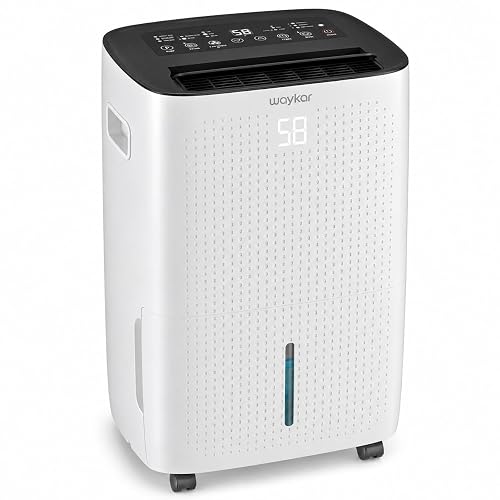
Waykar 145 Pints 6,500 Sq. Ft Dehumidifier with Pump

1,500 Sq. Ft 21 Pint Dehumidifier with Drain Hose
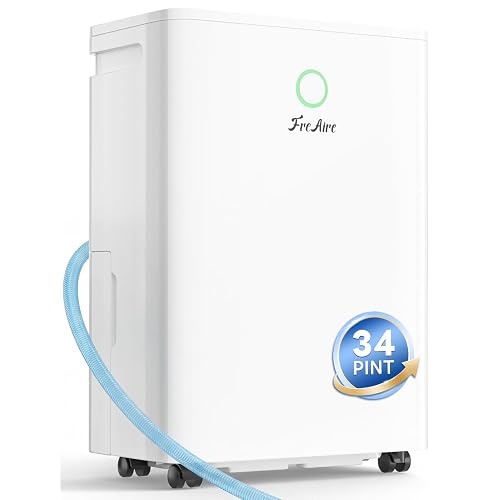
FreAire 34 Pint Dehumidifier for 2500 Sq. Ft
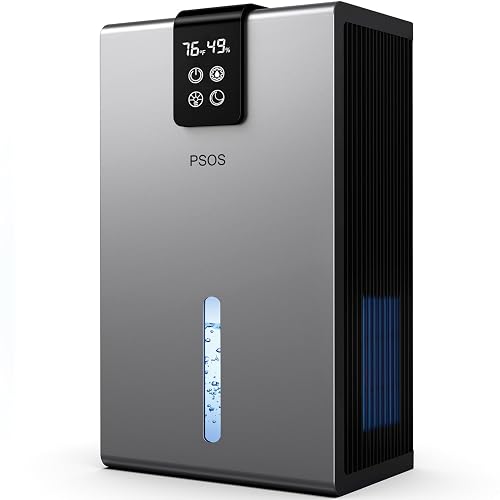
PSOS 98 OZ Dehumidifier for Home 1000 sq. ft
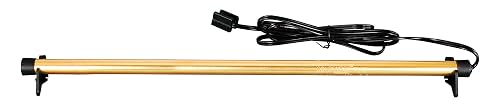
Lockdown Golden Rod Dehumidifier 24″
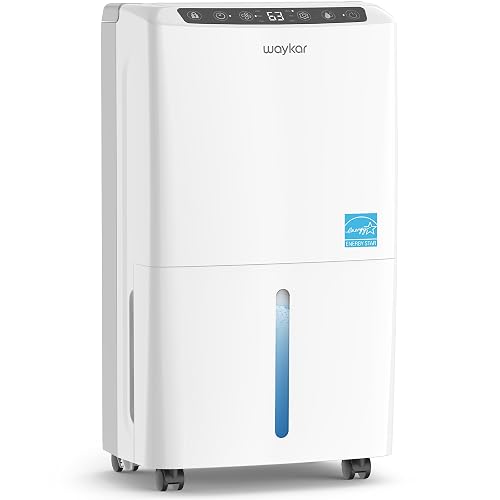
Waykar 34 Pints 2025 Energy Star Dehumidifier
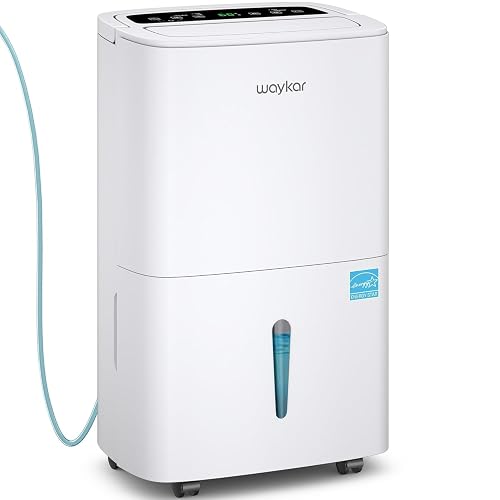
Waykar 150 Pints 2025 Energy Star Dehumidifier with Pump
Taking A Closer Look At The Options
Open floor plans and large basements are where this Waykar earns its keep. The integrated pump moves condensate (the water vapor that condenses back into liquid) upward and out through a drain line, so you can route the discharge to a sink, window, or floor drain without babysitting a tank. If the room runs damp for weeks on end, that hands-off operation matters more than any spec sheet.
You trade portability for capacity. The chassis is sizable, and moving it between rooms is a two-person job. Owners with a permanent installation point, like a fixed workshop corner or finished basement, get the full benefit without wrestling the unit around the house.
Bright Spots
- Built-in pump enables continuous drainage without manual tank emptying
- Daily moisture extraction strong enough for large basements or commercial drying rooms
- Adjustable humidity range lets you dial in the exact target percentage
- Compatible with a standard drain hose for flexible placement away from a floor drain
Things To Consider
- Larger footprint than mid-size units, harder to tuck into tight storage
- Drain hose routing needs planning before the first run
Who It Suits Best
Workshop owners and homeowners with a 2,000+ square foot basement who want a set-and-forget install rather than a portable appliance.
Where Another Pick Suits Better
Smaller drying rooms up to 1,500 square feet will be better served by the 1,500 Sq. Ft 21 Pint Dehumidifier, which is easier to position and lighter on the power bill.
First-time dehumidifier owners tend to over-buy, then regret the size. This PLUSCENT unit lands in the sweet spot for a typical basement or spare bedroom. The included drain hose lets you set it up near a low point and walk away, which is genuinely useful when the room is small and a tank fills faster than you expect.
Capacity here means 21 pints per day under standard test conditions, which is plenty for moderate dampness but won’t keep up with a chronically wet basement. For laundry drying or a mildew-prone bathroom, though, this is a clean, approachable fit.
What Helps Most
- Right-sized for typical bedroom or small basement moisture loads
- Drain hose included for direct-to-floor-drain setup
- Compact form factor slides into tight corners
Points To Keep In Mind
- Not strong enough for spaces with standing water or severe damp
- Drain hose is gravity-only, so the unit must sit above the discharge point
Key Specs
Right Fit For
Apartment dwellers or first-time owners running a dehumidifier in a single room without rewiring or permanent installation.
Skip It When
You need serious capacity for a 2,500+ square foot basement, where the FreAire 34 Pint Dehumidifier pulls noticeably more moisture per day.
The middle child of this list often ends up being the right answer. FreAire’s 34-pint compressor pushes enough air through a 2,500 square foot basement to keep a hanging laundry load moving, and the 6.56-foot drain hose gives you real flexibility on placement. That’s a longer run than most competitors include.
One small but useful detail: a longer hose means the unit doesn’t have to live right next to a floor drain. In an older basement with a single drain in the corner, that reach can save you from rerouting plumbing or buying extensions.
Real-World Strengths
- Daily capacity covers a medium basement or drying room without strain
- Extended drain hose for flexible positioning
- Compressor-based design handles sustained, heavy use better than smaller thermoelectric models
Honest Caveats
- Heavier than compact bedroom units, plan placement before first run
- Compressor noise is noticeable in quiet rooms
Made For
Homeowners drying laundry indoors or maintaining a mid-size basement workshop with a moderate moisture load.
Look Elsewhere When
You need a near-silent bedroom companion, in which case the PSOS 98 OZ Dehumidifier uses thermoelectric cooling (a quieter, lower-power technology) and runs much quieter at the cost of raw capacity.
Compressor dehumidifiers are workhorses, but they are not quiet. The PSOS unit runs on a thermoelectric module, which trades raw extraction power for a much gentler sound profile. If the drying room doubles as a guest room or nursery, that trade makes sense.
The visible humidity display and the seven-color ambient light are small touches, but the auto shutoff when the 98-ounce tank fills is the real safety net. You won’t come home to a puddle if you forget to empty it for a day.
Where It Delivers
- Near-silent operation suitable for bedrooms and living areas
- Auto shutoff prevents overflow when the tank is full
- Lightweight and easy to move between rooms as needed
Some Limits To Know
- Thermoelectric cooling limits performance in very humid environments
- 1,000 sq. ft. coverage assumes moderate, not heavy, moisture loads
Who Should Grab It
Renters or bedroom-focused users who want quiet background moisture control without the hum of a compressor.
Not Your Match When
Your drying room is a basement with serious damp, where the Waykar 34 Pints Energy Star unit will outpull this one several times over.
This one breaks the mold. A Golden Rod is not a compressor or thermoelectric dehumidifier, it is a vermiculite-filled heating rod that warms the air inside a sealed cabinet just enough to discourage condensation. Gun safes, ammo lockers, and dry-storage cabinets are its real home.
If your “drying room” is a small enclosed locker that needs to stay rust-free, this is the right tool. For anything bigger than a closet, you need an actual room-scale dehumidifier from the rest of this list.
The Helpful Details
- 24-inch rod fits most full-size gun safes and similar cabinets
- Plugs into any standard 110-120V outlet with a 6-foot cord
- Vermiculite core holds and releases heat steadily without a fan
Practical Considerations
- Only suitable for enclosed cabinets, not open rooms
- No humidity readout, so monitoring requires a separate hygrometer
Best Suited To
Gun owners and hobbyists with a metal safe who need to keep internal humidity stable to prevent rust on tools or firearms.
A Better Fit Elsewhere
Anyone drying laundry or managing a basement should pick the FreAire 34 Pint Dehumidifier instead, since the Golden Rod has no moving air and no real extraction capacity.
Running a dehumidifier 12 hours a day adds up on the electric bill. Waykar’s 2025 refresh uses a rotary compressor that meets Energy Star efficiency targets, so the same 34-pint extraction costs less to run than older compressor designs. For homeowners who leave the unit cycling through laundry day after day, that matters.
The 0.62-gallon tank is small for the capacity, which means you will either drain often or hook up the gravity hose. The dual drainage option is what saves this from being a hassle.
Notable Gains
- Energy Star rated for lower long-run power consumption
- Both auto pump and manual drain options built in
- Compact body for a 34-pint unit, easier to position than older bulkier models
Where It May Fall Short
- Onboard tank fills quickly under heavy load
- Gravity drain hose needs a downward path to function
Key Specs
Whose Shelf It Belongs On
Cost-conscious homeowners running a dehumidifier through a full season who want lower electric bills without sacrificing capacity.
Another Choice May Suit
If your space runs larger than 2,000 square feet, the Waykar 145 Pints Dehumidifier offers a much higher daily extraction ceiling.
At the top end, this Waykar pulls 150 pints per day, enough for a 7,000 square foot warehouse or a chronically damp commercial basement. The built-in pump pushes water upward and out through a drain hose, so you can route condensate to a sink, window, or exterior drain without gravity holding you back. Auto defrost (a cycle that melts ice off the internal coils in cool conditions) keeps the unit running in colder spaces where standard compressors would ice up.
The honest read is that most homeowners do not need this much machine. It is built for serious loads, and the size and power draw make it overkill for a single-family basement. Treat it as a commercial-grade tool, not a household upgrade.
The Good Stuff
- Top-tier daily extraction for large or commercial spaces
- Built-in pump with included drain hose for true continuous operation
- Auto defrost extends usable range into cooler basements and garages
- Self-drying feature helps protect internal components between cycles
Worth Bearing In Mind
- Energy draw is high even at Energy Star efficiency
- Physical size demands a permanent placement plan
Built With In Mind
Workshop owners, small-business operators, and homeowners with very large basements who need commercial-grade extraction.
Swap It Out When
You are working with a standard home basement under 2,500 square feet, where the Waykar 34 Pints 2025 Energy Star Dehumidifier handles the load at a much friendlier operating cost.
What To Weigh Before Choosing a Dehumidifier
Match Capacity To Room Size
A 21-pint unit in a 3,000 square foot basement will run constantly and still leave the air damp. Conversely, a 150-pint commercial unit in a 200 square foot bedroom will short-cycle, which wears the compressor and drives up electric use. Room square footage is the single most important number to match.
Decide Between Drainage Methods
Tank-only models force you to empty water every few hours under load. Hose-equipped units route water out passively, but gravity-only hoses need the unit above the drain point. Pump-equipped models push water upward, which is the most flexible option for basements where the only drain sits above floor level.
Factor In Operating Noise
Compressor dehumidifiers hum, and that hum is louder in thermoelectric units. If the drying room shares space with sleeping quarters, a quieter thermoelectric model like the PSOS is worth the capacity trade-off. For workshop or basement-only installations, compressor noise is rarely a concern.
Mind The Climate
Basements below 65 degrees Fahrenheit cause standard compressors to ice up, reducing efficiency or stopping extraction entirely. Units with auto defrost handle cool conditions without intervention. Heated drying rooms or warm-climate basements rarely face this issue.
Key Considerations Across These Picks
Mistakes Worth Dodging
A common trap is sizing up without thinking about drainage. A 150-pint unit sounds appealing until you realize the tank fills in hours and you do not have a drain line nearby. Match the drainage method to your space before you match the capacity to the square footage.
Another frequent miss is ignoring operating temperature. Placing a non-defrost compressor unit in a 55-degree basement will leave you with a frosted coil and minimal moisture removal. If your space runs cool, prioritize auto defrost.
Where The Extra Money Goes
Higher-capacity models cost more because the compressor, coils, and housing are physically larger. The added expense also buys features like built-in pumps, longer drain hoses, and self-drying cycles that protect the internal components. For a small bedroom, those features are wasted. For a 5,000 square foot basement, they pay back in convenience and longevity.
Frequently Asked Questions
How many pints per day do I need for a drying room?
A rule of thumb is to size capacity to the room, not the laundry load. For a 1,000 to 1,500 square foot space, 21 to 34 pints per day covers most household drying needs. Anything larger calls for 50-plus pints.
Can a dehumidifier run continuously?
Most modern units are rated for 24-hour operation when paired with a drain hose or pump. Tank-only models must be emptied or shut off automatically when the reservoir fills, so continuous use is only practical with a drainage setup in place.
Where should I place a dehumidifier in a drying room?
Central placement with a few feet of clearance on all sides gives the best airflow. Keep it away from direct heat sources and outside walls, which can confuse the humidistat (the internal sensor that measures room humidity and signals the compressor when to run).
Do dehumidifiers work in cold basements?
Standard compressors lose efficiency below 65 degrees Fahrenheit because the coils frost over. Units with auto defrost handle cooler conditions, and some models are specifically rated for low-temperature operation down to the low 40s.
How often does the tank need emptying?
Tank-only units in damp basements may need emptying every 6 to 12 hours. A drain hose eliminates that routine, and a pump-equipped model can route water several feet vertically to the nearest drain.
The Takeaway
The right dehumidifier depends entirely on your space. A small bedroom wants a quiet, compact unit. A basement workshop wants a compressor with a drain hose. A warehouse or oversized basement wants a pump-equipped workhorse. Match the capacity, drainage, and noise profile to your actual room, and the rest of the decision tends to make itself.