

Garages are rough environments for any appliance. Concrete floors sweat, seasonal temperatures swing hard, and the air often carries the kind of moisture that quietly rusts tools, ruins cardboard, and feeds musty odors. A residential dehumidifier can limp through a bedroom but stall in this kind of space. The right garage unit pulls real pints of water per day, tolerates cool basements, and runs without babysitting.
This lineup focuses on capacity, build, and how each model handles the day-to-day reality of a damp, often unheated workspace. Whether you store a classic car, run a small wood shop, or just want the air to stop feeling clammy, there’s a sensible match ahead.
A Quick View Of The Lineup

PLUSCENT 1,500 Sq. Ft 21 Pint Dehumidifier with Drain Hose
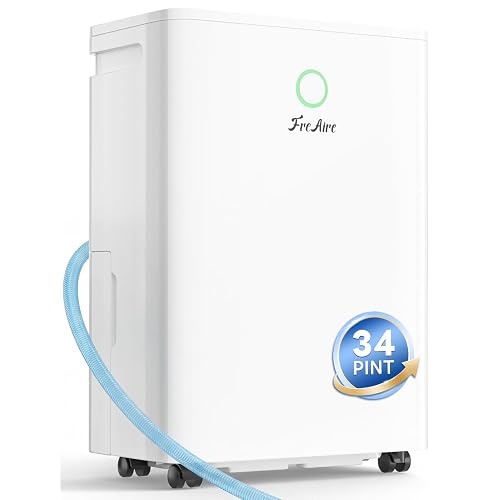
FreAire 34Pint Dehumidifier for 2500Sq.Ft With 6.56ft Drain Hose
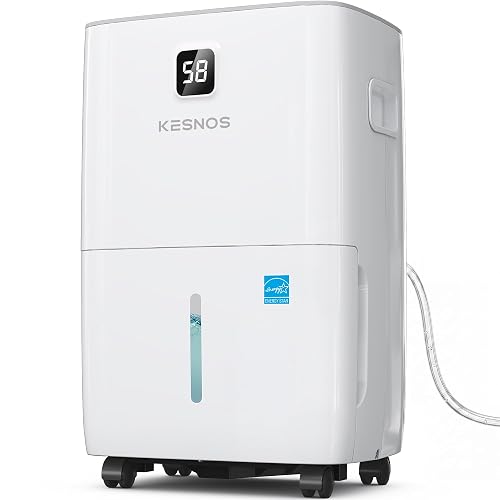
Kesnos 120 Pint Energy Star Dehumidifier for Basement, 6500 Sq. Ft
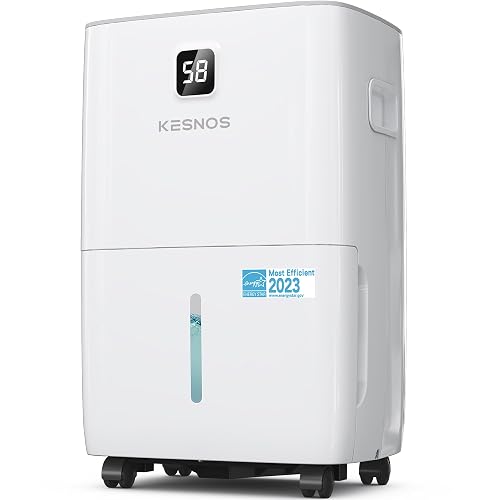
Kesnos 80 Pints Energy Star Dehumidifier for Basement & Home, 6,000 Sq. Ft.
Kesnos 80 Pints Energy Star Dehumidifier for Home w/Front Humidity Display
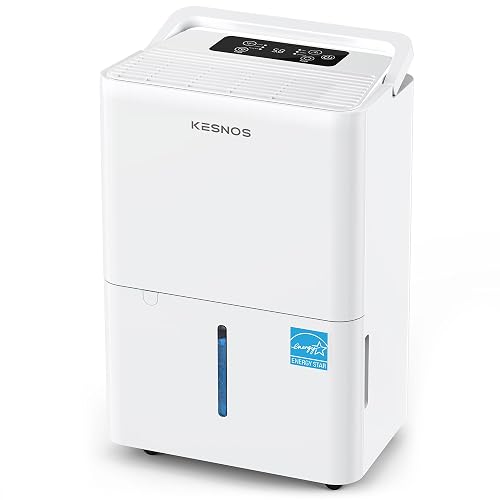
Kesnos 30 Pints Energy Star Dehumidifier, Ultra-Quiet 36 dB, 2500 Sq. Ft.
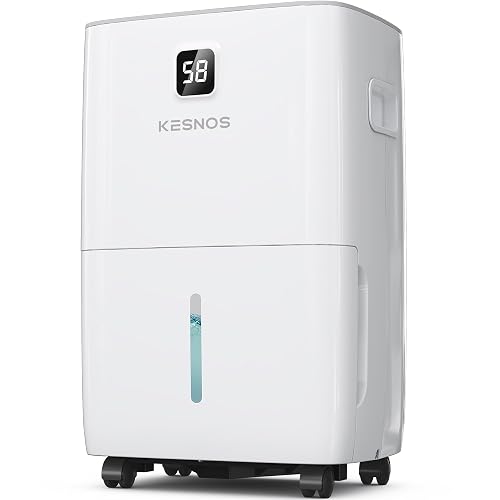
Kesnos 150 Pint Dehumidifier for Basement with Drain Hose, 7,500 Sq. Ft.
Inside Each Recommended Option
The PLUSCENT sits at the entry point of this list and earns its place by doing the basics well. Rated for 1,500 square feet and a daily extraction of 21 pints, it suits a single-car garage that sees mild dampness rather than standing-water conditions. The included drain hose gives you a set-and-forget option if there’s a floor drain nearby.
Think of this as a tidy starter. The 160W compressor is gentle on a standard outlet, and the unit is light enough to roll between rooms if your garage doubles as a workspace. Compared with the FreAire below, the PLUSCENT gives up raw capacity but keeps the footprint small and the controls uncomplicated.
What Earns Its Place
- Compact body fits tight corners beside a workbench or tool cabinet.
- Drain hose included for continuous gravity draining to a nearby floor drain.
- Low 160W draw keeps it friendly to older garage circuits.
- Simple control layout that doesn’t require a manual to operate.
Points To Keep In Mind
- 21 pints per day is modest for garages with active moisture intrusion.
- Performance drops sharply when ambient temperatures fall, common in unheated garages during shoulder seasons.
Right Fit For
Shoppers with a small, mostly dry attached garage who want a no-fuss unit and already have a drain point.
A Better Fit Elsewhere
Anyone dealing with serious damp should look at the Kesnos 150 Pint Dehumidifier for Basement with Drain Hose, 7,500 Sq. Ft., which moves far more water per day.
Step up from a starter unit and you land at the FreAire, which targets a 2,500-square-foot envelope. Its 34-pint daily capacity is the sweet spot for a two-car garage or a workshop that doubles as storage. The 6.56-foot drain hose is long enough to reach a utility sink without much rerouting.
The compressor system pulls moisture faster than the PLUSCENT, which matters in spring when concrete walls sweat after cold nights. Where the PLUSCENT felt like a basic tool, the FreAire behaves more like a workhorse: you set the target humidity and let the unit cycle. For most people with a typical suburban garage, the honest read is that this is enough machine without overbuying.
Strong Points
- 34-pint daily extraction handles a standard two-car garage comfortably.
- Long drain hose reaches wall-mounted drains and utility sinks.
- Adjustable humidity setpoint lets you tune the air rather than running full-time.
Worth Noting
- Not Energy Star certified, so operating costs run higher than the Kesnos options below.
- Coil freeze protection matters more here; in unheated winter garages, you may find the compressor cycles off in deep cold.
Built With In Mind
Owners of mid-size two-car garages who want setpoint control and don’t mind a slightly higher power bill.
Look Elsewhere When
Energy-conscious shoppers get a better long-term value from the Kesnos 80 Pints Energy Star Dehumidifier for Basement & Home, 6,000 Sq. Ft., which pairs similar coverage with verified efficiency.
The first Kesnos on this list jumps straight into serious territory. Rated at 120 pints per day and 6,500 square feet, this is the model you bring home when the garage smells like a wet basement after every rain. The Energy Star rating is the real differentiator: it pulls heavy moisture without the punishing power bills that come with non-certified units.
Adjustable humidity between 30% and 80% means you can target the sweet spot for tool storage, around 45 to 50 percent, rather than drying the air to uncomfortable levels. Compared with the FreAire above, the Kesnos trades portability for raw output, and it shows. You will need a real drain route, because the tank fills quickly and continuous draining is the realistic option.
Useful Touches
- Energy Star certified, so high output doesn’t translate to runaway electric costs.
- 30 to 80 percent humidity range covers everything from classic car storage to workshop comfort.
- 120-pint daily extraction tackles persistently damp concrete spaces.
Honest Caveats
- Larger chassis than the 30- and 34-pint picks; measure your floor space first.
- Without a drain line, the internal tank demands frequent emptying in heavy use.
Quick Facts
Who Should Grab It
Owners of large, persistently damp garages who already have a floor drain and care about long-term energy use.
Not Your Match When
Smaller spaces are better served by the PLUSCENT 1,500 Sq. Ft 21 Pint Dehumidifier with Drain Hose, which costs less to buy and run.
The 80-pint Kesnos is the more measured sibling of the 120-pint model above. It still covers 6,000 square feet and keeps the Energy Star rating, but it pulls 80 pints per day rather than 120. For many garages, that gap is the difference between a unit that runs constantly and one that idles between cycles.
It also straddles the workshop-and-storage line well. If your garage holds a workbench on one side and a car on the other, this Kesnos keeps the air stable without drying it to the point where lumber cracks or adhesives get brittle. The same 30 to 80 percent humidity range appears here, so you get the same tuning flexibility. The trade-off against the 120-pint version is straightforward: slower recovery after the door has been open all afternoon.
Notable Upsides
- Energy Star rating trims operating cost over years of continuous use.
- 80-pint output suits mixed-use garages without over-drying stored materials.
- Wide humidity range gives you control from comfort levels to tool-preservation levels.
Small Caveats
- After long open-door periods, recovery takes longer than on the 120-pint Kesnos.
- You still need a drain plan; the tank fills fast in continuous mode.
- Air filter cleaning is a recurring chore, especially in dusty garage environments.
Made For
Garages that serve as both parking and workshop, where stable humidity matters more than brute-force extraction.
Reach For A Different Pick When
Severely wet spaces benefit from the Kesnos 150 Pint Dehumidifier for Basement with Drain Hose, 7,500 Sq. Ft., which is built for the worst-case scenario.
This Kesnos variant shares the 80-pint output of the previous pick but shifts the focus to usability. The front-mounted humidity display means you can glance across the garage and see the current reading without crouching down or pulling out your phone. In a workshop, that convenience adds up.
The 5-percent adjustment increments are finer than most rivals, which is genuinely useful when you’re calibrating around sensitive materials like guitar wood or photographic equipment. Low and high fan speeds give you a quiet option for evening hours and a more aggressive mode after rain. The trade-off versus the larger 120- and 150-pint Kesnos units is coverage area: at 5,500 square feet, it sits between the FreAire and the higher-output Kesnos models.
A Few Strong Suits
- Front-facing display makes the current humidity readable from across the room.
- 5% adjustment steps allow fine-tuning around sensitive stored items.
- Dual fan speeds let you trade noise for faster drying on demand.
Less-Strong Areas
- 5,500 sq. ft. coverage is a step below the 6,000 and 6,500 sq. ft. Kesnos siblings.
- Display brightness in a sunlit garage can be harder to read than the spec sheet suggests.
Key Specs
Whose Shelf It Belongs On
Hobbyists and serious DIYers who store moisture-sensitive gear and want at-a-glance readings.
Swap It Out When
Buyers who care more about coverage than display clarity are better served by the Kesnos 80 Pints Energy Star Dehumidifier for Basement & Home, 6,000 Sq. Ft., which covers more ground at the same output.
The 30-pint Kesnos is the quietest model in this roundup, rated at 36 dB, which is roughly the sound of a library. That alone makes it the right pick for attached garages where a louder compressor would bleed into living space above or beside the garage.
It targets 30% RH, lower than the 40% floor of most rivals, which is meaningful if you’re storing books, documents, or fabrics in the garage. Coverage is 2,500 square feet, so it’s the smaller end of the Kesnos lineup, and the Energy Star rating helps offset the cost of running it on a long cycle. Compared with the FreAire at similar capacity, the Kesnos adds a notably quieter operation and a lower humidity floor, at the cost of slower recovery in genuinely wet conditions.
Points In Its Favor
- 36 dB operation won’t disturb living space above an attached garage.
- 30% RH target suits paper, fabric, and cardboard storage better than typical 40% minimums.
- Energy Star certified for lower continuous-run cost.
Practical Considerations
- 30-pint output is light for actively wet garages with water intrusion.
- Lower humidity targets can over-dry wood furniture if left unattended.
Best Suited To
Owners of attached garages with finished rooms overhead who need moisture control without compressor noise.
Consider Something Else When
Detached workshops with real water problems should step up to the Kesnos 120 Pint Energy Star Dehumidifier for Basement, 6500 Sq. Ft, which handles far heavier moisture loads.
The 150-pint Kesnos is the ceiling of this lineup. At 7,500 square feet of coverage and 150 pints per day, it exists for the garage that has tried everything else. Standing water after storms, condensation streaming down walls, a faint must every time the door opens; this is the model aimed at that reality.
The included drain hose is non-negotiable here. At this output, no internal tank keeps up. You route the hose to a floor drain, sump pump, or condensate pump and let the unit run. The 30 to 80 percent humidity range carries over from the other Kesnos models, so you still get tuning, not just brute force. The honest read is that most residential garages never need this much machine, but the ones that do will not be satisfied with anything smaller.
Strengths Worth Knowing
- 150-pint daily extraction tackles standing-water and persistent-flooding conditions.
- 7,500 sq. ft. coverage handles oversized detached shops and multi-bay garages.
- Adjustable 30% to 80% humidity range preserves the tuning the smaller Kesnos models offer.
Factors To Consider
- Overkill for any garage that doesn’t show visible water or persistent mustiness.
- Requires a dedicated drain route; bucket collection is not realistic at this output.
- Power draw is high, so a 15-amp garage circuit may need verification before installation.
Feature Snapshot
Perfect Match For
Owners of large detached workshops or multi-bay garages with documented water intrusion and a usable drain point.
Where A Sibling Pick Shines
Buyers with milder conditions get more value from the Kesnos 80 Pints Energy Star Dehumidifier for Home w/Front Humidity Display, which covers typical needs at a friendlier price.
What To Match Your Garage To Before You Buy
Capacity is the first decision, and the rule of thumb is straightforward: aim for a unit that can extract at least one full pint per square foot of coverage per day, more if you have visible water or active leaks. A chronically damp two-car garage rarely needs less than 50 pints per day, even when the floor looks dry.
Drainage setup is the second filter. Continuous-drain models save you the chore of emptying tanks, but they need a floor drain, sink, or pump within reach of the included hose. Without that, you are committing to manual tank emptying, which gets old fast in heavy-use conditions.
Operating temperature matters in unheated garages. Most residential dehumidifiers slow down or shut off entirely once the air drops below about 41°F, so cold-tolerant coils are worth checking if your garage sees winter temperatures. Energy Star certification is the final tiebreaker, and it shows up in long-term cost rather than day-one price.
Picking The Right Size For Your Space
Coverage ratings look generous on paper, but garages are tougher than living rooms. Concrete walls, poor insulation, and frequent door openings all make the air harder to dry. Sizing up by one tier is a reasonable hedge if your garage sits at the upper edge of a unit’s coverage claim.
For a single-car garage under 400 square feet, the PLUSCENT 21-pint covers light moisture comfortably. Two-car garages in the 400 to 700 square foot range usually want the FreAire 34-pint or the Kesnos 30-pint, depending on whether you value noise or capacity more. Anything above 1,000 square feet, especially with workshop use, belongs in the 80- to 150-pint Kesnos range. Overbuying is rarely a problem, because the unit cycles off once it hits your setpoint; underbuying means the compressor runs nonstop and the humidity never quite lands.
Common Shopping Slip Ups
The most frequent misstep is buying by square footage alone, without checking the daily extraction rating. A 2,500-square-foot unit that pulls only 21 pints will run constantly and still leave the air damp. The honest workaround is to look at both numbers together.
Another trap is ignoring the drain situation. People pick a high-capacity unit, then realize the only drain is on the opposite wall and the included hose is six feet short. Before any purchase, trace the route from the proposed unit location to the nearest drain and measure the distance.
Where The Extra Money Goes
Higher-tier models earn their price through better compressors, Energy Star efficiency, and humidity controls that go beyond a simple on/off dial. The 80- and 120-pint Kesnos units add the ability to set a precise target humidity, which means the unit idles once it arrives, instead of running until the tank overflows.
The 150-pint unit costs more because the compressor and coil are sized for sustained heavy extraction. For most residential garages, that capability goes unused, but for the rare space that needs it, no smaller model will catch up. The upgrade pays off when the alternative is replacing a smaller unit every few years.
Frequently Asked Questions
How many pints per day do I actually need for a two-car garage? A typical two-car garage with mild dampness does well at 30 to 50 pints per day. Persistent mustiness or visible condensation usually calls for 80 pints or more. Sizing up is reasonable because the unit cycles off once it reaches your setpoint, so extra capacity mostly shortens runtime, it doesn’t waste energy.
Can a residential dehumidifier handle cold garage temperatures? Most residential units slow down or stop extracting moisture once the air drops into the low 40s°F. Unheated garages in cold climates will see reduced performance in winter, and some models shut off entirely to protect the coils. Cold-rated or basement-rated units cope better, but no residential dehumidifier is a true replacement for a heated space.
Is continuous drainage worth setting up? For any unit above 30 pints per day, continuous drainage is close to essential. The internal tank fills fast, and manual emptying gets old quickly. A nearby floor drain, utility sink, or condensate pump turns the unit into a set-and-forget appliance, which is how these machines are designed to be used.
How often do the filters need cleaning? In a garage environment with sawdust, drywall dust, or pollen drifting in, expect to rinse or vacuum the filter every two to four weeks during heavy use. A clogged filter chokes airflow and tanks efficiency, so the few minutes of maintenance pays back in lower electric bills and longer compressor life.
Are Energy Star dehumidifiers really cheaper to run? Yes, the savings show up over years rather than weeks. Energy Star models use more efficient compressors and smarter defrost cycles, which translates to meaningfully lower kilowatt-hour use in continuous operation. For a unit that runs eight to twelve hours a day, the difference between certified and non-certified models adds up faster than most people expect.
The Takeaway
The right dehumidifier for a garage is the one that matches your square footage, drainage reality, and noise tolerance. Start with daily extraction, then check that the unit can actually drain where you plan to put it. The picks above cover everything from a tidy single-car space to a multi-bay workshop that fights water intrusion every season, and any of them will outperform a household unit pushed into garage duty.