
A dorm room is a tight box with shared walls, recirculated air, and a roommate who may or may not own a bath mat. You spend eight hours a night breathing whatever is in that box, and the building’s ventilation is not going to save you. A compact air purifier that fits on a desk or windowsill and actually pulls dust, dander, and cooking smoke out of the air is one of the few dorm upgrades that pays off every single day. The picks below are sized for rooms roughly 100 to 300 square feet, the realistic range for a typical dorm layout, and they span everything from true HEPA towers to simple plug-in ionizers that cost almost nothing.
The Main Contenders
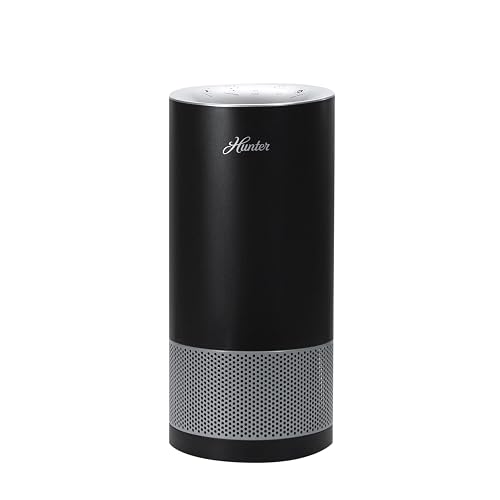
Hunter HP450UV Round Air Purifier Tower for Home, Black

DREO Air Purifier for Home up to 1176 ft², DR-HAP009
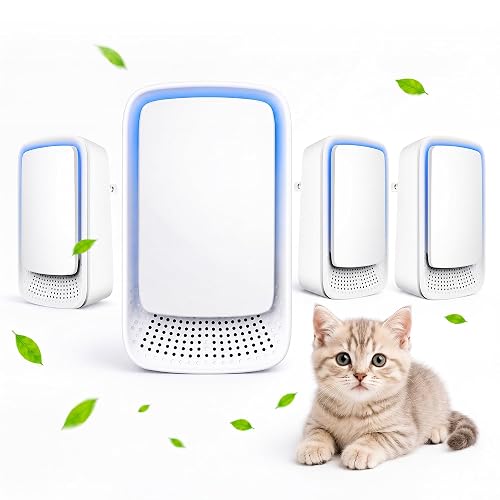
Plug In Air Ionizers 4 Pack for Home, Bedroom, Travel
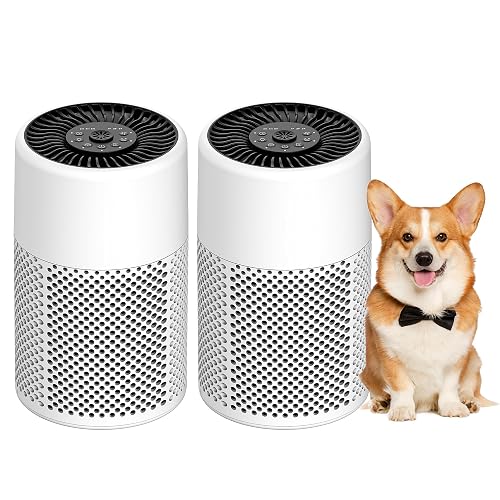
CHIVALZ Air Purifiers for Bedroom and Dorm Room, 2 Pack
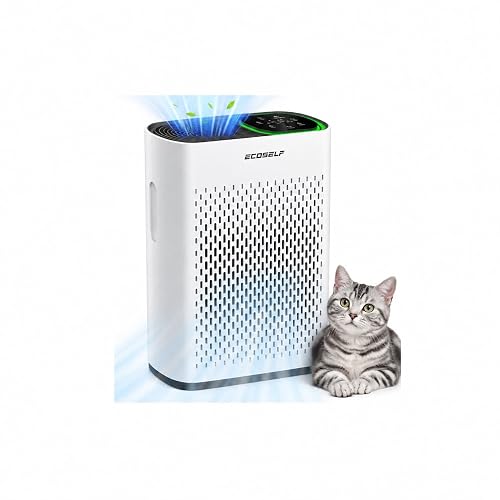
ECOSELF HAP602 Air Purifier for Large Room, 20 dB Sleep Mode
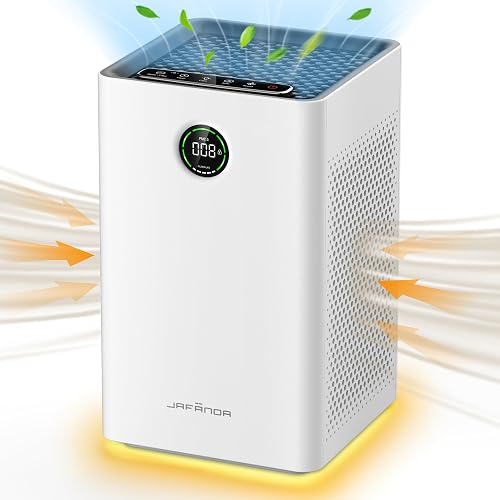
Jafanda HEPA Air Purifier for Home Large Room, up to 1090 ft²
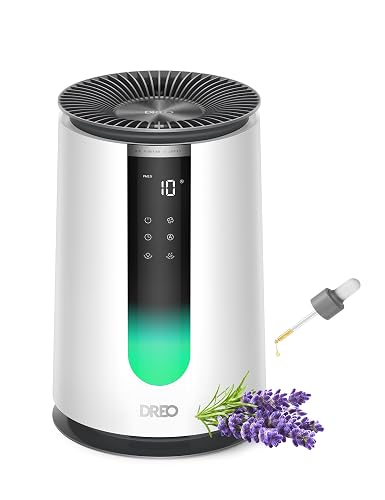
DREO Air Purifier DR-HAP008 with Scent Diffuser
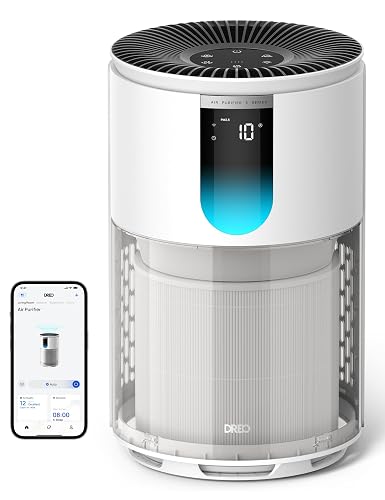
DREO Smart Air Purifier DR-HAP009S, Wi-Fi and Voice
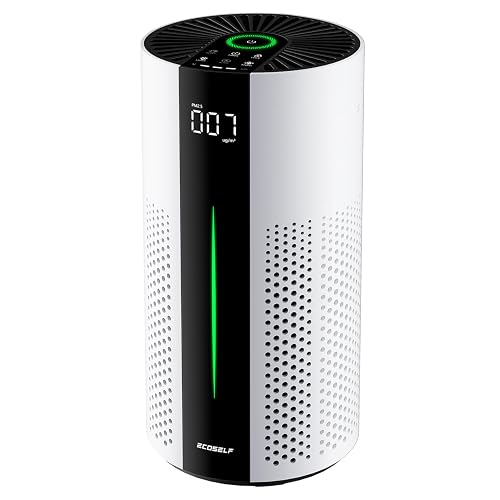
ECOSELF Air Purifier for Home Large Room up to 1800 ft²
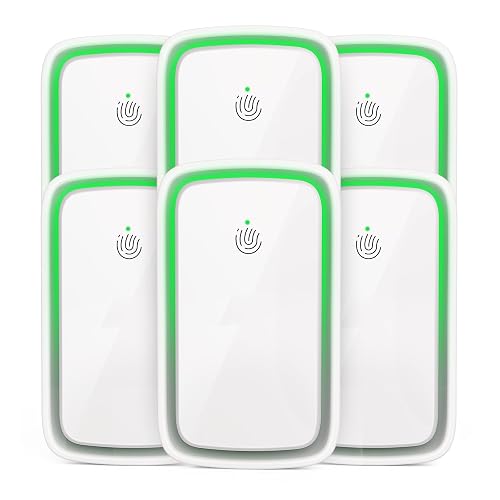
Paztkoo Plug In Air Ionizers 6 Pack, 3 Adjustable Modes
Meet The Standout Selections
The Hunter HP450UV is one of the more interesting options in this list because it skips the standard boxy form factor for a slim cylindrical tower that slips into the corner of a dorm without eating desk space. The True HEPA filter (a filter type that captures 99.97% of particles as small as 0.3 microns) handles the usual culprits like dust, pollen, and dander, while the EcoSilver pre-filter is treated to resist odor-causing microorganisms, which is a thoughtful touch for a room where laundry tends to pile up.
Compared with the larger DREO units later in the lineup, this Hunter is built for tighter spaces, and it tends to appeal to students who want something that looks like part of the room rather than an appliance. The round tower shape circulates air in every direction, which is genuinely useful in a square dorm where the bed, desk, and closet are all clustered against the walls.
Notable Upsides
- Compact round tower footprint fits in narrow dorm corners without dominating floor space
- True HEPA filtration paired with an odor-resistant pre-filter targets both particles and smells
- Cylindrical shape pushes air outward in a 360° pattern, helping it reach a bed, desk, and closet simultaneously
- UV component adds an extra layer of treatment for those who want it, though HEPA still does the heavy lifting
- Simple control layout, which is a real plus in a room where you do not want to fiddle with apps or pairing
Worth Noting
- Best suited to small rooms, so a suite layout with an adjoining common area may be larger than its sweet spot
- Replacement pre-filters and HEPA cartridges are an ongoing ownership cost that adds up across a four-year degree
Who It Suits Best
Students in standard 10-by-12 dorm rooms who want a low-profile tower and do not have a smart-home setup to link it to.
Where Another Pick Suits Better
Roommates in a larger shared suite will likely get more reach out of the DREO Air Purifier DR-HAP009, which covers more square footage and offers a verified CADR rating.
The DREO DR-HAP009 is the big sibling in DREO’s dorm-friendly family, and the headline number is its CADR of 158 CFM (clean air delivery rate, a measurement of how quickly a purifier scrubs a room of smoke, dust, and pollen). CADR is the metric worth caring about: it tells you how fast the machine actually moves clean air, and a 158 rating is genuinely fast for the size. For a dorm or a small studio with an attached kitchenette, that translates to a full room air change every 12.4 minutes in a 245 square foot space.
Where the Hunter tower leans on physical filtration alone, the DR-HAP009 adds a PM2.5 monitor (a sensor that measures fine particulate matter smaller than 2.5 microns) and an auto mode that ramps the fan up when pollution spikes. That is the kind of feature you only appreciate after a roommate decides to sear something in a pan at 11 p.m. and the unit quietly shifts to high gear on its own.
What Pays Off
- AHAM-verified CADR of 158 CFM, which is a meaningful step above smaller units in this list
- PM2.5 monitor with auto mode handles cooking smoke and aerosol sprays without manual adjustment
- Four fan speeds plus a turbo mode give flexibility for everything from sleeping to clearing a smoky room fast
- Covers up to 1176 ft² at one air change per hour, which is overkill for a single dorm but helpful in a shared suite
Trade Offs
- Larger cabinet footprint than the Hunter tower, so it needs a clear spot on the floor or a wide shelf
- Filter replacements can run higher over time since the unit processes more air per hour than smaller picks
Key Specs
Made For
Students in dorms with attached common areas, studios, or anyone who cooks in their room and needs the auto mode to react.
Consider Something Else When
Light sleepers who need absolute quiet should look at the CHIVALZ Air Purifiers for Bedroom, which drops to 24 dB on its sleep setting.
The ShaoDelynxia plug-in ionizer is a different category of product from everything else on this list, and it is worth being upfront about that. An ionizer works by emitting negatively charged particles that attach to airborne contaminants and drop them out of the air, rather than pulling air through a physical filter the way the Hunter and DREO units do. There is no HEPA filter, no fan speed, and no real way to measure what it has actually removed.
For a dorm resident on a strict budget, the appeal is simple: four units, plug them into outlets around the room, and forget about them. They also travel well, which matters for spring break trips or rotating sublets.
Notable Gains
- Four-pack pricing makes it the most affordable way to spread coverage across a dorm or small apartment
- No filter replacements ever, which is a real ongoing cost savings over HEPA units
- Plug-and-play setup with zero moving parts, so there is nothing to break in transit
Honest Caveats
- Ionization alone does not match HEPA-grade particle removal, and these do not capture allergens the way true filters do
- Some research notes that ionizers can leave a fine layer of particles on nearby walls and surfaces over time, so plan around that
- Effectiveness on cooking smoke and pet dander is less predictable than with a true HEPA tower
Right Fit For
Students who want light air freshening in a small space and do not have allergy or asthma concerns that demand HEPA-level capture.
Skip It When
Anyone who needs verified particle removal for wildfire smoke or pet dander will be better served by the CHIVALZ Air Purifiers, which actually run air through a True HEPA filter.
The CHIVALZ pair is the one most likely to win over a light-sleeping roommate. The 24 dB sleep mode (a noise level roughly equivalent to a whisper or quiet library) is genuinely soft, and the included night light means you do not need to sacrifice a separate lamp on the nightstand. The True HEPA filter plus a carbon layer pulls in wildfire smoke, dust, and pet dander, which is a more serious filtration setup than the ionizers above and more relevant for many real dorms.
Where the DREO DR-HAP009 is a single powerhouse unit, the CHIVALZ is a two-pack of smaller purifiers. Splitting them between your room and a shared common area, or between your side of the room and your roommate’s side, is a more practical layout for many dorms than a single loud unit.
What It Does Well
- 24 dB sleep mode keeps operation quieter than most competitors, helpful when a roommate is trying to sleep
- True HEPA plus carbon filtration handles smoke, dander, and odors in a single pass
- Fragrance sponge lets you add a few drops of essential oil for a more pleasant room scent
- Night light provides a soft glow without requiring a second fixture on the desk
- Two-pack configuration means you can cover your room and a shared common area
A Few Limitations
- Coverage is rated up to 270 ft² per unit, so a large open-plan dorm may need both units running flat out
- Essential oil on the fragrance sponge can leave residue on the sponge itself, requiring periodic cleaning
Feature Snapshot
Best Suited To
Roommates who share a tight space and need quiet overnight operation without sacrificing real HEPA filtration.
Look Elsewhere When
If you live in a large studio and want one unit to cover the whole space, the ECOSELF HAP602 hits harder on raw coverage and PM2.5 readouts.
The ECOSELF HAP602 is the most feature-heavy unit in this roundup, and the spec sheet reflects that. The claim of cleaning 2,400 ft² in 30 minutes sounds dramatic, but it is worth reading it correctly: that is the manufacturer’s aggressive benchmark, and real-world coverage depends on how you define “clean.” Either way, the 360° airflow design and the real-time PM2.5 display put this in a different class than the smaller picks above.
The 20 dB sleep mode is the quietest rating in this entire list, edging out the CHIVALZ pair by a few decibels. If you are the type to be kept awake by a fan on its lowest setting, this is the one to shortlist. The touch display is also notably larger than the typical small-button interface you find on budget units.
Features That Help
- 360° airflow design pulls air from all sides, which suits square dorm layouts and corner placement
- PM2.5 sensor with color-coded indicator takes the guessing out of whether the unit is actually doing its job
- 20 dB sleep mode is the quietest in this roundup, useful for noise-sensitive sleepers
- 3-stage True HEPA setup handles particles while a carbon component reduces odors
Points To Keep In Mind
- Larger body means it demands more floor space, and it may compete with a mini-fridge or storage bin for room
- Touch controls can be finicky for users with long nails or in dim light, depending on your preference
Who Should Grab It
Students in premium dorms or converted suites with open layouts who want one capable unit instead of running multiple smaller machines.
A Better Fit Elsewhere
Anyone on a tight budget who mostly needs quiet overnight filtration will find the CHIVALZ pair hits the same sleep-friendly note at a lower price.
The Jafanda JF260 is the pick for dorm rooms where the air smells like something. The 300g activated carbon filter (a filter that uses carbon to trap odor molecules and gases) is a noticeable step up from the smaller carbon layers found in typical dorm units, and it does real work against cooking smells, body odor, and lingering smoke. The HEPA side of the filter catches the usual particles: dust, pollen, dander, and hair.
With coverage up to 1090 ft² at one air change per hour, this is also a roomy option, closer to the DREO DR-HAP009 than to the CHIVALZ pair. It is the right call for dorms where the air is decent but the smells are the real problem.
Benefits That Matter
- 300g carbon filter is a meaningful upgrade over thin carbon layers, useful against persistent odors
- True HEPA plus carbon captures both particles and smells in a single pass through the unit
- Up to 1090 ft² coverage handles studio apartments or shared dorm layouts
- Night light option adds gentle ambient lighting for sleeping or studying
Practical Considerations
- Carbon filters typically need replacement every six months in heavy-use scenarios, so plan for that ongoing cost
- The unit is less compact than the Hunter tower, so consider whether you have a clear corner for it
Quick Facts
Whose Shelf It Belongs On
Students who cook in their dorm, share a suite with a smoker down the hall, or live with a roommate whose hygiene habits you cannot fix.
Another Choice May Suit
If you mainly want to run a smart-home routine or control your purifier from your phone, the DREO Smart DR-HAP009S is the better fit.
The DREO DR-HAP008 is the smaller cousin of the DR-HAP009 reviewed earlier, and the trade-off is straightforward: you give up some coverage and CADR in exchange for a built-in scent diffuser pad. The CADR drops to 115 CFM, which is still AHAM-verified (a third-party testing standard that confirms a purifier’s performance claims), and coverage tops out at 178 ft² at 4.8 air changes per hour, or larger spaces at a single air change per hour. For a standard dorm room, that is plenty.
The scent pad is the real differentiator. If you already use essential oils to make the room smell less like a dorm, this consolidates two plug-in appliances into one outlet, which matters when you are sharing two outlets with a lamp, a phone charger, and a laptop brick.
Practical Pluses
- AHAM-verified 115 CFM CADR gives you a real, third-party-checked performance number rather than marketing fluff
- Built-in scent pad lets you run an essential oil without a second diffuser taking up outlet space
- PM2.5 monitor with auto mode reacts to smoke and aerosol sprays without manual adjustments
- Four fan speeds cover both sleep and quick-clear situations
Some Limits To Know
- Coverage is lower than the larger DR-HAP009, so a studio with an attached common area may push past its sweet spot
- Scent pads need occasional replacement if you switch fragrances, which is a small but real ongoing task
Perfect Match For
Students who want HEPA-grade air plus aromatherapy in a single unit and who keep their room on the smaller side.
Reach For A Different Pick When
You want app and voice control, in which case the DREO Smart DR-HAP009S adds Wi-Fi, voice integration, and the same DREO filter system.
The DREO DR-HAP009S takes the verified 158 CFM CADR of the standard DR-HAP009 and adds Wi-Fi, voice control, and app integration. For a student who already runs a smart speaker or smart lights in their dorm, the appeal is real: you can drop the purifier into a routine that fires up before you get back from class, or shut it off from bed without getting up.
It is the same physical filtration as the non-smart DR-HAP009, so you are not paying more for cleaner air. You are paying for the convenience of not walking across the room to press a button. Whether that is worth the price difference depends on how much you already lean on your smart-home setup.
Practical Advantages
- AHAM-verified 158 CFM CADR matches the non-smart DR-HAP009, so air cleaning is identical
- Wi-Fi and voice control integrate with routines, smart speakers, and app scheduling
- PM2.5 monitor with auto mode still handles smoke spikes without manual input
- Same 1176 ft² coverage ceiling at one air change per hour
Where It Is Less Suited
- You will likely pay more than for the non-smart version of the same machine, which may not be worth it if you do not use smart-home routines
- App setup requires a 2.4 GHz Wi-Fi network, which is worth confirming before unboxing
Best Suited To
Students who already run a smart-home ecosystem and want their purifier to slot into the same routines as their lights and speakers.
Swap It Out When
If you prefer to keep your dorm simple and prefer not to manage another app, the standard DREO DR-HAP009 gives the same air cleaning without the connectivity.
The ECOSELF for Home Large Room is the bigger sibling of the HAP602 reviewed earlier, and it leans into the same 360° air intake design. The 1800 ft² rating is for a single air change per hour, so the real working number in a dorm or studio is going to be much smaller, but the headroom matters when you want a unit that does not have to work at full tilt just to keep up.
The auto mode behavior is similar to other smart-feeling units in this list: a built-in PM2.5 sensor watches the air, and the fan ramps up or down on its own based on what it detects. For shared dorm suites where two people cook, clean, and burn candles, that automation is the main reason to choose this over a smaller fixed-speed unit.
What Makes Sense
- 360° air intake captures pollutants from every direction, which is useful in an open dorm layout
- Auto mode adjusts fan speed in real time based on the PM2.5 sensor, no babysitting required
- Coverage up to 1800 ft² gives plenty of headroom for shared spaces
- True HEPA filter setup handles the usual particle suspects
Factors To Consider
- Floor-standing size means it wants a clear corner, which can be hard to find in a smaller dorm
- Heavier cabinet makes it less convenient to move between dorms at the end of the year
Built With In Mind
Students in a converted dorm or off-campus suite where one powerful unit needs to handle a larger shared footprint.
Not Your Match When
For a standard single dorm room, the DREO DR-HAP009 or the CHIVALZ pair will cover you with a smaller cabinet and less floor competition.
The Paztkoo six-pack takes the same plug-in ionizer concept as the ShaoDelynxia four-pack reviewed earlier and scales it up, with three adjustable modes and a night mode option. If your goal is to drop a small unit into every outlet in a suite, six covers a living room, bedroom, bathroom, and hallway without leaving a gap.
As with the other ionizers in this roundup, expectations matter. These are not HEPA purifiers, and they will not deliver verified particle removal. They are best understood as light, low-effort air fresheners that spread across a whole space rather than concentrating filtration in one corner.
What Helps Most
- Six-unit pack covers a full dorm suite with one purchase, including the bathroom and hallway
- Three adjustable modes with night setting let you tune each outlet to its location
- Simple touch controls are easy to operate in the dark or for roommates unfamiliar with the device
- Zero ongoing filter costs, since there is no filter to replace
Things To Weigh
- Like other ionizers, these do not match HEPA-grade particle capture, so allergy sufferers should look elsewhere
- Wall and surface darkening near outlets is a commonly reported side effect of ionizers over time
The Right Fit
Students who want light, distributed air freshening across a whole suite and are not relying on the units for serious allergen or smoke control.
Look Elsewhere When
Anyone with allergies, asthma, or sensitivity to wildfire smoke should choose the CHIVALZ Air Purifiers, which use a real True HEPA filter for verified particle capture.
What To Match Against Your Dorm Layout
A dorm room looks small on paper, but the way it is laid out changes which purifier makes sense. Measure your room’s square footage before you shop, and remember that numbers like 1176 ft² or 1800 ft² on a product page are usually based on a single air change per hour, not the four to five air changes per hour you actually want for noticeable results. For a 10-by-12 dorm, that means a unit rated for at least 500 ft² is a comfortable fit.
CADR is the more honest number than coverage, because it tells you how fast the purifier moves clean air in cubic feet per minute. AHAM-verified CADR ratings, found on the DREO units in this list, are third-party tested and worth preferring over manufacturer-only claims. For a small dorm, a CADR above 100 CFM is plenty, and 150+ leaves headroom for cooking, candles, and the occasional burned microwave popcorn.
Filtration type matters more than fan speed. True HEPA captures 99.97% of particles down to 0.3 microns, which covers dust, pollen, dander, and most smoke. Activated carbon is the part that handles odors, and the heavier the carbon layer, the more smell it can absorb before needing replacement. Ionizers do neither, and they should be treated as air fresheners, not purifiers, especially in dorms where wildfire smoke or pet dander is a real concern.
Finally, think about noise. A 24 dB sleep mode is genuinely whisper-quiet, while anything above 35 dB is noticeable in a silent room. Roommates make this more, not less, important, because the noise floor of two people’s worth of fans, laptops, and HVAC already eats into the quiet budget.
Picking Wisely Without Overbuying
Common Shopping Slip Ups
Treating coverage ratings as gospel is the most common mistake. A 1800 ft² number on a product page usually assumes one air change per hour, which is far less than what most people want. Scale the room you actually have against the CADR, not the headline coverage number, and you will end up with a unit that genuinely clears the air.
Another trap is buying an ionizer when you need a HEPA. Ionizers are popular because they are cheap and require no filters, but they do not capture particles the way HEPA does. For wildfire smoke, allergies, or pet dander, only True HEPA will do what the marketing implies.
Where The Extra Money Goes
Higher-tier models earn their price with verified CADR, larger carbon filters, and quieter sleep modes. A premium unit like the ECOSELF HAP602 or the DREO DR-HAP009 also adds a PM2.5 sensor and auto mode, which means you set it once and forget it. In a dorm where you are juggling classes and a social life, that automation is the part that pays for itself. Budget ionizers are a fine complement for freshening a hallway, but they should not be the only air cleaning in the room.
Frequently Asked Questions
How big of a purifier do you actually need for a dorm? A unit rated between 200 and 500 square feet with a CADR above 100 CFM is the sweet spot for a typical dorm room. Bigger is fine, but it will not run at full speed often and may be quieter as a result.
Are plug-in ionizers real air purifiers? They release negatively charged particles that can help freshen the air, but they do not capture allergens, dust, or smoke the way a True HEPA filter does. Treat them as light air fresheners, not as substitutes for filtration.
How often do HEPA filters need replacing? Most True HEPA filters last six to twelve months in a dorm, depending on use and air quality. Activated carbon layers usually need replacement every six months, and the unit will often have an indicator or a noticeable drop in odor control when it is time.
Is a PM2.5 display worth it? The display turns the unit from a guess into a tool, since you can see when cooking or cleaning has spiked particulates and watch the unit clear them. It is most valuable if you cook in your dorm or have a roommate who burns candles.
Can one purifier cover a shared suite? A single unit can cover a small suite if its CADR and coverage rating are high enough, but in practice two smaller units placed in different rooms do a better job than one oversized unit struggling in the center.
Wrap Up
A dorm air purifier is one of those rare purchases that quietly improves daily life from the moment you plug it in. Match the unit to your room size, prefer True HEPA over ionizers if allergens or smoke are a real concern, and let verified CADR numbers guide you when the marketing claims start to blur together. Whichever pick on this list fits your space, the air in your room will be a noticeable step better than the hallway you walked in from.