
Clinical spaces demand air quality control that goes well beyond a bedroom-grade purifier. Whether you manage a waiting room, dental office, urgent care clinic, or long-term care facility, the right HEPA setup controls airborne particles, neutralizes odors, and helps staff and patients breathe easier. This list rounds up ten hospital-suitable options with the coverage area, filter grade, and build quality to handle professional environments. Each pick has been evaluated on CADR (clean air delivery rate, the volume of filtered air a unit pushes out per minute) claims, filter media, real-world room coverage, and noise output at typical operating speeds.
A Closer Look At The Lineup
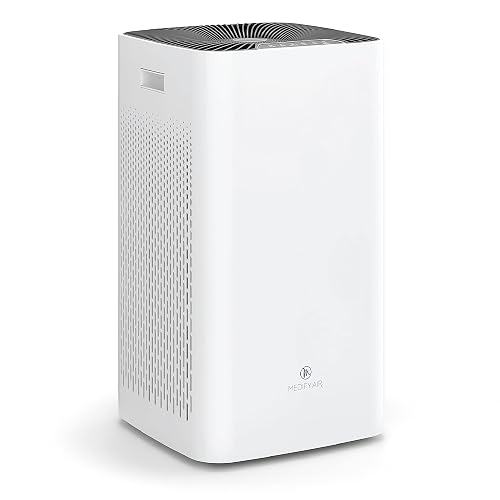
Medify MA-112 Air Purifier V3.0 with HEPA Filter
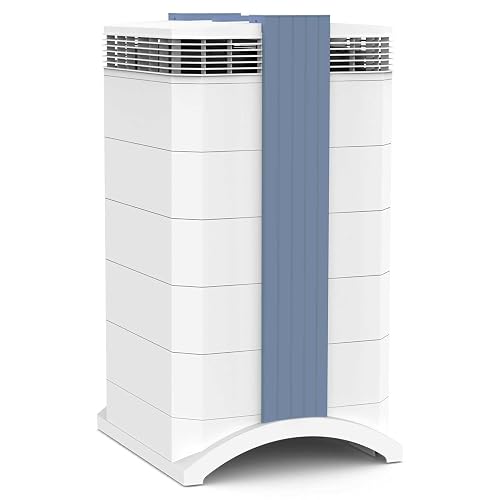
IQAir GC MultiGas XE Air Purifier
IQAir HealthPro Plus XE Air Purifier
Dr.Prepare Air Purifier for Home Large Room
Medify MA-14 Air Purifier with HEPA Filter
ECOSELF Air Purifier for Home Large Room
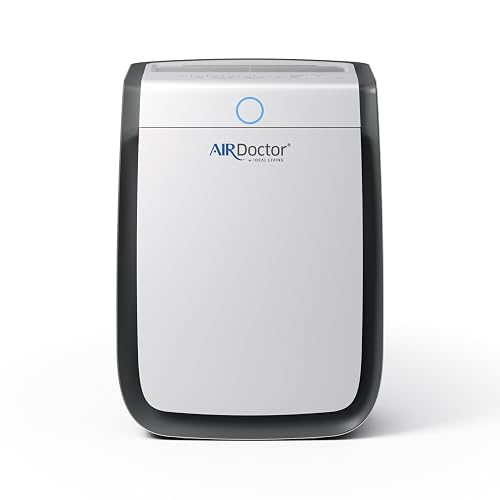
AIRDOCTOR AD3500 Air Purifier
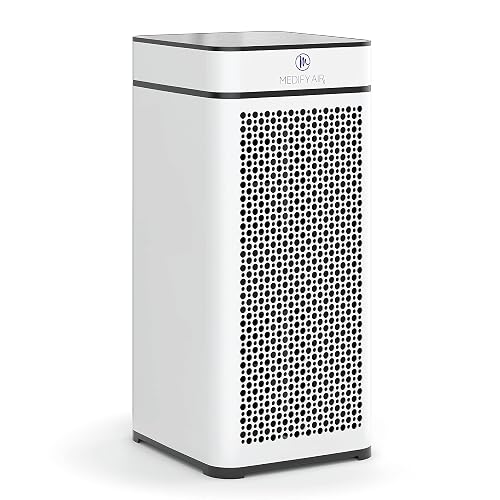
Medify MA-40 Air Purifier with HEPA Filter
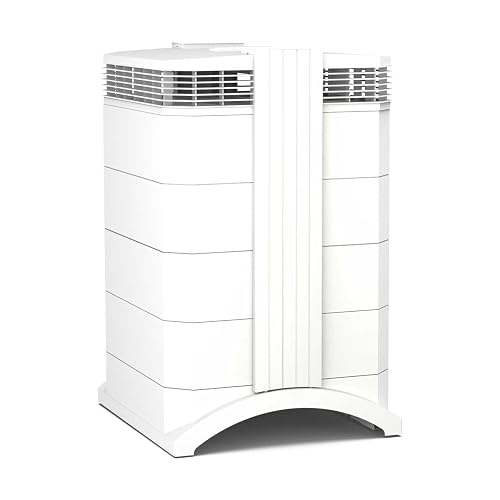
IQAir HealthPro Compact XE Air Purifier
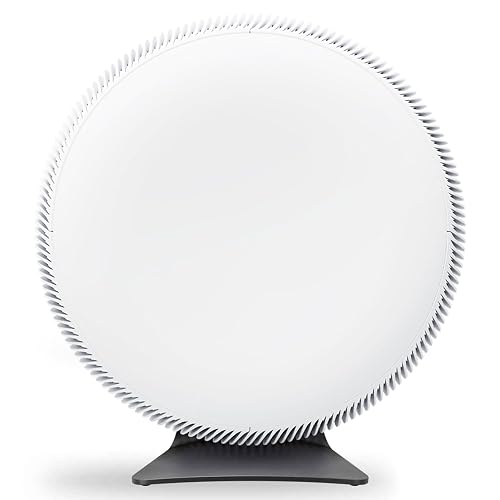
IQAir Atem X Air Purifier HyperHEPA WiFi
Why These Options Stand Out
The Medify MA-112 is built for facilities that need serious throughput without sacrificing the kind of medical-grade filter media (filter material rated to capture hospital-relevant particles) that small-room purifiers skip past. It uses dual H13 HEPA filters, which means each filter is tested to capture 99.97% of particles down to 0.3 microns, the standard threshold for hospital-adjacent purification, and pushes enough filtered air to handle a 2,200 sq ft open clinic floor in roughly half an hour. For a busy waiting area or multi-room practice, that kind of throughput removes the need to run multiple smaller units in tandem.
Compared to the IQAir GC MultiGas XE covered below, this unit focuses more on raw particle volume than on chemical absorption, so it’s a stronger fit for dusty or pollen-heavy environments. The touchscreen panel is intuitive enough for staff who don’t want to read a manual, and the four fan speeds give you a quiet daytime mode plus a high-output night setting. For most clinical spaces, the trade-off is footprint: this is a tall, substantial unit, so plan placement accordingly.
What Pays Off
- Massive coverage means one unit can replace two or three smaller machines in open floor plans.
- Dual H13 HEPA filters deliver hospital-adjacent particle capture at a mid-range price.
- Four fan speeds let you dial down noise during consultations and crank up during off-hours.
- Touchscreen controls are simple enough for rotating staff to operate without training.
- Metal housing holds up to bumps from rolling carts and daily cleaning routines.
Things To Consider
- Replacement filters are a recurring cost, and dual-filter designs mean double the spend per cycle.
- The tall tower form factor may not fit under standard cabinetry or low ceilings.
Key Specs
Who It Suits Best
Facility managers running large waiting rooms, urgent care floors, or multi-room practices who need a single unit to handle open-plan space without buying several smaller purifiers.
Look Elsewhere When
The IQAir GC MultiGas XE is a smarter pick when chemical fumes, disinfectant odors, or anesthesia residue are the bigger concern than particulate volume.
The IQAir GC MultiGas XE tackles the side of air quality most home-grade purifiers ignore: gaseous pollutants. Activated carbon (carbon treated with oxygen to open up millions of tiny pores that trap chemical molecules) plus dedicated gas cartridges absorb volatile organic compounds (VOCs), formaldehyde from cleaning products, and lingering disinfectant smells, the kind of cocktail that builds up in small procedure rooms. HyperHEPA media sits underneath the carbon stage, so you still get 99.5% particle capture down to 0.003 microns, finer than the standard HEPA threshold.
Where the Medify MA-112 prioritizes raw coverage area, this IQAir trades footprint for filtration depth. WiFi controls let facilities managers monitor performance from a tablet at the nurse’s station, and the modular filter design means you can swap the gas cartridges independently when chemical loads spike. For most dental clinics, oncology infusion rooms, and pathology labs, that multi-stage approach is closer to what a real clinical environment demands.
Positive Takeaways
- Multi-gas cartridges target VOCs and chemical fumes that standard HEPA can’t touch.
- HyperHEPA captures ultrafine particles well below the 0.3-micron standard.
- Modular filters can be replaced individually based on actual usage.
Worth Noting
- Filter replacement runs higher than simpler units because of the multi-stage design.
- The unit is heavier than it looks, so wall placement or rolling carts may be necessary.
- WiFi setup requires a stable 2.4 GHz network in the facility.
Made For
Specialty clinics, dental operatories, and labs where chemical off-gassing and disinfectant odors are part of daily operations, not just dust and pollen.
Skip It When
The Medify MA-112 Air Purifier V3.0 is the better call for large open spaces where coverage area matters more than chemical absorption.
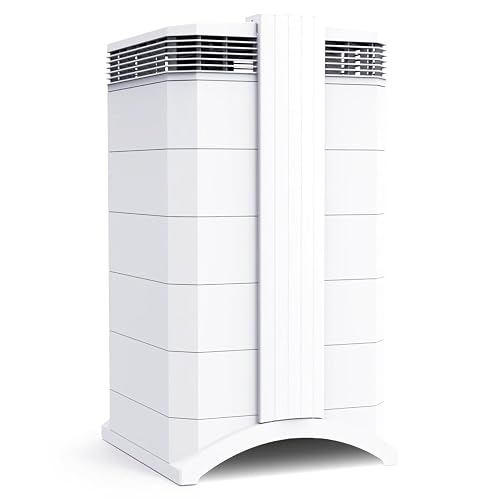
The HealthPro Plus XE is what you reach for when particle precision matters more than raw coverage. Its HyperHEPA filter is rated to trap 99.995% of airborne particles down to 0.003 microns, roughly 100 times finer than the standard HEPA H13 threshold. In practice, that means smoke from wildfires, fine dust from construction, and even some bacteria-sized particles don’t just bounce around the room. For allergy-sensitive patients in immunology clinics, that level of capture makes a noticeable difference.
Unlike the GC MultiGas XE above, this unit skips the heavy carbon gas stage, so it’s leaner on chemical filtration but stronger on pure particulate work. The redesigned fan assembly in the XE generation runs cooler and quieter, which matters in exam rooms where noise carries. WiFi integration is a quiet bonus for tracking filter life from a phone. The trade-off is a smaller coverage area at 1,125 sq ft, so this fits medium-sized consultation and procedure rooms better than a sprawling lobby.
Points In Its Favor
- HyperHEPA captures particles 100x smaller than the standard HEPA threshold.
- Refined fan system runs noticeably quieter than older IQAir generations.
- WiFi lets staff check filter status without opening the unit.
Trade Offs
- Coverage caps at 1,125 sq ft, so it’s not the right call for open-plan wings.
- Premium filter media means higher replacement costs than basic HEPA units.
Best Suited To
Allergy specialists, pulmonology offices, and consultation rooms where ultrafine particle capture matters more than chemical absorption.
Consider Something Else When
The IQAir GC MultiGas XE is the stronger pick for rooms with high chemical off-gassing or persistent disinfectant odors.
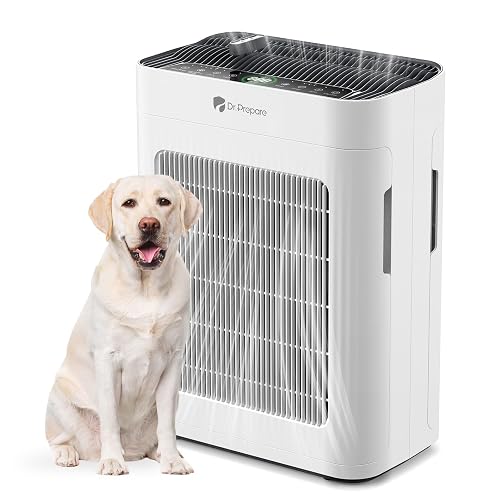
Budget-conscious clinical spaces often get stuck choosing between a cheap residential purifier and a hospital-tier unit they can’t justify. The Dr.Prepare fills that middle lane with a dual-sided intake design that pulls air from both flanks, effectively doubling the air-change rate compared to single-inlet competitors at the same price. Coverage hits 3,000 sq ft under ideal lab conditions, which in a real clinic with furniture and partitions means a moderate-sized lobby or a couple of open treatment bays.
Where the IQAir HealthPro Plus XE above targets ultrafine particles, this unit focuses on throughput and practical maintenance. The washable pre-filter (the first mesh layer that catches hair and large dust before air reaches the HEPA filter) cuts down on consumable costs, a real concern in facilities running multiple units around the clock. The PM2.5 display (a numeric readout showing real-time fine particulate concentration in micrograms per cubic meter) on the front panel gives quick visual confirmation that the unit is working, which staff appreciate during allergy season. The honest read is that filter media here is solid for general use but doesn’t match IQAir’s ultrafine capture depth.
Where It Delivers
- Dual-sided intake doubles effective airflow versus single-inlet designs in this tier.
- Washable pre-filter cuts long-term consumable costs in busy facilities.
- PM2.5 display provides instant visual feedback on air quality.
Honest Caveats
- Filter media captures down to 0.3 microns, not the ultrafine range of HyperHEPA.
- Build quality feels lighter than the metal-housed Medify and IQAir units.
- Pet mode is a niche feature most clinical settings won’t use.
Who Will Love This
Smaller practices and outpatient facilities that need solid HEPA performance without the premium price tag of an IQAir unit.
A Better Fit Elsewhere
The Medify MA-112 is the right call when you need higher-grade H13 filtration and a metal housing that withstands daily commercial cleaning.
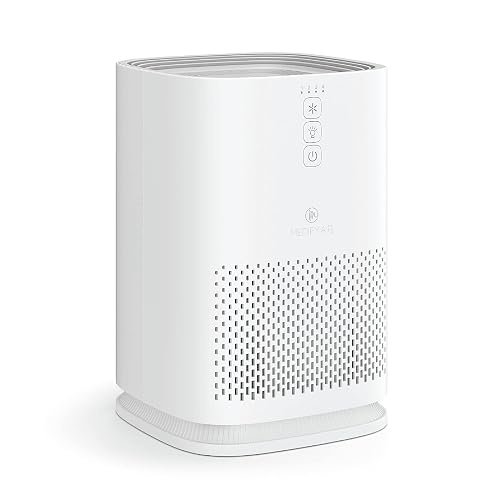
Small exam rooms, private offices, and isolation suites don’t need 4,000 sq ft of coverage. The Medify MA-14 brings hospital-grade H13 filtration to a tabletop-friendly footprint, cleaning 470 sq ft per hour in a compact form that fits on a counter or low shelf. That’s a useful scale for telehealth rooms, patient consultation pods, and triage stations where space is at a premium and air changes happen in tight cycles.
Same H13 True HEPA media as the larger Medify units above, so you don’t sacrifice filter quality for size. The trade-off shows up in coverage: this won’t handle a multi-room wing, and the CADR of 120 is modest. In most waiting areas or open lobbies, you’d need several of these to match what the Medify MA-40 does alone. For targeted use in a small clinical space, though, the size and quiet operation make it genuinely useful.
The Case For It
- Compact size fits exam room counters, mobile carts, and tight office corners.
- H13 True HEPA captures the same 0.3-micron particles as larger Medify units.
- Low fan noise keeps it suitable for patient-facing rooms.
Points To Note
- Limited 470 sq ft coverage means it’s not a whole-floor solution.
- Smaller filter surface area fills up faster in dusty environments.
Perfect Match For
Small private practices, telehealth rooms, and isolation suites that need HEPA-grade filtration in a footprint smaller than a tower unit.
Not Your Match When
The Medify MA-40 is the better pick for medium-sized consultation offices and multi-room practices needing broader coverage.
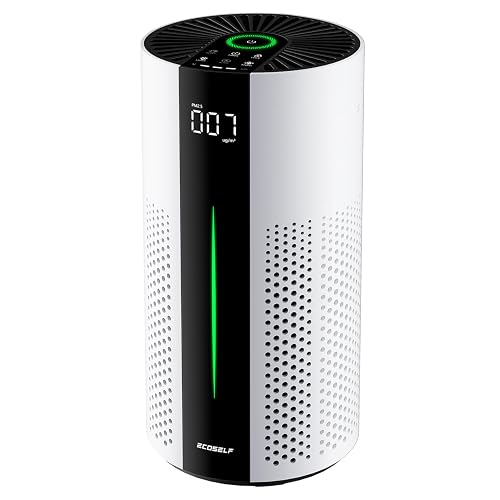
The ECOSELF stands out for its 360-degree intake design, which pulls air from every direction rather than forcing it through a single side panel. That makes placement easier in cluttered reception areas where air might be blocked on one side by furniture or partitions. The built-in PM2.5 sensor pairs with auto mode, so the purifier ramps up fan speed when pollution spikes and quiets down when air is clean, without staff needing to touch it.
Compared to the Dr.Prepare above, this unit has a smaller coverage ceiling at 1,800 sq ft but offers smarter automation for facilities that want set-and-forget operation. The HEPA filter captures standard 0.3-micron particles, which handles most clinical airborne concerns but doesn’t reach the ultrafine range of HyperHEPA media. For lobbies and waiting rooms with variable foot traffic, the auto mode is a genuine time-saver.
Useful Strengths
- 360-degree intake makes it placement-flexible in crowded clinical layouts.
- Auto mode adjusts fan speed based on real-time PM2.5 readings.
- Quieter low-speed operation suits patient-facing areas.
Room For Improvement
- Standard HEPA capture, not the ultrafine range of HyperHEPA units.
- Filter replacement cycle runs shorter in high-traffic reception spaces.
Right Fit For
Reception lobbies, waiting areas, and entry vestibules where foot traffic and door-opening create unpredictable air quality swings.
Another Choice May Suit
The Dr.Prepare Air Purifier is the stronger pick when you need higher coverage and a washable pre-filter to cut consumable costs.
The AIRDOCTOR AD3500 is built for high-traffic clinics where air quality shifts by the hour. Its UltraHEPA filter is rated to capture 99.99% of particles down to 0.003 microns, matching the HyperHEPA standard set by the IQAir units in this list. The dual-action carbon filter handles odors and VOCs alongside particulate capture, so you’re not choosing between gas and particle filtration.
Coverage reaches 2,520 sq ft in an hour, which puts it between the mid-size Medify MA-40 and the massive MA-112. In a busy pediatric clinic or urgent care waiting room with constant patient turnover, the throughput keeps the air visibly cleaner without running the unit on max continuously. The premium carbon stage adds depth that simpler HEPA-only units miss. You may find the unit’s weight and price steep for smaller practices, but for facilities that run full-day, the build feels built to last.
Reasons It Performs
- UltraHEPA captures ultrafine particles at a competitive price tier.
- Premium carbon stage addresses both particles and chemical odors in one unit.
- Rapid 15-minute clean cycle for 630 sq ft rooms handles between-patient turnover.
Small Caveats
- Heavier than tower-only designs, so placement planning matters.
- Filter replacements are dual-stage, so annual costs run higher than single-filter units.
Who Should Grab It
High-traffic urgent care centers, pediatric clinics, and busy specialty practices with constant patient flow and variable air quality.
Reach For A Different Pick When
The Medify MA-112 is the smarter fit for facilities prioritizing maximum raw coverage over UltraHEPA-grade particle precision.
The Medify MA-40 sits in a useful middle ground for clinical spaces that are too big for a tabletop unit but don’t need the massive coverage of the MA-112. It cleans 1,793 sq ft in an hour and runs quietly enough for consultation rooms where conversations happen all day. The H13 True HEPA media is the same as the smaller MA-14, so you’re not trading filtration quality for size; you’re just getting a stronger fan and a larger filter surface.
Where the ECOSELF above leans on automation and 360-degree intake, the MA-40 keeps things straightforward with a focused airflow design and four manual fan speeds. The metal housing holds up to repeated cleaning with hospital-grade disinfectants, a real consideration in facilities where staff wipe down equipment daily. For a single consultation office or a couple of connected exam rooms, the MA-40 is a dependable middle-tier pick without overpaying for features you won’t use.
Noteworthy Benefits
- Mid-size coverage handles typical consultation and exam room layouts.
- H13 True HEPA media matches the larger MA-112 filter grade.
- Metal housing tolerates daily disinfection in clinical settings.
Factors To Consider
- No auto mode or PM2.5 sensor, so fan speed must be set manually.
- Filter replacements are specific to the MA-40 model, limiting cross-compatibility.
Built With In Mind
Mid-sized consultation offices, outpatient clinics, and private practices that need reliable HEPA filtration without the size or cost of a flagship unit.
Where A Sibling Pick Shines
The ECOSELF Air Purifier is the stronger call when auto mode and 360-degree intake matter more than manual control simplicity.
Some clinical spaces are shaped awkwardly: narrow corridors between treatment bays, tight consultation nooks, or converted rooms where a full tower unit simply doesn’t fit. The IQAir HealthPro Compact XE keeps the HyperHEPA filtration of its larger siblings in a footprint that slides into corners and beside desks. Coverage of 1,240 sq ft suits medium-sized rooms without dominating the floor plan.
Compared to the IQAir HealthPro Plus XE above, the Compact trades some airflow for a smaller body, so air changes take a bit longer in real-world use. HyperHEPA still captures 99.5% of particles down to 0.003 microns, which is the main reason you’d pick an IQAir over a cheaper alternative. WiFi controls are included, so facility managers can monitor filter life remotely. For most clinical settings with awkward layouts, the Compact is the IQAir that actually fits.
A Favorable Mix
- Compact footprint fits tight clinical spaces where towers won’t go.
- HyperHEPA capture down to 0.003 microns in a smaller body.
- WiFi monitoring supports centralized facility management.
Potential Drawbacks
- Lower airflow means longer air-change times in real-world rooms.
- Filter replacements are specific to the Compact model.
Whose Shelf It Belongs On
Clinics with narrow corridors, small consultation rooms, or awkward floor plans where full-size purifiers physically won’t fit.
Swap It Out When
The IQAir HealthPro Plus XE is the better call when you have the floor space and want the highest HyperHEPA capture rate in the lineup.
The IQAir Atem X wraps HyperHEPA filtration in a sleeker tower silhouette, which matters in medical lobbies and modern clinics where equipment is visible to patients. The redesigned fan system is rated up to three times more energy efficient than older IQAir generations, so running it continuously in a waiting area won’t spike the facility’s power bill. Coverage of 1,650 sq ft handles most medium-to-large clinical rooms with single-unit efficiency.
Same 99.995% particle capture down to 0.003 microns as the HealthPro Plus XE, so the air quality performance is consistent across the IQAir line. The difference is the form factor and the energy profile. For modern medical offices where aesthetics and operating cost both matter, the Atem X is a thoughtful middle path. The trade-off is that it costs more than the Compact, and you give up some of the gas-filtration depth of the GC MultiGas XE covered earlier.
Real Benefits
- Modern tower design fits visually into patient-facing spaces.
- Energy-efficient fan reduces long-term operating costs.
- HyperHEPA capture matches the premium IQAir standard.
Some Limits To Know
- Skips the gas-filtration cartridges of the GC MultiGas XE.
- WiFi setup requires a stable network in the facility.
Right Fit For
Modern medical lobbies, boutique specialty clinics, and design-conscious practices that need HyperHEPA performance in a visually unobtrusive tower.
Consider Something Else When
The IQAir GC MultiGas XE is the smarter pick for facilities with persistent chemical odors or VOC concerns alongside particulate needs.
What To Weigh Before Choosing a Clinical HEPA Air Purifier
Hospital-grade air purification comes down to matching filtration depth, coverage area, and noise output to the specific clinical environment. Larger waiting rooms and open wings need the throughput of units like the Medify MA-112 or AIRDOCTOR AD3500, where a single machine can replace several smaller ones running in parallel. Smaller exam rooms and consultation spaces often perform better with a focused unit such as the Medify MA-14 or the IQAir HealthPro Compact XE, which keeps the air clean without dominating floor space or producing distracting fan noise.
Filter grade matters more than most shoppers expect. Standard H13 HEPA captures 99.97% of particles down to 0.3 microns, which handles dust, pollen, and most bacteria-sized particles. HyperHEPA and UltraHEPA filters, found in the IQAir and AIRDOCTOR units, push that threshold down to 0.003 microns and capture ultrafine smoke, fine dust, and some virus-sized particles. For allergy-heavy patient populations or facilities near wildfire-prone regions, the deeper filtration pays off.
For rooms with chemical off-gassing, disinfectant odors, or anesthesia residue, activated carbon and dedicated gas cartridges become essential. A pure HEPA unit will leave chemical smells lingering. Units like the IQAir GC MultiGas XE or the AIRDOCTOR AD3500 with premium carbon stages handle both particle and gas filtration in one unit.
Noise is the overlooked spec. Clinical environments depend on clear communication between staff and patients. Look for units with low fan-speed decibel ratings under 35 dB (decibels, a logarithmic unit measuring sound pressure) for consultation rooms and procedure suites. Coverage claims are typically based on one air change per hour, meaning every cubic foot of room air passes through the filter once in 60 minutes, so for faster air-change cycles, oversize the unit.
Key Considerations Across These Picks
Mistakes Worth Dodging
A common error is buying a residential-grade purifier and expecting it to perform in a clinical setting. Standard room purifiers are designed for bedrooms and living rooms, not for spaces with constant foot traffic, open doors, and shared air. Another pitfall is underestimating coverage area: manufacturers rate their units based on one air change per hour, but hospitals and clinics typically want three to four air changes per hour for infection control. That means oversizing the unit by two to three times the room’s square footage is a sound approach.
Ignoring filter replacement costs creates budget surprises later. Multi-stage units with separate HEPA and carbon filters can run higher annual maintenance than the unit itself. Facilities running multiple units should calculate total cost of ownership over three to five years, not just the purchase price.
Where The Extra Money Goes
Premium models in this list earn their higher cost through deeper filtration, better build materials, and smarter automation. HyperHEPA media captures particles 100 times smaller than standard HEPA, which matters in allergy and pulmonology settings. Metal housings and sealed filter chambers reduce air leakage around the filter, a real concern in older units where bypass air can carry unfiltered particles straight into the room.
WiFi monitoring, modular filters, and multi-gas cartridges add operational convenience. For a single-room practice, those features feel optional. For a multi-room facility with rotating staff, they cut down on training time and filter-change guesswork. The upgrade is worth it when the unit runs continuously and the staff managing it changes regularly.
Frequently Asked Questions
What is HEPA, and why does it matter in hospital settings?
HEPA stands for High-Efficiency Particulate Air, a filter standard that requires capturing 99.97% of particles at 0.3 microns. In hospital settings, this threshold is critical because it covers bacteria-sized particles, dust, pollen, and most airborne allergens that circulate through clinical spaces.
How often should HEPA filters be replaced in a clinical environment?
In typical clinical settings with continuous operation, HEPA filters should be replaced every 6 to 12 months. High-traffic clinics with elevated dust or particulate loads may need replacements every 4 to 6 months. Check the manufacturer’s indicator and the unit’s PM2.5 readings to gauge actual filter life.
Can a home air purifier work in a small medical office?
Some home-grade units can handle very small medical offices, but coverage and filtration depth are the limiting factors. A unit designed for a 500 sq ft bedroom won’t keep up with a clinical space that has constant door-opening, shared air with adjacent rooms, and elevated particulate loads from patient traffic.
What is HyperHEPA, and how is it different from standard HEPA?
HyperHEPA filters capture 99.5% to 99.995% of particles down to 0.003 microns, roughly 100 times smaller than the standard HEPA threshold. In clinical settings with sensitive patients, wildfire smoke concerns, or ultrafine particle sources, this deeper filtration reduces triggers that standard HEPA misses.
Do I need activated carbon in a clinical air purifier?
Activated carbon is essential for clinical spaces where chemical odors, disinfectant residues, or VOCs are part of daily operations. Standard HEPA filters capture particles but not gases, so a unit without carbon will leave chemical smells lingering even when particulate readings look clean.
The Takeaway
Hospital-grade air purification isn’t about finding the most expensive unit. It’s about matching filter depth, coverage, and noise output to the specific clinical environment and patient population. Large open wings benefit from high-throughput units like the Medify MA-112 or AIRDOCTOR AD3500, while smaller exam rooms work better with focused units like the Medify MA-14 or IQAir HealthPro Compact XE. Facilities with chemical odor concerns should prioritize multi-stage units with carbon and gas cartridges. The right pick depends on your room size, patient sensitivity, and how the space is used day to day.