
Mold colonies thrive in basements, bathrooms, and rooms where humidity lingers, and the air you breathe there carries invisible spores that aggravate allergies. A solid HEPA purifier (a high-efficiency filter rated to capture 99.97% of particles down to 0.3 microns) pulls those spores out of circulation while also catching dust, pollen, and pet dander. The right unit depends on room size, noise tolerance, and whether you want extras like aromatherapy or smart sensors. This list walks through nine real options worth weighing for damp-prone corners of your home.
A Quick View Of The Lineup
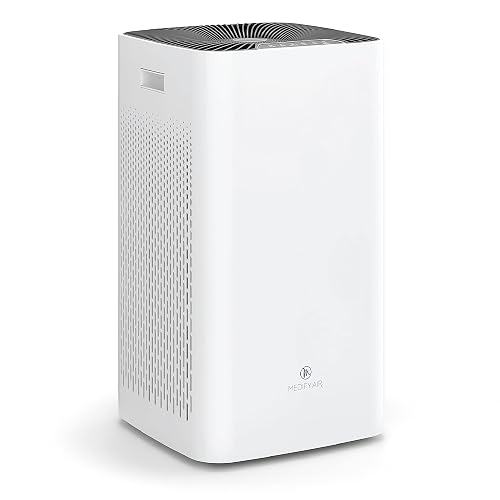
Medify MA-112 Air Purifier V3.0 with HEPA Filter
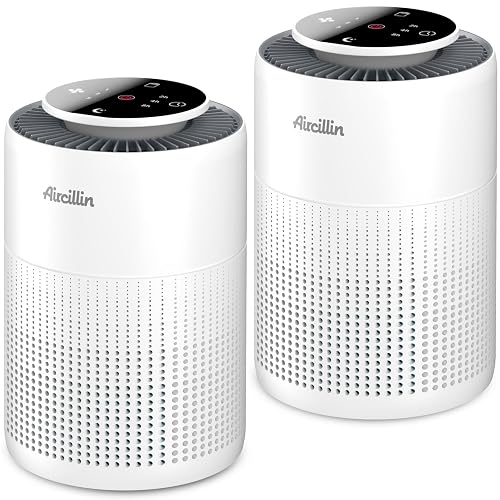
Aircillin 2 Pack H13 True HEPA Air Purifier

AIRTOK Air Purifier for Home Large Room
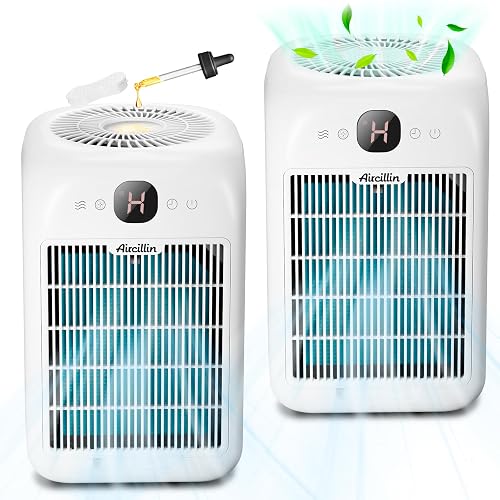
Aircillin Air Purifier with Aromatherapy 2-Pack
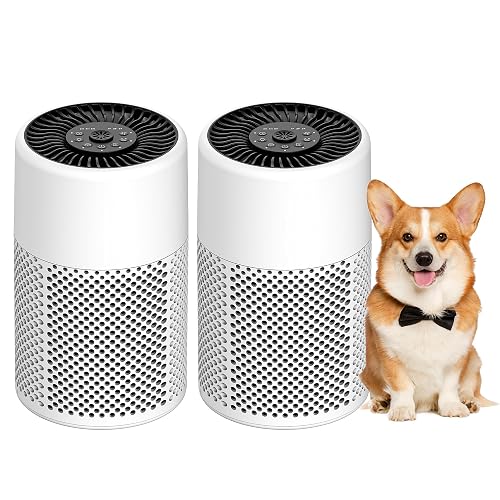
CHIVALZ 2 Pack Compact Bedroom Air Purifier
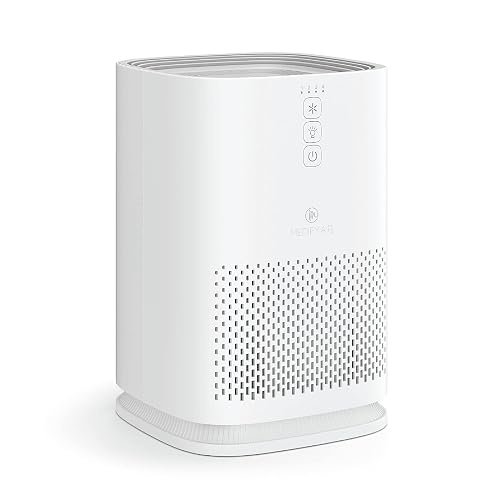
Medify MA-14 Air Purifier with HEPA Filter
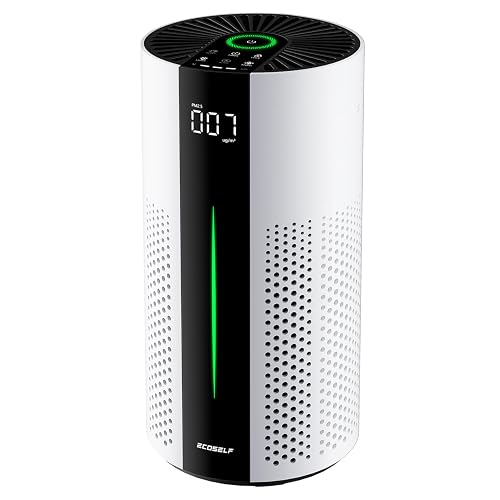
ECOSELF Air Purifier Up to 1800 Ft²
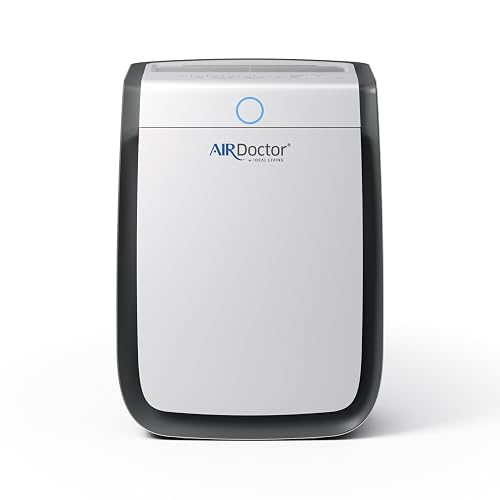
AIRDOCTOR AD3500 Air Purifier
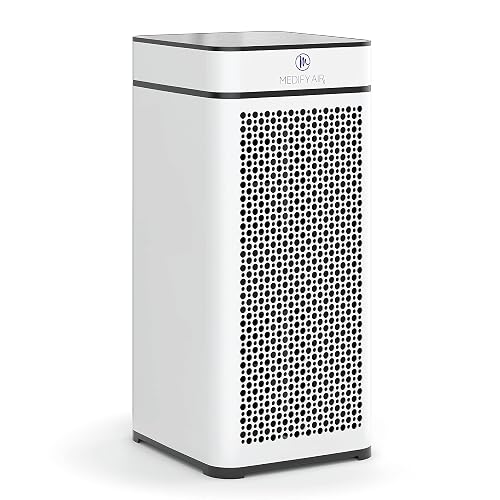
Medify MA-40 Air Purifier with HEPA Filter
The Strengths Of Each Pick
The Medify MA-112 V3.0 is the kind of unit you reach for when one purifier is expected to cover an entire open floor plan. With a stated CADR (Clean Air Delivery Rate, a measure of how quickly a purifier filters a specific pollutant from a room) of 1009 and 5,948 square feet of one-hour coverage, it dwarfs the smaller picks on this list. Dual H13 filters (a medical-grade HEPA class) trap particles down to 0.3 microns, which includes mold spores, pollen, and fine dust.
Homeowners with a sprawling basement, a lofted studio, or a combined kitchen-living area will appreciate not having to chain multiple purifiers together. It runs quietly enough for a living space, and the panel-style design blends into a corner without drawing attention.
A Few Highlights
- Massive 5,948 sq ft one-hour coverage suits open-plan homes
- Dual H13 HEPA filters target allergens, smoke, and mold spores
- High CADR of 1009 moves air quickly for fast relief
- Substantial build that owners commonly report lasting for years
- Quieter than expected for the airflow it pushes
Trade Offs
- Footprint is large, so a corner or wide wall is required
- Replacement filters cost more than compact units
- Overkill for a single bedroom or studio apartment
Who It Suits Best
Owners of large, open-plan homes with persistent humidity or smoke concerns who want one unit handling the whole space.
Where Another Pick Suits Better
The Medify MA-40 fits a mid-size room better, and shoppers in a small apartment will find the MA-14 a more reasonable match.
The Aircillin two-pack brings a smart angle: one purifier for the bedroom, one for the living room, with no per-unit markup. Each unit runs a four-stage filter (pre-filter, blue nano layer, H13 HEPA, and activated carbon) to catch dust, pet hair, smoke, and lingering odors. At 24 dB on the lowest setting, it stays quieter than a soft whisper, which makes nighttime placement realistic.
For renters or anyone furnishing a new place on a tight budget, two compact units outmaneuver a single expensive one if the goal is room-by-room coverage. The night light adds a gentle glow for hallways or kids’ rooms.
Notable Upsides
- Two units included for whole-home spread
- 24 dB sleep mode keeps bedrooms quiet
- Four-stage filtration including activated carbon for odors
- Compact enough for a nightstand or shelf
Points To Keep In Mind
- Each unit covers a smaller footprint than the Medify MA-112
- Replacement cartridges are an ongoing cost per unit
Made For
Budget-conscious shoppers in apartments or shared homes who want one purifier per room without sacrificing filter quality.
Consider Something Else When
The AIRTOK Air Purifier is a stronger fit when a single high-output unit matters more than spreading two compact ones around.
AIRTOK focuses on airflow geometry, and it shows in the numbers. A Smoke/Dust/PM2.5 (fine particulate matter smaller than 2.5 microns) CADR of 165 CFM (cubic feet per minute) and a Pollen CADR of 176 CFM put it well ahead of the bedroom-tier picks for raw throughput. The front air intake paired with a top-mounted outlet creates a steady circulation loop, which is exactly the kind of behavior you want in a living room where the door opens and closes often.
For households with pets or kitchens that vent into the main living area, that airflow keeps odors and dander from settling. Compared to the Aircillin two-pack above, this is a single heavy-hitter rather than a distributed setup.
What Earns Its Place
- High CADR for both smoke and pollen categories
- Front intake, top outlet design cycles air efficiently
- Suited to large living areas and open floor plans
- Strong choice for pet households
Honest Caveats
- Larger cabinet demands a dedicated spot on the floor
- Less portable than the compact nightstand models
Key Specs
Best Suited To
Pet owners and anyone in a large living area needing fast, single-unit air turnover rather than scattered coverage.
Skip It When
Small bedrooms call for the CHIVALZ 2 Pack, which runs quieter and fits tighter spaces.
Aircillin’s larger 908-square-foot pair steps up the airflow story with double-sided air inlets, which is unusual at this size. The two H13 True HEPA filters pull air from both sides of the unit, which is genuinely useful when furniture or walls limit placement options. A built-in aromatherapy slot lets you add a few drops of essential oil for a light scent without a separate diffuser.
The DC brushless motor keeps things efficient, and the unit maintains its HEPA rating even in sleep mode, so a bedroom placement is realistic. The Medify MA-40 above delivers stronger single-room coverage, but the Aircillin 2-pack wins on flexibility.
What Works In Its Favor
- Double-sided intake clears air from two directions
- Aromatherapy slot adds a scent option to the routine
- Maintains HEPA filtration in sleep mode
- Two units cover multiple rooms for the price of one premium model
Things To Consider
- Filter replacements needed for both units over time
- Aromatherapy pads are small and need occasional refilling
Whose Shelf It Belongs On
Shoppers who want a flexible bedroom or living room setup with light scent support, and who appreciate the option of two locations.
Look Elsewhere When
The ECOSELF Air Purifier’s auto mode makes more sense for households that prefer the unit to react to air quality on its own.
The CHIVALZ pair is built for tight spaces. Each unit handles up to 270 square feet through a three-stage filter, and at 24 dB in sleep mode, it stays quieter than most refrigerators hum. The night light and fragrance sponge turn it into a multi-tasking bedside companion, particularly useful in dorms or shared kids’ rooms.
For a damp-prone bathroom or a small nursery, two compact units at this size hit a sweet spot. The trade-off is coverage, since the AIRTOK ahead of it pushes much more air per minute. For most small spaces, though, the CHIVALZ is the friendlier fit.
What Pays Off
- 24 dB sleep mode keeps bedrooms peaceful
- Fragrance sponge adds a subtle scent option
- Three-stage HEPA filtration for a compact footprint
- Night light feature for hallways or kids’ rooms
Small Caveats
- 270 sq ft coverage is small for open living areas
- Two units needed for whole-room spread
Quick Facts
Who Will Love This
Dorm residents, small-bedroom dwellers, and parents placing a unit in a nursery where quiet operation matters most.
A Better Fit Elsewhere
The Medify MA-40 handles a larger main room with more authority when one purifier must cover more than 270 square feet.
The MA-14 sits in that useful middle ground: too big for a nightstand, too small to dominate a living room. It cleans 470 square feet per hour with a CADR of 120, which is a reasonable turnover for a kid’s room, a home office, or a small apartment. The H13 HEPA filter handles smoke, allergens, and mold spores down to 0.3 microns.
Tabletop placement on a dresser or low shelf works well, and the Medify line’s reputation for consistent build quality carries through here. Compared to the CHIVALZ pair above, you trade two compact units for one with stronger single-room throughput.
Strengths Worth Knowing
- 470 sq ft per hour fits medium rooms comfortably
- H13 HEPA captures allergens and mold particles
- Compact tabletop form factor
- Quieter than full-size Medify models
A Few Limitations
- One-hour rating assumes a smaller room than the larger Medify models
- Filter size is smaller, so replacements come sooner with heavy use
Perfect Match For
Studio dwellers and nursery or home office owners wanting a single tabletop unit that doesn’t dominate the room.
Reach For A Different Pick When
Two rooms need coverage, and the Aircillin 2 Pack spreads more evenly across bedrooms or living spaces.
The ECOSELF unit leans on a 360-degree intake, which pulls air from every direction rather than relying on a single face. That design choice means placement against a wall or in a corner is less of a compromise, and the airflow stays even. A built-in PM2.5 sensor (a particle sensor that detects fine dust and smoke concentrations in real time) drives the auto mode, so the unit ramps up when smoke, pollen, or pet dander spikes without any input from you.
Up to 1,800 square feet of coverage lands between the Medify MA-40 and MA-112 in scale. The smart response is the real differentiator for households where outdoor pollution or cooking smoke comes and goes throughout the day.
Everyday Perks
- 360-degree intake works in corners or open spaces
- PM2.5 auto sensor adjusts fan speed automatically
- 1,800 sq ft coverage suits larger living areas
- Reactive to real-time pollution changes
Worth Bearing In Mind
- Auto mode can be more responsive than some prefer
- Larger body needs floor placement
At A Glance
Built With In Mind
Households near busy roads, wildfire zones, or homes with cooking smoke that want the purifier to respond on its own.
Swap It Out When
Shoppers wanting the highest-grade filtration should look at the AIRDOCTOR AD3500, which targets a finer particle size.
The AD3500 takes a step above standard HEPA with an UltraHEPA filter, which the manufacturer rates for particles down to 0.003 microns, a hundred times smaller than the basic HEPA threshold. For allergy-sensitive households, that finer capture matters because smoke, ultrafine dust, and certain mold fragments fall in that smaller range. Coverage spans 2,520 square feet per hour, and 630 square feet clear in just 15 minutes for a faster room reset.
The premium carbon layer adds an extra push against odors, which helps in homes with pets, open kitchens, or attached garages. It is the most expensive pick on this list, and the UltraHEPA rating carries that price tag on its own.
Positive Takeaways
- UltraHEPA filter captures particles to 0.003 microns
- 2,520 sq ft per hour suits large homes
- Premium carbon filtration for stubborn odors
- 15-minute rapid clean for 630 sq ft
Practical Considerations
- Higher upfront cost than the other picks here
- Replacement UltraHEPA filters are pricier than standard H13 cartridges
Feature Snapshot
The Right Fit
Allergy sufferers and households with severe sensitivity to smoke, ultrafine dust, or persistent mold-related air quality issues.
Where A Sibling Pick Shines
The Medify MA-112 covers a similarly large footprint for a noticeably lower cost when UltraHEPA capture isn’t required.
The MA-40 covers the middle of the Medify line with confidence. Cleaning 1,793 square feet in an hour at a CADR of 406, it handles a large living room or a combined kitchen and dining area without strain. The H13 HEPA filter traps mold spores, pollen, smoke, and pet dander down to 0.3 microns, and the unit runs quietly enough for everyday background use.
For a household that wants a single dependable workhorse without jumping to the MA-112, this is a sensible pick. It also pairs well with smaller units like the MA-14 to handle adjacent rooms.
What It Does Well
- 1,793 sq ft per hour covers large main rooms
- H13 HEPA targets smoke, mold, and pollen
- Mid-tier Medify option between MA-14 and MA-112
- Quiet enough for daily living areas
Possible Compromises
- Not the strongest single-room output in the lineup
- Floor placement still required despite the moderate size
Technical Highlights
Who Should Grab It
Households needing a single unit for a large living area, or those pairing it with a smaller Medify for bedroom duty.
Not Your Match When
The Aircillin 2 Pack fits better when a couple of smaller rooms need equal attention rather than one main space.
What Matters Most Before Choosing Mold Air Purifiers
Match Coverage To The Room, Not The Box
Square-foot ratings can mislead when they describe a one-hour or 30-minute turnover rather than continuous air quality. A unit that handles 1,800 square feet in 60 minutes will cycle that space only once an hour, which works for a bedroom but feels slow in an open living area. For a main room, look for higher CADR numbers, since CADR measures how many cubic feet of clean air a purifier delivers per minute, and it translates directly to how fast the air turns over. Smaller bedrooms and nurseries can comfortably use compact picks like the CHIVALZ or Medify MA-14 without losing meaningful filtration.
Filter Class And What It Really Captures
H13 HEPA, the rating shared across nearly every pick here, removes 99.97% of particles at 0.3 microns. That covers most mold spores, pollen, dust, and pet dander. The AIRDOCTOR AD3500’s UltraHEPA filter reaches down to 0.003 microns for finer smoke and ultrafine particles, which matters in homes near wildfires or busy roads. Activated carbon layers add odor removal, which is a real bonus in kitchens, basements, and pet-heavy homes.
Noise, Sleep Modes, And Placement Reality
A purifier running at full tilt in a bedroom will keep most people awake. Models like the CHIVALZ pair, the Aircillin two-pack, and the Medify MA-14 drop into the 24 dB range on sleep mode, which fades into background noise. Larger units like the Medify MA-112 and the AIRDOCTOR AD3500 push more air but also need floor placement, so they belong in living areas or finished basements rather than tight bedside corners.
Practical Ownership Considerations
Filters need replacement, and the cost and frequency vary widely. Compact units use smaller cartridges that need swapping more often, while large HEPA filters last longer but cost more per replacement. Plan on a quick pre-filter rinse (when the model supports it) to extend the life of the main HEPA layer, and keep a window cracked for fresh air when outdoor counts are low, since sealed rooms with a purifier still need ventilation.
Common Slip Ups Shoppers Hit
Pitfalls Shoppers Hit
Choosing a purifier by maximum coverage alone often backfires. A 2,500-square-foot unit running on low in a small bedroom is overkill, and the filter life drops without any real benefit. Match the size of the room to the rated coverage and consider a 30% headroom margin, so a 200-square-foot bedroom deserves a unit rated for at least 260 square feet.
Ignoring the filter replacement cost is another quiet trap. A budget unit becomes expensive fast when cartridges run $30 to $50 every few months. Multi-pack purifiers like the Aircillin sets double that recurring cost since each unit has its own filter. Realistic ownership includes budgeting for at least one or two filter changes per year per unit.
What The Higher Tier Buys
Premium models like the AIRDOCTOR AD3500 add UltraHEPA capture and dual-stage carbon filtration, which makes a measurable difference in homes with wildfire smoke exposure or severe chemical sensitivity. The build quality tends to be more robust, motor noise is lower at high speeds, and auto modes with real-time sensors remove the guesswork of fan adjustment. For households where allergens or smoke are a daily battle, the upgrade pays off in fewer symptoms and less manual fiddling. For light-duty bedroom use, that extra cost is hard to justify when an H13 unit at half the price does the same job.
Frequently Asked Questions
Do HEPA air purifiers actually help with mold?
HEPA filters capture airborne mold spores, which is the most common way people breathe in mold irritants. The purifier won’t remove mold growing on surfaces, so pair it with cleaning, ventilation, and humidity control for full protection.
How often should I run a mold air purifier?
Running a purifier continuously on a low or auto setting is generally the most effective approach, since mold spores enter the air any time a door opens or humidity shifts. Sleep mode is enough for bedrooms during the night.
What’s the difference between H13 and H14 HEPA?
H13 filters capture 99.97% of particles at 0.3 microns, while H14 filters reach 99.99%. The jump is small in practical terms, and most homes won’t notice the difference. UltraHEPA, which the AIRDOCTOR uses, is a separate standard targeting much finer particles.
Can a small purifier handle a large room?
A small unit will still filter the air, but it will take longer to cycle through and may struggle to keep up with continuous sources of particles like cooking smoke or multiple pets. Larger rooms benefit from a higher CADR or multiple units.
Is activated carbon necessary for mold?
Activated carbon targets odors and gases rather than mold spores, which the HEPA layer handles. In a damp basement or a room with musty smells, carbon adds noticeable comfort, but it isn’t strictly required for spore removal.
Closing Remarks
Mold-prone spaces demand a purifier matched to the room, the humidity level, and your tolerance for noise. A compact two-pack covers bedrooms and small offices cheaply, while a single high-CADR unit makes more sense in an open living area. For sensitive households, the UltraHEPA standard justifies the higher spend. Whichever direction you choose, the right filter class and the right coverage matter more than the brand name on the box.