
Whether you work from a converted bedroom, share a small apartment with a shedding dog, or simply want bedtime air that doesn’t hum, the right quiet air purifier can change how a room feels without competing with conversation or sleep. Noise matters as much as filtration, since a loud unit ends up on the lowest setting anyway, which is why the picks below focus on low-decibel operation, real coverage for the room you actually have, and the everyday details that decide whether you keep using a purifier six months in.
A Fast Comparison Of The Options
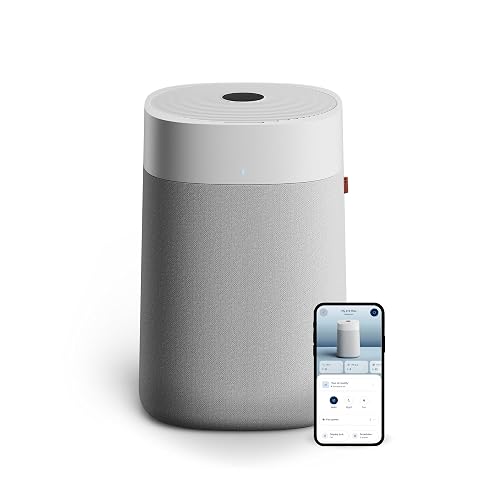
BLUEAIR Blue Pure 211i Max Smart Air Purifier (Large Room)
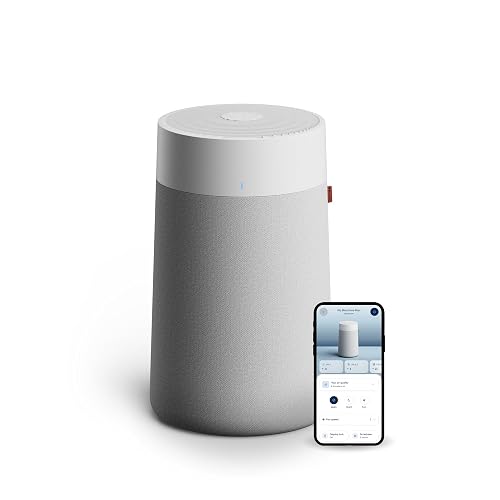
BLUEAIR Blue Pure 311i Max Smart Air Purifier (Medium Room)
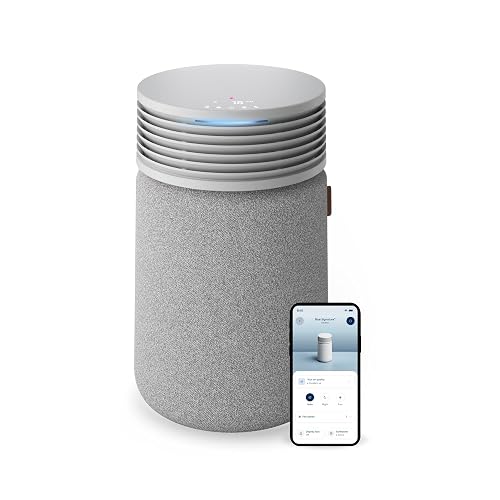
BLUEAIR Blue Signature SP3i Air Purifier (Medium Room)
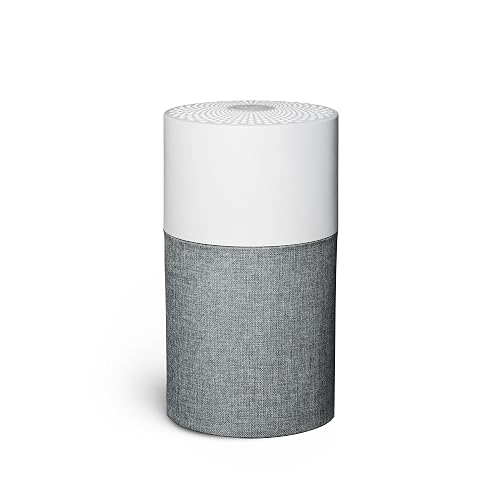
BLUEAIR Blue Pure 511 Air Purifier (Small Room)
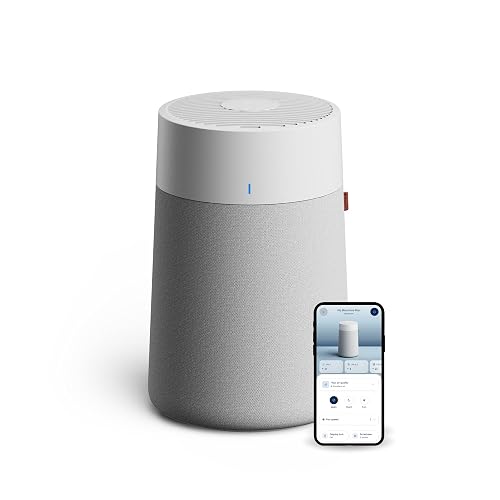
BLUEAIR Blue Pure 511i Max Smart Air Purifier (Small Room)
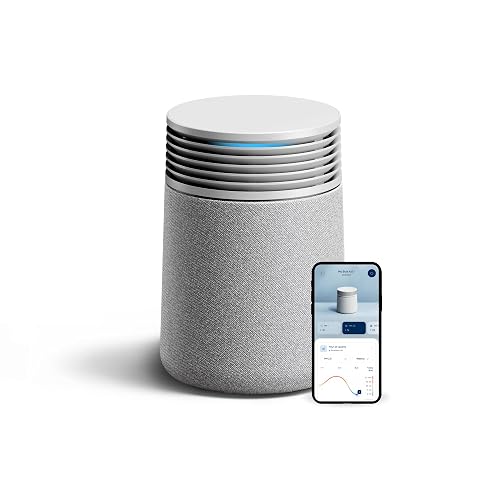
BLUEAIR Blue Signature Small Smart Air Purifier (Small Room)
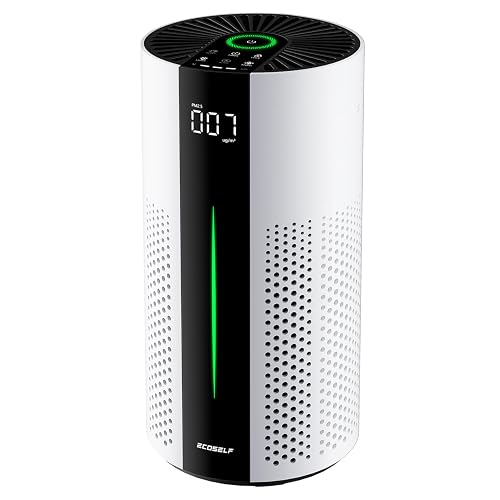
ECOSELF Air Purifier for Home Large Room Up to 1800 Ft²
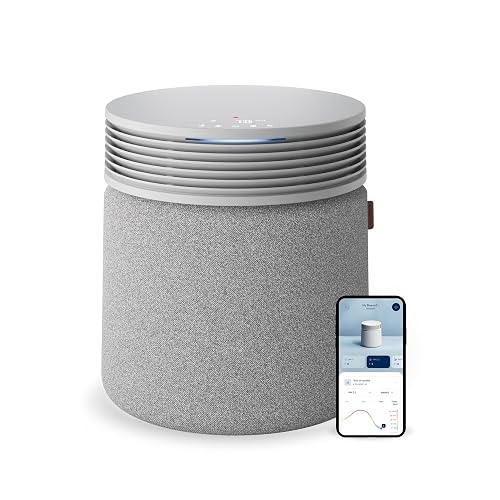
BLUEAIR Blue Signature Air Purifier (Large Room, 3,385 Sq Ft)
Meet The Standout Selections
Open living rooms punish most purifiers because the air volume is huge and the unit sits far from where you breathe. The Blue Pure 211i Max is built for that exact problem, rated to refresh 3,235 square feet in an hour, which means a single unit can carry a loft, a great room, or a studio apartment without being shoved into the corner. The cylindrical fabric prefilter comes in several washable colors, so the unit can blend into a room rather than dominate it.
HEPASilent filtration is Blueair’s combined electrostatic-and-mechanical approach, designed to capture fine particles while running quieter than a conventional HEPA-only fan. Auto mode steps the fan up and down based on what the onboard sensor reads, so overnight the unit can drop to near-silence and ramp back up when dinner smoke drifts in.
What Pays Off
- Rated coverage handles large, open floor plans without needing a second unit
- HEPASilent dual filtration captures fine particles at lower fan speeds, which helps with nighttime noise
- WiFi and app control let you change fan speed, schedule, and monitor filter life from a phone
- Washable fabric prefilter extends the life of the main filter and lets you match the room’s palette
- Auto mode reacts to airborne particles instead of running flat-out all day
Worth Noting
- The taller cylinder needs a spot with a few inches of clearance on all sides for unrestricted airflow
- Filter replacements are specific to the 211i Max line, so plan to reorder from the manufacturer rather than a third party
- At its highest setting, the unit becomes audible in a quiet room, so app-based scheduling helps keep nights calm
Key Specs
Who It Suits Best
Homeowners with open layouts, pet households dealing with dander across a large area, and anyone who wants one unit to cover a primary living space rather than buying several smaller ones.
Where Another Pick Suits Better
The Blue Pure 311i Max is a better fit when your main concern is a single bedroom or mid-size office, since it costs less and is tuned for that footprint.
Most bedrooms and home offices land in the 200 to 500 square foot range, which is exactly where the Blue Pure 311i Max is aimed. Rated to refresh 2,107 square feet in an hour, it gives a typical primary bedroom about five air changes per hour, the kind of turnover that matters when someone is allergic to the dog sleeping at the foot of the bed. WiFi, auto mode, and a fabric-wrapped cylinder carry over from its larger sibling.
Where the 211i Max is built for vast open spaces, the 311i Max trims down to a smaller footprint without losing the washable prefilter or the app control. For most households, this is the more honest size match, since oversizing a purifier wastes energy and undersizing it leaves the fan running on high just to keep up.
Useful Highlights
- Rated coverage of 2,107 sq ft per hour suits medium bedrooms, living rooms, and home offices
- HEPASilent dual filtration targets fine particles and common household odors
- Washable fabric prefilter is available in several colors to match the room
- Auto mode uses onboard sensors to throttle fan speed based on detected particles
- WiFi app control removes the need to walk to the unit to change settings at night
Trade Offs
- Like the larger 211i Max, replacement filters are model-specific and not interchangeable with older Blue Pure units
- Still a freestanding cylinder, so very narrow side tables may not fit the base
Who Will Love This
Anyone furnishing a primary bedroom, nursery, or dedicated home office who wants strong air cleaning without paying for capacity they will never use.
Consider Something Else When
The Blue Pure 211i Max is the better match for a loft-style apartment, where one wider unit covers more ground than several mid-size ones.
The Blue Signature SP3i is the most filtration-focused model in the Blueair family, built around a 7-stage HEPASilent system. For households where the air problem is more than a little dust, things like wildfire smoke rolling in during summer, a cat that sleeps on the couch, or a partner with strong pollen allergies, the extra stages give the unit more room to tackle gases, odors, and fine particulates together.
Compared to the Blue Pure 311i Max, the SP3i trades the playful fabric prefilter for a more architectural table design, which is the kind of detail that matters in a finished living room. AHAM verification adds a layer of confidence, since the rating is measured against an independent standard rather than only the brand’s own claim.
Everyday Perks
- 7-stage HEPASilent filtration broadens what the unit can capture beyond basic particulates
- AHAM-verified performance gives a third-party check on the coverage claim
- Rated for medium rooms up to 2,250 sq ft per hour, slightly larger than the 311i Max
- Table-friendly footprint suits desks, side tables, and console cabinets
- Auto mode and WiFi control keep hands-on adjustment to a minimum
Soft Spots
- Multi-stage filtration means filter replacement costs more than a single-stage unit
- The premium build shows up in the price, so it is harder to justify for a guest room used twice a year
Best Suited To
Allergy and asthma households, homes near wildfire corridors, and pet owners who want the most thorough filtration Blueair offers in a mid-room size.
Look Elsewhere When
The Blue Pure 311i Max is plenty for a guest room or small office, where paying for extra filtration stages is hard to justify.
The original Blue Pure 511 is the unit you put in a nursery, a small guest bedroom, or a tight home office where floor space is at a premium. Rated to refresh 180 square feet in about 12.5 minutes, it is genuinely small, which is exactly the point. HEPASilent dual filtration is the same approach used in the larger Blue Pure models, just scaled down to a room-sized workload.
On the lowest speed it runs at around 24 decibels, which is closer to a whisper than a hum and is the main reason this model keeps showing up on nursery shortlists. Without WiFi or app control, it leans on a simple touch interface, which is actually a plus for anyone who does not want another device on the home network.
The Case For It
- Compact footprint fits on a dresser, changing table, or narrow shelf
- Around 24 dB on the lowest fan speed makes it easy to sleep next to
- HEPASilent dual filtration handles common allergens and fine dust
- Simple one-button operation means fewer things to fiddle with at night
- Washable prefilter in several colors lets it blend in or stand out on purpose
Points To Consider
- Rated coverage tops out around 432 sq ft, so it is not the right tool for an open living area
- No WiFi or app, so adjustments happen on the unit itself
- Commonly reported wear point: the fabric prefilter can pill after many wash cycles, so gentle laundering helps it last
Made For
Parents setting up a nursery, anyone working in a small home office, and renters who need a purifier that does not crowd the room.
Not Your Match When
The Blue Pure 311i Max fits a primary bedroom better when the room is larger than about 250 square feet, since the 511 will run on high just to keep up.
The 511i Max is the connected version of the 511, keeping the compact cylinder but adding WiFi, app control, and auto mode. Rated to clean 1,138 square feet per hour, it punches above its physical size, which is helpful when a small purifier is asked to cover a bedroom with high ceilings or a room with a lot of soft furnishings that trap particles.
For households already running a smart home setup, app control turns the purifier from a set-and-forget appliance into something you can schedule, monitor, and adjust from the couch. Auto mode is the quietness win here, since the fan settles down when the air is already clean and ramps up only when something changes.
Useful Strengths
- 1,138 sq ft per hour rating from a footprint small enough for a side table
- HEPASilent dual filtration at a low-decibel operating range
- WiFi app control and auto mode adjust performance based on real-time air quality
- Compatible with the rest of the Blueair smart ecosystem, so multiple units can run from a single app
Less Ideal Details
- App-dependent features may feel like overkill in a room used by someone who just wants a single on/off button
- Like other Blueair units, replacement filters are tied to the 511i Max model line
Who Should Grab It
Smart home users, anyone running a baby monitor and a purifier in the same nursery, and people who want to track air quality trends on their phone.
Swap It Out When
The non-smart Blue Pure 511 is the simpler, less expensive option for a guest room or office where no one needs app data.
The Blue Signature Small is the compact cousin of the SP3i, sharing the 7-stage HEPASilent architecture in a smaller body. It refreshes 1,190 square feet per hour, which is a useful ceiling for a dorm room, nursery, or studio apartment, and the design language is more architectural than the Blue Pure line. That matters when the unit is going to sit on a console table or a shared office desk, not tucked behind a door.
App control, auto mode, and quiet operation are all in the mix, so it is essentially the small-room equivalent of the SP3i. In most cases, owners choose this unit when they care about the look of the purifier as much as the air output.
A Favorable Mix
- 7-stage HEPASilent filtration in a small-room-friendly size
- Rated to refresh 1,190 sq ft per hour from a compact base
- App control and auto mode handle day-to-day adjustments on their own
- Refined cabinet design fits bedrooms, dorms, and home offices without looking utilitarian
Factors To Consider
- Multi-stage filtration drives up the cost of replacement filters over time
- Some shoppers may find the design understated compared to more colorful competitors
Perfect Match For
Dorm rooms, small apartments, and design-conscious bedrooms where the purifier needs to look like part of the furniture.
Reach For A Different Pick When
The Blue Pure 511i Max is a better call for someone who prefers a fabric prefilter they can swap colors on.
The ECOSELF is the only non-Blueair model in this roundup, and it earns its spot by addressing a specific budget gap. Rated to cover up to 1,800 square feet, it targets large living rooms and open floor plans at a lower price than the larger Blueair models. The 360-degree air intake is the practical detail here, since pulling air from all sides means the unit is more forgiving about where you place it against a wall.
A built-in PM2.5 sensor drives auto mode, which is a feature usually found on pricier models. PM2.5 refers to fine particulate matter 2.5 micrometers or smaller, the kind of particles that come from cooking, smoke, and outdoor pollution, so a sensor-driven response is genuinely useful rather than a marketing line.
Features That Help
- 360-degree intake design is more forgiving about placement near walls or in corners
- Built-in PM2.5 sensor drives auto mode without manual adjustment
- Rated for up to 1,800 sq ft, suitable for large rooms and open layouts
- Lower price point than comparably sized premium models
Where It Is Less Suited
- Brand ecosystem is smaller, so app and smart-home integration may be less polished than the leading options
- HEPA-style filtration is effective for particulates, but odor and gas handling is typically less aggressive than multi-stage systems
- Replacement filters should be confirmed compatible before reordering, since third-party filters do not always match the seal
The Right Fit
Large-room shoppers on a tighter budget who still want sensor-driven auto mode and a footprint that disappears into the corner.
A Better Fit Elsewhere
The Blueair Blue Pure 211i Max makes more sense for someone who values the brand’s connected ecosystem and is willing to spend more for it.
The flagship Blue Signature is the largest purifier in the lineup, with a 3,385-square-foot hourly rating that puts it in whole-home territory. For households with high ceilings, an open staircase, or a single great room that doubles as the kitchen, one of these can replace two or three smaller units. The 7-stage HEPASilent filtration brings the same thorough approach as the smaller SP3i, scaled up to a higher airflow.
Smart WiFi control and auto mode are included, so the unit can be set to react to air quality on its own. Given the size, placement matters: the unit still needs several inches of clearance around the intake, and the fan on its higher settings is noticeable, so nighttime scheduling helps keep things quiet.
A Strong Showing
- Widest coverage in the Blueair family at 3,385 sq ft per hour
- 7-stage HEPASilent filtration for thorough particulate and odor handling
- WiFi control and auto mode handle most adjustments without manual input
- One-unit solution for open layouts that would otherwise need several smaller purifiers
Things To Weigh Up
- Physical size is substantial, so a dedicated floor spot is required
- Higher fan speeds are audible, so scheduling and auto mode matter for quiet hours
- Multi-stage filter replacements cost more than simpler single-stage units
Whose Shelf It Belongs On
Large-home owners who want one central purifier instead of a network of smaller ones, and households with high-traffic open spaces.
Where A Sibling Pick Shines
The Blue Pure 211i Max is easier to place in a normal living room and is the better match when coverage beyond about 2,500 sq ft is not needed.
What Matters Most In A Quiet Air Purifier
Start with the room you actually have, not the room you wish you had. A purifier’s hourly coverage rating is only useful if it matches your square footage, and for most bedrooms, a mid-size rating between 1,000 and 2,000 sq ft per hour is the honest range. Going larger wastes energy, while going smaller forces the fan onto high, which is exactly the noise you are trying to avoid.
Filtration type matters more than marketing claims. HEPASilent combines electrostatic charging with mechanical filtration, which lets the fan move less air for the same particle capture, which is the underlying reason these models stay quiet. Multi-stage systems add carbon or other media for odors and gases, which helps in kitchens and pet households but adds filter cost.
Decide whether you need smart features. WiFi, app control, and auto mode are genuinely useful in a nursery, a shared household, or any room where the purifier needs to react to cooking smoke and then drop back to silence. In a guest room, a simple touch interface is enough. Noise floor, expressed in decibels, is the final filter: anything in the low 20s dB on the lowest setting is closer to breathing than to humming, which is the level most light sleepers need.
Key Considerations Across These Picks
Mistakes Worth Dodging
The most common slip is sizing a purifier to the room’s name rather than its actual square footage. A “large bedroom” listed at 350 sq ft needs a different unit than a 600 sq ft primary suite, even if both feel large in person. Another pitfall is chasing coverage numbers without checking noise, since a unit rated for huge rooms will ramp the fan hard in a smaller space and end up louder than expected.
Where The Extra Money Goes
Higher-tier models in this category earn their premium through multi-stage filtration, larger smart ecosystems, and quieter fan profiles at higher airflow. For pet households and allergy sufferers, the upgrade is usually worth it because the extra stages catch odors and finer particles that single-stage units miss. For a guest room used occasionally, the lower tier is a more honest match.
Frequently Asked Questions
How quiet is “quiet” for an air purifier?
Most manufacturers rate their lowest fan speed between 20 and 30 dB, which is roughly the level of a soft whisper or a quiet library. Anything in that range should not interfere with sleep, conversation, or video calls.
Do quiet air purifiers clean as well as louder ones?
The best modern units reach similar particulate capture by combining electrostatic and mechanical filtration, which lets them move less air for the same result. The honest answer is that a well-engineered quiet unit will outperform a poorly tuned loud one, so look at filtration design and coverage, not just the noise floor.
Where should I place a quiet air purifier?
Leave several inches of clearance around the intake, ideally near the room’s center or against an interior wall away from direct sunlight. Avoid placing it directly behind furniture, since blocked intake makes the fan work harder and raises the noise level.
How often do filters need to be changed?
Most prefilters can be washed every few weeks, while the main filter typically lasts six to twelve months depending on air quality and usage. Auto mode and filter life indicators in the app help take the guesswork out of the schedule.
Are smart features worth the extra cost?
Smart features pay off when the purifier needs to react to cooking smoke, pollen spikes, or pet dander without manual input. In a quiet, low-traffic room, a simple touch interface is usually enough.
Closing Thoughts
A quiet air purifier is less about the brand on the box and more about matching the unit to the room, the noise tolerance, and the kind of air you are actually trying to clean. Start with square footage, check the lowest fan speed, and choose the filtration depth that fits the allergens or odors in your home. The right pick will fade into the room, which is exactly what you want from a quiet appliance.