
Finding a purifier that actually does something in a tight apartment, nursery, or home office feels harder than it should. Most bulky units overpower the room visually, while tiny plug-in models sometimes barely register. The right pick depends on your square footage, your tolerance for fan noise, and whether you want true HEPA filtration or a simple ionizer for light odor control. This list covers HEPA workhorses, smart connected models, ultra-quiet ionic options, and budget plug-in sets for multi-room coverage, so you can match the right tool to your space without overpaying for features you’ll never touch.
The Shortlist At A Glance

DREO DR-HAP009 Air Purifier 1176 ft²
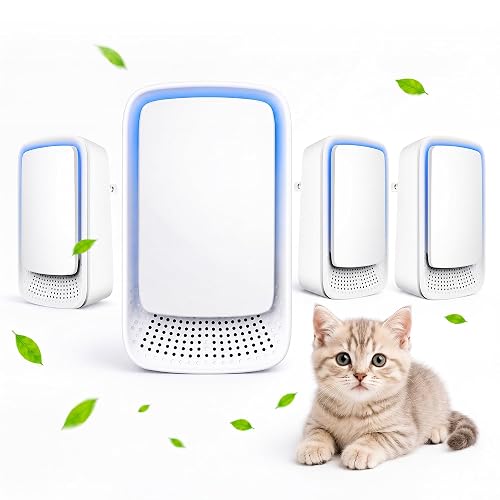
Plug In Air Ionizers 4 Pack
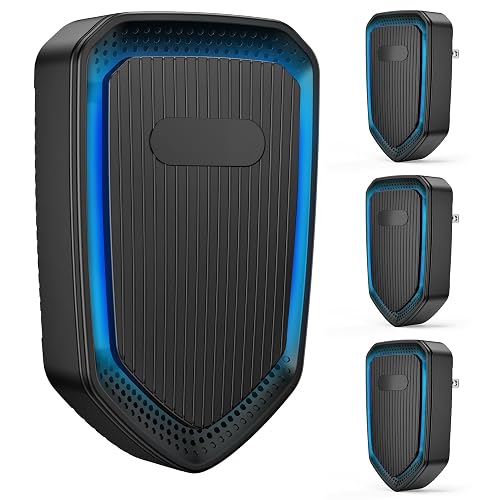
Plug In Negative Ion Air Purifier
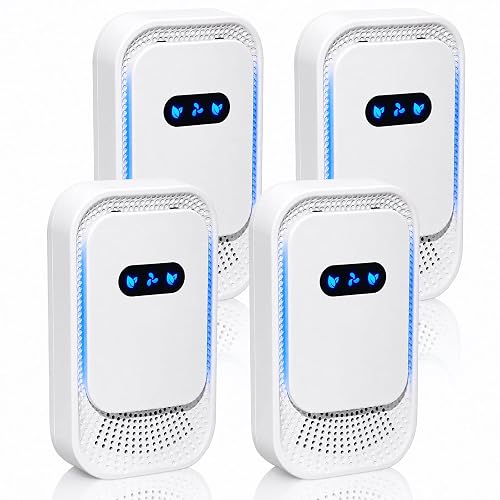
Ceoeyelin Air Ionizers 4 Pack
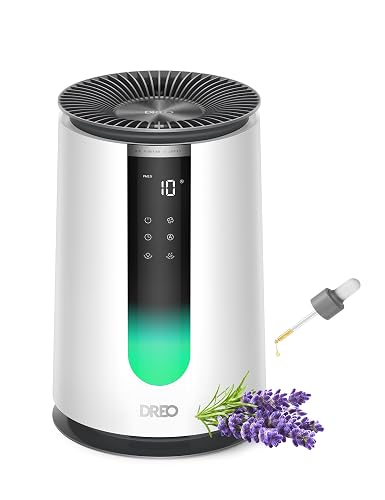
DREO DR-HAP008 HEPA Bedroom Purifier
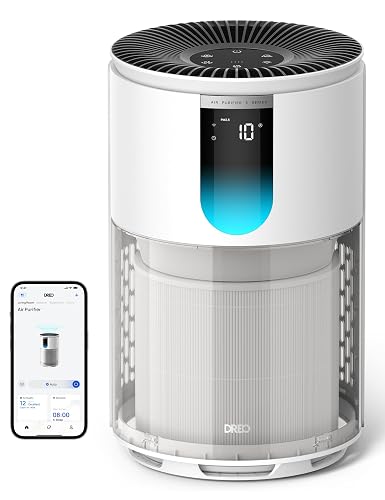
DREO DR-HAP009S Smart Air Purifier
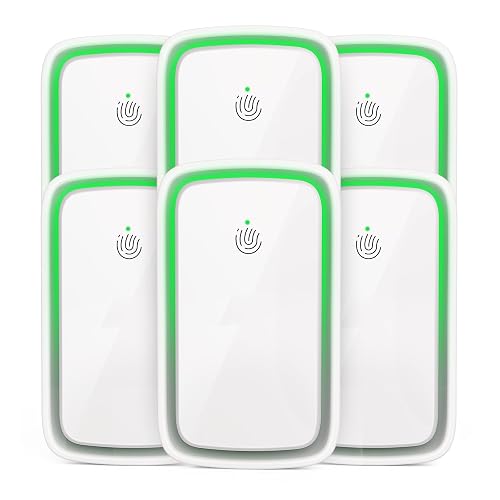
Paztkoo Air Ionizers 6 Pack

Ionic Pro Platinum TA750 Purifier
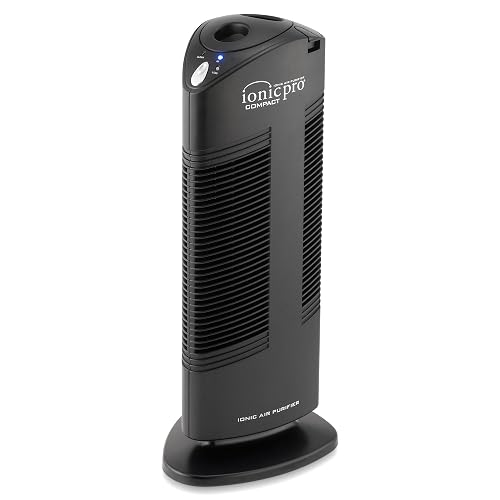
Ionic Pro Compact Filterless Purifier

Ionic Pro Turbo Filterless Purifier
Inside Each Recommended Option
The DREO DR-HAP009 is a HEPA tower that punches above its footprint, which is why it leads this list. It’s rated for spaces up to 1176 square feet and carries AHAM-verified CADR numbers, which means the Clean Air Delivery Rate (how fast the purifier filters smoke, dust, and pollen from a room) has been independently measured rather than estimated.
For open-plan apartments, studios with attached kitchens, or anyone running it in a single shared space, the auto mode does the heavy lifting. It reads the PM2.5 (fine particulate matter 2.5 microns or smaller) sensor, ramps up when cooking fumes spike, then drops back to sleep mode when the air clears. Four manual speeds give you direct control when the auto logic feels sluggish.
Useful Highlights
- AHAM-verified CADR of 158 CFM delivers measurable air changes every 12.4 minutes in a 245 sq ft room
- PM2.5 monitor on the front panel turns red, yellow, or green so you can see what your lungs are getting
- True HEPA filter captures fine particles, pollen, and pet dander rather than just pushing them around
- Turbo mode clears smoky rooms after a kitchen incident in minutes, then quiets down for normal use
- Compact tower shape fits beside a TV stand without dominating the room
Points To Note
- Filter replacements are an ongoing cost, so budget for a new HEPA cartridge every several months depending on use
- Auto mode cycles the fan more aggressively than some people prefer at night
- No smart connectivity here, unlike the DR-HAP009S, so app and voice control are missing
Best Suited To
Open-plan dwellers and pet owners who want verified HEPA performance in a single unit that can stretch across a large living area.
A Better Fit Elsewhere
Smart-home users should look at the DREO DR-HAP009S instead, since it adds app and voice control without changing the core airflow.
This four-pack of plug-in ionizers from ShaoDelynxia takes a different approach from the DREO at the top of the list. Instead of one big fan-driven unit, you get four small wall-outlet purifiers that release negative ions to settle airborne particles and tackle light odors. The trade-off is real: ionizers don’t match HEPA for fine particle filtration, but they cost less and disappear into a room visually.
Spread them across a bedroom, bathroom, kitchen, and home office, and you’ve covered the rooms you actually spend time in. The simple plug-and-play design also makes them handy for short-term rentals, dorms, or travel where you can’t bring a tower unit.
Bright Spots
- Four units mean whole-home coverage without buying a second purifier later
- Direct wall-outlet design frees up counter and floor space in cramped rooms
- Lightweight enough to unplug and pack for hotels or short trips
- No filter replacements to track or buy, which simplifies long-term ownership
Trade Offs
- Ion-based purification is gentler than HEPA for allergy-grade particle control
- Owners commonly report a faint static or ozone-like smell in very small enclosed spaces
- Performance depends on outlet placement near the breathing zone, not just anywhere on the wall
Right Fit For
Renters and travelers who want barely-there air freshening in multiple rooms without the bulk of a tower unit.
Look Elsewhere When
Anyone with serious allergy symptoms should skip to the DREO DR-HAP008, which offers true HEPA filtration in a bedroom-sized footprint.
The Vnitoz single-unit ionizer trades the four-pack count for a more compact, quieter profile. Plug it into any standard outlet and it begins releasing negative ions immediately, no app, no buttons, no setup. That’s the whole appeal, and for many people it’s enough.
This is the kind of purifier that earns its space in a basement office, a guest bathroom, or the corner of a kitchen where cooking smells linger. It won’t compete with a HEPA tower for pollen season, but for travel days, hotel stays, and small problem rooms, it’s a low-fuss tool that disappears into the wall.
Why It Works Well
- Truly plug-and-go operation with no controls to learn
- Tiny footprint keeps counter and shelf space open
- Quieter than a fan-based purifier since there are no moving parts producing noise
- Lightweight enough to toss in a carry-on for hotel trips
Honest Caveats
- Single-unit coverage means it’s a one-room solution, not a whole-home one
- Ionizers are widely considered less effective than HEPA for capturing fine particulates like PM2.5
Made For
Frequent travelers and renters who want a low-maintenance ionizer for hotel rooms, dorms, or short-term stays where carrying a tower is impractical.
Consider Something Else When
Households needing broader coverage should consider the Ceoeyelin Air Ionizers 4 Pack, which spreads the same ion technology across four rooms.
The Ceoeyelin four-pack leans into the same ionizer formula as the ShaoDelynxia set above, with low-noise operation and a focus on light odor and particle reduction. Where it differs is positioning: it’s pitched for pet households and busy families who want fresher air in the rooms where pets and cooking actually happen.
Sticking a unit near a litter box, a kitchen trash can, or a living room with a shedding dog tends to be where these pay off. They’re not a replacement for HEPA during peak allergy season, but for the everyday “this room smells funny” problem, the four-pack gives you range without spending much.
Good Reasons To Consider
- Four-room spread at a budget-friendly per-unit cost
- Low-noise operation makes it viable for bedrooms and shared spaces
- Targets pet dander, smoke, and cooking odors that build up over a day
- White housing blends into most outlet covers and trim without standing out
Things To Weigh
- Negative ion technology alone won’t handle heavy pollen seasons or wildfire smoke events
- Effectiveness varies based on how close the unit sits to the source of the odor
Who It Suits Best
Pet owners and busy households on a tight budget who want light air freshening across multiple rooms without a single tower dominating the space.
Swap It Out When
Anyone with allergy-grade filtration needs should reach for the DREO DR-HAP008 instead, which adds true HEPA in a similar small-space footprint.
The DR-HAP008 is DREO’s smaller-sibling HEPA, tuned for rooms up to 178 square feet and built around the same sleep-friendly design language as the larger DR-HAP009. It carries AHAM-verified performance with a 115 CFM CADR, which keeps it honest against manufacturer claims, and it adds a built-in scent diffuser for light aromatherapy.
For nurseries, guest bedrooms, or anyone who wants true HEPA without the footprint of the larger tower, this is a sensible middle ground. The PM2.5 monitor, four speeds, and auto mode all carry over, just sized down for the room you’ll sleep in rather than the room you entertain in.
What Works In Its Favor
- AHAM-verified CADR of 115 CFM for measurable, independent performance in compact bedrooms
- HEPA sleep mode drops fan noise low enough for light sleepers
- PM2.5 monitor gives visual feedback so you know when the air actually improves
- Built-in scent diffuser slot adds optional aromatherapy without a second device
- Turbo mode handles pollen bursts during spring without waking the room
Where It May Fall Short
- Filter replacements still apply, so factor that into multi-year ownership
- Coverage tops out well below the DR-HAP009, limiting it to true bedroom-scale rooms
At A Glance
Perfect Match For
Light sleepers, parents of nursery-age kids, and small-bedroom occupants who want true HEPA filtration without the noise or bulk of a full-size tower.
Where Another Pick Suits Better
Large open-plan dwellers should consider the DREO DR-HAP009 instead, since it stretches across much bigger rooms without losing the same HEPA performance.
The DR-HAP009S is the connected version of the DREO flagship covered in review one, with the same 1176-square-foot capacity and 158 CFM CADR. What it adds is Wi-Fi, voice control, and app integration, so you can check your bedroom’s air quality from the couch or kick the purifier into turbo before you walk through the door.
It earns the smart upgrade badge because the core spec sheet matches the non-smart DR-HAP009, but the connectivity turns it into something you actually interact with day to day. Schedules, filter-life tracking, and remote mode changes become part of the routine rather than gimmicks.
Strong Points
- Same AHAM-verified 158 CFM CADR as the DR-HAP009, so airflow is not compromised for the smart features
- App and voice control let you adjust speed or check air quality without leaving the couch
- PM2.5 monitor pairs with the app for historical air quality tracking over weeks
- Schedule modes automate daily routines, like running harder at night and lighter during the day
Soft Spots
- Wi-Fi setup is the kind of step you only do once, but it’s a real step the non-smart version skips
- Filter costs match the DR-HAP009, so the smart upgrade doesn’t reduce long-term ownership expenses
Whose Shelf It Belongs On
Smart-home households and app-driven users who want full remote control and scheduling for their bedroom or living room purifier.
Skip It When
Anyone who prefers a simple on-unit control panel should look at the DREO DR-HAP009 instead, which delivers the same airflow without the connectivity overhead.
The Paztkoo six-pack is the most ambitious plug-in set on this list, both in count and in features. Where the ShaoDelynxia and Ceoeyelin packs give you simple on-off operation, this set adds three adjustable modes with a visible indicator light, including a night mode option that dims the unit for bedrooms.
It’s a smart pick for larger homes, multi-generational households, or anyone running a small rental. Six outlets means you can put a unit in nearly every room that matters, and the touch controls make daily adjustments easier than reaching for an inaccessible wall plug.
Useful Strengths
- Six units cover nearly every room in a typical apartment or small house
- Three adjustable modes let you tune intensity per room rather than running all six at full output
- Night mode dims the indicator light so it doesn’t disrupt sleep
- Simple touch controls make it accessible for seniors and guests who haven’t seen the unit before
Practical Considerations
- Six outlets committed to purifiers means losing access to those plugs for other devices
- Like other ionizer sets, peak effectiveness for fine particles falls short of HEPA
Built With In Mind
Larger households and small rental properties that want light air freshening spread across nearly every room without installing a single tower in each space.
Not Your Match When
Apartment dwellers who need only two or three rooms covered are paying for extra units they won’t use. The ShaoDelynxia 4 Pack is a more proportionate option in that case.
The Ionic Pro Platinum TA750 takes a different route from the rest of this list. Instead of HEPA filters that need replacing, it uses a washable ionic collector that you rinse under the tap every few weeks. The trade for that low-maintenance life is that it relies on ion technology rather than true HEPA filtration, so it targets odors, smoke, and larger particles more than fine PM2.5.
It covers up to 800 square feet and runs quietly enough for living rooms and bedrooms, which is the real hook. No replacement filter inventory, no annual cost beyond a bit of dish soap, and the unit stays useful for years without ever asking for a new cartridge.
Benefits That Matter
- Washable ionic filter removes the recurring cost and hassle of HEPA replacements
- Up to 800 square feet of coverage handles most living areas and large bedrooms
- Whisper-quiet operation suits bedrooms, nurseries, and home offices
- Targets pet dander, dust, smoke, and common allergens in a single pass
Small Caveats
- Ion technology is widely considered less thorough than HEPA for fine particles like PM2.5
- Rinsing the collector plate every few weeks becomes a small but recurring chore
Feature Snapshot
Who Should Grab It
Set-and-forget households who want whole-room coverage without ever buying a replacement filter, especially in pet-friendly homes.
Reach For A Different Pick When
Allergy sufferers who need verified HEPA filtration should turn to the DREO DR-HAP008, which captures finer particulates in a bedroom-scale package.
The Ionic Pro Compact is the smallest of the three Ionic Pro models on this list, rated for rooms up to 300 square feet. It runs the same filterless ion technology as the larger TA750 covered in review eight, just with a smaller footprint and a more bedside-table-friendly shape.
For a home office, a nursery corner, or a guest bedroom, this is the most unobtrusive ionic option. There are no fans spinning and no motor noise, so it disappears into a room both visually and acoustically, which matters in spaces where silence is part of the appeal.
Real Benefits
- Compact shape slips onto a nightstand, desk, or small shelf without crowding the space
- No fan or motor means near-silent operation suitable for sleep and focused work
- Filterless design removes cartridge replacements from your ownership list
- Covers up to 300 square feet, enough for most bedrooms and small offices
Areas To Watch
- Smaller coverage area means it’s not a whole-home solution like the TA750 above
- Ion-based purification is gentler on fine particles than a true HEPA tower
Who Will Love This
Quiet-space dwellers and bedside-table users who want an invisible air quality upgrade without the hum of a fan-based purifier.
Another Choice May Suit
Anyone needing coverage for a larger living room should look at the Ionic Pro Platinum TA750, which scales the same technology up to 800 square feet.
The Ionic Pro Turbo slots between the Compact and the Platinum in the lineup, covering up to 600 square feet with the same filterless ion design. It brings a 3-speed fan, which the smaller Compact model doesn’t offer, so you can dial intensity up for cooking odors and back down for quiet evenings.
For medium-sized living rooms, basement rec rooms, or open studio layouts, this is the Ionic Pro that makes the most sense. The collector plate still rinses under the tap, so long-term ownership stays simple, and the 600-square-foot reach is enough to handle a single open-concept space.
Standout Benefits
- Up to 600 square feet of coverage suits medium living rooms and open layouts
- 3-speed fan offers real control over intensity for cooking, pets, or quiet evenings
- Filterless design means no replacement cartridges to track or stock
- Quieter operation than many fan-based HEPA towers at comparable coverage
Possible Compromises
- Ion technology is widely considered less effective than HEPA for fine PM2.5 particles
- Collector plate still needs regular rinsing every few weeks to stay effective
Feature Rundown
The Right Fit
Medium-room households that want filterless convenience with enough coverage for an open living area, without paying for the largest Platinum model.
Where A Sibling Pick Shines
Smaller bedrooms are better served by the Ionic Pro Compact, while larger living rooms may need the reach of the Ionic Pro Platinum TA750 instead.
What Matters Most Before Choosing Small Space Air Purifiers
Room Size Versus Rated Coverage
The single most common mistake is choosing a purifier rated for a room larger than yours and assuming more is always better. In a tight bedroom, an oversized tower can feel intrusive visually and acoustically, even when it runs quietly. Match the CADR and square-foot rating to the actual room where it will live, with a small buffer for high ceilings or open doorways that bleed air into adjacent spaces. A 178-square-foot bedroom in a one-bedroom apartment doesn’t need a 1176-square-foot workhorse.
HEPA Versus Ionizer Technology
HEPA (High-Efficiency Particulate Air) filters physically capture fine particles, including pollen, pet dander, and PM2.5, on a dense filter media. Ionizers (devices that release negatively charged ions to attach to airborne particles) work differently. They charge airborne particles so they settle out of the breathing zone, but they don’t physically remove them from circulation the same way. For allergy-grade filtration, HEPA is the stronger choice. For light odor and pet smell control in a small space, ionizers are often enough, and they trade physical filtration for compactness, silence, and zero filter replacements.
Noise, Footprint, and Maintenance
A purifier you’ll actually keep in the room beats a more powerful one that ends up in a closet. Consider fan noise at sleep speed, footprint on a nightstand or shelf, and whether the filter is washable, replaceable, or nonexistent. HEPA owners should budget for replacement cartridges every several months. Ionic owners should plan to rinse the collector plate every few weeks. Plug-in ionizer packs add zero maintenance but trade away deep filtration.
Key Considerations Across These Picks
Pitfalls Shoppers Hit
A common trap is buying a plug-in ionizer expecting HEPA-grade results during pollen season, then feeling disappointed when symptoms don’t improve. The honest read is that ionizers and HEPA purifiers solve different problems, and matching the tool to the goal saves money. Another misstep is ignoring square footage. A 178-square-foot bedroom purifier in a 600-square-foot open living area will technically run, but it won’t cycle the air fast enough to matter during a cooking smoke event.
Where The Extra Money Goes
Higher-tier models like the DREO DR-HAP009S and the Ionic Pro Platinum TA750 cost more because they bring verified performance, larger coverage, app integration, or maintenance-free operation. The upgrade is worth it for households that need verified HEPA in a real-sized living space, want smart-home integration, or simply refuse to deal with filter replacements. For tighter budgets or smaller rooms, the simpler picks in this list do the same core job without the extras.
Frequently Asked Questions
How Often Do HEPA Filters Need Replacing?
Most HEPA filters in consumer purifiers last roughly six to twelve months depending on usage and air quality. Pet-heavy homes and high-pollen regions tend to shorten that window. The purifier’s filter-life indicator handles the guesswork.
Are Plug-In Ionizers Safe For Bedrooms?
Plug-in ionizers are generally considered safe for normal residential use. Some users notice a faint static or ozone-like smell in very tight enclosed spaces, so ventilation matters. For people with respiratory sensitivities, a HEPA bedroom unit is often the safer pick.
Can One Purifier Cover An Entire Apartment?
A single tower can cover a small studio or one-bedroom apartment if its rated coverage matches the total square footage. For multi-room layouts with closed doors, a tower in the living area plus a smaller unit in the bedroom usually works better than one oversized model.
Do Air Purifiers Help With Pet Allergies?
True HEPA purifiers capture pet dander and other fine allergens, which helps reduce symptoms in many households. Ionizers assist with light dander and odors but are not a substitute for HEPA when allergy relief is the primary goal.
What Is CADR And Why Does It Matter?
CADR stands for Clean Air Delivery Rate, a measurement of how quickly a purifier filters smoke, dust, and pollen from a room. Higher numbers mean faster air changes. AHAM-verified CADR values are independently tested and more reliable than manufacturer estimates alone.
The Takeaway
A small-space air purifier only earns its keep when it matches the room, the air-quality goal, and your tolerance for maintenance. HEPA towers like the DREO DR-HAP009 or DR-HAP008 handle verified particle filtration in compact footprints, while Ionic Pro models trade that depth for filterless simplicity. Plug-in ionizer packs spread light air freshening across multiple rooms at minimal cost. Pick the one that fits your real room, and you’ll actually use it.