
Choosing the right air purifier used to mean staring at CADR numbers and guessing whether “300 sq ft” actually fit your living room. Today, smart models pair true-HEPA filtration with app control, auto modes, and quiet sleep settings, which is great, but it also makes the buying decision more layered than ever. This roundup sorts ten solid options by room size, filtration depth, and daily-use comfort so you can match the machine to your space, not the other way around. Pet households, allergy sufferers, and open-plan dwellers each get a fit worth a closer look.
The Lineup, Simplified
Smart Air SA600 Large HEPA Air Purifier for Pets
Smart Air Sqair Air Purifier H13 HEPA & Activated Carbon
Smart Air Sqair Air Purifier SA120
Smart Air Blast MKII Large Room Air Purifier 1200 CFM

AIRDOCTOR AD3500 Smart App Air Purifier
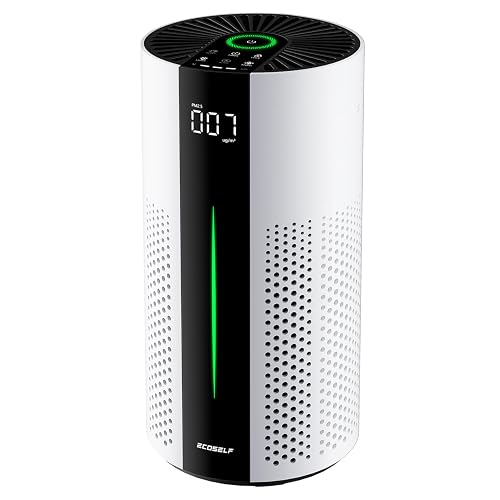
ECOSELF Air Purifier for Home Large Room 1800 Ft²
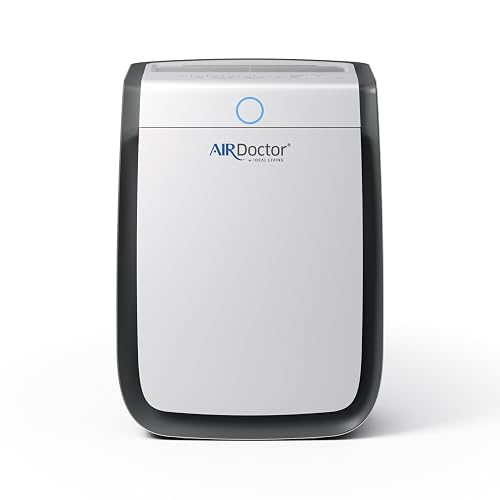
AIRDOCTOR AD3500 Air Purifier UltraHEPA
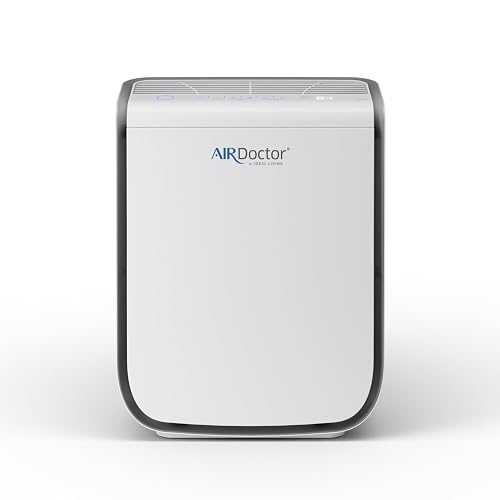
AIRDOCTOR AD2000 for Small & Medium Rooms

AIRDOCTOR AD4000 Air Purifier for Large Rooms
AIRDOCTOR AD5500 Whole Home Air Purifier
What Each Pick Brings To The Table
The Smart Air SA600 is built around a problem most purifiers ignore: pet hair, dander, and litter-box odor all hit the air at once, and a single intake just isn’t fast enough. The dual-inlet design pulls from two sides at once, so two H13 True HEPA filters and two carbon filters work in parallel rather than fighting each other for airflow. H13 is the step below medical-grade H14, still capturing 99.97% of particles down to 0.3 microns, which is more than enough for the dander, pollen, and fine dust that dominate daily life.
In a real home with two shedding dogs, you tend to notice the difference in fur accumulation on the washable pre-filters rather than the air alone, which is actually the point. Owners commonly report vacuuming the pre-filters weekly and only swapping the main cartridges every few months, depending on how many pets share the space. The trade-off is a chunkier cabinet than sleeker competitors, so it works best tucked into a utility corner or against a wall where its 2400 ft²-per-hour throughput isn’t wasted on an empty great room.
What Makes Sense
- Dual-inlet airflow doubles the effective filter contact area without doubling the cabinet footprint in the same way stacking two units would.
- Washable pre-filters catch the bulk of pet hair before it reaches the HEPA layer, which extends the life of the more expensive cartridges.
- Two carbon filters in parallel handle odor load better than single-filter designs in homes with multiple pets or open litter boxes.
- The 2400 ft²-per-hour rating covers most suburban homes in a single pass, so you don’t need to relocate it room to room.
Things To Consider
- The cabinet is noticeably taller and wider than typical tower purifiers, so finding a discreet spot takes planning.
- Replacement filter costs stack up since you’re buying HEPA and carbon cartridges in pairs.
Feature Snapshot
Right Fit For
Multi-pet households with shedding dogs or cats who want one unit to handle fur, dander, and odor in an open living area without running it on turbo all day.
Where Another Pick Suits Better
The AIRDOCTOR AD3500 Smart App is a better fit for someone wanting app scheduling and air-quality telemetry rather than maximum pet-specific filtration.
The Sqair is the quietest unit in this lineup, and Smart Air leans into that on purpose. The 23 to 52 dB(A) operating range, measured on the A-weighted scale that mirrors how your ears actually perceive sound, drops below a whisper on the lowest setting. There’s no glaring display, no blinking fan indicator, and no high-pitched whine when the motor ramps up. Drop it on a nightstand and it disappears into the room the way a sleep sound machine would.
Filtration still uses an H13 True HEPA stage paired with activated carbon, so it pulls allergens, smoke, and pet odors rather than just blowing air around. The 900 ft²-per-30-minutes cadence is honest for a bedroom-to-living-room unit, not a whole-house claim. Where it falls short is raw CADR, the Clean Air Delivery Rate that measures how much filtered air a purifier pushes out per minute. The Sqair’s gentle fan design costs you throughput, so cooking-heavy households with strong odors may want something beefier.
The Upside
- Sub-whisper operation on low makes it one of the few purifiers you can actually sleep next to without white noise masking.
- Dark-friendly design with no bright LEDs or distracting displays suits nurseries and shift workers.
- True H13 HEPA with activated carbon handles both particulates and odors in one pass.
Worth Noting
- Lower CADR than larger Smart Air siblings means it takes longer to clear a room after a cooking spike.
- Lacks a built-in PM2.5 sensor, so you have to trust the fan setting rather than real-time air readings.
- Carbon layer is modest, so strong kitchen or litter-box smells linger longer than on the SA600.
Made For
Light sleepers, nursery setups, and shift workers who need genuinely quiet background filtration more than raw airflow numbers.
Skip It When
You cook often with strong spices or run a multi-cat household, in which case the Smart Air SA600 handles odor load more effectively.
The SA120 is essentially the Sqair’s proven-for-years sibling, the unit that built Smart Air’s reputation before the refreshed version above. It shares the same 23 to 52 dB(A) sound profile and H13 True HEPA plus activated carbon stack, so acoustically it’s a near twin to the newer SKU. What you get is a tested track record: this is the design that owners have run for years in bedrooms and home offices without complaint.
The 900 ft²-per-30-minutes coverage spec uses the same 2 ACH, or air changes per hour, standard, which means the unit cycles all the air in a 900 ft² space twice in an hour. For most apartments and mid-size living rooms, that’s a comfortable turnover without constant turbo mode. If you’ve been on the fence between the two Sqair listings, the honest read is that the SA120 is the safer pick for someone who values longevity, while the refreshed version above leans slightly more on modernized components.
The Good Stuff
- Established model with a long owner track record in bedrooms and shared workspaces.
- Same whisper-quiet floor as the newer Sqair, so noise-sensitive setups get a familiar experience.
- Compact cube footprint fits on dressers and side tables without dominating a room.
Trade Offs
- No smart-app connectivity, so scheduling and remote control require manual button presses.
- Filter availability is solid but the cartridge line is older, so some third-party options may not match the original spec exactly.
Right Fit For
Anyone who wants a proven, no-fuss bedroom purifier and doesn’t care about app integration or air-quality readouts.
Look Elsewhere When
You want real-time PM2.5 data and scheduling from your phone, in which case the AIRDOCTOR AD3500 Smart App is the more connected option.
The Blast MKII is the outlier in this roundup, and Smart Air is upfront about that. With 1200 CFM (cubic feet per minute) of airflow and a stated 9000 ft²-per-hour ceiling, this is a commercial-grade unit dressed in a residential-looking cabinet. The 1140 CFM clean-air figure is closer to what you actually get after filter resistance, which is still roughly four times what most home purifiers push. For warehouses, gyms, classrooms, and open-plan offices, the math changes entirely.
The H13 True HEPA stage and carbon filter pair with a washable pre-filter that catches the bigger debris before it clogs the main cartridges. In a home setting, this unit is overkill for anything under 1500 ft² and noticeably loud at top speed. Owners commonly report running it on medium in big spaces rather than max, which keeps the noise more reasonable. The honest read is that this is the right pick when a regular home purifier just can’t keep up, not when you want a quiet bedroom companion.
Advantages To Know
- 1200 CFM raw airflow means fewer units needed to cover a large commercial or open-concept space.
- Washable pre-filter extends the life of the more expensive HEPA and carbon stages in dusty environments.
- Same H13 True HEPA grade as smaller Smart Air models, so you don’t trade filtration quality for size.
Honest Caveats
- Top-speed noise is substantial, so placement away from desks and seating matters.
- Cabinet is large and heavy, limiting where you can realistically install it.
- Energy draw at full output is meaningfully higher than the residential units on this list.
Right Fit For
Small business owners, studio managers, and anyone with a 2000+ ft² open space where two or three home units just won’t cut it.
Swap It Out When
You’re purifying a normal-sized home, in which case the AIRDOCTOR AD5500 covers similar ground with quieter operation and finer particle capture.
The AD3500 Smart App is the connected version of AIRDOCTOR’s mainstream large-room unit, and the app is genuinely useful rather than a token feature. You get real-time air-quality readings, fan-speed scheduling, filter-life tracking, and mode presets you can trigger from the couch. The UltraHEPA filter is the headline spec, capturing 99.99% of particles down to 0.003 microns, which is 100 times smaller than the 0.3-micron HEPA standard. For people sensitive to wildfire smoke or fine dust, that extra reach matters more than CADR bragging rights.
Coverage runs 630 ft² in 15 minutes and up to 2520 ft² per hour, so a typical great room clears in well under an hour on auto mode. The auto mode reacts to the built-in PM2.5 sensor, which measures fine particulate matter 2.5 microns and smaller, ramping the fan when smoke or cooking spikes. Compared to the Smart Air SA600, the AD3500 trades pet-specific dual-intake design for finer particle capture and better connectivity, which is a fair swap for most non-pet households.
Good Reasons To Consider
- UltraHEPA captures particles 100x smaller than standard HEPA standards, ideal for wildfire smoke and ultra-fine allergens.
- Companion app with scheduling, filter tracking, and live PM2.5 readouts removes guesswork from daily use.
- Auto mode responds to actual air quality, so the unit quiets down when the room is already clean.
Points To Note
- App setup occasionally requires patience with Wi-Fi pairing on certain routers.
- Replacement UltraHEPA cartridges cost more than standard HEPA filters, a real consideration for long-term ownership.
Quick Facts
Right Fit For
Tech-comfortable households in wildfire-prone or high-pollen areas who want real-time data and scheduling from a phone.
Look Elsewhere When
You have multiple shedding pets, in which case the Smart Air SA600’s dual-inlet design tackles pet-specific filtration more directly.
ECOSELF built this unit around a 360-degree intake, which pulls air from all sides rather than a single face. In practice, that means placement matters less than with directional purifiers: stick it in the middle of a room or against a wall and it still pulls from the surrounding air. The PM2.5 sensor drives an auto mode that ramps the fan up the moment smoke, pollen, or cooking residue enters the air. For owners who don’t want to fiddle with fan curves, the set-and-forget experience is the whole pitch.
Coverage is stated at 1800 ft², which positions it between the Smart Air Sqair’s 900 ft² and the AIRDOCTOR AD3500’s 2520 ft². In real homes, that translates to a comfortable fit for open living-dining combos and finished basements. The HEPA stack is solid for everyday allergens, though ECOSELF doesn’t market an UltraHEPA-grade media like AIRDOCTOR does, so ultrafine smoke is less of a specialty. Owners commonly report the auto mode being the feature they actually use, which is usually the right sign for this category.
What Works In Its Favor
- 360-degree intake removes placement guesswork and works well in room-center positions.
- Reactive auto mode responds to real PM2.5 changes, ideal for wildfire season or heavy cooking days.
- 1800 ft² coverage lands in the sweet spot for most suburban open-plan layouts.
Some Limits To Know
- No app connectivity, so all adjustments happen on the unit itself.
- HEPA grade is standard rather than UltraHEPA, so ultrafine smoke capture is less specialized than AIRDOCTOR’s offer.
Right Fit For
Owners who want a self-adjusting purifier in a central living area and don’t care about phone-based controls.
Another Choice May Suit
The AIRDOCTOR AD4000 fits a similar role with finer particle capture and a slightly larger coverage area for similar money.
This is the standard AD3500 without the smart-app bundle, and the choice between it and the app version above comes down to one question: do you want phone control, or do you want to save on the bundle. The filtration is identical: UltraHEPA media capturing 99.99% of particles down to 0.003 microns, paired with a premium carbon stage for VOCs (volatile organic compounds, the gases that cause lingering odors and off-gassing smells) and smoke. A dual-mode switch lets you toggle between auto and manual without diving into menus.
Where this version diverges is the user interface: a top-mounted control ring with a PM2.5 readout, no app dependency. For households where not everyone wants to install yet another phone app, or for anyone giving a purifier to a relative who isn’t app-comfortable, the simpler interface is a real plus. The honest read is that you trade scheduling and remote telemetry for a cleaner, more direct unit, and the underlying air-cleaning performance stays unchanged.
Everyday Perks
- Same UltraHEPA-grade filtration as the smart-app sibling, with no compromise on particle capture.
- Top-mounted control ring is intuitive for anyone who doesn’t want to manage another app.
- Premium carbon layer addresses VOCs and smoke beyond what most HEPA-only competitors offer.
Points To Note
- No app means no remote scheduling or filter-life notifications on your phone.
- PM2.5 readout is on the unit only, so you have to walk over to check air quality.
Right Fit For
Allergy households that want the cleanest possible air without the friction of an extra app, especially in mixed-age homes.
Skip It When
You want real-time air-quality data on your phone, in which case the AIRDOCTOR AD3500 Smart App version is the better match.
The AD2000 is AIRDOCTOR’s compact unit, sized for bedrooms, nurseries, and home offices under about 305 ft² for fast cleaning or 1220 ft² for full-room turnover. It uses a three-stage filter: a pre-filter for large particles, an UltraHEPA layer for fine allergens, and a carbon/VOC stage for gases. The UltraHEPA media here is the same 0.003-micron standard as the larger AD3500, so you don’t give up filtration quality when you downsize.
For most small-room scenarios, the AD2000 is a smarter pick than running a big purifier on its lowest setting. Smaller fans spin slower, generate less noise, and use less energy, and the AD2000 follows that logic. Owners commonly report it running quietly enough for light sleepers, with a footprint that fits on a dresser or side table. The trade-off shows up in coverage: a 1500 ft² open-concept living area is genuinely too much for this unit, and you’d be better served stepping up to the AD3500 or AD4000.
Reasons It Performs
- UltraHEPA-grade media in a bedroom-friendly footprint, rare in this size class.
- Carbon/VOC stage handles paint, furniture, and cleaning-product off-gassing in nurseries and offices.
- Energy draw and noise levels suit continuous 24/7 use without complaint.
Trade Offs To Consider
- Coverage tops out around 1220 ft² per hour, so large living areas need a bigger unit.
Right Fit For
Small bedrooms, nurseries, and home offices where you want AD-grade filtration without the bulk of a large-room unit.
Skip It When
You’re trying to cover a 1500+ ft² open space, in which case the AIRDOCTOR AD4000 makes more sense.
The AD4000 is the sweet spot in AIRDOCTOR’s residential line, sitting between the AD3500 and the whole-home AD5500. Coverage is 694 ft² in 15 minutes or 2776 ft² in an hour, which lines up with most suburban basements, lofts, and main floors. The UltraHEPA + premium carbon stack mirrors the rest of the AD family, so particle and gas capture stay consistent across the lineup. What changes is throughput: bigger fan, faster turnover, more aggressive auto mode.
For homes with a finished basement rec room or a bonus room over the garage, the AD4000 is the right size. It pulls enough air to handle a 700 ft² space in roughly 15 minutes on high, which is fast enough to clear smoke from a burnt dinner before it settles into furniture. Owners commonly run it on auto in basements where humidity and mustiness tend to spike. Compared to the Smart Air SA600, the AD4000 trades pet-specific dual intake for finer particle capture and better gas handling.
What Pays Off
- 2776 ft²-per-hour coverage handles most finished basements and large bonus rooms comfortably.
- UltraHEPA + premium carbon stack addresses both fine particles and household gases in one pass.
- Auto mode reacts to basement humidity and dust patterns, which differ from main-floor air profiles.
Honest Caveats
- Larger cabinet than the AD3500, so finding a discreet spot takes planning.
- Higher fan speeds are noticeably louder than smaller AD units on turbo.
Feature Snapshot
Right Fit For
Homeowners with a 1500 to 2500 ft² main floor or finished basement who want AD-grade filtration with stronger airflow than the AD3500.
Another Choice May Suit
For open-concept layouts pushing 3500+ ft², the AIRDOCTOR AD5500 is a better size match than the AD4000.
The AD5500 is AIRDOCTOR’s whole-home flagship, sized for open floor plans and large shared spaces up to 4172 ft² per hour. That kind of coverage means a single unit can handle a great room, kitchen, and dining area in one pass without needing to move it around. The UltraHEPA media paired with premium carbon targets both particulates and gases, which is what you want when cooking smells, fireplace smoke, and outdoor pollen all converge in one open space.
The honest read is that the AD5500 is a real investment, more than a casual purchase. Owners commonly cite it as a single-unit replacement for two or three smaller purifiers that couldn’t keep up with an open layout. Compared to the Smart Air Blast MKII above, the AD5500 trades raw CFM for finer UltraHEPA-grade filtration and quieter residential operation. If your home is genuinely 3000+ ft² of connected space and you don’t want multiple units, this is the one to look at.
What Stands Out
- 4172 ft²-per-hour coverage handles great rooms, kitchens, and dining areas in a single cycle.
- UltraHEPA + premium carbon stack targets both particulates and gases in one open space.
- Quieter than commercial-grade alternatives at comparable airflow, suitable for living areas.
Honest Caveats
- Large cabinet footprint requires planning a permanent spot rather than a corner stash.
- Replacement UltraHEPA cartridges are a meaningful ongoing cost at this size.
Feature Snapshot
Right Fit For
Owners of 3000+ ft² open-concept homes who want one purifier to cover the main living area rather than running multiple smaller units.
Another Choice May Suit
For smaller homes or those who want app-driven controls and a lower price point, the AIRDOCTOR AD3500 Smart App is a more accessible option.
What To Weigh Before Choosing A Smart Air Purifier
Match The Unit To Your Room Size
A purifier’s coverage number tells you the maximum space it can clear in a stated time, but real-world placement cuts that figure down. For a 200 ft² bedroom, a 900 ft²-rated unit like the Smart Air Sqair runs on low and stays quiet, which is what you actually want. Stretching a small unit across a 1500 ft² great room is where disappointment creeps in, because CADR stays the same regardless of how long you run it. Match the unit to the largest room you want to clean, not your whole home combined.
Understand Filter Grades Beyond The H Number
H13 True HEPA captures 99.97% of particles at 0.3 microns, which covers most allergens, dander, and pollen. UltraHEPA, the AIRDOCTOR standard, pushes that to 99.99% at 0.003 microns, 100x smaller. For wildfire smoke, fine dust, and severe allergy sufferers, that extra reach matters. For everyday use in a low-pollution area, standard H13 is plenty. The trade-off is filter cost, since UltraHEPA cartridges run meaningfully more than standard HEPA replacements.
Decide How Much Smart Matters
App control, PM2.5 readouts, and auto modes are useful when you actually engage with them. Owners who schedule around air-quality alerts and check filter life from their phones get real value from connected units. Owners who set the purifier once and forget it often do fine with a simple top-mounted control ring. The honest read is that smart features are a quality-of-life upgrade, not a filtration upgrade, and paying for them only makes sense when you’ll use them.
What Separates Premium From Basic
Higher-tier purifiers earn their cost in three places: finer filter media, stronger airflow per square foot, and quieter operation at speed. UltraHEPA-grade cartridges capture particles standard HEPA misses, particularly ultrafine smoke and combustion byproducts. Premium carbon layers handle VOCs and odors that basic activated carbon can only partially address. Quieter motors at high fan speeds matter most in bedrooms and offices, where low-grade units can sound like box fans on turbo.
The upgrade is worth it for households dealing with wildfire smoke, severe allergies, or persistent odors from cooking and pets. For clean-air suburban homes with light allergies, mid-tier units handle the job without the premium. Where paying up backfires is buying a flagship unit for a small bedroom, where the extra airflow gets wasted and the noise becomes more noticeable than helpful.
Frequently Asked Questions
How Often Do HEPA Filters Need Replacing?
Most True HEPA filters last 6 to 12 months under normal household use, depending on particle load. Homes with multiple pets, smokers, or heavy cooking may need replacements closer to 6 months, while a low-traffic guest room can stretch toward a year. The unit’s filter-life indicator is the easiest guide, since it tracks actual run hours and air-quality load rather than a fixed calendar.
What’s The Real Difference Between HEPA And UltraHEPA?
Standard H13 True HEPA captures 99.97% of particles at 0.3 microns, the traditional benchmark for medical-grade filtration. UltraHEPA pushes that to 99.99% at 0.003 microns, roughly 100x smaller. The practical difference shows up with ultrafine smoke, viral particles, and combustion byproducts that slip past standard HEPA. For everyday allergens and pollen, the gap is smaller and H13 is generally enough.
Do Air Purifiers Help With Pet Allergies?
Yes, when the filter grade and coverage match the situation. An H13 or UltraHEPA unit sized to the room where pets spend time will pull dander and saliva proteins out of the air continuously, which reduces airborne allergen load. A carbon stage helps with pet odors, though litter-box smells may need additional ventilation. The unit can’t remove allergens embedded in carpet or upholstery, so vacuuming still matters.
How Loud Are Smart Air Purifiers At Night?
Most modern units run between 23 and 35 dB on their lowest setting, which is quieter than a whispered conversation. The Sqair specifically targets sub-whisper operation at 23 dB, while larger commercial-grade units like the Blast MKII run noticeably louder at full speed. Look for a unit with a dedicated sleep mode and a darkened display, since bright LEDs can be more disruptive than fan noise for light sleepers.
Can One Purifier Cover An Open Floor Plan?
A single high-CADR unit like the AIRDOCTOR AD5500 or Smart Air Blast MKII can cover 3000 to 4000 ft² in one cycle, but placement matters. Open floor plans have less wall separation, so air mixes freely, but a single unit can only pull from one location at a time. For genuinely connected 3000+ ft² spaces, one whole-home unit is more practical than running two or three mid-size purifiers in different zones.
The Takeaway
Smart air purifiers live or die on three things: filter grade, room-size match, and how the unit fits your daily routine. Pet-heavy homes benefit most from the Smart Air SA600’s dual-inlet design, while allergy and smoke households get more from AIRDOCTOR’s UltraHEPA media. Light sleepers and small-room owners should lean toward the Sqair and AD2000, and open-concept dwellers need the AD4000, AD5500, or Blast MKII to keep up. Match the unit to the largest room you want clean, pick the filter grade your air actually needs, and don’t overspend on smart features you won’t use.